Indra Aziz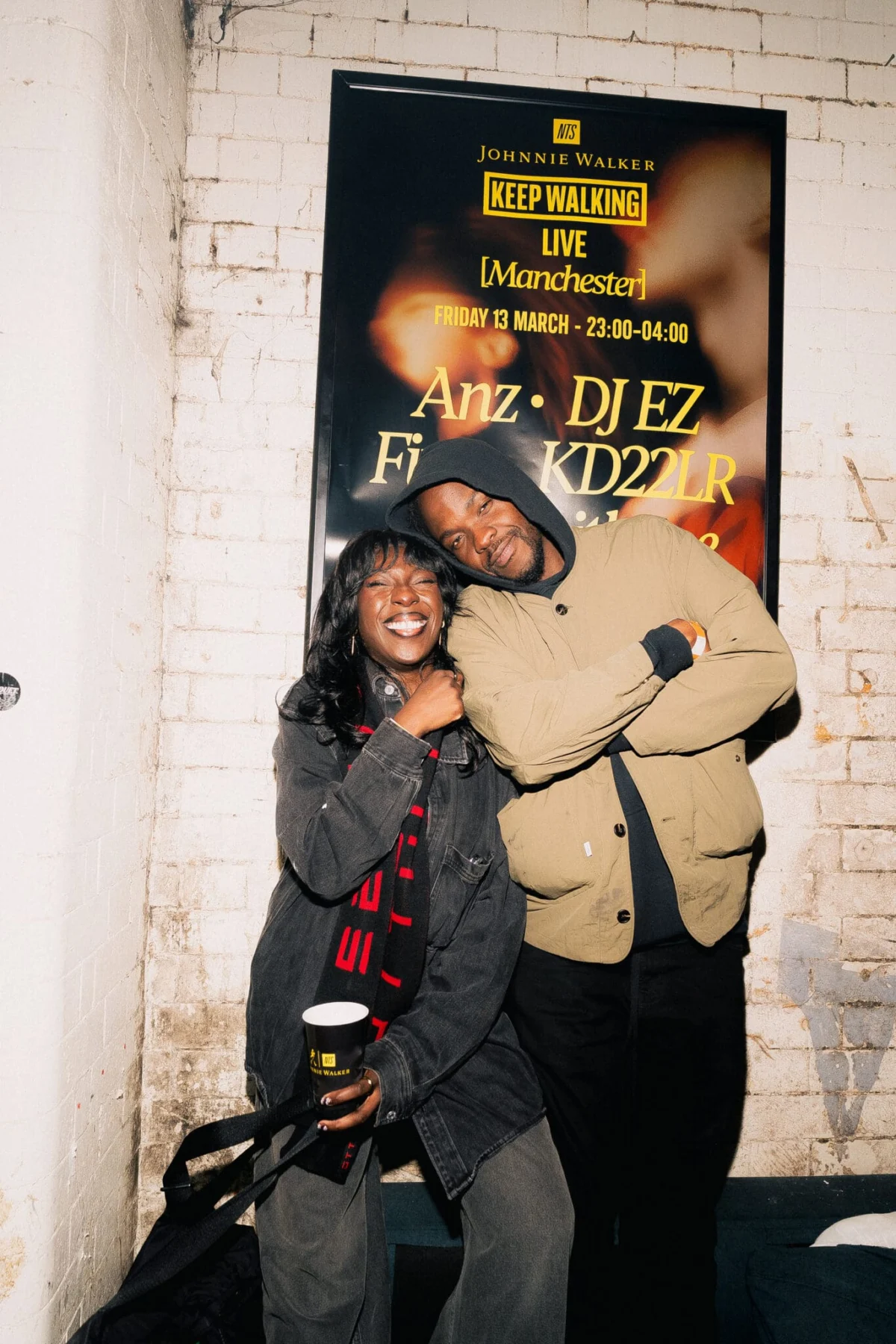
A home to all great things; The Smiths, Vimto, A Clockwork Orange and Umbro, there’s an unbeatable pep to the Manchester crowd. Through bucketfuls of drizzle, it’s a region that bursts with character and knows its history, fostering a dialogue among art, film, music, fashion, and working-class culture. Over the early nineteenth century, Manchester rose to prominence as the UK’s first industrial city and asserted its position within the global market, trading in valuable cotton (hence the nickname, ‘Cottonopolis’). Since then, its wardrobe has maintained an unabashed grit, a punchy je ne sais quoi that traverses between the 80s Madchester movement into dummy-sucking noughties raves and world-class football pitches. From the outside looking in, it’s a city that takes after its youthful, pressure-built spirit, disinterested in mainstream appeal, instead choosing to preserve its underground through tight-knit collectives, subcultural offshoots and generational record labels. A deep-dive into the likes of Skam Records, Chow Down and Factory Records illustrates the breadth of its musical output, offering nascent talent the space to grow into their own. Amid a national crisis for grassroots venues, still, the scene protects its dancefloors (say The White Hotel, Stage & Radio or Hidden) and treats each clubbing experience as sacrosanct.
Community radio station NTS landed in the city over a decade ago, connecting local DJs, artists and presenters to a global audience who seek more diligent tastemaking. From its original East London HQ, the broadcaster has expanded to Berlin, New York and Shanghai, strengthening its online community through chat rooms where listeners meticulously scout live track IDs. Over time, the station has leant further into its specialist programming, with over 50% of the music played over its airwaves being unavailable on Spotify or Apple Music. Elsewhere, NTS’s vision for collaboration, too, has shifted, now teaming up with Scottish whiskey expert Johnnie Walker to unveil the next phase of its Keep Walking initiative. Together, the team set out to platform Manchester’s creative milieu and feed back into its ecosystem, curating a weekend-long takeover in which ticket sales are donated to industry charity Brighter Sound Ltd. From DJ workshops, chess sessions and panel discussions to after-hour sojourns, the line-up boasts an expansive pool of performers, ranging from Nubya Garcia and KOKOROKO to DJ EZ, Finn and Space Afrika. The campaign pays equal attention to its spread of locations, amplifying the stories behind Eastern Bloc Records, SOUP, New Century and Impiety Hour.
Johnnie Walker’s ‘Keep Walking’ Initiative Lands in Manchester
The collaboration between Johnnie Walker and NTS Radio represents a significant investment in the cultural fabric of Manchester, aiming to spotlight its vibrant creative scene. The "Keep Walking" initiative, a long-standing program by Johnnie Walker that champions progress and pioneering spirit, found a natural ally in NTS’s dedication to fostering underground talent and diverse musical expression. This particular activation in Manchester was designed not merely as a series of events, but as a holistic immersion into the city’s artistic ecosystem. The weekend-long takeover, held recently, was a testament to this ambition, featuring a curated lineup of established and emerging artists across various disciplines, from music production and DJing to panel discussions on the future of creative industries.
The initiative’s commitment to giving back was evident in its decision to donate all ticket sales to Brighter Sound Ltd., a charity dedicated to supporting music practitioners and fostering inclusivity within the music sector. This philanthropic element underscores a broader trend in cultural events, where corporate sponsorship is increasingly aligned with social impact and community development. The choice of venues also spoke volumes about the event’s intent to engage with Manchester’s authentic creative spaces. From the renowned New Century Hall to the intimate basement of Impiety Hour at The White Hotel, the selected locations are integral to the city’s underground music and arts circuit, providing a genuine backdrop for the discussions and performances.
Anz: A Manchester Resident’s Perspective on Creative Evolution
As part of Johnnie Walker’s ‘Keep Walking’ takeover, a deeper exploration into Manchester’s creative landscape was facilitated through an interview with NTS resident DJ and producer, Anz (real name Anna-Marie Odubote). Despite being born in London, Anz has established a strong connection with Manchester, having relocated for university and found the North to be a more conducive environment for her burgeoning career. She highlighted the city’s geographical layout as a facilitator of creative exchange, where proximity allows for easy collaboration and connection between artists, clubs, and studios.
Anz’s musical journey has been significantly shaped by the Manchester scene. She pinpointed "Chow Down," an event that took place in the city, as a pivotal space in her early career. "Chow Down was very much a space where variety, divergence, breadth and taste were really encouraged. It was fostered and nurtured," she explained. This environment allowed her to embrace her "perennially indecisive" nature regarding music, realizing that it was a strength rather than a weakness, enabling her to explore diverse sonic territories without constraint.
Her experience with established entities like Hessle Audio provided a valuable lesson in navigating the music industry with integrity. "Those guys are such a good example, to me personally, of how things can be," Anz stated. "Through their time in the industry, they’re still excited about new things and treat people with care." This sentiment reflects a desire for a more ethical and supportive industry, particularly in contrast to what she described as a "cruel place for a lot of people." Her philosophy, deeply influenced by such encounters, centers on maintaining pleasant relationships and remembering that "all you have at the end of anything is how you’ve been to the people around you."
Anz also reflected on pivotal moments that have defined her role as a selector and producer. Her first all-night-long set at The White Hotel was a profound experience in balancing self-expression with audience engagement, allowing for a more vulnerable and pure form of artistic communication. Similarly, her first all-production set at "Can You Feel the Sunlight" in 2021, a decision made just hours before, demonstrated the power of her own material to connect with an audience, reinforcing the idea that creative output becomes a shared experience.
When discussing the broader creative landscape, Anz emphasized a critical distinction between conversation and action. "I don’t think we struggle for lack of conversation. A lot of people have taken the time and the energy to really clearly articulate actionable things that people can do to help change the shape of things. I don’t think we struggle with speaking so much as we struggle with taking action." This call for tangible change highlights a frustration with inaction, despite widespread awareness of issues within the creative industries. Her advice to younger generations – "Don’t be scared of cringe" – encapsulates a philosophy of embracing vulnerability and growth, essential for authentic creative expression.

The Rise of ‘Gone Norf’: Empowering Northern Working-Class Creatives
Beyond the musical performances and established figures, the Johnnie Walker and NTS ‘Keep Walking’ takeover also provided a platform for emerging collectives shaping the future of Manchester’s art scene. A notable inclusion was "Gone Norf," a collective formed in 2015 by Rosie Callaghan, George Groucott, and Tad Dzimwasha. Their mission is to build a network of creatives, with a particular focus on those from northern, working-class backgrounds, offering a resourceful response to the challenges faced by emerging artists operating outside of London.
George Groucott articulated the collective’s genesis as a direct response to the "lack of opportunities that we’ve faced within personal situations." He identified a common theme: a demographic that is often overlooked and underserved. Rosie Callaghan elaborated on this, explaining their desire to "provide something that motivated young people to know that they can work around their roots and platform where they’re from themselves, rather than having to go to a new place and feel like they’ve got to fit into this brand new scene that they’re not from." This ethos of celebrating and empowering local identity is central to their approach.
A significant obstacle for "Gone Norf" has been financial accessibility. They prioritize keeping their events free, a stance that challenges the often-high ticket prices found in the cultural sector. "Money is a big one," Callaghan stated. "We’ve only ticketed one event ever, and that was a fundraiser, so that’s how we like to work. We like to keep everything free because accessibility is a big thing." This commitment to free events, while challenging to sustain, directly addresses the economic barriers that can prevent young people from engaging with the arts.
They also noted a surprising challenge in finding young creatives specifically from Manchester itself. Callaghan observed that brands often expect to find a high concentration of local talent within the city, but many individuals are forced to live on the outskirts due to the cost of living. This reality underscores the broader economic pressures impacting creative communities in major urban centers.
When seeking collaborators, "Gone Norf" looks for partners who are "willing to work with young people" and are "open to getting out of Manchester, as we’re working across the North." They emphasize the importance of long-term relationships, aiming to build genuine connections rather than transactional collaborations. Their methods for discovering new talent include extensive use of social media and word-of-mouth, actively encouraging individuals to share their hometown stories. Networking face-to-face at events also plays a crucial role in identifying and connecting with emerging artists. Callaghan stressed the importance of authenticity: "People can see straight through you if you’re just trying to get young people on for the sake of it. You’ve got to actually build a friendship with them."
Evolving Definitions of Creativity and the Path Forward
The conversation with "Gone Norf" also delved into the evolving nature of creativity and self-expression. Rosie Callaghan noted an increased experimentalism among young people, driven by exposure to diverse cultures and lifestyles. She highlighted that "creativity isn’t just the traditional arts anymore," and that the stigma around what it means to be a creative is diminishing. However, she also pointed to the inherent political nature of art and the potential for social media to curate content for perception rather than authentic message.
George Groucott offered a nuanced perspective, suggesting that a traditional 9-to-5 job can, paradoxically, foster greater creativity and curiosity. He observed a trend towards increased expressiveness and authenticity, while simultaneously acknowledging the pressure to create curated content for social media consumption.
When discussing the need for more encouraging creative environments, Callaghan advocated for greater realism. She expressed a desire for aspiring creatives to understand the difficulties in securing full-time creative employment, a reality often glossed over by those who have benefited from established support systems. "I wish someone had told me how difficult it is to get in and how just calling yourself a creative is not enough," she admitted. Groucott added that significant time and work investment is crucial for building a platform.
Both emphasized that it is acceptable to have other jobs alongside creative pursuits and that a degree alone is insufficient. They stressed the importance of understanding the broader "ecosystems" within which creatives operate. Callaghan specifically critiqued advice from individuals who have had a privileged background, suggesting that their guidance may not be applicable to those without similar safety nets or access to different systems of support.
The collective highlighted key individuals whose work excites them, including Meg McWilliam from Newcastle, known for her work as Raj Mag, and Tad Dzimwasha, their third co-founder, who is a chef and a multifaceted creative. Their vision for the future involves continuing to uplift voices from across the North, fostering a more equitable and accessible creative landscape for all. The Johnnie Walker and NTS ‘Keep Walking’ initiative, by bringing these diverse voices and perspectives together, has undoubtedly served as a catalyst for such important conversations and future collaborations within Manchester’s dynamic cultural scene.