Johan Budi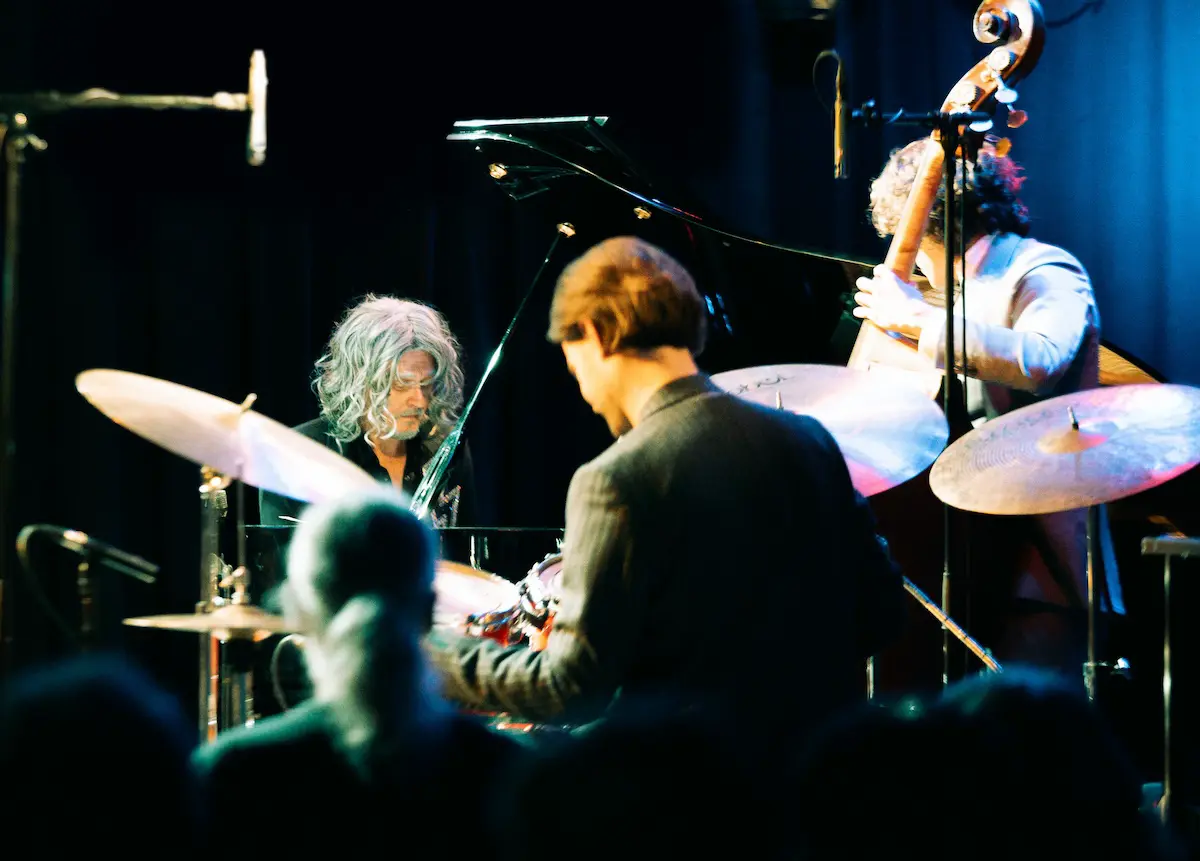
The global landscape of contemporary jazz and instrumental music has been significantly enriched by three major releases that challenge traditional genre boundaries and redefine the expressive potential of their respective instruments. From the polyrhythmic global fusions of Ben Rosenblum’s Nebular Project to the atmospheric, river-inspired explorations of Joe Harvey-Whyte and Geir Sundstøl, and the subversive heavy metal reinterpretations of Jazz Sabbath, these works represent a significant shift toward multidisciplinary and conceptual composition. These releases, recorded across prestigious studios in New York, Oslo, and the Netherlands between early 2024 and 2025, provide a comprehensive look at the evolving state of modern improvisation and the ongoing dialogue between classical, folk, rock, and jazz traditions.
Ben Rosenblum and the Nebular Project: A Literary and Global Synthesis
Ben Rosenblum, the multifaceted composer, pianist, and accordionist, has released his third album with the Nebular Project, titled The Longest Way Round. The title, a direct reference to a passage in James Joyce’s seminal modernist novel Ulysses, encapsulates the album’s philosophical core: the idea that the journey of self-discovery and musical evolution often requires a circuitous path through varied influences and geographies. This release follows the critical success of his previous efforts, Kites and Strings and A Thousand Pebbles, establishing a clear trajectory of increasing complexity and stylistic breadth.
Recorded at NRS Studios on March 5–6, 2024, the album features a sophisticated ensemble including Wayne Tucker on trumpet and flugelhorn, Jasper Dutz on woodwinds, and Rafael Rosa on guitar. The project is a deliberate attempt to dismantle the stereotypical limitations of the accordion. Rosenblum has frequently noted that the instrument is "very misunderstood," often relegated to narrow folk or kitsch categories. In The Longest Way Round, he positions the accordion as a lead voice capable of navigating high-speed Dominican merengue, intricate Irish reels, and complex bop-influenced arrangements.
The album’s structure is anchored by the suite Scenes Frozen In Time. This centerpiece is a programmatic work that charts Rosenblum’s personal and professional development. It includes movements inspired by a period of artistic isolation in Berlin, as well as reflections on his formative years in high school and college. Analysts have noted a "cinematic quality" to the compositions, drawing comparisons to the narrative-driven film scores of Randy Newman. By blending the technical rigor of classical music with the spontaneity of jazz, Rosenblum has created a work that is both accessible and intellectually demanding.
Geographical and Sonic Fluidity in Langeleik
In a stark contrast to the bustling energy of the Nebular Project, the collaboration between London-based pedal-steel player Joe Harvey-Whyte and Norwegian multi-instrumentalist Geir Sundstøl offers a masterclass in atmospheric minimalism. Their album, Langeleik, departs from the pedal-steel’s traditional association with country music’s themes of heartbreak and Western aesthetics. Instead, the duo utilizes the instrument’s "shimmering melancholy" to explore the physical and metaphorical geography of Norway’s river systems.
The production of Langeleik highlights a fascinating intersection of two distinct creative philosophies. Sundstøl is known for a meticulous, long-form approach to production, sometimes spending up to 18 months refining a single album. In contrast, Harvey-Whyte favors spontaneity and the energy of live improvisation. The resulting compositions were largely birthed in the studio, developed through a process of "mutual listening" and real-time response. This method resulted in a soundscape that mirrors the constant, shifting movement of water—a central theme of the record, with many tracks named after specific Norwegian rivers.
The inclusion of the track Rørvikelva serves as a focal point for the album’s emotional weight. Originally considered for exclusion during the editing process, the piece was transformed by the addition of spoken word poetry by Ivar Orvedal. This addition grounded the ethereal, Kraftwerk-esque synthesizers and brooding percussion in a human narrative. At just over 30 minutes, the album is a concise but powerful statement on environmental concern and the "other-worldly" potential of the pedal-steel. Harvey-Whyte has described the work as a "companion for reverie," demanding a level of "deep listening" that mirrors the focus required for its creation.
The Subversive Sophistication of Jazz Sabbath Live
Perhaps the most unconventional of the recent releases is Jazz Sabbath Live, the first official live recording from the trio led by Adam Wakeman. While the project began with a satirical "backstory" involving a 1960s jazz band whose songs were allegedly stolen by Black Sabbath, the musical reality is a serious and technically brilliant exploration of the heavy metal canon through the lens of a piano-led jazz trio.
Adam Wakeman, the son of legendary Yes keyboardist Rick Wakeman, brings a formidable pedigree to the project. Having played with Black Sabbath and Ozzy Osbourne for years, Wakeman’s transition to these jazz arrangements is not merely a novelty but a deep-seated recontextualization of the source material. Recorded at The Paradox Jazz Club in the Netherlands on March 20, 2025, the album captures the trio—including bassist Jack Tustin and drummer Arthur Newell—navigating the "bombast and drama" of Black Sabbath’s original compositions with a surprisingly light and melodic touch.
The performance begins with the atmospheric tropes of the heavy metal genre—rain and tolling bells—before diving into intricate, blues-inflected jazz. On tracks like Behind The Wall Of Sleep, the trio demonstrates a mastery of the form, with Tustin’s walking bass lines and Newell’s crisp percussion providing a foundation for Wakeman’s phrasing, which critics have noted bears an "uncanny" resemblance to his father’s touch. The album proves that the structural integrity of heavy metal classics like War Pigs and Paranoid can support sophisticated jazz improvisation, successfully bridging a gap that many critics previously considered unbridgeable.
Chronology of Production and Personnel
The production timeline for these three projects reflects the global nature of modern jazz recording:
- March 2024: Ben Rosenblum records The Longest Way Round at NRS Studios. The session involves a seven-piece core ensemble with additional percussion by Gustavo Di Salva and Brad Dutz. The album is released under One Trick Dog Records.
- Late 2024: Joe Harvey-Whyte and Geir Sundstøl finalize Langeleik at Studio Intim in Oslo. The project features contributions from Jo Berger Myhre, Anders Engen, and Erland Dahlen. It is released on the Hubro label, known for its experimental and Nordic jazz catalog.
- March 20, 2025: Jazz Sabbath records their live performance at The Paradox Jazz Club in the Netherlands. The album, Jazz Sabbath Live, is released by Blacklake Records, capturing 83 minutes of material across 11 tracks.
Supporting Data and Technical Analysis
The technical specifications of these recordings highlight the diversity of the modern instrumental market. The Longest Way Round clocks in at 58 minutes and 7 seconds, utilizing a wide array of acoustic instruments to create a dense, layered sound. In contrast, Langeleik is a lean 31-minute experience, prioritizing space and texture over melodic density. Jazz Sabbath Live is the most substantial in terms of length, offering an 83-minute immersive experience that reflects the stamina and improvisational depth of the trio format.
From an analytical perspective, these albums signify a broader trend toward "instrumental rehabilitation." Rosenblum is actively campaigning for the accordion’s legitimacy in high-art jazz circles, while Harvey-Whyte and Sundstøl are doing the same for the pedal-steel in the ambient and experimental sectors. Meanwhile, Adam Wakeman is rehabilitating the "riff" as a viable foundation for complex jazz harmony.
Broader Impact and Industry Implications
The release of these three albums has several implications for the music industry and the jazz genre specifically. First, they demonstrate the continued viability of independent labels like One Trick Dog, Hubro, and Blacklake in fostering niche, high-quality projects that might be overlooked by major distributors. These labels provide the necessary platform for artists to engage in "long-form" creativity, such as Sundstøl’s 18-month production cycles or Rosenblum’s multi-year suite compositions.
Furthermore, these works suggest a shift in audience expectations. The success of Jazz Sabbath, in particular, indicates a growing appetite for genre-bending projects that combine technical virtuosity with a sense of humor or historical subversion. Similarly, the environmental and geographical themes in Langeleik align with a broader cultural trend toward music that encourages mindfulness and "deep listening" as an antidote to the digital era’s rapid-fire content consumption.
As the final notes of The Longest Way Round, Langeleik, and Jazz Sabbath Live reach audiences globally, they serve as a testament to the enduring power of instrumental music to convey complex emotions and narratives without the need for traditional lyrical structures. Whether through the lens of Irish folklore, Norwegian rivers, or British heavy metal, these artists are successfully charting "the longest way round" to the heart of modern musical expression.