Reynand Wu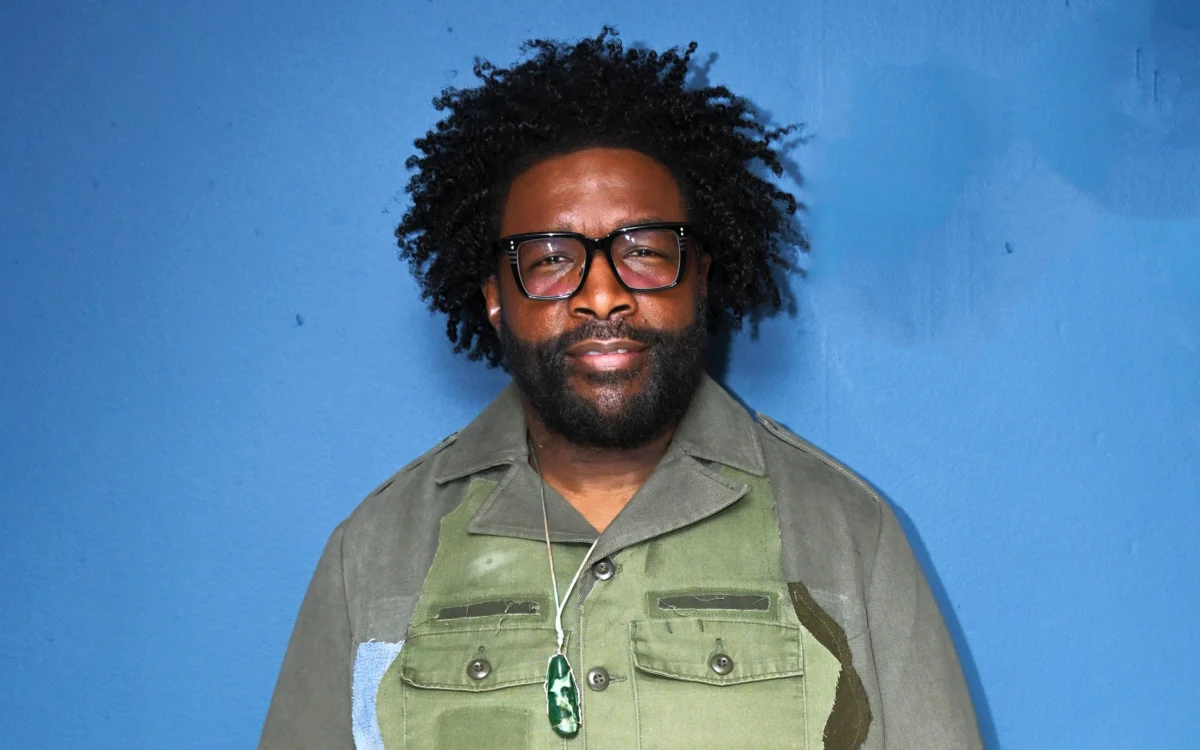
The music world is abuzz with the tantalizing prospect of a reunion from one of hip-hop and R&B’s most revered and influential collectives, the Soulquarians. What began as a loose assembly of visionary artists, producers, and musicians at the turn of the millennium, forging a distinctive sound that blended neo-soul, jazz, hip-hop, and funk, now appears poised for a potential revival. At the heart of this renewed hope is Questlove, the iconic drummer for The Roots and an acclaimed filmmaker, who recently hinted at a stripped-down return for the beloved movement he helped spearhead.
During a recent episode of his popular podcast, The Questlove Show, Questlove revealed conversations with key original members, stating, "James [Poyser], myself, Bilal — the fragments that are left of the Soulquarians… we spoke. The family’s going to get back together." This declaration has sent ripples of excitement across the music industry and among legions of fans who have long cherished the Soulquarians’ profound artistic contributions. The proposed core lineup for this potential comeback includes Questlove himself, alongside R&B luminary Bilal and the prolific producer/multi-instrumentalist James Poyser, signaling a focused, perhaps more intimate, iteration of the collective.
The Genesis of a Movement: A Counter-Cultural Force in Late 90s Music
To truly appreciate the significance of a Soulquarians comeback, one must revisit the cultural and musical landscape of the late 1990s and early 2000s when the collective first coalesced. Emerging against a backdrop dominated by commercial hip-hop’s shiny suit era and R&B’s increasingly synthesized soundscapes, the Soulquarians represented a conscious return to organic instrumentation, intricate musicianship, and lyrical depth. This period saw a yearning for authenticity and a rebellion against perceived commercialism, paving the way for the neo-soul movement.
The Soulquarians were not a formal group with a fixed roster, but rather a fluid collective of like-minded artists who frequently collaborated, sharing ideas, studio time, and a mutual respect for analog recording techniques. Their spiritual home was Jimi Hendrix’s legendary Electric Lady Studios in New York City, a space imbued with musical history that fostered an environment of uninhibited creativity. Here, artists like D’Angelo, Erykah Badu, Common, Q-Tip, Yasiin Bey (then Mos Def), J Dilla, Bilal, James Poyser, and Questlove converged, bringing their individual genius to bear on each other’s projects.
Questlove himself chronicled the collective’s formation and ideals in his 2013 memoir, Mo’ Meta Blues. He envisioned it as "this utopian paradise I had always envisioned, the Native Tongues movement recreated," referring to the influential 1980s and 90s hip-hop collective known for its positive, Afrocentric, and jazz-inflected sound. The Soulquarians aimed to embody a similar spirit of collaboration and artistic integrity, emphasizing live instrumentation, complex arrangements, and a deep reverence for the lineage of soul, jazz, and funk music. Their philosophy was simple yet radical: prioritize the groove, the feel, and the lyrical narrative over trends and commercial pressures.
A Legacy Forged in Sound: Masterpieces of the Neo-Soul Era
Between 1999 and 2002, the Soulquarians’ influence was palpable across a series of seminal albums that not only defined the neo-soul genre but also pushed the boundaries of contemporary R&B and hip-hop. These recordings, often featuring overlapping personnel, showcased a rare synergy among the artists, creating a sonic tapestry that remains hugely influential to this day.
One of the crowning achievements of this era was D’Angelo’s Voodoo, released in 2000. Following the widespread success of his debut Brown Sugar, Voodoo was a daring departure, embracing raw funk, experimental arrangements, and dense, multi-layered grooves. Questlove’s drumming, J Dilla’s rhythmic genius, and James Poyser’s keyboard work were integral to its unique sound, earning it widespread critical acclaim and a Grammy Award for Best R&B Album. Its impact on subsequent R&B artists is immeasurable, solidifying D’Angelo’s status as a reclusive genius and a master of his craft.
Erykah Badu’s Mama’s Gun, also released in 2000, further cemented the Soulquarians’ reputation. A more expansive and intricate album than her debut, it delved into themes of love, spirituality, and social commentary with a sophisticated blend of soul, jazz, and gospel. Contributions from Poyser, Questlove, and other Soulquarians collaborators helped craft its rich, organic sound, proving Badu’s artistic growth and cementing her as the "Queen of Neo-Soul." Tracks like "Bag Lady" and "Cleva" became anthems, showcasing the collective’s ability to create both commercially successful and artistically profound music.
Common’s Like Water For Chocolate (2000) marked a significant artistic turning point for the Chicago rapper. Infused with live instrumentation and soulful grooves, the album saw Common explore deeper, more introspective themes, moving away from some of the more abstract lyricism of his earlier work. With production largely handled by Questlove, J Dilla, and James Poyser, the album featured collaborations with D’Angelo and Erykah Badu, seamlessly blending hip-hop lyricism with the collective’s signature musicality. It earned critical adoration and remains a cornerstone of conscious hip-hop.
Other notable projects from this period that bear the Soulquarians’ indelible stamp include Bilal’s debut 1st Born Second (2001), a critically lauded album that showcased his incredible vocal range and eclectic musical tastes, and The Roots’ own Things Fall Apart (1999) and Phrenology (2002), both of which exemplified the live band aesthetic and intellectual depth synonymous with the collective. The combined output of the Soulquarians during this brief but intense period fundamentally shifted perceptions of R&B and hip-hop, demonstrating that commercial success and artistic integrity were not mutually exclusive.
The Unraveling: A Paradise Lost to Perception
Despite their immense creative output and burgeoning influence, the Soulquarians’ original run was relatively short-lived. The very informal nature that allowed such spontaneous creativity also proved to be its undoing, exacerbated by external pressures and misinterpretations. According to Questlove’s account in Mo’ Meta Blues, the beginning of the end was triggered by a 2000 VIBE magazine article intended to celebrate the collective’s rise.
The article, rather than capturing the fluid, non-hierarchical spirit of the Soulquarians, inadvertently presented Questlove as the singular mastermind, the "leader" orchestrating the various projects. This misrepresentation, while perhaps unintentional, created friction among the highly individualistic artists who valued their autonomy. Questlove vividly recalled the immediate aftermath: "I was in Chicago for a D’Angelo show… Someone came up and tapped me on the shoulder. ‘Ahmir, it’s Mos [Def]. He wants to talk to you.’" Mos Def (now Yasiin Bey) expressed his concern, asking, "I’m not an Aquarian… Does that mean I’m not a real Soulquarian?"
Soon after, Q-Tip, another foundational figure in hip-hop, voiced his displeasure: "Yo," he told Questlove, "This article makes it look like I work for you." Erykah Badu also contacted Questlove with her own reservations about the piece. Questlove acknowledged the validity of their points: "When I [checked out the story], I could see their point… It was at that moment that I realized that the paradise I had imagined wasn’t headed in a good direction." The incident highlighted the inherent challenge of formally defining and marketing a collective built on informal collaboration, ultimately leading to its gradual dissolution as members pursued their individual careers.
Questlove’s Renewed Mission: Carrying the Torch for Analog Soul
More than two decades later, Questlove’s call for a Soulquarians comeback is driven by a profound sense of artistic responsibility and a desire to "see the mission through" of keeping "thoughtful, analog-driven music alive." This motivation stems, in part, from a reflection on the passage of time and the loss of seminal figures in music.
It is important to address Questlove’s recent remarks on his podcast, where he stated, "Now that [D’Angelo] is not here, I feel that responsibility more than ever." While this phrasing might suggest a physical absence, it is crucial to clarify that Grammy-winning artist D’Angelo is very much alive and continues to be an influential figure in R&B and soul. His last studio album, Black Messiah, released in 2014, garnered widespread critical acclaim and a Grammy Award for Best R&B Album. Questlove’s remark is more likely a poignant reflection on the end of a specific collaborative era, the spiritual weight of maintaining the collective’s artistic ethos in a changed musical landscape, or perhaps a misinterpretation of a deeper, metaphorical sentiment regarding the original collective’s dynamic. The original article also contained a factual error regarding D’Angelo’s death date of 2025, which further underscores the need for clarity on this point.
Furthermore, the passing of Prince in 2016, another titan of analog-driven funk and soul, undoubtedly weighs heavily on Questlove. Prince’s uncompromising artistic vision and dedication to live instrumentation resonated deeply with the Soulquarians’ philosophy. The loss of J Dilla in 2006, whose innovative production techniques were central to the Soulquarians’ sound, also underscores the fragility of such creative partnerships and the urgency to preserve their legacy. For Questlove, the responsibility to uphold a certain standard of musicality and authenticity in an increasingly digital and algorithm-driven industry feels more pressing than ever.
Potential Inclusions and Challenges for a Modern Soulquarians Revival
The proposed "stripped-down" nature of the comeback, featuring Questlove, Bilal, and James Poyser, suggests a focused approach, perhaps acknowledging the logistical complexities of reuniting all original members. While the core trio represents a formidable creative force, speculation naturally arises regarding the potential involvement of other living Soulquarians.
Erykah Badu, Common, Q-Tip, and Yasiin Bey have all maintained highly successful and active careers since the original collective dissolved. Badu continues to tour extensively and release critically acclaimed music, while Common has achieved success in music, film, and activism, including an Oscar and Grammy. Q-Tip remains a respected producer and DJ, and Yasiin Bey has explored various artistic avenues. Their individual schedules and creative trajectories present significant hurdles for a full-scale reunion. However, even guest appearances or specific collaborations could electrify fans and lend immense weight to any new Soulquarians project.
The challenges extend beyond scheduling. The music industry itself has undergone radical transformations since the early 2000s. The shift from physical album sales to streaming, the dominance of digital production tools, and evolving listener habits all present a different environment for a collective known for its commitment to analog processes and meticulous craftsmanship. The question of whether a new Soulquarians project would seek to replicate their original sound or evolve it for a contemporary audience will be key. Yet, this very commitment to "analog-driven music" might be its greatest strength, offering a refreshing counterpoint to current trends.
The Broader Significance: Why the Soulquarians Still Matter
A Soulquarians comeback, even in a modified form, holds immense significance. Their original body of work continues to inspire new generations of artists across genres. The meticulous production, innovative arrangements, and heartfelt lyricism found in albums like Voodoo and Mama’s Gun are frequently cited as benchmarks by contemporary R&B, hip-hop, and indie artists. The collective’s emphasis on genuine musicality over commercial trends fostered an environment where artistic risks were celebrated, leading to a golden age for "thinking person’s" soul and hip-hop.
In an era often characterized by fast-paced releases and a reliance on digital shortcuts, the Soulquarians’ ethos of patience, dedication to craft, and the organic interplay of live musicians feels more relevant than ever. A return could serve as a powerful statement, reminding the industry and listeners of the enduring value of authentic, soul-stirring music made by human hands and minds. It could reignite interest in live instrumentation, improvisation, and the collaborative spirit that defined their original run.
Furthermore, a revival would honor the memory and immense contributions of figures like J Dilla, whose posthumous influence has only grown exponentially. Any new Soulquarians material would inevitably carry the torch of his groundbreaking rhythmic innovation, ensuring his legacy continues to resonate.
As Questlove, Bilal, and James Poyser embark on this potential new chapter, the anticipation is palpable. The Soulquarians were more than just a group of musicians; they were a cultural movement that championed artistic integrity, soulful expression, and the power of collaboration. Their potential return promises not just new music, but a rekindling of a vital spirit in the contemporary music landscape, reminding us all of the profound impact of truly thoughtful, analog-driven sound. The music world awaits with bated breath to see how this iconic family will once again come together to shape the future of soul.