Muhammad Ibadurrohman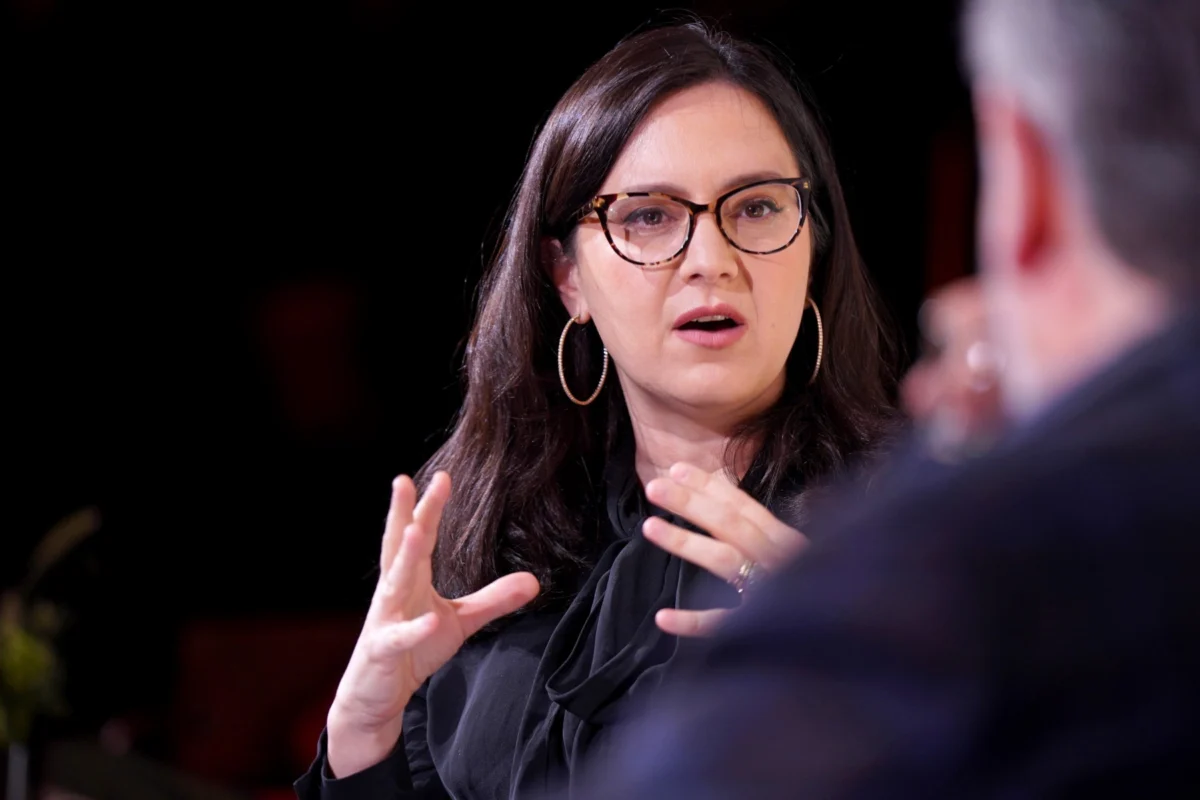
CBS News announced Friday its decision to shut down its esteemed radio news service after nearly a century of continuous operation. The closure, effective May 22, signifies the end of a pivotal era in American broadcast journalism, attributed by network executives to challenging economic conditions and a seismic shift in news consumption towards digital platforms and podcasts. Concurrently, CBS News also confirmed a broader reduction of its workforce by approximately 6%, impacting over 60 individuals, though the precise number of staffers affected by the radio service shutdown remains unspecified.
A Storied Legacy Spanning a Century
The roots of CBS News Radio trace back to September 1927, predating the establishment of the full CBS television network itself. Its inception provided a crucial platform for a young William S. Paley, laying the groundwork for what would become one of the most influential media organizations globally. Over the decades, CBS News Radio evolved into a cornerstone of American journalism, shaping public discourse and informing generations.
Its history is punctuated by iconic moments that defined eras. During World War II, the voice of Edward R. Murrow became synonymous with courage and journalistic integrity. His rooftop reports from London amidst the Nazi blitz captivated and reassured an anxious American audience, offering a visceral connection to events unfolding across the Atlantic. Murrow’s broadcast on Germany’s invasion of Austria in 1938 marked his historic on-air debut, setting a precedent for immersive, on-the-ground reporting that became a hallmark of CBS News.
Beyond wartime reporting, CBS News Radio played a critical role in domestic affairs. Alongside newspapers, radio was the dominant medium for news dissemination from the 1920s through the 1940s. Americans gathered in their living rooms to listen intently to President Franklin Delano Roosevelt’s "Fireside Chats" during the Great Depression, a testament to radio’s power in uniting and informing a nation. The service was renowned for its familiar voices, including legendary broadcasters such as Douglas Edwards, Dallas Townsend, and Christopher Glenn, whose delivery of top-of-the-hour news roundups became a trusted routine for millions.
For decades, CBS News Radio served an estimated 700 stations across the country, providing comprehensive news coverage, special reports, and hourly bulletins. Its reliability and widespread reach made it an indispensable resource for local stations lacking the infrastructure for their own extensive national and international reporting.
Economic Realities and the Digital Tsunami

The decision to shutter such a historically significant operation underscores the profound and relentless pressures facing traditional media in the 21st century. Bari Weiss, editor-in-chief of CBS News, addressed staff with the difficult news, stating, "Radio is woven into the fabric of CBS News and that’s always going to be part of our history. I want you to know that we did everything we could, including before I joined the company, to try and find a viable solution to sustain the radio operation." She candidly acknowledged that "with the radical changes in the media industry, we just could not find a way to make that possible."
The "radical changes" Ms. Weiss refers to are multifaceted. The media landscape has undergone a dramatic transformation driven by the internet, mobile technology, and evolving consumer habits. The rise of television in the 1950s initiated a gradual decline in radio’s primary role as a news source. This trend has accelerated exponentially in recent decades with the advent of the World Wide Web, social media, and on-demand audio content like podcasts and streaming services.
Traditional radio, particularly news-focused segments, has struggled to attract the advertising revenue necessary to sustain operations in an environment where listeners increasingly turn to personalized, digital audio experiences. According to industry reports, while overall audio consumption remains robust, the share commanded by terrestrial radio, especially for news, has been steadily eroded by digital alternatives. Data from organizations like Edison Research consistently show podcasts reaching hundreds of millions of listeners globally, with growth in podcast advertising revenue outpacing traditional radio advertising. Advertisers are shifting budgets to platforms where engagement metrics are more precise and audience targeting is more refined.
CBS News had previously attempted to stem the tide, implementing cuts to some of its radio programming late last year. This included the discontinuation of "Weekend Roundup" and "World News Roundup Late Edition" in an effort to streamline operations and maintain the service’s viability. These measures, however, proved insufficient in the face of broader market forces.
Broader Workforce Reductions and Corporate Realignments
The shutdown of CBS News Radio is part of a larger restructuring effort within CBS News, which includes the reduction of 6% of its overall workforce. This translates to more than 60 employees across various departments. These layoffs reflect a wider trend across the media industry, where legacy organizations are grappling with declining revenues, increased competition from digital natives, and the high costs associated with maintaining traditional newsgathering operations. Companies like CNN, NBC News, and The Washington Post have all announced significant job cuts in recent years, signaling a painful but necessary recalibration across the sector.
Adding another layer of complexity to the situation is the ongoing turmoil at parent company Paramount Global. The media conglomerate is navigating a period of intense strategic review and potential consolidation. Paramount Global is reportedly in advanced discussions regarding a potential acquisition by Skydance Media, and there have been earlier reports suggesting the company was considering absorbing CNN as part of a potential purchase of Warner Bros. Discovery assets. Such large-scale corporate maneuvers often lead to internal restructuring, cost-cutting measures, and strategic pivots that impact individual divisions, including news operations. The CBS News workforce reductions can be seen as a proactive measure by Paramount Global to streamline operations and enhance financial performance ahead of potential mergers or acquisitions.
Industry Reactions and the Future of Audio News

The news of CBS News Radio’s closure has been met with a mix of sadness and resignation within the media industry. Michael Harrison, publisher of Talkers, a prominent trade publication for radio talk shows, lamented the decision, stating, "This is another part of the landscape that has fallen off into the sea. It’s a shame. It’s a loss for the country and for the industry." Harrison underscored the service’s historical impact: "Its heyday spanned decades. It was quality on every level. It sounded good. Its coverage was as objective as possible within the realm of human nature. Its resources were extensive. It had a very high trust factor that was considered the standard of the day."
The sentiment reflects a recognition of the loss of an institution that, for many, represented the gold standard of broadcast news. The closure will undoubtedly impact the hundreds of affiliate stations that relied on CBS News Radio for their national and international news content. These stations will now need to seek alternative providers or invest in their own newsgathering capabilities, a challenge for many smaller, independent broadcasters.
The evolution of audio news is undeniable. While traditional radio news faces existential threats, audio journalism as a whole is experiencing a renaissance through podcasts and digital streaming. Platforms like Spotify, Apple Podcasts, and various news organizations’ own apps offer on-demand news consumption, often with deeper dives, niche topics, and diverse voices that cater to specific listener preferences. The challenge for legacy news organizations is not merely to transition their content to these new platforms but to adapt their production models, storytelling techniques, and monetization strategies to thrive in this new environment.
Bari Weiss’s Vision and the Path Forward for CBS News
The shutdown also brings into sharper focus the strategic direction being charted by Bari Weiss, who joined CBS News as editor-in-chief just months prior to this announcement. Weiss, founder of The Free Press website, came to CBS News without extensive broadcast news experience, a background that has made her a figure of both intrigue and controversy within journalism circles.
Since her arrival, Weiss has articulated a vision for CBS News that emphasizes innovation and a willingness to challenge established norms. In an address to staff in January, three months into her tenure, she famously invoked the network’s legendary newsman Walter Cronkite as a symbol of "old thinking," asserting that if the network continued with its current strategy, "we’re toast." She announced the hiring of 18 new contributors and stressed the need for CBS News to produce stories that would "surprise and provoke — including inside our own newsroom."
Her leadership has not been without scrutiny. Weiss made headlines when she reportedly held a "60 Minutes" story critical of then-President Donald Trump’s deportation policy from being broadcast for a month. This decision fueled concerns among some critics who questioned whether she was steering the network in a particular political direction. Regardless of the internal debates, Weiss’s mandate appears to be one of aggressive transformation, seeking to redefine CBS News’s relevance in a rapidly changing media ecosystem. The closure of the radio service, while economically driven, aligns with a broader strategy to shed legacy assets that are no longer financially viable and to pivot resources towards areas with greater growth potential, likely digital and video-first initiatives.
The end of CBS News Radio marks more than just the cessation of a news service; it symbolizes a significant moment in the ongoing evolution of journalism. It highlights the brutal economic realities confronting legacy media, the irreversible shift in audience behavior, and the continuous imperative for news organizations to adapt, innovate, and, at times, make profoundly difficult decisions to secure their future relevance. The airwaves will be quieter without the familiar hourly chimes of CBS News Radio, but the pursuit of news, in ever-evolving forms, will undoubtedly continue.