Aveline Kirana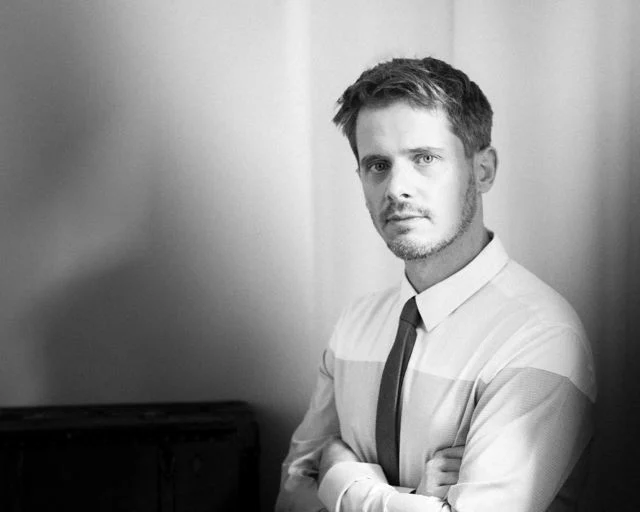
Composer Gregory Spears is currently navigating a significant milestone in his career, marking the tenth anniversary of his critically acclaimed opera, "Fellow Travelers." This seminal work, which premiered a decade ago, has not only cemented Spears’s reputation as one of the most sought-after composers of his generation but is also embarking on an extensive ten-city national tour. The tour, scheduled to span the next year, will bring the opera to audiences in cities including Seattle, Portland, San Diego, and Cooperstown, among others. Alongside this celebratory retrospective, Spears is poised to unveil a new operatic work, "Sleepers Awake," commissioned by Opera Philadelphia, offering a stark contrast in theme and style, inspired by the classic fairy tale "Sleeping Beauty." In an exclusive interview with OperaWire, Spears delved into the enduring legacy of "Fellow Travelers" and the artistic vision behind his forthcoming opera.
The Enduring Power of "Fellow Travelers"
The tenth anniversary of "Fellow Travelers" is more than just a marker of time; it signifies the opera’s remarkable staying power within the contemporary operatic repertoire. Spears expressed his profound satisfaction with the continued life of his work, a sentiment born from the inherent challenges of opera creation. "Making an opera is like a lot of work, obviously, so it’s just you," Spears reflected. "You dream about those orchestra parts being used more than once, and oftentimes they’re only used once. So it’s a real pleasure that the piece has gone on."
A significant factor contributing to the opera’s continued relevance, Spears noted, is its adoption by young singers. Arias from "Fellow Travelers" have become popular choices for auditions, allowing the music to reach a new generation of performers and audiences. "One of the ways in which it’s gone on is that singers use the arias for auditions," Spears explained. "So that’s a part of its life as well that I think young singers have gravitated to this music, and so that’s gratifying as well that they’re doing that. I feel like they connect with material in a way that you’re always hoping for as a composer. So, it’s wonderful." This organic integration into the training and development of operatic talent ensures a continuous infusion of fresh interpretations and a sustained connection with the work’s emotional core.
Echoes of Verismo in a Modern Age
When asked about the sustained resonance of "Fellow Travelers," Spears drew a compelling parallel to the innovations of Giacomo Puccini and the verismo composers of the late 19th and early 20th centuries. This operatic movement revolutionized the genre by shifting focus from mythological figures and royalty to ordinary people grappling with everyday dramas. "I was thinking about this the other day and I was talking about Puccini and one of the great innovations of Puccini and the verismo composers was writing opera about ordinary people and being able to wed this form that is larger than life and unusual and strange with people who we think we could meet on the street," Spears elaborated.
He contrasted this with earlier traditions, stating, "It’s very counterintuitive in fact because Handel certainly didn’t do that. Handel was writing about princes, dukes, and gods. But this ability to take this extreme form and say, ‘This could enter your own life,’ I think was such a counterintuitive thing to do." Spears cited Puccini’s "La Bohème" as a prime example, describing it as "about hipsters in Paris trying to pay their rent."
Spears sees "Fellow Travelers" as a direct inheritor of this verismo tradition. The opera, set in the McCarthy era of the 1950s and based on Thomas Mallon’s novel, centers on the "lavender scare"—a period of intense paranoia and persecution that led to the mass firings of gay individuals from the United States government. The opera explores the personal lives of government employees caught in this historical maelstrom. "And I think that ‘Fellow Travelers’ is in that tradition of trying to say, you can go and work a 9 to 5 job in a suit and your life is operatic on some level," Spears stated. "You’re part of this larger historical movement. These guys working in the State Department that were getting interrogated and really be anonymous. Hawk and Tim aren’t historical figures, but they represent the ordinary people caught up in these historical moments. And I think we can all relate to that and then just see that expressed through opera, in a way, it says to the audience, your life is operatic as well."
This connection to the "ordinary" is crucial to the opera’s emotional impact. Spears quoted poet Tracy K. Smith, who suggests that experiences like heartbreak in high school can feel "utterly operatic." Spears embraces this perspective: "And so I think of opera that way. I don’t think of operatic like an Apocalypse movie or something like that. I think opera is not extreme. It’s about being very, very personal. And I think that these characters feel very ordinary and very personal. And I feel like we know them and yet we see them caught up in this larger thing." This approach allows audiences to engage with profound historical events through relatable human experiences, fostering empathy and a deeper understanding of the past. The appeal to singers also stems from this very personal connection, as they can embody characters that feel closer to themselves than distant historical or mythological figures.
The Series Effect and Operatic Concentration
The conversation then turned to the Showtime television series adaptation of "Fellow Travelers," which premiered in 2022, a decade after the opera’s debut. Spears acknowledged the series’ potential to introduce the story to new audiences and speculated on its impact on opera attendance. "Yeah, I think so. And that’s exciting. For me to sort of see that reaction," he said. He noted that the opera performed in Pittsburgh shortly after the series aired, and he was eager to hear audience feedback.
Spears also highlighted the inherent differences between the opera and the series, particularly concerning narrative scope and temporal focus. While the book and opera remain largely focused on the 1950s, the series expands the narrative across several decades. "The book really sticks pretty closely to the mid-1950s. The series, of course, goes all the way through the decades, and it really builds on what the book was doing, and the opera is much closer to the book," Spears explained. This temporal expansion in the series means that certain dramatic moments, such as a breakup scene, can take longer to unfold visually. In contrast, opera allows for a more concentrated exploration of emotional intensity within a specific timeframe.
"It’s kind of fun that it was an opera first before the series. The opera is much more concentrated in that one moment and around their relationship because in opera, you can expand things," Spears observed. "I feel like in the Showtime series, they’re expanding it by expanding it through time. In the series, there’s a breakup scene and it can take a minute. But in an opera, it can take 10 minutes because things just get stretched out. So by focusing it on one time period, we can really go deep into that. And so I think that that’s one of the differences." Despite these differences, Spears expressed enthusiasm for the possibility of the series driving interest in the opera, acknowledging that the experience of engaging with the story through different mediums can be distinct yet complementary.
"Sleepers Awake": A Philosophical Fairy Tale
This year marks not only the anniversary of "Fellow Travelers" but also the premiere of Spears’s new opera, "Sleepers Awake," commissioned by Opera Philadelphia. This work ventures into a different realm of storytelling, drawing inspiration from the fairy tale "Sleeping Beauty" but with a decidedly existential and philosophical twist.
"It’s a fairy tale opera. It’s ‘Sleeping Beauty,’ but it takes a different kind of approach to it," Spears explained. "So traditionally, in the tale, the end of the story, the prince wakes Sleeping Beauty and the rest of the castle up, and everyone’s happy and they have a party. In this story, it starts with the prince, who’s called the Stranger, and he wakes up Sleeping Beauty, and they all get really mad at him because they were having a great sleep. It’s kind of an existential take on ‘Sleeping Beauty.’"
The opera’s musical and dramatic structure is equally unconventional. "The way the piece moves is very unusual, but the story’s familiar. It really focuses on the chorus and we have a couple of really wonderful leads that include Susanne Burgess and Jong Yoon Park, who just finished up the Lindemann Young Artist program," Spears said. He further elaborated that while there are significant arias, the chorus plays a central role, underscoring the ensemble nature of the opera. Corrado Rovaris is slated to conduct at the Academy of Music.
Spears emphasized the distinct character of "Sleepers Awake" compared to "Fellow Travelers." "The piece is also very different piece than ‘Fellow Travelers,’ as its less naturalistic and more fantastical. I think its more unusual musically."
The Literary Tapestry of "Sleepers Awake"
The genesis of "Sleepers Awake" is deeply rooted in Spears’s admiration for the writings of Robert Walser, an enigmatic Swiss author often compared to Franz Kafka. Walser spent the latter half of his life in a mental institution, and his prose is characterized by a unique blend of charm, modernist sensibilities, and existential introspection.
"I always loved Robert Walser and they call him the Swiss Kafka. He’s a very unusual guy and he spent decades in a mental hospital at the end of his life. The whole second half of his life, actually," Spears stated. "But I’ve always loved his writing, and it’s very unusual, and has this kind of charming beauty to it. But it’s also extremely modernist and existentialist."
Walser’s work includes a series of short plays that re-envision classic fairy tales, such as "Snow White," "Cinderella," and "Sleeping Beauty." Spears’s libretto for "Sleepers Awake" draws from Walser’s interpretation but also incorporates elements from other sources, including Arthur Quiller-Couch’s more traditional 1911 British version of "Sleeping Beauty." Additionally, the opera’s title and thematic underpinnings are influenced by the famous German hymn "Schlaf, ein" (Sleepers Awake), famously set by J.S. Bach in his cantata of the same name.
"So the piece begins with his version of it, but it is quite different because I use some other writers, Arthur Quiller-Couch for instance, who wrote, a very traditional ‘Sleeping Beauty’ in 1911 in Britain. And I sort of mixed these two versions together in the libretto. And there’s also a bit of the hymn text ‘Sleepers Awake,’ which is a very famous German hymn text, which Bach set famously in a cantata called ‘Sleepers Awake,’" Spears revealed.
The opera delves into the complex symbolism of sleep and wakefulness. "So the piece is really philosophical and what it means to be awake and what it means to sleeps," Spears elaborated. "And it’s really complicated because when we think of being asleep, we think of being of unknowing or sort of like, if you were to sleepwalk through life, that wouldn’t be a good thing. And yet, when you’re sleeping, you’re also dreaming and Walser is really interested in these ideas that we can’t quite decide if they’re good or bad. Sleeping can be very healing and Sleeping is rest. We need to sleep every night, but then every morning we wake up again and there’s these cycles of renewal and turning away or running away. So it’s a very powerful metaphor of falling asleep and waking up." Spears also noted the philosophical dimensions of the ballet "Sleeping Beauty," which can be interpreted as a metaphor for the reawakening of art.
Reimagining Fairy Tales and the Power of Ambiguity
The popular perception of fairy tales, often filtered through Disney adaptations, tends to sanitize their original darker and more complex narratives. Spears finds fertile ground in this duality. "They’re very mysterious and hard to kind of like, come out of it with an easy message. And Balser’s like that. His writing is so delightful to read and at the end you think, ‘what was that about?’ You have to meditate on it because it’s like two things at once. And those are the things that really excite me because music is like that."
He illustrated this point by referencing a recurring musical motif in "Fellow Travelers": "In ‘Fellow Travelers,’ the opening music reveals a beautiful day in D.C. and they’re sitting in Dupont Circle and Hawk and Tim are flirting. And that same music comes back when they’re sitting at the same park bench. But they’ve been through this terrible ordeal and broken up and they’re destroyed. But it’s the same music. And so music has this ability, I think, to capture two things that are not only different, but oftentimes opposite. So fairy tales are good at that too." This musical juxtaposition highlights how the same melody can evoke contrasting emotions, mirroring the complex emotional landscapes found in both opera and fairy tales.
Collaboration and Vision: Jenny Koons and Anthony Roth Costanzo
The staging of "Sleepers Awake" involves a dynamic collaboration with director Jenny Koons, whose work often incorporates installation art and site-specific elements. Spears has found their partnership highly productive. "She does a lot installation work. She’ll do a lot of different theatrical productions that are site specific but then she has old school theater chops and does plays. So it’s been really fun to work with her," Spears said. Their collaborative process has been deeply integrated, extending beyond simply staging the score. "It wasn’t like ‘here’s the score, stage the piece.’ We have really talked at every step of the way about the libretto and about how to realize this piece as a piece of theater."
A key aspect of Koons’s vision is transforming the performance venue, the Academy of Music, into an immersive environment. "There’s an installation element because in a way, the Academy will become Sleeping Beauty’s palace. The theater looks like a palace and as it were right out of Europe. So when you walk into the Academy, it’ll be like you’re walking into this Sleeping Castle community," Spears explained. He lauded Koons’s "intellectual, philosophically minded kind of approach," finding them to be a well-matched creative pair.
Spears also spoke about his long-standing relationship with Anthony Roth Costanzo, the visionary artistic director of Opera Philadelphia. Costanzo, who previously sang in Spears’s opera "The Righteous," has a deep understanding of Spears’s artistic trajectory. "He sang in ‘The Righteous’ two years ago and I’ve known him and collaborated with him for a long time. So he actually knew some of my work from before ‘Fellow Travelers’," Spears noted. Costanzo’s commission for "Sleepers Awake" was specifically designed to feature the chorus and to encourage Spears to revisit earlier, more stylized compositional approaches, such as those found in a requiem he wrote years prior.
"So I think when he asked me to write this, he wanted a piece that featured the chorus, and I think he wanted me to reconnect with some of that kind of writing from a long time ago like a requiem I wrote. So that was exciting for me to work for a producer who really knew a whole different side of my artistic output that I really wanted to go back and kind of revisit," Spears shared. This directive allowed Spears to explore a more neo-medieval sound palette, incorporating instruments like the theorbo, contributing to the opera’s distinct, stylized atmosphere. Costanzo’s trust and experience, both as a performer and producer, have been invaluable, providing practical insights and artistic guidance throughout the process.
The Composer’s Craft: Bringing Music to Life
The process of working with singers is, for Spears, a deeply rewarding and often surprising experience. "It’s wonderful and it’s exciting and it’s also weird actually. It’s a very surreal experience to think about and imagine this piece of music and then to see someone embody it," he admitted. This physicalization of his music is a core element of opera’s power, a stark contrast to music shared digitally. "That’s the great thing about opera. It’s not something you make and then post it on the Internet. It actually is physicalized and someone does it. That’s a thrill."
He highlighted the intuitive artistry of singers like Jong Yoon Park and Susanne Burgess, who possess an innate understanding of his music. "There’s certain singers who have such good instincts. It doesn’t matter how you notate it on the score and all that stuff that we learn as composers to communicate the music really well are all important. But there’s some singers that just know exactly what to do. And he’s a good example of that. I’m his Biggest fan now." The ability of singers to find the emotional truth and vocal freedom within the score is something Spears deeply admires and finds inspirational.
Spears also embraces the inevitable adjustments that occur during the compositional process. "Yes, constantly," he affirmed when asked if he ever encounters unsingable passages. He likens this to scientific experimentation or tailoring a bespoke suit. "You have a hypothesis and then you do the experiment, and then you have to refine the hypothesis." This iterative process of composition and refinement, often in direct collaboration with singers, allows the music to become tailored to their unique vocal capabilities and artistic interpretations. "And I like that. Tailoring the piece to the singer." This bespoke approach, similar to how Mozart might write a new aria for a specific performer, ensures that the music not only sounds beautiful but also feels organic and expressive in the hands of the vocalist.
Artistic Evolution: Shifting Modes of Composition
Looking ahead, Spears sees his compositional journey as a progression through distinct "modes" or stylistic approaches. "Fellow Travelers" and its successor, "The Righteous," represent a more naturalistic mode, where the musical setting aims to mirror the rhythms and inflections of natural speech. "I feel like I have different kind of modes as a composer. So ‘Fellow Travelers’ is a mode that really led to ‘The Righteous.’ And so that sort of naturalistic world where the text is set in a way that feels like they’re talking, hopefully, if it’s done well and if it’s been written well," he explained.
In contrast, "Sleepers Awake" and other recent works, such as a piece for the Frick Collection and an upcoming opera based on Melville’s "Bartleby," fall into a more stylized and fantastical mode. These works often explore more minimalist textures, unusual sounds, and a departure from strict naturalism. "And then I have another world, which is much more stylized, which is much more about process. Maybe a little bit more minimalist with more unusual sounds. With ‘Sleepers Awake’ for instance it feels a little neo medieval and little more stylized," Spears stated.
This ability to move between these stylistic worlds is crucial for his creative vitality. "I love going back and forth between them because they kind of refresh one another. And as a composer, I find that, especially after writing a big opera, I have to try to go in a totally different direction," he said. This deliberate shift in gears prevents creative burnout and allows him to approach each new project with renewed energy and perspective. While he anticipates returning to his naturalistic style in the future, the current exploration of more stylized and fantastical realms has been a profoundly refreshing experience. This continuous evolution and willingness to experiment underscore Spears’s position as a dynamic and forward-thinking voice in contemporary opera.