Nayara Elvina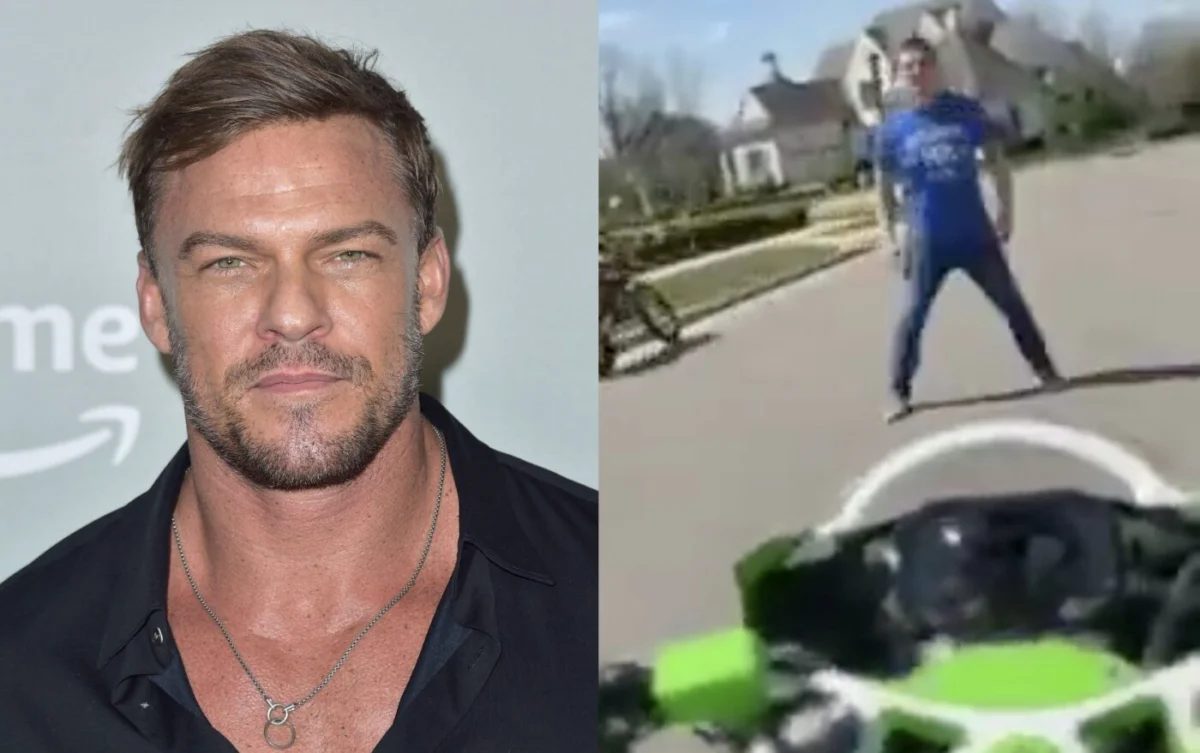
The Brentwood Police Department has officially announced that no criminal charges will be filed against actor Alan Ritchson following a physical altercation with a neighbor in an affluent Nashville suburb. The incident, which occurred over the weekend of March 22-23, 2026, initially drew significant public attention after videos surfaced appearing to show the star of the hit series "Reacher" engaged in a violent confrontation. However, after a thorough review of bodycam and action-camera footage provided by Ritchson himself, law enforcement officials determined that the actor acted in self-defense after being targeted by an aggressive individual.
The investigation centered on a dispute between Ritchson and his neighbor, identified as Ronnie Taylor. While initial reports and statements from Taylor suggested an unprovoked attack by the actor, the subsequent release of high-definition video evidence painted a drastically different picture of the events leading up to the physical struggle. The case has sparked a wider conversation regarding the importance of personal recording devices in legal disputes and the nuances of self-defense laws within the state of Tennessee.
Chronology of the Incident
The friction between the two parties reportedly began on Saturday, March 22, 2024. According to statements given to the Brentwood Police Department and later shared with media outlets, Ronnie Taylor claimed that Ritchson was operating a motorcycle through their residential neighborhood at "excessive speeds." Taylor alleged that the noise from the engine and the speed of the vehicle were "disturbing the peace" and posed a danger to the community. This initial encounter involved a brief verbal exchange and the trading of hand gestures, but no physical contact was reported on Saturday.
The situation escalated significantly the following day, Sunday, March 23. Ritchson was again out on his motorcycle, this time accompanied by his children. According to the neighbor’s initial account to TMZ, he approached the actor to ask him to stop his perceived reckless behavior. Taylor claimed that Ritchson responded by punching and kicking him, eventually continuing the assault while Taylor was on the ground.
However, the timeline established by the Brentwood Police Department, aided by Ritchson’s own recording equipment, tells a different story. The footage reveals that as Ritchson was riding down the street at a moderate pace, Taylor intentionally stepped into the path of the moving motorcycle. The sudden obstruction forced Ritchson to apply his brakes abruptly, causing the motorcycle to pitch forward and throwing the actor over the handlebars.
Immediately following the crash, the video shows Ritchson standing up and confronting Taylor, who remained in the street. A heated verbal argument ensued. The footage captures Taylor continuing to behave aggressively, eventually pushing Ritchson and his motorcycle as the actor attempted to right the vehicle and depart. It was at this point that the physical altercation turned into a full-scale fight, leading to the injuries Taylor later displayed to the media, including facial abrasions and a black eye.
Detailed Analysis of the Evidence
The pivotal factor in the Brentwood Police Department’s decision was the "bodycam" style footage captured by a camera mounted on Ritchson’s person or helmet. In modern legal proceedings, such objective digital evidence often supersedes conflicting witness testimonies.
In this instance, the video provided three critical pieces of evidence:
- The Act of Provocation: The footage clearly showed Taylor moving from the side of the road directly into the path of the motorcycle. Under Tennessee law, this could be classified as reckless endangerment, as it created a substantial risk of death or serious bodily injury to the rider.
- The Initial Physical Contact: While Taylor claimed Ritchson attacked him unprovoked, the video demonstrated that Taylor was the one who physically interfered with the actor’s ability to leave the scene, pushing him and the bike after the initial crash.
- The Proportionality of Response: Law enforcement and the District Attorney’s office reviewed whether Ritchson’s physical response was proportional to the threat. Given that Taylor had already caused a vehicular accident and continued to engage physically, the authorities deemed Ritchson’s actions as a justifiable means of neutralizing an active threat to his safety.
Official Statements and Legal Determination
Captain Steven Pepin of the Brentwood Police Department released a formal statement regarding the closure of the case. "After reviewing available evidence, including video footage and witness statements, authorities determined that no criminal charges will be pursued," Pepin stated. "Mr. Ritchson’s actions were found to be in self-defense."
The police department further clarified that the neighbor, Ronnie Taylor, was the primary aggressor in the eyes of the law. Captain Pepin noted that the department had actually explored filing charges against Taylor for reckless endangerment based on his actions in stopping the motorcycle. However, the case was closed without those charges being filed because Ritchson himself declined to pursue a criminal complaint against his neighbor.
"Although a potential reckless endangerment charge was considered, Mr. Ritchson declined to pursue charges," Pepin added. "With the agreement of the District Attorney’s Office, the case is now closed, and no further action will be taken."
The District Attorney’s office corroborated this stance, noting that the presence of the video evidence made a trial or further investigation unnecessary. The clarity provided by the footage allowed for a swift resolution that might otherwise have dragged on through months of litigation and "he-said, she-said" testimony.
Legal Context: Self-Defense in Tennessee
The resolution of this case highlights the specific legal standards for self-defense in the state of Tennessee. Under Tennessee Code § 39-11-611, an individual who is not engaged in unlawful activity and is in a place where they have a right to be has no duty to retreat before using force against an aggressor, provided they have a reasonable belief that the force is immediately necessary to protect against the other’s use or attempted use of unlawful force.
In Ritchson’s case, the evidence suggested that he was operating his vehicle legally and was attempting to disengage from the situation. The neighbor’s act of stepping in front of the bike and subsequently pushing the actor provided the "reasonable belief" required for the legal use of force in self-defense. Furthermore, the fact that Ritchson’s children were present likely factored into the assessment of the perceived threat and the necessity of a decisive response to ensure their safety.
Broader Implications and Public Perception
The incident has drawn significant commentary regarding the public persona of Alan Ritchson. Known for playing physically imposing characters like Jack Reacher—a former military policeman who frequently engages in hand-to-hand combat—Ritchson’s real-life involvement in a street fight initially led to social media speculation that he might have been channeling his on-screen persona.
However, as the full details emerged, the narrative shifted. The incident serves as a cautionary tale regarding the dangers of road rage and neighborhood disputes. Data from the National Highway Traffic Safety Administration (NHTSA) indicates that road rage and aggressive driving incidents have been on the rise over the last decade, often spilling over into residential areas where tensions over noise and speed are high.
Furthermore, this case underscores the growing role of "action cameras" and personal surveillance in everyday life. Much like dashcams have revolutionized the insurance industry by providing objective accounts of traffic accidents, wearable cameras are increasingly being used by motorcyclists and cyclists to protect themselves against liability and physical aggression. In this instance, the technology likely saved Ritchson from a lengthy legal battle and potential damage to his professional reputation.
The Affluent Suburb Context
Brentwood, Tennessee, is known as one of the wealthiest communities in the United States, frequently housing high-profile executives, professional athletes, and entertainment figures. The Brentwood Police Department is accustomed to handling sensitive cases involving public figures, but the viral nature of this incident placed an unusual level of scrutiny on the department.
The quick resolution of the case and the transparency regarding the video evidence appear to have satisfied both the legal requirements and the public’s demand for clarity. By declining to press charges against his neighbor, Ritchson has also seemingly sought to de-escalate the neighborhood tension, despite the physical and mechanical damage caused by the encounter.
Conclusion of the Matter
As of the latest reports, the physical injuries sustained by Ronnie Taylor are non-life-threatening, and Alan Ritchson has returned to his professional schedule. The Brentwood Police Department considers the matter officially resolved. While the video of the fight continues to circulate online, the legal consensus remains firm: the evidence supports the actor’s claim of self-defense.
This event serves as a stark reminder of how quickly neighborhood disagreements can escalate into dangerous physical confrontations and highlights the definitive power of video evidence in the modern justice system. For the residents of Brentwood, the hope remains that the conclusion of this legal process will bring a return to the quiet, orderly atmosphere the community is known for.