Johan Budi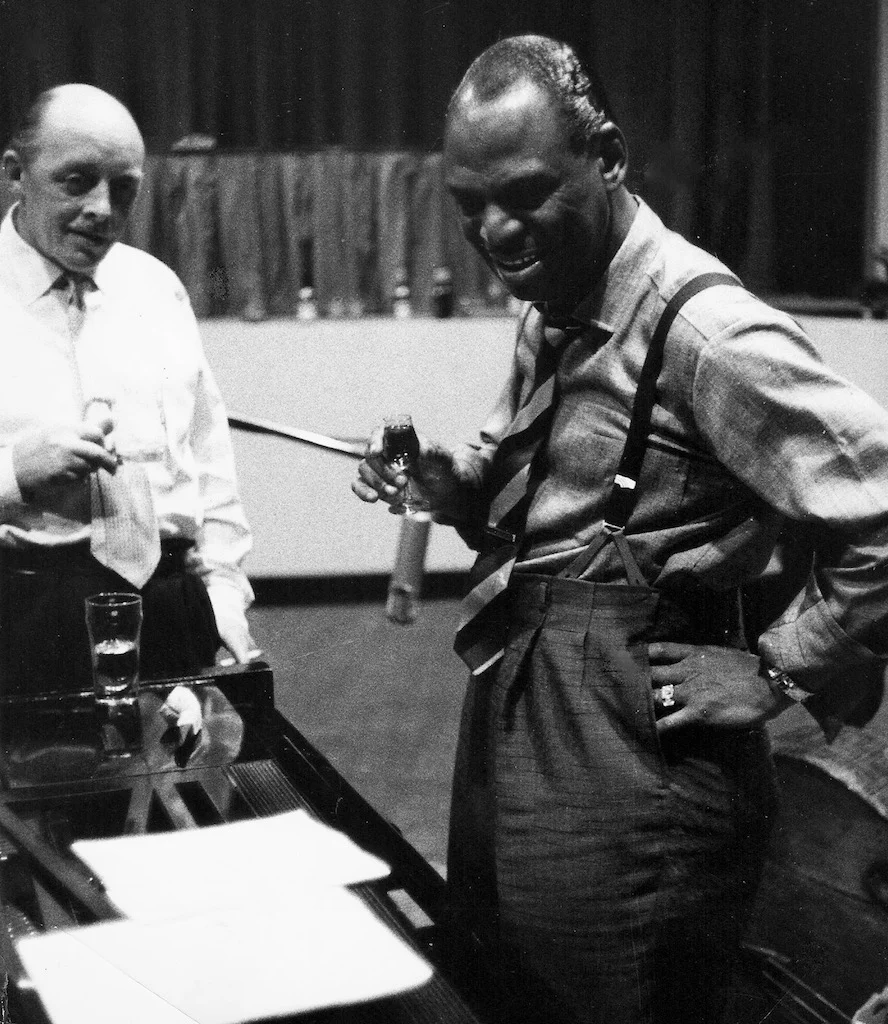
The mid-1960s marked a transformative era for jazz history, characterized by the critical "re-discovery" of Earl "Fatha" Hines, a pianist whose influence on the genre remains foundational. After a period of relative obscurity during which he performed primarily in smaller venues on the United States West Coast, Hines returned to the international spotlight following a series of legendary 1964 concerts in New York. This resurgence led to extensive European tours and a renewed critical appreciation for his "trumpet-style" piano playing. In a recent installment of Sinclair Traill’s long-running interview series, Hines provided a rare, technical, and deeply personal analysis of the state of jazz, evaluating the works of his contemporaries and the evolution of the music industry.
Sinclair Traill, the founder of Jazz Journal, conducted these sessions with a specific methodology: musicians were played a series of records and asked for immediate "snap opinions." To ensure the judgments were based on informed musicality rather than guesswork, the subjects were provided with the record sleeves during playback. This format allowed Hines to move beyond mere critique and offer a historical narrative of his own career and the broader jazz movement.
The Kansas City Legacy and the Concept of Soul Music
One of the primary focuses of the session was the evaluation of the Kansas City jazz tradition, specifically through the lens of Jay McShann’s Orchestra and the blues-shouting of Joe Turner. Listening to McShann’s Dexter Blues, featuring a young Charlie Parker, Hines drew a poignant parallel between the culinary traditions of the American South and the musical output of that era. He categorized the early work of Parker as "soul music," comparing it to the "soul food" found in New Orleans or the culinary excellence of Paris.
Hines noted that while Parker eventually moved to New York and adopted a more technical, bebop-oriented style, his early recordings with McShann captured a raw, heartfelt expression. This period in Kansas City was defined by intense competition in after-hours clubs, where the "even beat" of the McShann band was a prerequisite for survival. Hines’ analysis suggests that the "groove" or "rock" found in Kansas City bands—a style later popularized by Count Basie—was a product of an environment where music was inseparable from the emotional reality of the performers.
Reflecting on Joe Turner’s Hollywood Bed, Hines identified Turner as the definitive blues original. He recalled that in Kansas City, the blues was not merely a genre but a lifestyle, noting that musicians would sing the blues while walking down hallways in the morning. According to Hines, these artists did not seek to copy one another or establish formal styles; they sang as they felt, creating a template for the rhythmic "rocking" that would eventually define the swing era.
Technological Advancements and the Grand Terrace Era
The interview also delved into Hines’ own discography, specifically the recording of Fat Babes by the Earl Hines Orchestra during the "Golden Swing Years." This discussion highlighted the significant impact of recording technology on the public’s perception of jazz. Hines recalled the technical limitations of early wax recordings, where a single mistake required the entire process to be restarted while a new wax disc was heated.
Hines credited a sympathetic and technically proficient engineer for finally capturing the true balance of his orchestra. For the first time, the bass was brought to the forefront, allowing listeners to hear the full intonation and arrangement as it actually sounded in a live setting, such as the Grand Terrace Ballroom in Chicago. This venue, which had ties to the criminal underworld of the 1930s, served as the laboratory for Hines’ big band innovations.
The arrangement of Fat Babes, penned by Jimmy Mundy, was revealed to be a "trick" arrangement designed to challenge the musicians. Hines recounted an anecdote involving a confident trombonist who claimed he could play any written part. In response, Mundy wrote a part so complex that the trombone section repeatedly "fluffed" it, leading to a session that lasted all night. This historical context emphasizes the high level of virtuosity required in the big band era, where technical excellence was often a matter of professional pride and internal competition.
Challenging the Taxonomy of Jazz: The Dixieland Debate
One of the most significant portions of the interview involved Hines’ critique of how jazz is classified by critics and historians. He argued that the labels "New Orleans" and "Dixieland" are often misapplied, frequently used to categorize music that was being performed simultaneously across the United States. Hines pointed out that he had never even heard of New Orleans jazz until he arrived in Chicago, noting that artists like Ethel Waters and Duke Ellington were recording long before the New Orleans style became a national talking point.
Hines offered a technical distinction between a "band" and an "orchestra." In his view, a traditional Dixieland band was a street-marching ensemble typically lacking a piano. Once a piano was added and the ensemble moved indoors, it transitioned into an orchestra. Consequently, Hines asserted that there is no such thing as a "Dixieland piano player." He recounted instances where audiences on the West Coast asked him to play Dixieland, to which he would respond that the term was a misnomer for his instrument. This perspective challenges the rigid stylistic silos often used in jazz education and journalism, suggesting a more fluid and geographically diverse origin for the music.
The Mechanics of Genius: Garner, Tatum, and Hines
The discussion of piano technique provided a masterclass in the differences between the genre’s most legendary figures. When listening to Erroll Garner’s Teach Me Tonight from the iconic Concert by the Sea, Hines identified Garner as a "true original." He analyzed Garner’s unique ability to use the rhythm section as an extension of the piano, utilizing the bass to fortify his left hand. This allowed Garner to maintain a guitar-like beat while intentionally slowing down the tempo—a technique also used by Count Basie to prevent a drummer from "running away" with the rhythm.
Hines contrasted Garner’s and Louis Armstrong’s ability to repeat a solo exactly with his own improvisational philosophy. While Garner and Armstrong created "trademarks" through repetition, Hines described his own approach as a constant challenge. He admitted to possessing a "photographic mind" that allows him to see chords before he reaches them, but he prefers to play whatever enters his mind in the moment, often leading himself into complex musical "corners."
This led to a comparison with Art Tatum, whom Hines described as a "musician’s musician." Using a painter’s analogy, Hines described Tatum as an artist with a full palette of colors, capable of seeing chords so far in advance that his execution appeared effortless. Hines noted that Tatum’s genius was often lost on the general public because it required a deep understanding of musical theory to fully appreciate.
Integration of Modernism and Traditionalism
Despite being a giant of the swing era, Hines demonstrated a remarkably open-minded approach to modern jazz. He recalled his time playing with bebop pioneers Charlie Parker and Dizzy Gillespie in the 1940s, asserting that his own playing benefited from the experience. Hines explained that while he maintains his fundamental style, he has adapted modern chords and "coloration" to enhance his work.
He used a domestic analogy to explain the evolution of the genre: while food is still cooked in a kitchen, the kitchen itself has improved with modern equipment. For Hines, the adoption of new techniques is a natural progression for any musician who loves their instrument. He praised Dizzy Gillespie’s ability to alter his style to suit his company and criticized some modern musicians for playing the blues without "feeling," which he cited as the most vital component of the music.
Broader Implications for the Jazz Canon
The insights provided by Earl Hines in this interview serve as a vital bridge between the foundational years of jazz and the modern era. His reflections underscore several key points for jazz historiography:
- Geographic Complexity: The development of jazz was a multi-regional phenomenon, not solely restricted to New Orleans.
- Technological Influence: The evolution of recording equipment fundamentally changed how audiences perceived the "sound" of an orchestra, particularly regarding the rhythm section.
- The Role of Improvisation: There is a clear divide between "original" creators who favor consistent, trademark performances and those who prioritize the risk of spontaneous improvisation.
- Genre Fluidity: The transition from swing to bebop was not a clean break but a period of cross-pollination where older masters and young radicals influenced one another.
Hines’ continued success on the international stage during this period reaffirmed his status as a "real giant" of the jazz piano. As Sinclair Traill noted, the universal recognition of Hines was a long-overdue tribute to a musician who remained creative and technically unmatched throughout several decades of musical upheaval. His ability to analyze his peers with both technical precision and emotional depth remains a testament to the enduring intelligence of the "Fatha" of modern jazz piano.