Nayara Elvina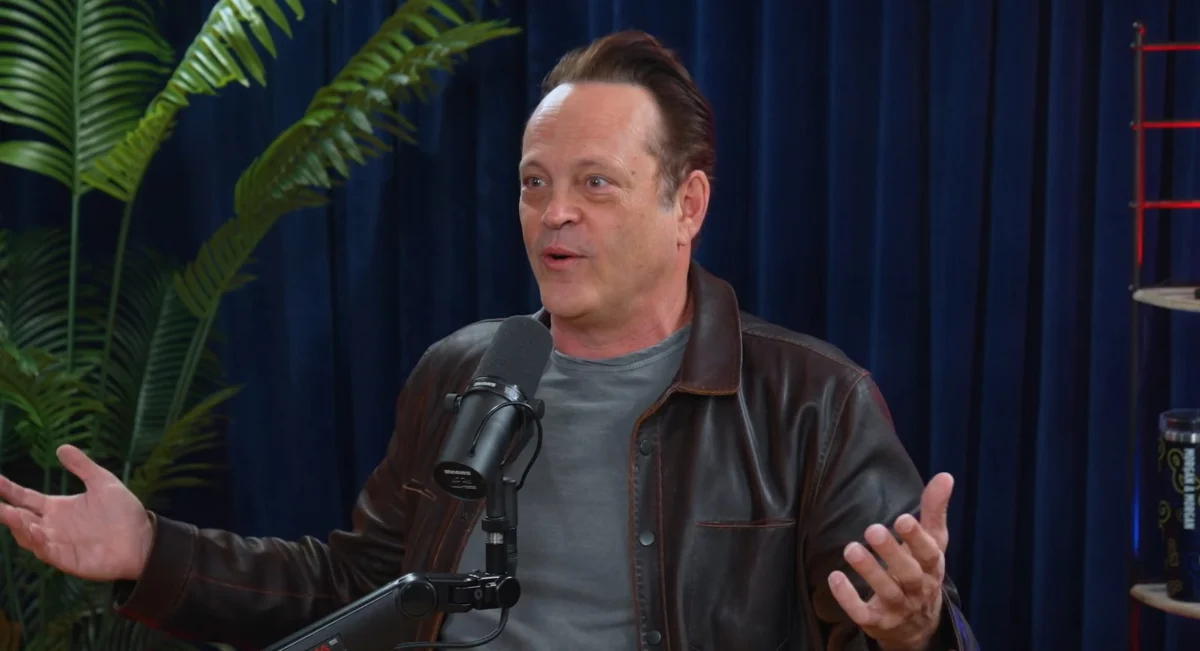
Vince Vaughn, the veteran actor known for his roles in comedic staples such as Wedding Crashers and Dodgeball, has sparked a significant industry conversation following a candid critique of the current state of late-night television. During a recent appearance on the podcast This Past Weekend with Theo Von, Vaughn detailed his perspective on why traditional network talk shows are experiencing a precipitous decline in cultural relevance and viewership. The actor argued that the medium has shifted away from its primary function of entertainment and toward a model defined by political "evangelism" and scripted agendas, leading audiences to migrate toward the more transparent and long-form nature of podcasting.
The conversation comes at a time of immense volatility for the late-night format. Historically the cornerstone of American media, programs such as The Tonight Show Starring Jimmy Fallon, Jimmy Kimmel Live!, and The Late Show with Stephen Colbert have faced dwindling Nielsen ratings and shrinking production budgets. Vaughn’s commentary highlights a growing sentiment among both creators and consumers that the "gatekeeper" model of network television is struggling to compete with the decentralized, unscripted world of digital media.
The Critique of "Agenda-Based" Programming
Central to Vaughn’s argument is the perception that late-night hosts have abandoned the role of the neutral entertainer in favor of becoming political commentators. During the interview with Theo Von, Vaughn expressed that the humor in these programs has been secondary to a desire to instruct or influence the audience.
"The podcasts have gotten so much more popular with less production, less writers, and less staff," Vaughn observed. "People want authenticity. I think that the talk shows, to a large part, became really agenda-based. They were gonna evangelize people to what they thought. So people just rejected it because it didn’t feel authentic. It felt like they had an agenda."
Vaughn further likened the experience of watching modern late-night television to being in a mandatory educational setting rather than a recreational one. He noted that the homogenization of the content—where multiple shows often cover the same political topics with similar perspectives—has led to a lack of variety for the viewer.
"It stopped being funny and it started feeling like I was in a fing class I didn’t want to take," Vaughn said. "But if you look at what happened to the talk shows and why their ratings are low, it’s got only to do with the fact that they all became the same show. And they all became so about their politics and who’s good and who’s bad. Imagine sitting next to someone like that on a fing plane. You’d be like, ‘Bro, how do I get out of this seat?’"
Historical Context and the Decline of the Monoculture
To understand Vaughn’s critique, it is necessary to examine the historical trajectory of late-night television. For decades, the format was defined by the "big tent" approach of Johnny Carson, who hosted The Tonight Show for 30 years. Carson famously avoided partisan politics to ensure he did not alienate any segment of his massive audience. This neutrality allowed late-night TV to function as a unifying "water cooler" moment for the country.
The transition to the era of Jay Leno and David Letterman maintained high ratings, even as the two hosts cultivated distinct comedic styles. However, the proliferation of cable television and the eventual rise of the internet began to fragment the audience. By the mid-2010s, the landscape shifted again as hosts like Stephen Colbert and Jimmy Kimmel leaned more heavily into topical political commentary, particularly during the 2016 and 2020 election cycles.
While this shift initially provided a ratings boost among specific demographics, it also coincided with a broader decline in linear television viewership. The recent reports of major shifts at CBS, including the end of The Late Show in its traditional format, serve as a culmination of these trends. The industry has reached a tipping point where the high overhead of network production—costing millions of dollars per week—is no longer justified by the shrinking ad revenue from traditional broadcasts.
Supporting Data: The Ratings Crisis
The data supporting Vaughn’s claims of a "downfall" is stark. According to Nielsen Media Research, late-night television has lost more than half of its total audience over the last decade. In the early 2010s, it was common for the top-rated late-night shows to average between 3 and 5 million viewers nightly. By 2023 and early 2024, those numbers had plummeted, with leading shows often struggling to maintain an average of 1.5 million viewers.
The demographic shift is even more pronounced. The "18-49" demographic, which is most prized by advertisers, has largely migrated to streaming platforms and social media. Shows like The Tonight Show now rely heavily on YouTube views and TikTok clips to maintain brand presence, but these digital views do not generate the same level of "appointment viewing" revenue that traditional commercials once did.
Furthermore, the economic pressures have led to significant cost-cutting measures. NBC recently transitioned The Tonight Show to a four-day-a-week broadcast schedule to save on production costs, while CBS opted not to renew the high-budget Late Late Show with James Corden, replacing it with a lower-cost game show format. These moves signal a strategic retreat by networks from the traditional late-night "juggernaut" model.
The Rise of the Podcast as the New Standard
Vaughn’s preference for podcasts like Theo Von’s This Past Weekend highlights a major shift in how celebrities choose to promote their work. In the traditional talk show format, a guest typically has five to seven minutes to perform a scripted "bit" and tell a pre-cleared anecdote. In contrast, podcasts offer long-form conversations that can last anywhere from one to three hours.
This format allows for the "authenticity" that Vaughn claims audiences are seeking. In a three-minute television segment, a celebrity can maintain a carefully curated persona. In a two-hour podcast, the artifice often falls away, allowing the audience to see a more genuine version of the individual.
The economic model of podcasting also provides a competitive advantage. With minimal staff and no need for expensive studio audiences or house bands, podcasts can achieve massive reach with a fraction of the overhead. Theo Von’s podcast, for instance, frequently garners millions of views per episode on YouTube alone, often outperforming the digital reach of network talk shows while maintaining full creative control.
Industry Reactions and the Future of Entertainment
While late-night hosts have not officially responded to Vaughn’s specific comments, the industry at large has been grappling with these criticisms for several years. Defenders of the current late-night model argue that the political nature of the shows is a response to a highly polarized era where "neutrality" is seen by some as an abdication of social responsibility. They also point out that clips of political monologues often go viral, providing the digital engagement that networks now prioritize.
However, critics within the industry suggest that this strategy has a "burn-out" effect. By catering to a specific political niche, shows may be trading long-term institutional stability for short-term social media engagement.
The broader implications of this shift are profound. If late-night television continues to recede, the entertainment industry loses one of its primary engines for celebrity promotion and cultural curation. The "decentralization" of media means that there is no longer a single stage where an actor like Vince Vaughn can reach the entire country at once. Instead, stars must navigate a fragmented landscape of niche podcasts and social media influencers.
Conclusion: A Turning Point for Media
Vince Vaughn’s critique serves as a high-profile validation of a trend that has been building for years. His observation that late-night has become a "class I didn’t want to take" resonates with a significant portion of the former viewing public that feels alienated by the current tone of network programming.
As the media landscape continues to evolve, the survival of the late-night format may depend on its ability to reclaim the sense of spontaneity and broad-based humor that once defined it. Whether the networks can—or want to—pivot back to a more traditional entertainment model remains to be seen. In the meantime, the rise of the podcast continues unabated, filling the void left by a medium that, in the eyes of many, has lost its way.
Vaughn’s interview with Theo Von is more than just a celebrity venting about the industry; it is a diagnostic of a shifting cultural appetite. As production values become less important than perceived honesty, the era of the highly produced, scripted late-night talk show may be nearing its final curtain call, replaced by the raw, unpolished, and lengthy conversations of the digital age.