Mia Khoirunisa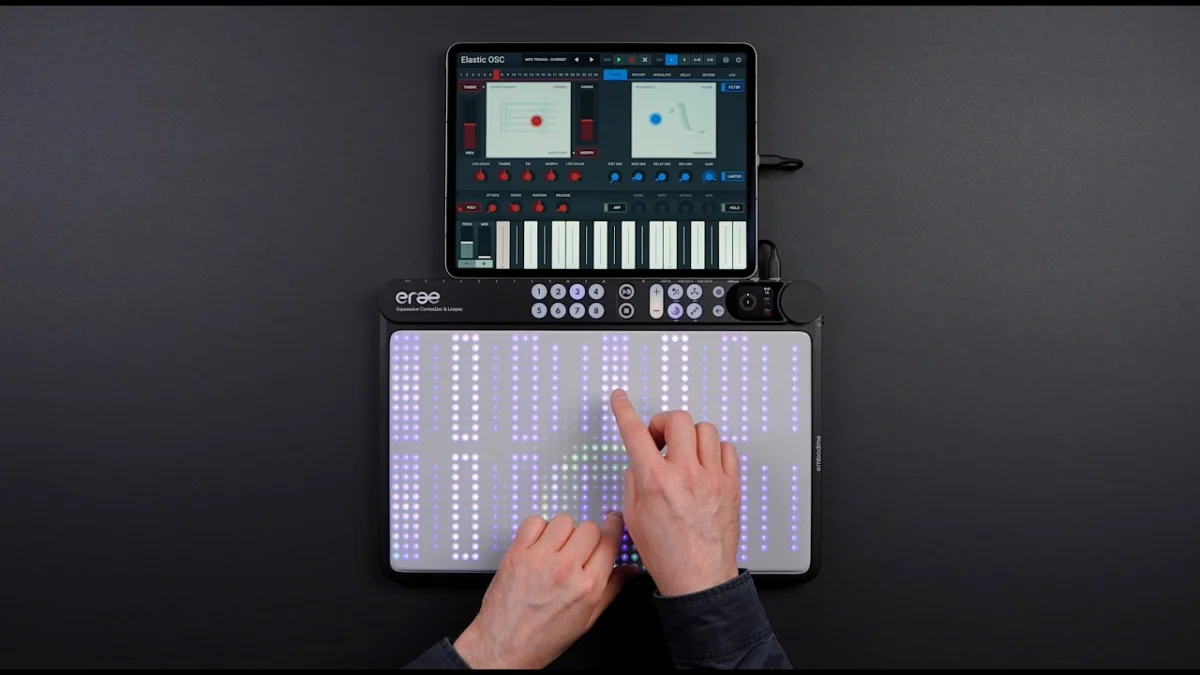
Oliver Greschke’s Elastic OSC, a mobile application that harnesses the acclaimed open-source algorithms of Mutable Instruments’ Plaits, has undergone significant advancements, solidifying its position as a potent and versatile tool for electronic music creation. The latest updates introduce robust modulation capabilities and expand platform compatibility to include Android, alongside enhanced support for MIDI Polyphonic Expression (MPE). This evolution transforms Elastic OSC from a novel concept into a comprehensive synthesizer experience, offering users a powerful and accessible platform for sound design and performance on their mobile devices.
Genesis of Elastic OSC: A Vision for Accessible Synthesis
The genesis of Elastic OSC can be traced back to Oliver Greschke’s ambition to democratize access to sophisticated synthesis techniques. By leveraging the well-regarded Plaits oscillator algorithms, originally designed for Eurorack modular systems, Greschke aimed to create a standalone application that retained the sonic character of Mutable Instruments’ hardware while offering a more integrated and user-friendly experience. The Plaits module, known for its diverse range of synthesis models and granular textures, had already garnered a dedicated following within the modular synth community. Greschke’s project sought to bring these sonic possibilities to a wider audience, removing the barrier to entry associated with traditional modular hardware.
This endeavor is deeply rooted in the philosophy of Émilie Gille, the creator of Mutable Instruments. Gille’s work consistently emphasized the power of intuitive control schemes to unlock vast sonic potential. Elastic OSC embodies this ethos by providing a curated interface that allows users to explore the complexities of the Plaits algorithms without requiring an extensive understanding of modular patching. The application’s development is a testament to the enduring appeal of open-source hardware and software, adhering strictly to the terms of the Plaits open-source license, with its underlying code made publicly available under the MIT License. The Plaits GitHub repository serves as a foundational reference for the application’s core functionality.
Evolution and Key Enhancements: Version 1.20 and Beyond
The trajectory of Elastic OSC’s development has been marked by a series of strategic updates designed to broaden its functionality and appeal. Initially conceived as a direct port of Plaits to a mobile platform, the application has progressively evolved into a fully-fledged synthesizer. A pivotal moment in this evolution was the release of version 1.20, which introduced a comprehensive modulation system. This addition was crucial for transforming Elastic OSC into a more dynamic and expressive instrument, moving beyond static sound generation to embrace the nuances of real-time performance and sound shaping.
The integration of modulation capabilities allows users to introduce movement and complexity to their sounds. This can manifest in various forms, including Low-Frequency Oscillators (LFOs), envelope generators, and other modulators that can dynamically alter parameters such as pitch, timbre, and amplitude. This level of control is essential for creating evolving textures, rhythmic patterns, and expressive performances, mirroring the capabilities found in more traditional hardware synthesizers. The inclusion of these features addresses a critical need for depth and expressiveness in a mobile music production context, where hands-on manipulation and dynamic sonic evolution are highly valued.
Expanding Expressivity: MIDI Polyphonic Expression (MPE) Integration
A significant leap forward for Elastic OSC has been the seamless integration of MIDI Polyphonic Expression (MPE). MPE is a protocol that allows for per-note control of expressive parameters like pitch bend, timbre, and pressure, enabling a more nuanced and human-like performance style. This feature significantly enhances the expressivity of Elastic OSC, both as a standalone instrument and when integrated with external controllers.
On iOS devices, MPE functionality is cleverly leveraged through the device’s touchscreen. The two-axis touch control on the on-screen keyboard can be mapped to MPE parameters, allowing users to intuitively control pitch, modulation, and other expressive elements with finger gestures. This provides a tactile and immediate way to imbue performances with subtle variations and emotional depth.
Furthermore, Elastic OSC’s MPE support transforms it into a powerful and flexible voice for external MPE controllers. Devices like the Erae 2 controller, which are designed to offer a wide range of expressive input, can now be seamlessly connected to Elastic OSC, unlocking a new dimension of sonic exploration. This integration allows musicians to utilize their MPE controllers to their full potential, translating intricate gestural performances into rich and complex synthesized sounds. The ability to quickly convert external controllers into capable instruments, even those lacking onboard sound generation, opens up a wealth of creative possibilities for mobile musicians. This cross-compatibility underscores Elastic OSC’s ambition to be a central hub for mobile music making, bridging the gap between hardware and software in innovative ways.
Cross-Platform Expansion: Arrival on Android
In a move that significantly broadens its user base and accessibility, Elastic OSC has officially launched on the Android platform. This expansion ensures that users across a wider spectrum of mobile devices can now experience the full capabilities of the application. The Android version mirrors the functionality and feature set of its iOS counterpart, providing an identical user experience.
The decision to bring Elastic OSC to Android is a strategic one, acknowledging the substantial and growing market of Android users interested in music production and creative applications. By offering the application at a price point tailored for Android customers, MoMinstruments / Elastic Instruments demonstrates a commitment to fostering a robust ecosystem on this platform. This move is particularly significant for the mobile music community, as it ensures that advanced synthesis tools are not confined to a single operating system, thereby promoting greater inclusivity and innovation within the field. The availability of Elastic OSC on Android provides a compelling reason for Android users to invest in the platform’s creative potential and to contribute to its growing musical landscape.
Impact and Implications for Mobile Music Production
The continuous development and expansion of Elastic OSC have profound implications for the landscape of mobile music production. The application’s ability to deliver the sonic power of Mutable Instruments’ Plaits algorithms in a portable and affordable package democratizes access to high-quality synthesis. This empowers a new generation of musicians, producers, and sound designers to explore complex sonic territories without the prohibitive cost and complexity of traditional modular hardware.
The integration of advanced modulation and MPE support elevates Elastic OSC beyond a simple sound source. It transforms it into a sophisticated instrument capable of nuanced performance and intricate sound design. This aligns with the broader trend of mobile devices becoming increasingly capable as primary music production tools. The ability to use Elastic OSC with MPE controllers further blurs the lines between mobile and desktop production, offering a portable yet expressive workflow that can be utilized in a variety of contexts, from live performance to studio production.
The cross-platform availability on both iOS and Android is a crucial factor in its growing impact. By catering to a wider audience, Elastic OSC fosters a more diverse and collaborative mobile music community. This inclusivity is vital for the continued growth and innovation within the mobile music sector. As mobile technology continues to advance, applications like Elastic OSC are at the forefront, demonstrating the immense creative potential that lies within our pockets.
The continued success of Elastic OSC also highlights the power of open-source development in driving innovation in the music technology space. By building upon the foundation of open-source hardware like Plaits, Greschke has created a valuable tool that benefits from a vibrant community of users and developers. This collaborative approach ensures that the application remains at the cutting edge of mobile synthesis, constantly evolving to meet the needs of its users.
The availability of powerful and expressive synthesizers like Elastic OSC on mobile platforms also encourages experimentation and discovery. Musicians can now explore complex synthesis techniques and develop their sonic palettes with unprecedented ease and portability. This accessibility can lead to new creative approaches and the emergence of novel musical styles, further enriching the global electronic music scene. The application serves as a gateway, inspiring both seasoned professionals and aspiring musicians to delve into the world of sound design and electronic music creation.
In conclusion, Oliver Greschke’s Elastic OSC represents a significant milestone in the evolution of mobile music instruments. With its robust feature set, commitment to open-source principles, and expanding platform compatibility, it stands as a testament to the power of innovation in making sophisticated synthesis accessible to all. The ongoing development of Elastic OSC promises to continue shaping the future of mobile music production, offering ever-greater possibilities for creativity and expression.