Aveline Kirana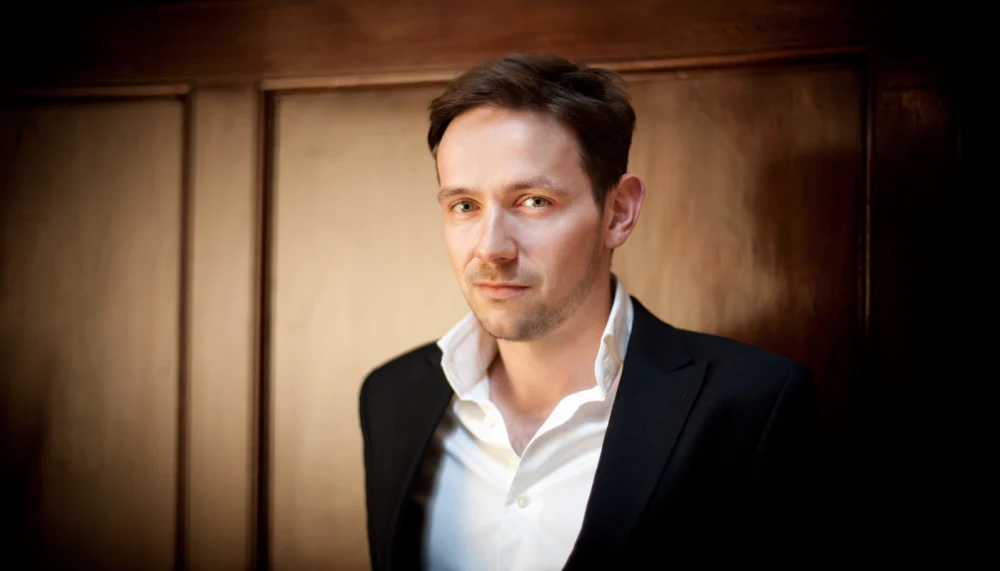
(Credit: Ben Ealovega)
Iestyn Davies, a countertenor whose commanding presence and profound musical intelligence have solidified his international standing, recently returned to the Teatro Real in Madrid to embody Oberon in Benjamin Britten’s "A Midsummer Night’s Dream." This engagement offered a timely platform for Davies to delve into the enduring resonance of Shakespearean narratives, the unique characteristics of the countertenor voice, and opera’s place within a contemporary cultural milieu increasingly defined by speed and digital ephemera. In an era where fleeting trends often dominate public discourse, Davies’ insights provide a compelling defense of the deep, contemplative power inherent in Britten’s psychologically rich operatic works.
A Triumphant Return to Madrid
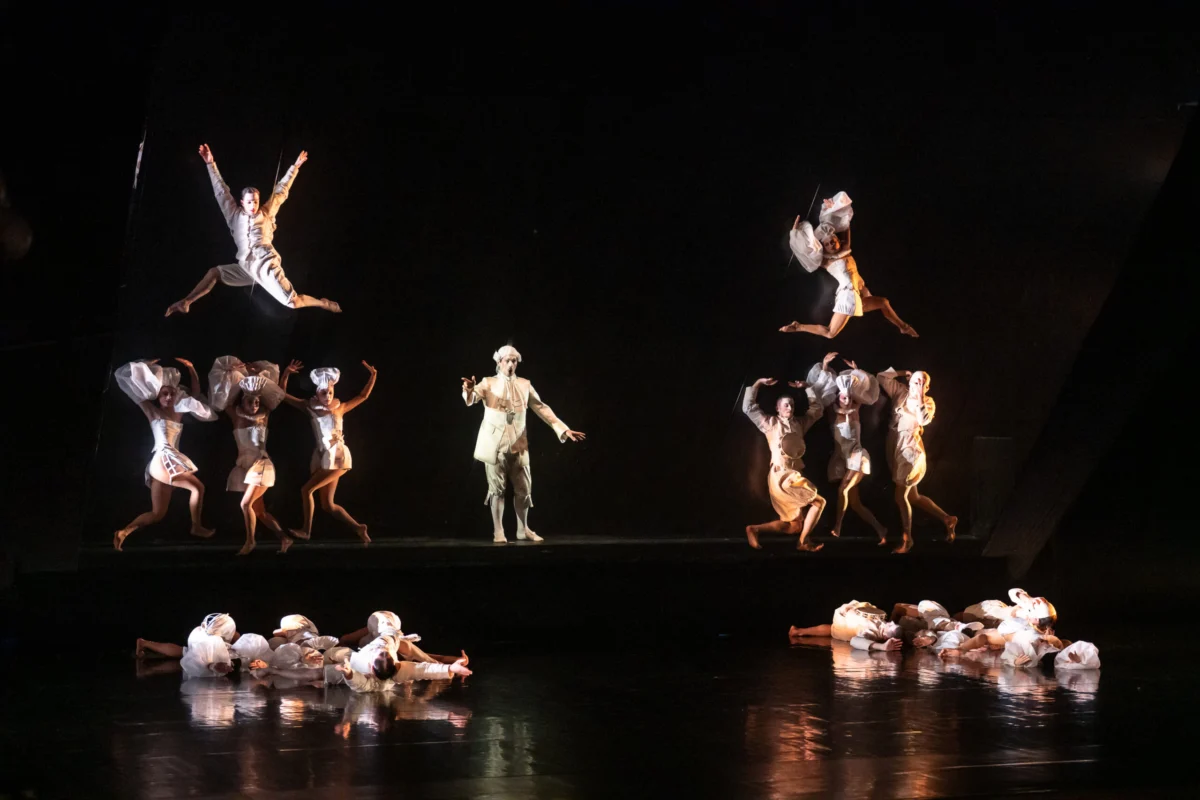
Davies’ reappearance at the Teatro Real marked a welcome return for audiences who had previously lauded his "absolutely stunning vocal and dramatic performance" as Didymus in Handel’s "Theodora" two years prior. Expressing his consistent delight in performing in Madrid, Davies conveyed his personal enjoyment of the "Theodora" role, underscoring his strong connection with the city’s operatic scene. The current production of "A Midsummer Night’s Dream" has been met with significant acclaim, with critics and audiences alike praising its "fairy tale" quality, leading some to attend multiple performances.
Addressing the "Chalamet Controversy"
The interview naturally gravitated towards recent controversial remarks made by actor Timothée Chalamet regarding opera and ballet, where he expressed a sentiment that such art forms were being kept alive despite a perceived lack of public interest. Davies, a former rock star who ultimately chose opera, offered a nuanced response. He suggested that Chalamet’s comments might have been intended as a witty, albeit ill-advised, remark within a specific conversational context, acknowledging that even he has "said stupid things myself when trying to be funny." However, Davies also pointed to the potential for individuals to disparage their origins, suggesting this behavior can stem from fear or denial. He posited that Chalamet’s remarks reveal more about his personal perspective than about the intrinsic value of opera or ballet.
Davies articulated a robust defense of opera as a distinct and profound form of classical musical expression, emphasizing its historical longevity, predating cinema by centuries. He drew a powerful analogy, comparing the engagement required for opera to reading a novel versus a magazine. A magazine offers immediate, transient information, akin to the superficial engagement often associated with digital media. In contrast, a novel, like an opera, demands deeper immersion, inviting re-reading, contemplation, and lasting impact.
He argued that opera’s value is not contingent on constant mass popularity. Indeed, Davies suggested that extreme popularity can sometimes dilute artistic depth and seriousness. He finds opera appealing precisely because its focus transcends fleeting trends, offering a slower, more profound impact that may only resonate days or even months after the experience – a rarity in the context of rapid-fire digital content consumption.
The viral spread of Chalamet’s comments, Davies noted, highlighted a societal paradox: individuals engaging on their phones to refute the idea that opera is irrelevant, rather than disconnecting to engage with art or literature. He stressed that artists must largely disregard such ephemeral criticisms and remain committed to their craft. Davies asserted that the opera he was performing that evening would likely endure for another fifty years, a longevity he contrasted with the uncertain legacy of contemporary popular culture, questioning whether Chalamet’s current work would be similarly revered in the future. He invoked the historical practice of English landowners planting trees for future generations, a metaphor for artistic creation that transcends immediate gratification and focuses on enduring legacy. Davies concluded that Chalamet’s apprehension likely stems from a fear of depth and seriousness, traits often at odds with the fast-paced, constantly seeking validation environment of the entertainment industry.
The Enduring Appeal of "A Midsummer Night’s Dream"
The production of Britten’s "A Midsummer Night’s Dream" at the Teatro Real has been a particular highlight, with Davies’ portrayal of Oberon earning significant praise. He described the music as "beautiful" and noted Britten’s significant connections with Russia, recalling a past performance of "Death in Venice" in Moscow.
Addressing the perception that Britten’s music is less complex than that of Schoenberg or Berg, Davies acknowledged its accessibility but countered that it is deeply satisfying. He explained that while Britten wrote brilliantly for amateurs and children, his music is rhythmically intricate and demands considerable effort to master. The intellectual and artistic fulfillment derived from grappling with this complexity, he argued, is profoundly inspiring.
The aesthetic of the Madrid production, which included a striking photo shoot on the roof of the Teatro Real, was explored in relation to contemporary Madrid. Davies suggested that the relevance of art is not something that needs to be explained or dictated but is rather brought by the individual viewer. He sees Shakespeare’s enduring appeal in his profound illumination of the human condition, an illumination amplified and refined by Britten’s operatic setting.
Davies noted that Shakespeare’s plays, like modern viral commentary, often contained references to contemporary gossip and transient trends. He contrasted the perceived "cute creatures" of forest fairies with the more ominous, Brothers Grimm-inspired interpretations seen in other productions, suggesting that the opera elevates the narrative, allowing music to subtly convey mood and emotion.
The Psychological Depths of Oberon
Davies delved into the complex psychology of Oberon, particularly his jealousy over a human child. He suggested that Oberon and Titania are not entirely human but rather metaphorical representations. He proposed that Oberon could be interpreted as representing "libido," and the conflict over the child, who is perhaps a human child brought into the fairy realm, symbolizes a clash of maternal instincts and territoriality. He also referenced interpretations of the boy as Cupid, framing the struggle as a contest for power within love and an opportunity to confront one’s "shadow side," a theme he deemed highly contemporary.
The duality inherent in Oberon’s character – a master of manipulation, an invisible observer, existing on the precipice of two worlds – is profoundly expressed through the countertenor voice. Davies highlighted that Britten’s introduction of the countertenor voice for Oberon in 1960, inspired by Alfred Deller’s "otherworldly, unearthly sound," was a deliberate choice to imbue the Fairy King with a magical quality. While acknowledging that the countertenor voice can still be perceived as a novelty, Davies strives to humanize his characters through the text, balancing the inherent ethereal quality of his voice with relatable human emotions.
Beauty, Imperfection, and the Future of Art
When questioned about Dostoevsky’s assertion that beauty will save the world, Davies offered a stark "No." He argued that beauty can often be superficial and part of the problem. He expressed a need for "ugliness, imperfection, darkness, and melancholy," asserting that an unyielding pursuit of perfection, exemplified by the "internet catastrophe," leads to boredom and a distorted aesthetic. He believes that true beauty can be found in empathy and in understanding another’s pain.
Davies reiterated his conviction that art and opera are creations for future generations, a sentiment he finds essential for leadership. He expressed faith in the future, drawing a historical parallel to the paranoia and political instability of the Soviet era, which eventually passed.
An Honor and a Legacy
As a Member of the Order of the British Empire (MBE), Davies expressed his gratitude for the honor, presented to him by the now King Charles III, who shared a musical past with Davies’ father. He stated he would "never disparage this system." He fondly recalled meetings with Queen Elizabeth II, reflecting on the profound connection to history embodied by her presence. He concluded by emphasizing the enduring power of legend and tradition in shaping cultural heritage.