Aveline Kirana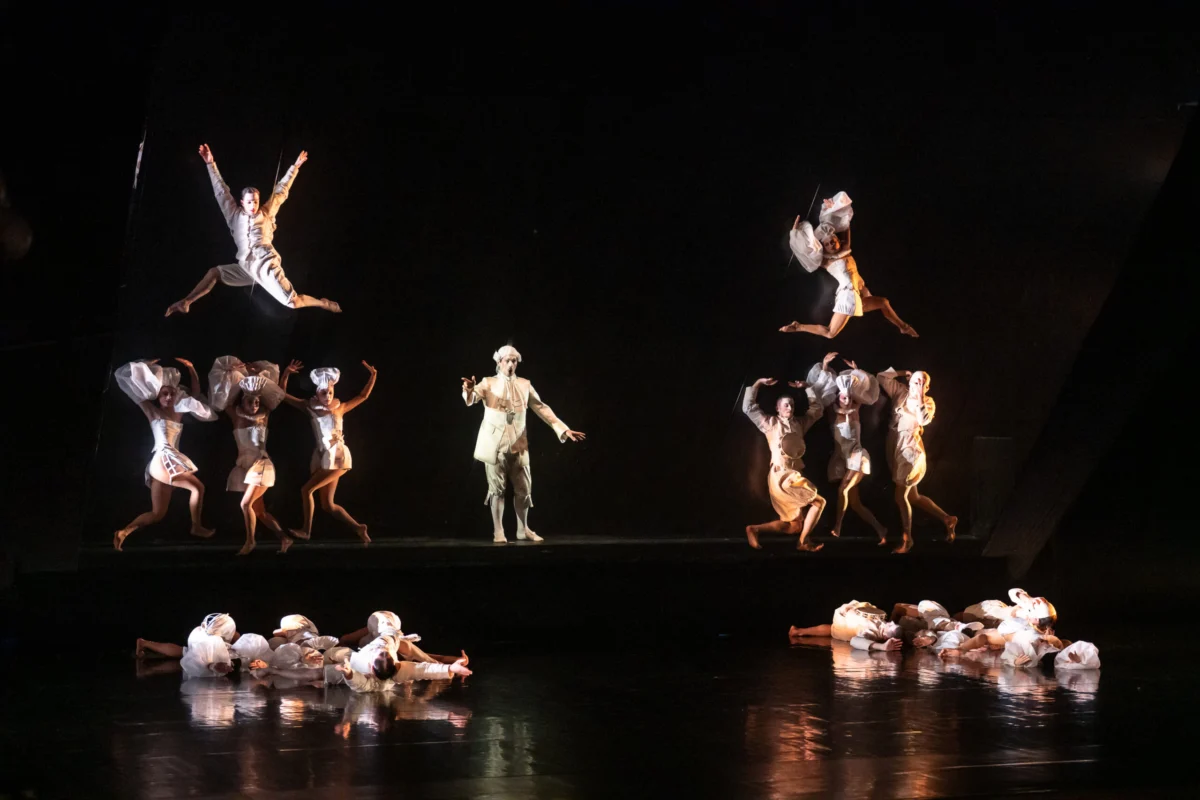
Although Jean-Baptiste Lully, the titan of French Baroque music, was born in Florence, Italy, his illustrious career unfolded entirely within the gilded confines of the court of Louis XIV in France. For over three decades, Lully served as the Superintendent of the King’s Music, a position of immense power and influence that cemented his status as the preeminent figure in the development of French opera. Paradoxically, despite his Italian origins, Lully’s theatrical works, including his groundbreaking operas, have historically struggled to gain traction in his native land, with performances remaining a rarity. However, a significant cultural initiative is underway in Florence, spearheaded by the Florence Institute Giovanni Battista Lulli, to reintroduce and celebrate the composer’s legacy, aiming to reclaim him as a son of the city. This ambitious endeavor has culminated in the first production of a revised version of Lully’s opéra-ballet, "Le Carnaval, Mascarade Royale," since its opulent premiere at the Louvre Palace in 1675. The musical director, Federico Maria Sardelli, in collaboration with Samuele Lastrucci of the Institute, has meticulously reconstructed and revived this significant work, marking a pivotal moment in Lully’s Italian rediscovery.
The revival of "Le Carnaval, Mascarade Royale" presents a fascinating case study in Baroque entertainment, offering a distinct departure from the contemporary understanding of opera. This opéra-ballet is not characterized by a driving narrative in the modern sense; instead, it unfolds as an intricate tapestry woven from equal parts dance and song, structured into discrete, thematic scenes. These vignettes, unified by the overarching motif of carnival, eschew a linear plot in favor of a light, celebratory spectacle. The core of the work lies in its vibrant dance music, with singers largely embodying unnamed roles that shift with each scene, minimizing opportunities for deep character development. As a court opera, "Le Carnaval, Mascarade Royale" was conceived not merely as entertainment for the king and his esteemed guests, but as a potent tool for projecting the grandeur and absolute power of the sovereign, and by extension, the might and cultural ascendancy of France. The very overture of the piece serves as a resounding paean, an explicit glorification of Louis XIV’s kingship, underscoring the work’s intrinsic connection to royal propaganda and the projection of state power.
The structure of "Le Carnaval, Mascarade Royale" is as rich and varied as the festivities it depicts. Beyond the king-glorifying overture, the work comprises eleven distinct scenes, each dedicated to a specific theme. For instance, the inaugural scene, titled "The Spaniards," explores the multifaceted nature of love, encompassing both its joyous expressions and the poignant sorrow of lost affection. Scene five delves into the world of masks and characters from the celebrated Commedia dell’Arte, a staple of Italian theatrical tradition. Scene eight, meanwhile, offers a testament to the cultural diversity within the French court, incorporating influences from Basque, Bohemian, and Egyptian traditions, showcasing the global reach of French influence and taste. The inclusion of comedic figures further enlivens the proceedings, with the know-it-all Maestro Barbacola making a notable appearance in scene two, followed by the social climber Monsieur Pourceaugnac in scene three, providing moments of lighthearted satire. Collectively, these elements contribute to an experience that is simultaneously easy, light, and thoroughly entertaining. The unifying thread of the carnival, with its inherent themes of leisure, freedom, escapism, and a poignant acknowledgment of human fragility, binds these diverse scenes together. It is important to note that "Le Carnaval, Mascarade Royale" is, in essence, a pastiche, meticulously arranged by Philippe Quinault, drawing upon Lully’s earlier musical compositions and incorporating texts by celebrated playwrights and poets of the era, including Molière, Isaac de Benserade, and Quinault himself. This collaborative approach, characteristic of Baroque stage productions, highlights the synthesis of diverse artistic talents to create a unified and spectacular whole.
A Visionary Staging: Dance as the Unifying Force
The recent production of "Le Carnaval, Mascarade Royale" in Florence has been lauded for its visually striking and imaginatively conceived staging, under the direction of Emiliano Pellisari. Aided by the evocative scenography of Claudia Spoglia and the meticulous costume designs of Nora Bujdoso and Daniela Piazza, the production successfully captured the essence of 17th-century Baroque theater, with its profound emphasis on visual spectacle. This historical aesthetic has been skillfully reimagined for a 21st-century audience, with dance emerging as the pivotal element that underpins the entire performance.
A key element of the visual design was the costuming of the singers. Adorned in traditional 17th-century attire, their garments were rendered in a uniform, understated powdery white. This deliberate choice served to accentuate their presence against the stark black backdrop of the stage, creating a striking monochromatic effect that amplified the visual contrast and drew immediate attention to the performers. In a bold move that eschewed traditional stage props entirely, the vast expanse of the stage was dominated by a large, strategically angled mirror. This mirror was positioned to reflect the floor of the stage, effectively doubling the visual space and creating a canvas for the dancers’ extraordinary performances.
The dancers, hailing from the acclaimed NoGravity Dance Company, were the true architects of the illusion. Clad in cool-toned contemporary costumes, which were subtly adapted to echo the shifting themes of each scene, they moved across the mirrored floor in ways that defied conventional perception. By performing on their sides and backs, their reflections in the mirror appeared as if they were standing upright, creating a surreal and mesmerizing effect. The choreography was designed to generate breathtaking optical illusions. At times, the dancers seemed to float or walk on air, their movements imbued with an ethereal quality. In other moments, they would tumble downwards or ascend upwards in slow motion, or execute gravity-defying somersaults that traversed the stage with astonishing grace. They exhibited remarkable acrobatic prowess, forming human pyramids and then breaking free to seemingly walk above the singers positioned at the front of the stage. This meticulously orchestrated interplay of movement and reflection resulted in a series of imaginative visual patterns and marvelous images. The artistic team has drawn comparisons to the work of Busby Berkeley, the legendary choreographer of 1930s Hollywood musicals, for their ability to create grand, geometric formations and stunning visual effects, albeit on a more intimate scale within the theater. The dancers’ costumes further enhanced these illusions, with certain designs contributing to the perception of characters possessing elongated bodies, appearing to stand as tall as fifteen feet. The overall effect was a true spectacle, a testament to the grandeur and theatrical innovation that characterized the Baroque era, brought vividly to life for a modern audience.
Vocal Prowess: The Six Soloists and the Chorus
The musical fabric of "Le Carnaval, Mascarade Royale" relies on the contributions of six solo singers, whose roles were meticulously characterized according to the 17th-century French vocal classifications. This commitment to historical authenticity provided a nuanced understanding of the vocal demands and aesthetic ideals of Lully’s era. Valeria La Grotta assumed the role of the première dessus, a designation for a light, high soprano voice, essential for lyrical and agile passages. Giuseppina Bridelli, a mezzo-soprano, portrayed the deuxième dessus, a voice type used to define a slightly lower, warmer tone, often employed for more introspective or tender moments. The tenor Cyril Auvity was cast as the taille, a voice typically associated with the central melodic line. Philippe Talbot, another tenor, was designated as the haute-contre, a high tenor voice known for its brilliance and agility, often used for more heroic or elevated passages. In the lower registers, baritone Biagio Pizzuti embodied the première basse, a voice reserved for noble and heroic figures, demanding a commanding presence. Finally, bass-baritone Alexandre Baldo took on the role of the deuxième basse, a voice suited for authoritative and darker characters, adding depth and gravitas. Together with the chorus, Coro I Musici del Gran Principe, which performed from the pit, these soloists delivered a rich tapestry of vocal textures that beautifully ornamented Lully’s airs, duets, trios, and choruses, enriching the musical landscape of the performance.
Despite the vocal talents on display, the inherent nature of the opéra-ballet genre, with its emphasis on visual spectacle and dance, occasionally relegated the singers to a secondary role. Nevertheless, the soloists engaged positively with each scene, contributing to the overall effect with conviction. The constraints of their roles, which limited opportunities for extensive character development, and the refined, balanced, and stately nature of Lully’s music itself, also influenced their expressive range. The score, while musically rich, did not lend itself to overt melodrama, thus moderating their emotional reactions to the text.
Valeria La Grotta made a notable impression with her vocal flexibility, attractive timbre, and delicate phrasing, offering a pleasing contrast to Giuseppina Bridelli’s darker, more expressively oriented voice, particularly in ensemble pieces. Biagio Pizzuti, as the première basse, commanded the stage and the audience’s attention with his strong vocal and stage presence. His confident and controlled delivery lent his characters an authoritative demeanor. Alexandre Baldo, as the deuxième basse, sang his parts with a clear, refined, and articulate sound, effectively conveying the courtly nature of the performance. Philippe Talbot, as the haute-contre, exuded the polished air of a typical 17th-century French aristocrat, complete with a carefully placed beauty mark on his cheek. His voice, possessing an attractive timbre, was delivered with a pleasing ease that allowed him to fully capture the melodic beauty of his lines. Cyril Auvity’s singing was characterized by clarity, elegance, and expressiveness, and he convincingly conveyed his characters’ emotional states without any hint of overstatement, a hallmark of performances cultivated for the refined court of the Sun King.
Under the sensitive direction of Federico Maria Sardelli, the Orchestra Barocca Modo Antiquo delivered a stately and elegant reading of Lully’s score. The orchestra’s performance was meticulously molded to support the intricate choreography of the dancers and the vocal lines of the singers, underscored by a pleasing sense of restraint and understatement that allowed the individual elements to shine.
Reclaiming a Florentine Legacy: Broader Implications
The staging of "Le Carnaval, Mascarade Royale" in Florence represents more than just a revival of a historical operatic work; it signifies a crucial step in reclaiming a lost piece of Florentine heritage. It is a rare opportunity, especially outside of France, to experience a theatrical event conceived for the French court, and for this reason alone, the production proved to be an intrinsically interesting and worthwhile undertaking. The performance’s distinctive fusion of dance and singing, amplified by its spectacular visual presentation and refined aesthetic, offered a profound contrast to the typical operatic experience, even when compared to operas from the same period produced in other European nations.
Musically, the work possesses undeniable beauty and serves as a perfect accompaniment to the dance, yet it is characterized by a stately and reserved quality that, for some audience members, might have lacked the visceral excitement of more dramatically driven works. Dramatically, the piece offers little in the way of a compelling narrative arc, a characteristic that was never its primary intention. For those attending with expectations of a traditional drama featuring a strong plot and overt emotional displays, the production might have elicited a sense of disappointment. However, even these viewers would undoubtedly have been captivated by the sheer magic and artistry of the dance sequences.
The success of this revival carries significant implications for Lully’s standing in his homeland. It provides a tangible opportunity for Italian audiences and scholars to engage directly with the work of a composer who, despite his Florentine birth, became inextricably linked with French culture and musical innovation. The Florence Institute Giovanni Battista Lulli’s commitment to this project underscores a broader trend of cultural repatriation and the reassessment of historical artistic figures within their original geographical and cultural contexts. By bringing "Le Carnaval, Mascarade Royale" back to life, the Institute is not only celebrating Lully’s genius but also enriching the understanding of Italy’s own contributions to the broader European Baroque landscape. This initiative serves as a powerful reminder that artistic legacies are not static but are subject to ongoing reinterpretation and rediscovery, fostering a deeper appreciation for the complex cultural exchanges that have shaped musical history. The meticulous research and innovative staging employed in this production set a precedent for future revivals of Lully’s less frequently performed works, potentially paving the way for a more comprehensive appreciation of his multifaceted artistic contributions.