Johan Budi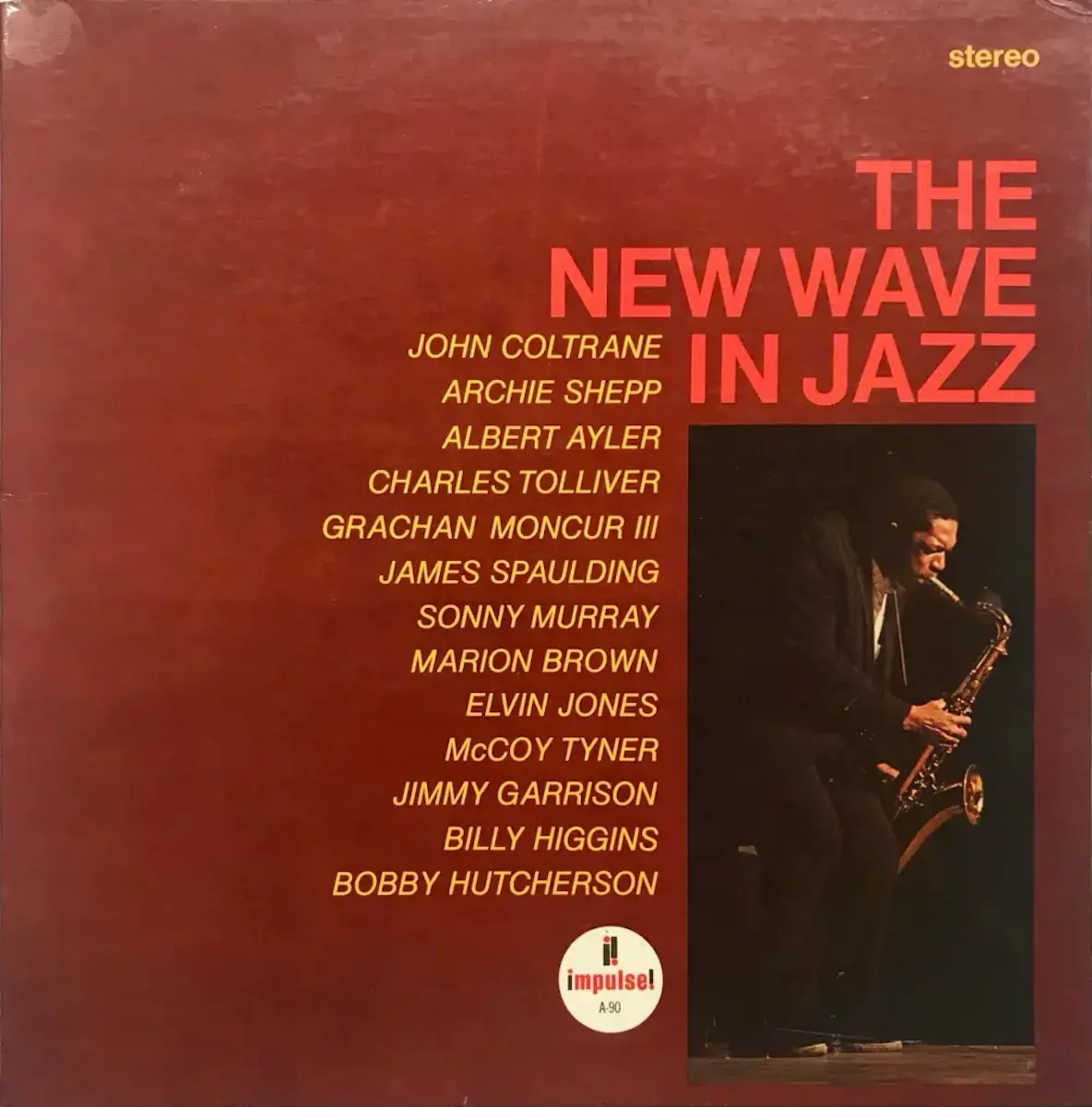
The release of the HMV CLP 1932 recording in March 1966, titled "The New Wave in Jazz," marked a definitive and polarizing moment in the history of recorded music, capturing the transition of jazz from its post-bop foundations into the experimental territory of the avant-garde. Originally recorded during a benefit concert at the Village Gate in New York City on March 28, 1965, the album serves as a sonic manifesto for the "New Thing," a movement that sought to dismantle traditional harmonic structures in favor of raw emotional expression and political urgency. For the critics of the era, such as Graham Boatfield writing for Jazz Journal, the album represented a challenging, and at times unwelcome, departure from the "mainstream of contemporary jazz." While established figures like John Coltrane were viewed as having earned their right to experiment through their mastery of traditional "changes," newer voices like Albert Ayler and Archie Shepp were met with significant skepticism, their work often dismissed as incoherent or caricatured.
The Context of the Village Gate Benefit Concert
To understand the significance of this recording, one must look back to the social and artistic climate of 1965. The concert was organized by LeRoi Jones (later known as Amiri Baraka) to benefit the Black Arts Repertory Theatre/School (BARTS). This institution was a cornerstone of the Black Arts Movement, which aimed to create art that was culturally specific to the Black experience and politically engaged with the Civil Rights and burgeoning Black Power movements.
The Village Gate performance was not merely a musical event but a cultural declaration. By 1965, the "October Revolution in Jazz," a series of concerts organized by Bill Dixon in 1964, had already signaled that a new generation of musicians was ready to break away from the commercial constraints of the nightclub circuit. "The New Wave in Jazz" captured this energy, featuring a lineup that bridged the gap between the established avant-garde and the radical newcomers. The inclusion of John Coltrane, who by then was a superstar in the jazz world, lent the event and the subsequent record a level of prestige that helped bring these radical sounds to a wider, albeit often confused, audience.
Profiles of the Featured Artists and Their Contributions
The album is structured as a survey of the various factions within the new movement. John Coltrane’s performance of "Nature Boy" opens the record. In 1965, Coltrane was in the midst of a profound spiritual and musical transformation. Having recently released A Love Supreme, he was moving toward the denser, more dissonant textures that would define his later works like Ascension. Critics of the time, including Boatfield, tended to grant Coltrane more leeway than his peers. Because Coltrane had "proved his ability" in the hard bop and modal eras, his foray into the "New Wave" was seen as a calculated extension of a known quantity rather than a chaotic abandonment of skill.
In contrast, Albert Ayler’s contribution, "Holy Ghost," represented the most radical break from tradition. Ayler’s style was characterized by a massive, wide-vibrato saxophone tone that drew more from gospel and folk dirges than from the bebop lexicon. His rejection of standard chord progressions in favor of "energy playing" was often misinterpreted by contemporary critics as a lack of technique. The track features Donald Ayler on trumpet and Sonny Murray on drums, the latter of whom was a pioneer of "free time," a style that eschewed a steady pulse in favor of a wash of percussive textures.
Archie Shepp’s "Hambone" introduced a different facet of the avant-garde: the integration of social commentary and theatricality. Shepp’s work often utilized "vocalisation," where the saxophone was made to mimic the screams, moans, and inflections of the human voice. This was a direct nod to the roots of African American music, yet to the ears of a 1966 jazz traditionalist, it sounded like a "pop-art cartoon figure." Shepp’s ensemble included a larger horn section, providing a dense, polyphonic backdrop that challenged the listener’s ability to find a central melodic hook.
The Role of the Rhythm Section and "Acceptable" Modernism
Amidst the more polarizing tracks, the work of Grachan Moncur III and Bobby Hutcherson provided what some critics deemed an "acceptable" version of modernism. Both Moncur and Hutcherson were associated with the Blue Note label, which, while forward-thinking, maintained a degree of adherence to structure and "swing." Moncur’s "Blue Free" and the ensemble performance of Thelonious Monk’s "Brilliant Corners" (led by Charles Tolliver and James Spaulding) offered a bridge for the listener.
Bobby Hutcherson’s vibraphone work was particularly praised for its delicacy and imagination. Unlike the abrasive textures of Ayler or Shepp, the vibraphone provided a shimmering, ethereal quality that fit more comfortably within the "wide bounds" of contemporary jazz. These tracks demonstrated that the "New Wave" was not a monolith; it contained a spectrum of approaches ranging from the analytical deconstruction of Monk’s compositions to the total improvisational freedom sought by the Ayler brothers.
Critical Reaction and the Generational Divide
The original 1966 review by Graham Boatfield serves as a primary source for understanding the generational and aesthetic friction of the era. The use of terms like "ugly," "hard to take," and "thalidomide Popeye" reflects a profound sense of unease. This was a period where the very definition of "jazz" was under siege. For the established guard, jazz was a music of discipline, based on the sophisticated navigation of harmonic changes. The New Wave’s emphasis on "sound" over "notes" and "emotion" over "theory" felt like an existential threat to the genre’s standards.
The "weary" response of musicians and critics noted in the original text suggests a form of "avant-garde fatigue." By 1966, the shock of Ornette Coleman’s 1959 debut at the Five Spot had settled into a persistent tension within the jazz community. The critics who had championed bebop against the "mouldy figs" (traditionalists) now found themselves in the role of the conservatives, defending the music of the 1940s and 50s against the perceived nihilism of the 1960s radicals.
Technical Data and Discographical Information
The HMV release (CLP 1932), priced at 32 shillings in 1966, was a significant investment for jazz listeners. The discography provided in the original record notes reflects a "who’s who" of the mid-60s experimental scene:
- Nature Boy: John Coltrane (tenor), McCoy Tyner (piano), Jimmy Garrison (bass), Elvin Jones (drums).
- Holy Ghost: Donald Ayler (trumpet), Albert Ayler (tenor), Joel Freedman (cello), Lewis Worrell (bass), Sonny Murray (drums).
- Blue Free: Grachan Moncur III (trombone), Bobby Hutcherson (vibes), Cecil McBee (bass), Bill Harris (drums).
- Hambone: Ashley Fennell (trumpet), Virgil Jones (trombone), Archie Shepp (tenor), Marion Brown (alto), Fred Pirtle (baritone), Reggie Johnson (bass), Roger Blank (drums).
- Brilliant Corners: Charles Tolliver (trumpet), James Spaulding (alto), Bobby Hutcherson (vibes), Cecil McBee (bass), Billy Higgins (drums).
The recording quality, handled by the legendary Rudy Van Gelder for the original Impulse! release, managed to capture the cavernous and sometimes chaotic acoustics of the Village Gate, adding an atmospheric layer of "liveness" that became a hallmark of avant-garde recordings.
Broader Impact and Implications for Modern Music
While the 1966 critics may have preferred to "pass on" this recording, history has judged "The New Wave in Jazz" quite differently. It is now regarded as one of the most important live documents of the 20th century. The album did more than just capture a concert; it documented the moment when jazz became a vehicle for radical self-determination and political expression.
The "ugly" and "difficult" sounds of Ayler and Shepp paved the way for the European free improvisation movement and influenced a wide array of genres outside of jazz, including punk rock, noise music, and experimental classical composition. The techniques that Boatfield dismissed as "incoherent trick-effects"—such as overblowing, multiphonics, and the use of extreme registers—became standard tools in the kit of the modern saxophonist.
Furthermore, the album’s association with the Black Arts Movement highlights the inextricable link between the evolution of jazz and the socio-political struggles of the era. The music was "worrying" precisely because the world it inhabited was in a state of upheaval. In retrospect, the "New Wave in Jazz" was not an outlier to be tolerated; it was a necessary and inevitable expansion of the musical language, reflecting a reality that could no longer be contained within "normal mainstream" structures.
Today, the 1965 Village Gate concert stands as a testament to the courage of artists who were willing to risk professional derision to pursue a new sonic truth. What was once viewed as a "waste of time" or "poisonous" is now studied as a masterclass in the power of creative liberation. The HMV CLP 1932 release remains a vital, if challenging, artifact of a time when the future of music was being rewritten in real-time.