Muhammad Ibadurrohman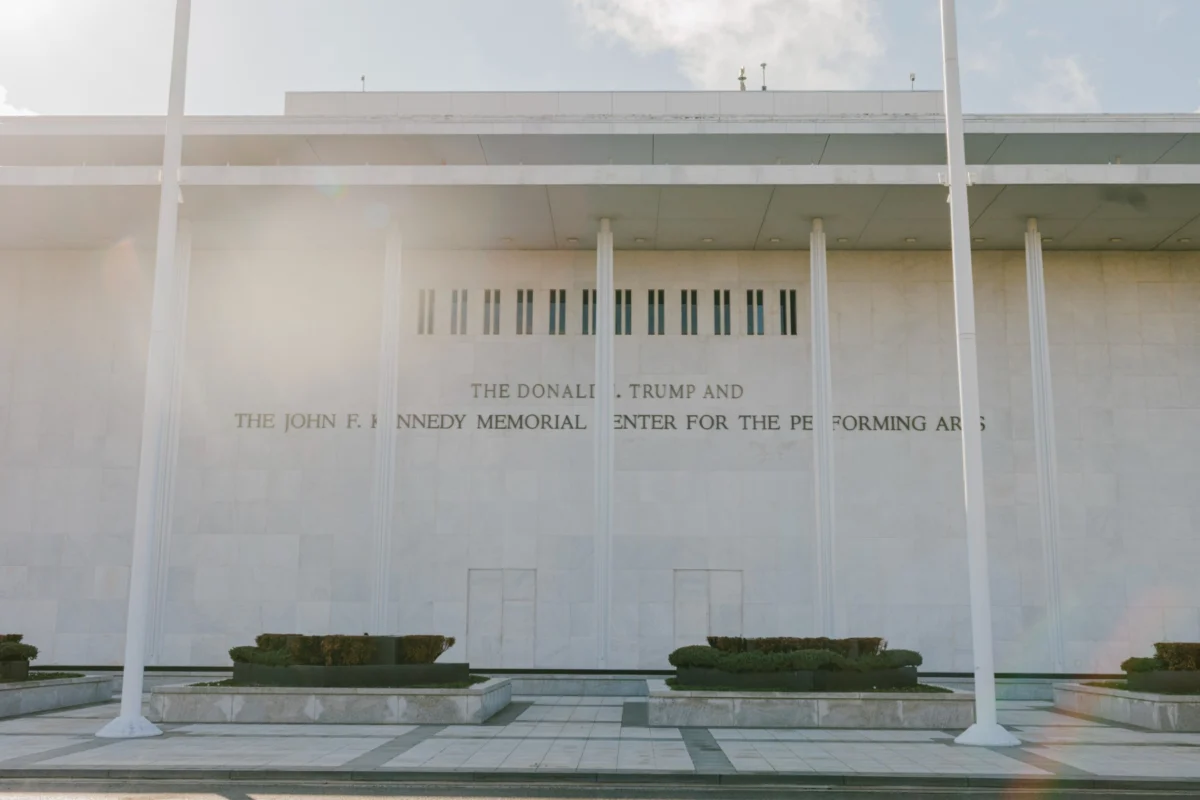
The esteemed John F. Kennedy Center for the Performing Arts, a national monument to culture and artistic expression, has initiated legal proceedings against renowned jazz drummer and vibraphonist Chuck Redd, following his abrupt cancellation of a long-standing Christmas Eve performance. Redd, a fixture of the Kennedy Center’s holiday programming for nearly two decades, withdrew from his scheduled "Jazz Jams" in direct protest against the perceived influence of then-President Donald Trump over the institution, specifically a controversial decision to affix the president’s name to the facility. This high-profile legal dispute, unfolding in D.C. Superior Court, delves into complex questions of contractual obligation, artistic freedom, political expression, and the responsibilities of cultural institutions.
The Core of the Dispute: Cancellation and Legal Recourse
The heart of the legal battle lies in Redd’s decision to cancel his annual Christmas Eve "Jazz Jams" on December 24, shortly after the Kennedy Center’s board, significantly influenced by presidential appointments, voted to incorporate President Trump’s name into the venue’s designation. Redd publicly articulated his protest, stating at the time, "When I saw the name change on the Kennedy Center website and then hours later on the building, I chose to cancel our concert." This act of artistic dissent quickly escalated into a legal confrontation when the Kennedy Center, through its then-President Richard Grenell, threatened a lawsuit seeking substantial damages, ultimately filing a breach of contract suit on March 6.
Redd, represented by prominent attorneys Debra S. Katz and Lisa J. Banks, has countered by filing a motion to dismiss the lawsuit. His legal team argues that the breach of contract claim is fundamentally flawed because Redd was never contractually obligated to perform. They assert that the Kennedy Center’s provided contract, which would have formalized the engagement, was never signed by the artist. Beyond the technicalities of contract law, Redd’s lawyers have framed the lawsuit as a broader attempt to silence dissenting artistic voices. "The Trump Kennedy Center filed this lawsuit to send a message to anyone who dares to publicly disagree with the decisions of those in power," Katz and Banks declared in a statement, suggesting that the institution’s actions were intended to intimidate artists and stifle legitimate political expression.
Representatives for the Kennedy Center have yet to issue an official response to Redd’s motion to dismiss, maintaining a public silence on the ongoing litigation. This silence, however, does not diminish the gravity of the implications for both parties and the broader arts community.
A Chronology of Controversy and Conflict
The events leading to the lawsuit illustrate a rapid escalation of political tensions intersecting with cultural institutions:
- Early 2025 (Specific Date Not Provided): The John F. Kennedy Center for the Performing Arts board, comprising members appointed by the sitting president, reportedly votes to add President Donald Trump’s name to the facility. The precise nature of this "addition" – whether a full renaming, a prominent dedication, or another form of recognition – sparked immediate public and internal debate. Presidential appointments to the Kennedy Center board are common, but the direct naming of a federal cultural institution after a sitting president is highly unusual and controversial, particularly given the center’s existing dedication to President John F. Kennedy.
- December 24, 2025: Chuck Redd, upon learning of the name change and seeing it reflected on the Kennedy Center’s website and physical building, makes the personal and professional decision to cancel his scheduled Christmas Eve "Jazz Jams." This performance was a long-standing tradition, having been a part of the Kennedy Center’s holiday programming since 2006. Redd’s cancellation was a direct and public act of protest against what he perceived as the politicization of a revered cultural space.
- Within Days of Cancellation: Richard Grenell, then-President of the Kennedy Center, dispatches a strongly worded letter to Redd. Grenell’s letter criticized Redd’s decision as "classic intolerance and very costly to a nonprofit Arts institution," indicating significant financial repercussions from the last-minute cancellation. The letter also contained a direct threat, stating that the Kennedy Center would seek $1 million in damages from Redd. This swift and aggressive response signaled the institution’s intent to pursue legal action.
- March 6, 2026: The Kennedy Center officially files a breach of contract lawsuit against Chuck Redd in D.C. Superior Court, initiating the formal legal process and seeking to recover damages purportedly incurred due to the cancellation.
- Shortly After Lawsuit Filing (Specific Date Not Provided): Richard Grenell departs from his role as President of the Kennedy Center. He is succeeded by Matt Floca, who had previously managed the Kennedy Center’s facilities operations. This leadership change occurs amid the escalating legal battle and public scrutiny.
- Friday (Specific Date Not Provided, but presumably late March/early April 2026): Chuck Redd’s legal team files a motion in D.C. Superior Court requesting the dismissal of the Kennedy Center’s lawsuit. The core argument for dismissal rests on the assertion that no legally binding contract existed between Redd and the Kennedy Center for the performance in question.
- Summer 2026: President Trump announces the closure of the Kennedy Center for extensive renovations, expected to last approximately two years. This development, while separate from the lawsuit, adds another layer of disruption and change for the institution.
The Kennedy Center: A National Treasure Entangled in Politics

The John F. Kennedy Center for the Performing Arts holds a unique and esteemed position in American culture. Established by Congress in 1964 as a living memorial to President Kennedy, it serves as the nation’s performing arts center, hosting a diverse array of theatrical, musical, and dance performances. Its mission extends beyond mere entertainment, encompassing education, artistic innovation, and the promotion of American culture both domestically and internationally. As a federal bureau, the Kennedy Center receives significant annual appropriations from Congress, alongside substantial private fundraising efforts. This blend of public and private funding often places it in a delicate balance, beholden to both governmental oversight and the expectations of its patrons and artistic community.
The composition of its board of trustees, largely appointed by the sitting president, inherently links the institution to the political currents of Washington D.C. While these appointments are typically intended to bring diverse expertise and influence, they can also become points of contention, particularly when cultural institutions are perceived to be aligning too closely with partisan agendas. The decision to associate President Trump’s name with the facility, even in an unofficial or temporary capacity, was seen by many, including Redd, as a significant departure from the institution’s non-partisan stature and its original dedication. Such an act inevitably draws the institution into political discourse, potentially alienating artists and audiences who believe cultural spaces should remain neutral or dedicated to broader principles of artistic freedom and humanistic values.
Chuck Redd: A Legacy of Jazz and Artistic Integrity
Chuck Redd is not merely a musician but a respected figure in the jazz world, celebrated for his mastery of both drums and vibraphone. His career spans decades, marked by collaborations with jazz legends such as Dizzy Gillespie, Ray Brown, and Monty Alexander. Redd’s musical versatility and profound understanding of jazz have earned him a reputation for excellence and a dedicated following. His "Jazz Jams" at the Kennedy Center, which commenced in 2006, had become a beloved holiday tradition, drawing audiences seeking classic jazz in a festive setting. For 19 consecutive years, Redd had anchored these performances, fostering a deep connection with the venue and its patrons.
For an artist with such a long-standing relationship with a major institution, the decision to cancel a performance, particularly a cherished holiday event, is not taken lightly. Redd’s protest was evidently rooted in a profound belief that the Kennedy Center’s actions compromised its integrity and its role as a beacon of the arts. His cancellation can be interpreted as a stand for artistic independence, a refusal to lend his talent and reputation to an institution whose perceived political alignments he found objectionable. This act resonates deeply within the artistic community, where debates about the intersection of art, politics, and patronage are perennial.
The Legal Labyrinth: Unsigned Contracts and Implied Agreements
The core of Redd’s defense hinges on the absence of a signed contract. In legal terms, a breach of contract typically requires proof of a valid, enforceable agreement. While written and signed contracts are the gold standard, the legal landscape is more nuanced. Courts may, in certain circumstances, recognize implied contracts based on a long history of dealings, verbal agreements, or the actions and conduct of the parties involved. Given Redd’s nearly two-decade-long history of performing at the Kennedy Center, it is plausible that the institution might argue for an implied contract or a pattern of past performance that established an expectation of future engagement.
However, Redd’s lawyers’ assertion that the Kennedy Center "provided" a contract but it "never signed" by the artist is a strong defense. If a formal written contract was presented but never executed by both parties, it significantly weakens the claim of a binding agreement. The burden of proof will lie with the Kennedy Center to demonstrate that a legally enforceable contract, explicit or implied, was in place for the specific Christmas Eve performance in question. Without a signed document, the Kennedy Center would need to present compelling evidence of offer, acceptance, consideration, and intent to create legal relations through other means.
The claim by Redd’s lawyers that the lawsuit is an "intimidation tactic" also introduces the concept of a Strategic Lawsuit Against Public Participation (SLAPP). While not explicitly stated as a SLAPP suit, the sentiment aligns with the argument that the lawsuit aims to punish or silence an individual for exercising free speech, rather than genuinely seeking damages for a legitimate contractual breach. This angle could introduce broader First Amendment considerations into the legal proceedings, potentially shifting the focus beyond mere contract law.

Financial and Reputational Stakes
For the Kennedy Center, the lawsuit carries significant financial and reputational implications. While the exact financial losses from Redd’s cancellation are not publicly detailed, they would typically include ticket refunds, potential loss of future ticket sales, and administrative costs associated with rescheduling or finding a replacement. Grenell’s threat of seeking $1 million in damages suggests the institution believes the financial impact was substantial. Beyond direct costs, the legal battle itself incurs considerable expenses in terms of attorney fees and court costs.
More importantly, the lawsuit could have a chilling effect on the Kennedy Center’s relationship with artists. Artists, who often rely on their ability to express themselves freely, may become wary of engaging with an institution that appears willing to pursue legal action against performers for politically motivated cancellations. This could damage the Kennedy Center’s reputation as a welcoming and neutral space for artistic expression, potentially affecting its ability to attract top talent in the future. For a non-profit organization heavily reliant on both federal funding and private donations, maintaining a positive public image and strong relationships within the artistic community is paramount.
For Chuck Redd, the personal and professional stakes are equally high. While his legal team is robust, the process of litigation is inherently stressful and costly. Regardless of the outcome, the lawsuit will consume his time and resources. However, his stand has also garnered attention and support from segments of the artistic community who view him as a principled artist willing to challenge institutional power. He has, in a sense, become a symbol of artistic conscience in a politically charged era. The outcome of this case could set a precedent for how cultural institutions and artists navigate the increasingly intertwined worlds of art and politics.
Broader Implications for Arts and Politics
This incident at the Kennedy Center is emblematic of a wider trend where cultural institutions find themselves increasingly caught in political crosscurrents. The role of art as a mirror to society and a platform for dissent is undeniable, but when federal funding and presidential appointments are involved, the lines become blurred. Debates about artistic freedom versus institutional neutrality, and the responsibilities of publicly funded bodies, are intensifying.
The case raises critical questions: How should national cultural institutions balance their mission to foster the arts with their obligations as federally supported entities? To what extent should artists be expected to compartmentalize their political views from their professional engagements, especially when those engagements are with institutions perceived to be politicized? And what are the acceptable boundaries of protest within the framework of professional contracts?
The upcoming renovations, while seemingly unrelated, also underscore a period of significant transition for the Kennedy Center. With a new president, a high-profile lawsuit, and a temporary closure for extensive upgrades, the institution is facing a multifaceted challenge that will shape its identity and trajectory for years to come. The outcome of the legal dispute with Chuck Redd will undoubtedly be a closely watched development, offering insights into the evolving dynamics between artistic expression, institutional governance, and the pervasive influence of politics in contemporary American culture.