Reynand Wu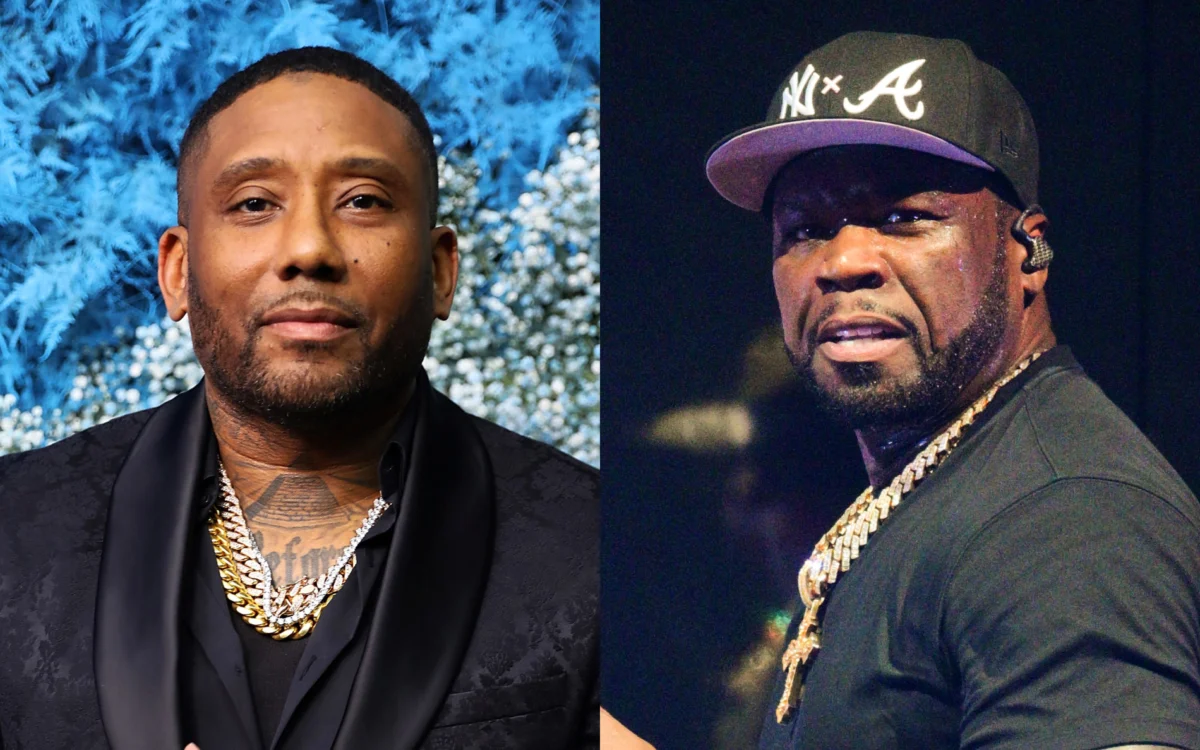
In a significant escalation of ongoing tensions within the hip-hop community, Brooklyn rapper Maino has released a potent diss track titled “Bleed Like Us,” directly targeting industry titan 50 Cent. The new song, unveiled on Wednesday, March 11, serves as a direct lyrical rebuttal to 50 Cent’s recent track, “No More Tricks, No More Tries,” featuring Max B, which itself was clarified to be aimed at Maino, Jim Jones, and Fabolous after initial speculation linked it to T.I. Maino’s “Bleed Like Us” immediately drew attention for its clear homage to The Notorious B.I.G.’s classic “Niggas Bleed,” signaling a strategic and culturally resonant attack on the G-Unit general.
The Genesis of the Conflict: A Web of Hip-Hop Feuds
The current lyrical skirmish between Maino and 50 Cent is not an isolated incident but rather the latest development in a complex web of feuds that have characterized 50 Cent’s career for decades. Known for his provocative persona and strategic use of conflict, 50 Cent has a long history of high-profile beefs, including legendary clashes with Ja Rule, Fat Joe, and Rick Ross, each often transcending mere lyrical battles to encompass business, social media, and public perception.
Prior to Maino’s direct challenge, 50 Cent had been engaged in a notable war of words with Atlanta rap legend T.I. The feud reportedly stemmed from a long-standing debate over who could claim the title of "King of the South," a discussion that reignited following a series of public comments and social media exchanges. T.I. had publicly challenged 50 Cent to a Verzuz battle, a proposal that was met with characteristic dismissiveness from the G-Unit founder, leading to further back-and-forth insults and thinly veiled threats delivered through interviews and social media posts. This pre-existing tension created a fertile ground for misinterpretation when 50 Cent released “No More Tricks, No More Tries,” leading many to initially believe it was another salvo in his beef with T.I.
50 Cent’s Provocation: "No More Tricks, No More Tries"
The track “No More Tricks, No More Tries,” a remix of an earlier Max B song, initially caused a stir due to its aggressive tone and 50 Cent’s reputation for using music as a weapon in his feuds. Max B, currently incarcerated, has a storied history in hip-hop, and his collaboration with 50 Cent on this track added another layer of intrigue. When the accompanying video for the song was released, 50 Cent made his targets unequivocally clear. The AI-generated clip featured images of Maino, Jim Jones, and Fabolous, effectively removing any ambiguity about his intentions.
In a move designed to maximize impact and public humiliation, the video specifically mocked Maino’s distinctive face scar, recreating the prison incident that resulted in the permanent disfigurement of his right cheek. This deeply personal attack underscored the severity of 50 Cent’s animosity. He further clarified his targets on Instagram, captioning the video with: “Y’all thought I was talking about the Cosby’s. I’ll deal with Bill later. I am the algorithm!” This post, referencing T.I. (whose family name is Harris, often humorously linked to the Cosby show by 50 Cent), served to redirect public attention, confirming that Maino and his podcast co-hosts were the intended recipients of his lyrical aggression.
Maino’s Retaliation: "Bleed Like Us" – A Biggie-Inspired Assault
Maino’s response, “Bleed Like Us,” is a meticulously crafted diss track that leverages hip-hop history and specific accusations against 50 Cent. The choice to sample or interpolate The Notorious B.I.G.’s iconic 1997 track “Niggas Bleed” from his seminal album Life After Death is highly symbolic. Biggie, a revered figure from Maino’s native Brooklyn, used the original track to paint a vivid, gritty picture of street life and betrayal, making it a powerful template for Maino to channel his grievances. By adopting this framework, Maino aligns himself with a legacy of authentic street narratives, subtly questioning 50 Cent’s own street credibility.
Lyrically, Maino pulls no punches. He addresses a range of controversial aspects of 50 Cent’s public persona and past, aiming to dismantle the carefully constructed image of invincibility. One of the central accusations revolves around 50 Cent’s well-known narrative of being shot nine times. Maino implies this story has been exaggerated or “capped” (lied about), challenging a foundational element of 50 Cent’s origin story that has contributed significantly to his legendary status. This particular jab seeks to undermine the very source of 50 Cent’s perceived toughness and resilience.
Furthermore, Maino directly addresses long-standing rumors and allegations that 50 Cent cooperates with authorities against his rivals, a grave accusation within hip-hop culture that can severely damage an artist’s reputation. He raps, “Be careful when you come at me, ngga, you couldn’t humble me / Why the ones you beef with end up in fed custody? / 50 ways to catch a killer, is that your energy? / Only Black men, no white men, is your enemy?” These lines are a direct assault on 50 Cent’s integrity, linking his past feuds with the legal troubles of his adversaries and suggesting a pattern of selective targeting. The reference to “50 ways to catch a killer” cleverly twists the title of 50 Cent’s debut album, Get Rich or Die Tryin’*, and its associated themes of survival and street smarts, turning them against him.
Maino further demonstrates his lyrical prowess by flipping some of 50 Cent’s own most famous records into pointed jabs. He critiques 50 Cent’s fanbase and perceived authenticity, rapping, “Only white kids in the ‘burbs thought you was gangsta / We fucked with you ‘cause of your story, thought you was like us / Just to find out this whole time you was the wanksta.” This line is a direct reference to 50 Cent’s 2002 hit “Wanksta,” a song that famously criticized fake gangsters. By turning 50 Cent’s own rhetoric against him, Maino suggests that the G-Unit leader has become the very type of individual he once condemned. The song concludes with an ominous warning, “Getting rich wasn’t enough, still want to die?” a stark reminder of the dangerous stakes often involved in hip-hop beefs and a challenge to 50 Cent’s relentless pursuit of conflict.
The Diddy Documentary Catalyst: Podcast Criticism and Landlord Shenanigans
The root of 50 Cent’s animosity towards Maino, Jim Jones, and Fabolous can be traced back to late last year when the trio discussed 50 Cent’s then-upcoming documentary project about Sean “Diddy” Combs on their podcast, Let’s Rap About It. 50 Cent had announced his intention to produce a documentary exploring the numerous allegations and controversies surrounding Diddy, capitalizing on the heightened public interest in the mogul’s legal woes.
On their podcast, Jim Jones, a prominent member of Dipset and a respected figure in New York hip-hop, voiced his criticism of 50 Cent’s approach. Defending Diddy to some extent, Jones stated: “You don’t want nobody doing a documentary trying to make your whole character look weak. That’s petty behavior… It’s really not a documentary; it’s more like a mockumentary.” Maino and Fabolous, while perhaps less vocal in their criticism, were present and complicit in the discussion, implicitly endorsing Jones’s perspective. This commentary, suggesting 50 Cent’s documentary was driven by personal vendetta rather than genuine journalistic intent, seemingly struck a nerve with the G-Unit founder.
50 Cent, known for his swift and often disproportionate responses to perceived slights, immediately fired back at the trio on Instagram. His initial attacks focused on their perceived lack of financial success and legitimacy. He publicly claimed that the podcast hosts were “squatters,” alleging they owed a significant amount of rent, reportedly $250,000, for the very space where they recorded their podcast. “These guys are squatters, they owe 250,000k for the space they are filming their podcast,” he sneered on Instagram. “These bums are trying to win best dressed award and can’t pay their bills.” This tactic aimed to discredit them by attacking their financial standing and professional integrity.
The situation escalated dramatically when 50 Cent later claimed to have purchased the building where the podcast was recorded. This move, if true, would grant him direct power over their tenancy. He further stoked the flames by posting security footage purportedly showing Jim Jones attempting to gain entry by kicking down doors, implying disorderly conduct and threatening to terminate Jones’s tenancy agreement. This transformation from a lyrical beef to a real-estate power play exemplifies 50 Cent’s unique blend of entertainment and aggressive business tactics.
The Broader Implications: Hip-Hop Beef in the Digital Age
The clash between Maino and 50 Cent, like many contemporary hip-hop feuds, highlights the evolving nature of conflict in the digital age. Social media platforms, particularly Instagram, have become integral battlegrounds, allowing artists to deliver immediate jabs, clarifications, and provocations that amplify the impact of their music. 50 Cent, a master of this medium, consistently uses his considerable online presence to control narratives and intensify rivalries, blurring the lines between personal attacks, promotional tactics, and genuine artistic expression.
The commercial implications of such beefs are also noteworthy. While historically, diss tracks could significantly boost record sales, the current streaming landscape presents a different dynamic. Increased public attention, social media chatter, and media coverage can drive listeners to explore the music of both artists, potentially leading to a temporary surge in streams and engagement for their respective catalogs. For artists like Maino, directly confronting a figure as prominent and controversial as 50 Cent offers an opportunity for increased visibility and a reaffirmation of his street credentials within the competitive New York rap scene. For 50 Cent, these feuds often serve as a means to maintain his relevance and reinforce his image as a dominant, uncompromising force in entertainment, whether through music, television production, or social media provocations.
Beyond the immediate participants, these events underscore the enduring importance of authenticity and respect within hip-hop culture. Accusations of "capping" or cooperating with authorities strike at the core tenets of street credibility, which remain vital for many artists, particularly those from a background like Maino’s. The use of classic hip-hop references, such as the Biggie interpolation, also speaks to a desire to connect with the genre’s rich history and uphold its lyrical standards, even amidst modern digital warfare.
As this beef continues to unfold, the hip-hop community will be watching closely. Whether Maino’s potent lyrical assault will force a more direct musical response from 50 Cent, or if the G-Unit mogul will continue his strategy of social media ridicule and business maneuvering, remains to be seen. What is clear is that the rivalry has intensified, adding another compelling chapter to the complex and often volatile narrative of hip-hop’s most prominent figures. The strategic use of music, social media, and even real estate demonstrates that in the world of 50 Cent, every interaction is a potential chess move, and the stakes are always high.