Nana Wu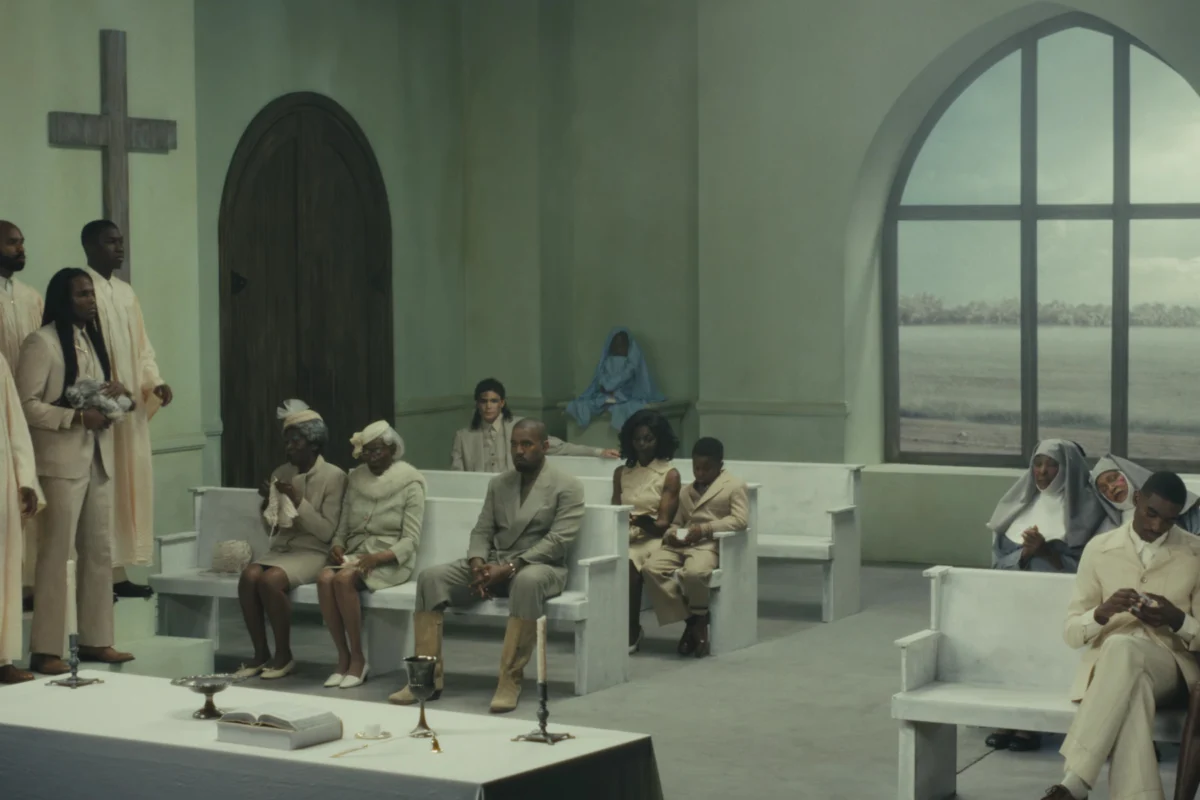
The highly anticipated "Bully" album by Ye, formerly known as Kanye West, has officially debuted on streaming services, arriving in the early hours of Saturday, March 28. Accompanying the 18-track collection is the visually arresting music video for the single "Father," featuring a verse from Travis Scott and directed by Bianca Censori. This release marks Ye’s first full-length project since a period dominated by highly publicized antisemitic remarks and erratic online behavior, signaling a significant moment in the artist’s turbulent career and ongoing public narrative. The album’s launch precedes two major live performances scheduled for April 1 and 3 at SoFi Stadium in Los Angeles, setting the stage for a comprehensive re-engagement with his global fanbase.
"Father" Music Video: A Surreal Commentary on Modernity and Faith
The music video for "Father" immediately distinguishes itself through its stark visual narrative and profound thematic undercurrents. Directed by Bianca Censori, the single-camera scene unfolds within a minimalist church setting, yet it is anything but simple. The video presents a series of surreal, almost absurdist events that occur largely unnoticed by the congregation, creating a potent commentary on religion, reality, and what appears to be the pervasive ennui of contemporary society.
Viewers are confronted with bizarre juxtapositions: a man’s card tricks inexplicably ignite into flames, while in an adjacent pew, a granny calmly continues knitting, seemingly unfazed. A medieval plate-armored knight on horseback dramatically rides down the aisle, preceding a police squad that proceeds to arrest a nun from her slumber. In the back row, a Michael Jackson lookalike sits in quiet solitude, completely unbothered by the unfolding chaos. Perhaps most strikingly, a UFO makes an understated touchdown, its arrival treated with the same inconsequentiality as the other events. Ye and Travis Scott themselves contribute to this layered symbolism, pulling down masks to reveal dual identities as both celebrities and extraterrestrials, hinting at the performative nature of fame and a sense of otherworldliness that often accompanies public figures. The collective indifference of the churchgoers to these extraordinary occurrences serves as a powerful metaphor for societal desensitization, the overwhelming influx of information in the digital age, or perhaps even a reflection of how Ye’s own controversies have been received.

While Ye has offered no direct statement regarding the video’s explicit meaning, its visual language invites extensive interpretation. The church setting, traditionally a place of sanctuary, spiritual reflection, and communal gathering, is transformed into a stage for the mundane and the miraculous to coexist without eliciting significant reaction. This could symbolize a disillusionment with traditional institutions, the commodification of spiritual experiences, or a broader critique of how society processes profound events through a lens of detachment. The inclusion of Travis Scott, a frequent collaborator and family member through his past relationship with Kylie Jenner, adds another layer, intertwining personal relationships with the video’s broader social commentary.
Lyrical Reflection and Personal Transformation in "Father"
The lyrical core of "Father" provides a direct, autobiographical counterpoint to the video’s abstract imagery. Ye’s chorus encapsulates a journey of self-reinvention: "Bye-bye to my old self/ Wake up to the new me/ I used to be on Worldstar/ Now I’m making Newsweek/ I used to hang on the 9/ Now I bought two streets/ Cottage Grove to King Drive/ Yeah, this life is a movie." These lines articulate a profound shift from a past identity, perhaps one associated with internet notoriety and street-level struggles ("Worldstar," "hang on the 9"), to a present where his actions and pronouncements command mainstream media attention ("Newsweek") and financial success ("bought two streets"). The specific mention of "Cottage Grove to King Drive" grounds his narrative in his Chicago roots, emphasizing his humble beginnings and the cinematic scope of his life’s trajectory.
This lyrical introspection directly echoes Ye’s recent public statements, particularly his January 2026 full-page apology ad in The Wall Street Journal. In that apology, he addressed the antisemitic remarks and erratic behavior that had dominated headlines, attributing some of his actions to "disconnected moments" stemming from bipolar type-1. He wrote, "One of the difficult aspects of having bipolar type-1 are the disconnected moments — many of which I still cannot recall — that led to poor judgment and reckless behavior that oftentimes feels like an out-of-body-experience. I regret and am deeply mortified by my actions in that state, and am committed to accountability, treatment and meaningful change. It does not excuse what I did, though." The "bye-bye to my old self" lyric can thus be seen as a direct artistic articulation of this stated commitment to personal growth and accountability, attempting to bridge the gap between his public transgressions and his artistic output.
"Bully": An Album Overview and Thematic Implications

The "Bully" album, a concise 18-song collection clocking in at 42 minutes, arrives at a pivotal juncture for Ye. The album title itself, "Bully," is rife with potential interpretations. It could be a defiant embrace of the "villain" narrative often ascribed to him, a self-deprecating acknowledgment of his past aggressive public persona, or a commentary on the "bullying" he perceives from media and industry forces. Given his history, the title suggests a complex engagement with power dynamics, victimhood, and accountability.
The album features a diverse array of collaborators, showcasing Ye’s continued ability to attract significant talent across genres. Beyond Travis Scott on "Father," the tracklist includes Don Toliver on "Circles," Peso Pluma on "Last Breath," CeeLo Green on the title track "Bully," and Ye’s music director Andre Troutman on "All the Love" and "White Lines." This eclectic mix suggests a potential sonic tapestry that weaves together various influences, from contemporary hip-hop and R&B to more soulful and experimental sounds. The inclusion of CeeLo Green, a veteran known for his powerful vocals and genre-bending work, hints at a possible return to the more soulful and gospel-infused elements that have historically underpinned some of Ye’s most critically acclaimed projects. Peso Pluma’s feature, representing the burgeoning regional Mexican music scene, further demonstrates Ye’s penchant for unexpected collaborations and his ear for artists making waves across different musical landscapes.
Ye’s Trajectory: From Icon to Controversial Figure
To fully appreciate the significance of "Bully," it is essential to contextualize it within Ye’s broader career arc. Since his emergence in the early 2000s, Ye has been a transformative figure in music, fashion, and culture. Albums like The College Dropout (2004) revolutionized hip-hop with its soulful samples and introspective lyrics. Subsequent projects such as 808s & Heartbreak (2008) pioneered auto-tune and melodic rap, while My Beautiful Dark Twisted Fantasy (2010) is widely considered a modern masterpiece, showcasing his maximalist artistic vision.
However, parallel to his artistic triumphs, Ye’s public persona grew increasingly volatile. His outspokenness, often controversial political endorsements, and frequent shifts in artistic and personal ideology became defining characteristics. The period leading up to "Bully" was particularly fraught. In late 2022, Ye made a series of antisemitic statements across various platforms, including social media and interviews. These remarks led to widespread condemnation, the termination of lucrative partnerships with major brands like Adidas and Gap (reportedly costing him billions and significantly impacting his net worth), and the closure of his Donda Academy private school. These events created a substantial rift between Ye and a significant portion of the public and industry, raising questions about his mental health, accountability, and the future of his career.
His January 2026 apology, published in The Wall Street Journal, was a rare moment of direct self-reflection and an attempt to address the fallout. Citing his bipolar type-1 diagnosis, he acknowledged the harm caused by his "poor judgment and reckless behavior." This apology, coupled with the release of "Bully," positions the album as a potential artistic and personal reckoning, a musical chapter that attempts to navigate the complexities of his public and private life in the aftermath of severe controversy.
Anticipated Reception and Broader Implications
The release of "Bully" and the "Father" video will undoubtedly ignite intense discussion across the music industry and general public. The challenge for many will be to separate the art from the artist, a dichotomy that has become increasingly difficult with Ye’s highly publicized personal life. Critics will scrutinize the album not only for its musical merit but also for its thematic engagement with his recent past, its perceived sincerity, and its potential to either alienate or reconcile with his audience.
Commercially, the album’s performance will be closely watched. Despite the controversies, Ye maintains a fiercely loyal fanbase, and his albums often debut strongly on charts globally. However, the extent of the damage to his commercial appeal from the brand boycotts and public backlash remains to be seen. Billboard chart positions, streaming numbers, and ticket sales for his upcoming SoFi Stadium shows will serve as key indicators of his current standing in the music landscape. These concerts, his first major live performances since the height of his controversies, represent a crucial opportunity for Ye to reconnect with his audience in a direct, unmediated fashion, potentially offering further insights into his current artistic and personal state.
Ultimately, "Bully" and the "Father" video are more than just a new album and single; they are a complex cultural artifact from an artist who has consistently pushed boundaries, courted controversy, and redefined the parameters of celebrity. This release marks a critical juncture for Ye, an artist perpetually in flux, as he attempts to navigate a path forward, reconcile with his past, and continue his relentless artistic output in the glare of intense public scrutiny. Whether "Bully" signifies a true turning point, a defiant continuation, or another unpredictable chapter in the saga of Ye, its arrival ensures that the conversation around one of music’s most polarizing figures will continue to evolve.