Nayara Elvina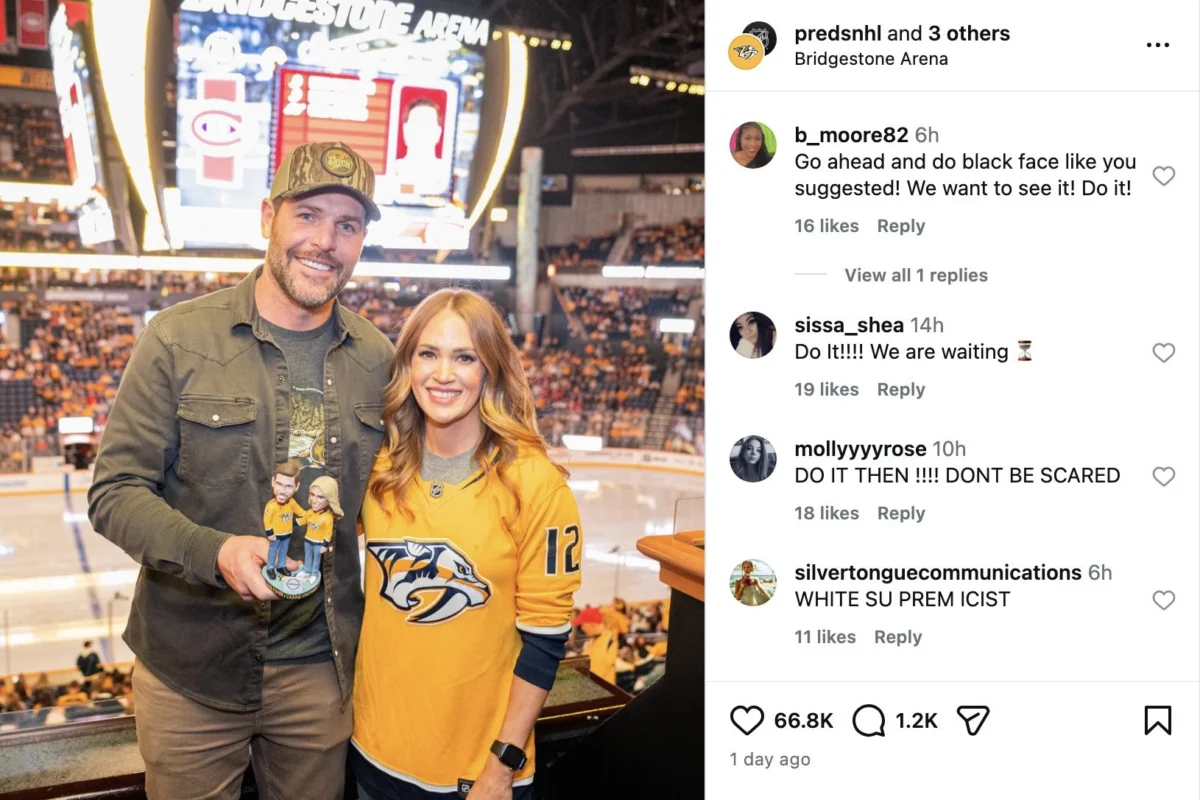
The intersection of celebrity culture, professional sports, and digital misinformation has created a complex public relations challenge for the Nashville Predators organization and country music icon Carrie Underwood. In late March 2026, a series of fabricated social media posts and authentic organizational decisions converged to spark a wave of online outrage, highlighting the increasing difficulty of managing brand reputation in an era of rapid-fire digital discourse. The controversy centers on a completely fabricated quote attributed to Underwood, which gained traction on the social media platform X, and a subsequent series of criticisms directed at the Nashville Predators regarding their community theme nights.
The Genesis of the Misinformation Campaign
The current controversy began when a parody account on X, operating under the handle "Hoops Crave," posted a fabricated statement attributed to Carrie Underwood. The account, which explicitly identifies itself as a parody of the popular entertainment news aggregator "Pop Crave," leveraged a sensitive cultural moment to maximize engagement. The fake quote suggested that Underwood proposed wearing blackface as a response to a recent skit by comedian Druski.
Druski had recently released a satirical video featuring himself in whiteface, intended to mock Erika Kirk, the wife of the late Charlie Kirk, who was the founder of the conservative organization Turning Point USA. The parody account exploited the polarized reactions to Druski’s content by claiming Underwood had stated a desire to use similar tactics against former First Lady Michelle Obama. Despite the account’s clear self-identification as a parody and the lack of any supporting evidence or official record of such a statement, the post quickly went viral. Within a short period, the tweet garnered over 11,000 likes and nearly 2,000 replies, with a significant portion of the audience accepting the quote as authentic.
This incident underscores a growing trend in digital media where "parody" accounts utilize the visual language of legitimate news sources to spread inflammatory content. The speed at which the misinformation spread suggests a breakdown in the traditional verification process among general social media users, many of whom reacted with immediate condemnation without investigating the source of the claim.
Impact on the Nashville Predators and Promotional Events
The fallout from the fake quote manifested physically on the digital platforms of the Nashville Predators. The NHL franchise recently hosted a promotional event featuring Carrie Underwood and her husband, Mike Fisher, a former captain of the Predators. The "Celebrity Couple Bobblehead Night" was intended to celebrate the local ties of the high-profile pair, who are staples of the Nashville community.
When the Predators posted a promotional image of Underwood and Fisher at Bridgestone Arena to their official Instagram account, the comment section was immediately inundated with vitriol. Rather than focusing on the team’s performance or the bobblehead promotion, hundreds of users cited the fabricated "Hoops Crave" quote. The comments ranged from calls for the team to distance itself from Underwood to aggressive "trolling" from individuals who believed the fake quote was a genuine political stance.

At the time of reporting, the Instagram post had accumulated over 1,200 comments, the vast majority of which were rooted in the misinformation campaign. This digital "brigading" illustrates how easily a brand’s neutral or positive promotional efforts can be hijacked by unrelated external controversies, particularly those fueled by viral falsehoods.
A Timeline of Organizational Challenges
The controversy surrounding the Underwood quote did not occur in a vacuum. The Nashville Predators social media and communications teams were already navigating a period of heightened scrutiny following a series of theme nights.
On March 22, 2026, the Predators hosted their annual "Pride Night," an initiative designed to foster inclusivity within the hockey community. The event featured a performance of the national anthem by "The Cowgays" and period-break entertainment by LGBT artist Brady Riley. While the event was praised by advocacy groups and many fans, it also drew sharp criticism from several high-profile conservative commentators. This backlash put the organization on the defensive, leading to a public statement reaffirming their commitment to diversity.
Following Pride Night, a secondary controversy emerged regarding the team’s "Faith and Family Night." Reports surfaced, most notably from OutKick and media personality Jon Root, that the "Faith and Family" event had been omitted from the team’s official promotional graphics and calendar. When questioned about the omission, the Predators organization characterized it as an "oversight." However, critics argued that the discrepancy in the promotion of "Pride Night" versus "Faith and Family Night" indicated an organizational bias, further polarizing the fan base.
Official Responses and Organizational Stance
In response to the mounting pressure from various demographic segments of their audience, the Nashville Predators issued a comprehensive statement. The organization sought to strike a balance between its inclusivity initiatives and the diverse viewpoints of its supporters.
"We understand that initiatives like Pride Night, Faith and Family night, Recovery Night, Women of Smashville Night, Ford Military Week and celebrations for Black History, API and others can be meaningful and affirming for many, while others may see them differently," the statement read. "We respect that our fan base is diverse not only in identity, but in viewpoint. That diversity is part of what makes our community strong."
The team emphasized the "Hockey is for Everyone" philosophy, a league-wide initiative by the NHL. "As an organization, we remain committed to fostering an environment rooted in respect, inclusion, and a shared passion for hockey. We will continue listening to our fans, supporting one another, and focusing on what unites us: the energy of the game, the spirit of competition, and the shared connection that we have in our team and our city."

Despite this statement, the organization faced continued questioning regarding the logistics of "Faith and Family Night." Unlike "Pride Night," which was treated as an arena-wide event with specific on-ice performances and integrated branding, the "Faith and Family" event was reportedly organized as a secondary promotional night, leading to accusations of a "tiered" approach to community engagement.
Analysis of the Misinformation Landscape
The Carrie Underwood incident provides a case study in the "outrage economy" of modern social media. Several factors contributed to the believability of the fake quote among the public:
- Prior Political Context: Underwood had previously faced criticism in early 2025 for her performance at the inauguration of President Donald Trump. This established a baseline of political polarization around her brand, making her a "believable" target for fabricated quotes of a partisan nature.
- The Saturation of Parody Accounts: Accounts like "Hoops Crave" mimic the aesthetic of verified news outlets. On platforms like X, where verification badges no longer exclusively denote institutional credibility, users often fail to check the biography or history of a posting account.
- Algorithmic Amplification: Social media algorithms prioritize high-engagement content. Because inflammatory or controversial statements generate more replies and shares, misinformation often travels faster and further than the subsequent corrections or fact-checks.
The impact on the Nashville Predators demonstrates that professional sports teams are no longer insulated from broader cultural and political battles. As "Smashville" (the nickname for the Predators’ fan base) encompasses a wide range of political and social leanings, the team’s efforts to be "everything to everyone" through themed nights frequently result in friction.
Broader Implications for Professional Sports
The difficulties faced by the Nashville Predators reflect a broader trend across the NHL and other professional sports leagues. In recent seasons, the league has seen various players and teams navigate the complexities of "Pride" jerseys and other social initiatives. The Predators’ experience suggests that the digital environment has become so volatile that even a routine promotional night—such as a bobblehead giveaway—can be derailed by a single viral lie.
From a crisis management perspective, the incident highlights the need for organizations to monitor not just their own mentions, but the broader "fake news" ecosystem surrounding their associated celebrities. Carrie Underwood remains one of the most successful artists in country music history, and her association with the Predators is a significant part of the team’s local identity. When her reputation is targeted by fabricated content, the team inevitably shares in the reputational fallout.
As of the end of March 2026, neither Carrie Underwood nor her representatives have issued a formal statement regarding the fake "Hoops Crave" quote, a strategy often employed to avoid giving further oxygen to baseless rumors. However, the persistence of the comments on the Predators’ social media pages suggests that the "digital footprint" of misinformation often outlasts the truth.
The Nashville Predators continue to move forward with their 2025-2026 season schedule, though the social media team remains under heightened pressure to moderate interactions and navigate the conflicting demands of a fractured digital audience. The episode serves as a stark reminder that in the modern era, the "energy of the game" is frequently overshadowed by the noise of the internet.