Aveline Kirana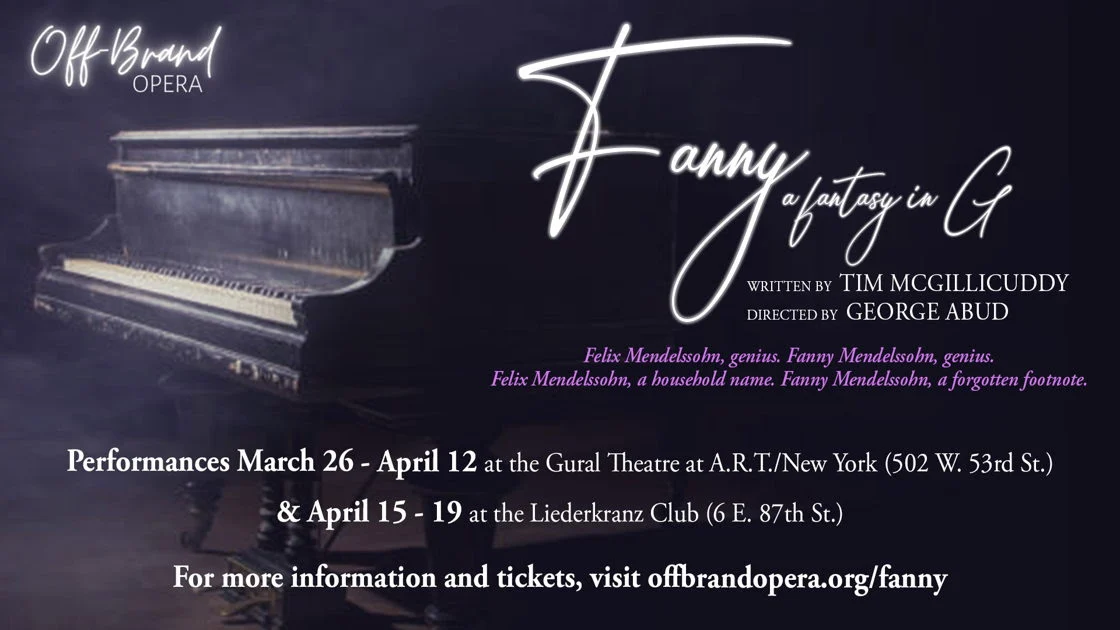
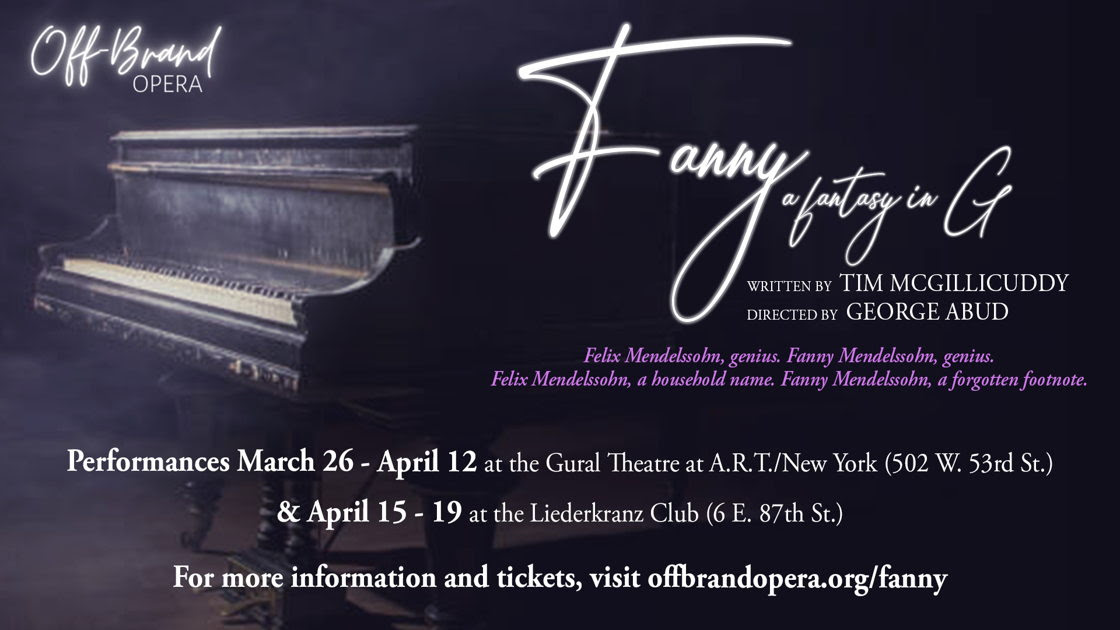
Off-Brand Opera is set to unveil the world premiere of Tim McGillicuddy’s ambitious new work, "Fanny, A Fantasy in G," a production helmed by the acclaimed director George Abud. This highly anticipated theatrical event promises to illuminate the life and aspirations of Fanny Mendelssohn, a prodigious talent often overshadowed by her more famous brother, Felix. The opera will have its premiere on March 26, 2026, and will continue its run through April 19, 2026, gracing audiences at two distinguished venues: the Gural Theatre at A.R.T./New York and the historic Liederkranz Club. Set against the vibrant and intellectually charged backdrop of Berlin in 1828, the narrative centers on Fanny Mendelssohn’s fervent pursuit of her dream to become the first widely published female composer in modern European history, a goal fraught with societal constraints and familial expectations.
The Genesis of a Musical Vision: Fanny Mendelssohn’s Unfulfilled Potential
Fanny Mendelssohn Hensel (1805-1847) was a composer of extraordinary gifts, whose musical output was substantial and of high quality, yet largely unrecognized during her lifetime. Born into a prominent and intellectually distinguished family, she received a rigorous musical education alongside her younger brother, Felix. While Felix Mendelssohn achieved immense fame and recognition, Fanny’s own compositions were often published under his name or were discouraged from public performance and publication by her father, Abraham Mendelssohn Bartholdy, who believed a woman’s place was in the home. Despite these obstacles, Fanny composed over 460 works, including a significant body of piano music, songs, chamber music, and a cantata. Her artistic endeavors were often confined to private salons, where her music was appreciated by an elite circle, but the wider public remained unaware of her genius. "Fanny, A Fantasy in G" endeavors to bring this compelling story of artistic ambition and the struggle against patriarchal norms to the forefront of contemporary opera.
A Stellar Cast Embodies a Historic Narrative
Leading the cast in the pivotal role of Fanny Mendelssohn is Annalisa Chamberlin, an artist whose previous performances have garnered critical acclaim for their depth and emotional resonance. She is joined by a formidable ensemble of performers who will bring the world of Fanny Mendelssohn to life. Ena Clancy will portray Lea Mendelssohn, Fanny’s mother, a figure who navigated the complexities of her family’s status and expectations. Rufus Collins takes on the role of Abraham Mendelssohn, Fanny’s influential father, whose views on his daughter’s career significantly shaped her artistic trajectory. Zaq Latino is cast as Felix Mendelssohn, Fanny’s celebrated brother, whose own musical success both inspired and, in some ways, complicated Fanny’s ambitions.
The supporting cast includes Alan Kelly as Charles Gounod, a contemporary composer who, while not directly involved with the Mendelssohn family in this period, represents the broader musical landscape of the era and the potential for artistic exchange and influence. Joseph Pyfferoen will portray the renowned poet and journalist Heinrich Heine, whose writings often reflected the intellectual currents of 19th-century Germany and who was a contemporary of the Mendelssohns. Daniel David Stewart completes the principal roster as Wilhelm Hensel, Fanny’s husband, an artist himself who provided Fanny with crucial support and encouragement for her musical pursuits. The collective talent of these performers promises a nuanced and captivating portrayal of the individuals who populated Fanny Mendelssohn’s artistic and personal world.
A Visionary Creative Team
The production is further elevated by the visionary contributions of its creative team. Director George Abud brings a wealth of experience and a proven track record of innovative theatrical work to "Fanny, A Fantasy in G." Abud is an award-winning artist recognized for his work as an actor, director, and playwright. His recent directorial credits include a critically lauded new adaptation of "3Penny Opera" Off-Broadway and "The Ruins" at the Guthrie Theater, demonstrating his capacity for tackling complex narratives with fresh perspectives. His involvement suggests a commitment to a dynamic and engaging interpretation of McGillicuddy’s libretto and score.
The visual landscape of the opera will be meticulously crafted by a team of accomplished designers. Scenic design by Henry Pederson will undoubtedly create an immersive and historically evocative environment, transporting the audience to the heart of 1828 Berlin. Raul Luna’s costume design will be crucial in capturing the sartorial elegance and social nuances of the period, while also reflecting the internal lives of the characters. Sunshine de Castro’s lighting design will further enhance the atmosphere, shaping the mood and highlighting key dramatic moments, potentially drawing parallels between the intellectual and emotional illumination Fanny sought.
The Literary Roots of "Fanny, A Fantasy in G"
The libretto and concept for "Fanny, A Fantasy in G" originate from the pen of Tim McGillicuddy, a New York-based poet, playwright, and performer. McGillicuddy’s extensive literary background, evidenced by his eleven published books of poetry, suggests a lyrical and profound approach to storytelling. His work as a poet often delves into themes of human emotion, historical reflection, and the power of artistic expression, qualities that are ideally suited to exploring the inner life of a composer like Fanny Mendelssohn. His dual role as playwright and performer also indicates a deep understanding of dramatic structure and the nuances of character portrayal, promising a libretto that is both textually rich and dramatically compelling. The title itself, "A Fantasy in G," hints at a non-linear, perhaps dreamlike or impressionistic exploration of Fanny’s world, where her music and her aspirations might intertwine in imaginative ways.
Historical Context and Artistic Legacy
The year 1828 marks a significant period in European cultural history. The Romantic era was in full bloom, with composers like Beethoven having recently passed, leaving a profound legacy, and a new generation, including Felix Mendelssohn, emerging. Berlin was a burgeoning center of intellectual and artistic activity, a hub for philosophical discourse and musical innovation. It was within this dynamic environment that Fanny Mendelssohn composed some of her earliest significant works. Her struggles for recognition are emblematic of the broader challenges faced by women in the arts throughout the 19th century. The opera’s focus on her desire to be the "first published female composer in modern Europe" highlights a specific ambition that, while not fully realized in her lifetime, laid groundwork for future generations of female artists. The fact that her works were often attributed to Felix underscores the systemic biases that prevented women from claiming their own artistic identities.
Supporting Data and Artistic Significance
Fanny Mendelssohn’s compositional output, though largely unrecognized in her time, was substantial. She composed approximately 250 works for piano, including preludes, fugues, etudes, and character pieces, many of which are technically demanding and musically sophisticated. Her song repertoire also numbers over 100 pieces, demonstrating a command of vocal writing and lyrical expression. Her chamber music, including a string quartet and a piano trio, showcases her ability to work within established genres with originality and flair. The opera’s premise taps into a growing interest in rediscovering and re-evaluating the contributions of women in music history. Works like "Fanny, A Fantasy in G" contribute to a richer and more complete understanding of the musical past, challenging traditional narratives that have often marginalized female artists. The opera’s exploration of Fanny’s relationship with her brother, Felix, is particularly poignant. Felix himself recognized Fanny’s talent, famously writing to her, "I cannot deny that you have a talent for composition… it is a source of great pleasure to me that you possess it." Yet, his support was often tempered by his father’s wishes and the prevailing societal norms.
Inferred Reactions and Broader Implications
While direct statements from individuals not directly involved in the production are not available, the very creation of "Fanny, A Fantasy in G" can be seen as a significant cultural statement. It reflects a broader societal re-evaluation of historical figures and a desire to rectify past omissions and injustices. The production is likely to be met with enthusiasm from opera enthusiasts, historians, and those interested in feminist narratives in the arts. It provides a platform to engage with the complex intersection of family, ambition, gender, and artistic legacy. The opera’s run coinciding with International Women’s Month (March) further amplifies its thematic resonance.
The choice of Off-Brand Opera as the producing company is also noteworthy. This company often champions new and experimental works, suggesting a commitment to pushing artistic boundaries and exploring underrepresented narratives. Their selection of this opera signifies a belief in its artistic merit and its potential to connect with contemporary audiences. The dual venue approach—the Gural Theatre at A.R.T./New York, a known space for contemporary theater, and the Liederkranz Club, with its strong ties to German musical heritage—suggests a thoughtful curation of performance spaces that can enhance the opera’s historical and cultural context.
The Future of Musical Storytelling
"Fanny, A Fantasy in G" stands as a testament to the ongoing evolution of opera as a medium for exploring diverse narratives and bringing forgotten voices to light. Tim McGillicuddy’s work, brought to life by George Abud and a talented cast and creative team, has the potential to not only entertain but also to educate and inspire. By delving into the life of Fanny Mendelssohn, the opera challenges audiences to reconsider the historical record and to appreciate the full spectrum of artistic talent that has shaped our cultural landscape. The success of such productions can pave the way for further exploration of female composers and artists whose contributions have been historically overlooked, enriching the operatic canon and offering a more inclusive and comprehensive understanding of musical history. This premiere represents a significant step in that ongoing endeavor.