Johan Budi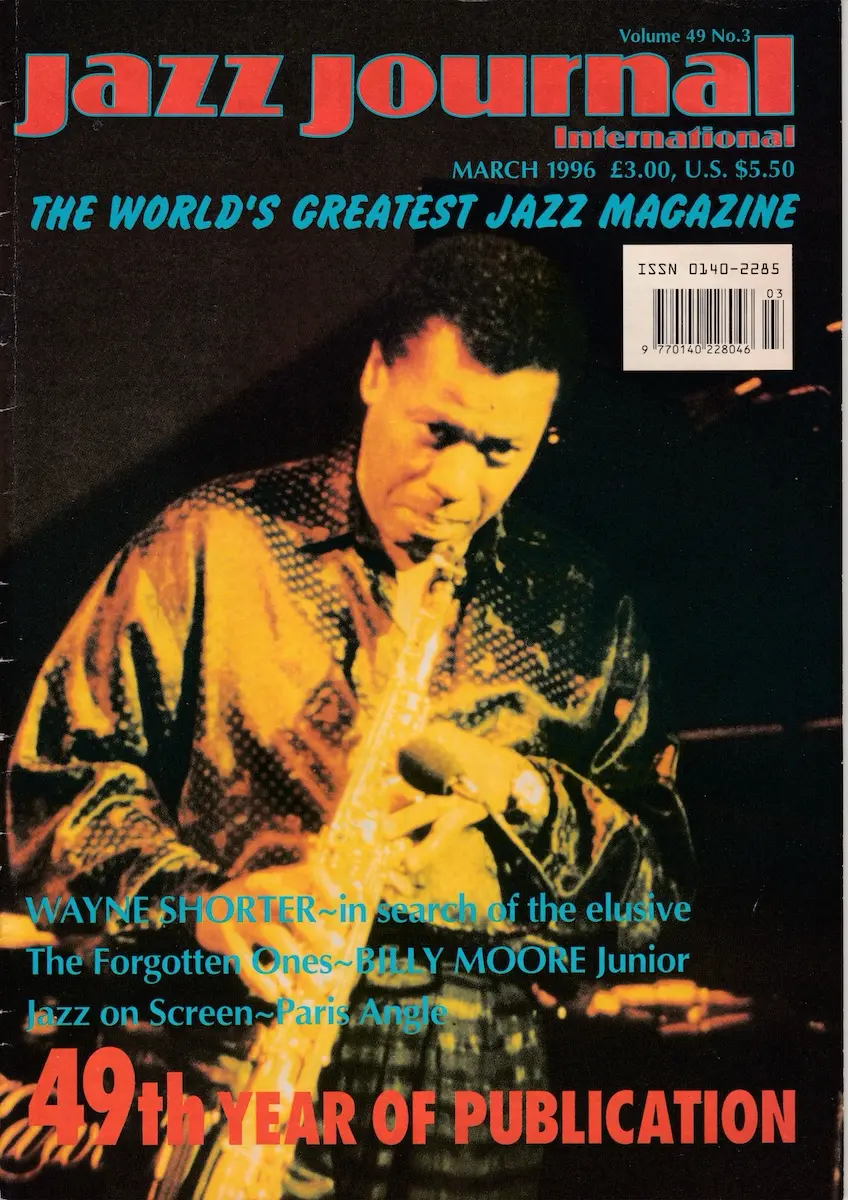
Wayne Shorter, a cornerstone of modern jazz composition and improvisation, has entered a significant new chapter in his storied career with the signing of a high-profile contract with Verve Records. This move marks a pivotal transition for the saxophonist and composer, whose work with Art Blakey’s Jazz Messengers, the Miles Davis Second Great Quintet, and the fusion juggernaut Weather Report redefined the parameters of the genre. As Shorter prepares to release his latest project, "High Life," under the Verve banner, musicologists and critics are revisiting the origins of a style that remains one of the most singular and enigmatically influential in the history of American music. Shorter’s journey from the industrial landscape of Newark, New Jersey, to the vanguard of global jazz offers a profound case study in the intersection of traditional harmony, cinematic imagination, and a relentless commitment to innovation.
The Newark Foundations and Organic Influences
Born on August 25, 1933, in Newark, Wayne Shorter’s musical awakening was less a product of formal instruction and more a result of domestic osmosis. While his parents were not professional musicians, the household was permeated by a diverse sonic palette. Shorter recalls his mother singing standards such as Duke Ellington’s "Sophisticated Lady" while performing household chores. This early exposure to complex melodic structures—specifically the "bridge" of a song where the tonality shifts—instilled in Shorter an organic understanding of harmony. He noted that his mother navigated these transitions with a "second nature" precision, despite the lack of leading tones to guide the way.
Simultaneously, Shorter’s father provided a window into the world of cinematic and atmospheric music. A fan of country and western music as well as the radio program "Music A La Mood," the elder Shorter introduced his son to the transportive power of soundtracks. Pieces like "Bali Hai" from South Pacific and the scores of Miklós Rózsa (specifically Spellbound) suggested to the young Shorter that music could serve as a vehicle for dream-like exploration. This early fascination with filmic textures would later manifest in Shorter’s expansive, "ethereal" compositions of the 1960s and 1970s.
Academic Preparation and the Blending of Styles
Shorter’s formal entry into music began relatively late, around age 15, when he took up the clarinet. Before this, his primary focus was visual art, a discipline he studied at Newark’s Arts High School—the same institution that produced jazz icon Sarah Vaughan. This background in the visual arts is critical to understanding Shorter’s approach to composition; he often speaks of "drawing" music or capturing a "scene" through sound.
In 1951, Shorter enrolled at New York University (NYU) to study music education. While the curriculum was designed to produce teachers, Shorter and his peers used the environment to foster a clandestine community of avant-garde thinkers. It was during this period that Shorter began to experiment with the synthesis of disparate musical eras. He recalls a specific assignment for professor Medina Scoville where he inadvertently blended Romantic, Impressionistic, and contemporary styles within a single sixteen-measure piece. While his instructors urged him to master one style at a time, Shorter’s internal ear was already hearing a "total" music that disregarded chronological or stylistic boundaries.
This period also saw Shorter developing a deep, analytical relationship with the works of Shostakovich, Mahler, and Mozart. Rather than transcribing their scores, he spent nights listening to classical radio stations, deconstructing the modulations and harmonic shifts in his mind. This "relative pitch" approach allowed him to internalize the emotional logic of symphonic music, which he would later apply to the small-group jazz format.
The Chronology of Innovation: From Blakey to Miles
The professional trajectory of Wayne Shorter is often divided into distinct eras, each characterized by a different philosophical approach to the ensemble.
The Jazz Messengers Era (1959–1964)
Upon joining Art Blakey’s Jazz Messengers, Shorter became the group’s primary composer and musical director. During this time, his writing was disciplined by the functional requirements of a "show band." Blakey required music that was high-energy, blues-inflected, and grounded in a hard-bop sensibility. Shorter’s compositions for the Messengers, such as "Lester Left Town" and "Children of the Night," showcased his ability to write within a framework that emphasized "dignity and integrity" while remaining accessible to a nightclub audience.
The Miles Davis Era (1964–1970)
Shorter’s transition to the Miles Davis Quintet represented a liberation from the "limiting factors" of the show-band format. Davis encouraged Shorter to write without restraint. This era produced some of the most influential compositions in jazz history, including "E.S.P.," "Nefertiti," and "Fall." Shorter’s method during this period was often spontaneous; he recalls "Nefertiti" coming to him at 4:00 AM by candlelight, the melody resolving through elusive "pinky movements" on the piano. In Davis’s band, Shorter’s writing moved into the "ethereal realm," where the melody and harmony were often "organically close" despite being intervals apart.
The Blue Note Years and Harmonic Philosophy
Parallel to his work with Davis, Shorter’s solo output on Blue Note Records in the early-to-mid-sixties solidified his reputation as a "crucial" composer, a term he also applied to Thelonious Monk. Albums such as Speak No Evil, The Soothsayer, and Juju displayed a harmonic language that was entirely new to jazz.
Shorter’s chord sequences were often generated by a search for "elusiveness." He posits that something elusive—something that does not provide "instant gratification"—remains with the listener longer than a straightforward, predictable melody. This philosophy of "fascinating elusiveness" is what separates Shorter’s work from the standard song forms of his predecessors. He viewed the "oddity" of his compositions not as a gimmick, but as a more organic representation of how sound actually moves through space.
The Verve Transition and "High Life"
The new contract with Verve Records and the subsequent recording of High Life represent a synthesis of Shorter’s lifetime of exploration. Produced by Marcus Miller, the album features a sophisticated blend of electronic and orchestral elements, including a 30-member ensemble from the Los Angeles Philharmonic.
The personnel for the project reflects Shorter’s ongoing interest in cross-genre collaboration:
- Marcus Miller: Producer and bassist, known for his work on Miles Davis’s Tutu.
- Rachel Z: A keyboardist who spent months working with Shorter to develop the album’s harmonic textures.
- Will Calhoun: The drummer for the rock band Living Colour, brought in for his "unassuming, simple, and pulsating" rhythmic approach.
- David Gilmour: The legendary Pink Floyd guitarist, whose involvement underscores Shorter’s reach beyond the traditional jazz world.
In High Life, Shorter revisits the concept of "Flagships," a piece that began on his 1980s Columbia record Phantom Navigator. He views this not as a look backward, but as an evolution. To Shorter, the use of synthesizers and modern production is not a departure from "acoustic" music; rather, he defines all sound as the "movement of air," making the distinction between electronic and traditional instruments irrelevant.
Broader Impact and the "Spirit of Jazz"
As Shorter moves forward with Verve, his perspective on the preservation of jazz remains controversial to traditionalists but inspiring to innovators. He explicitly rejects the notion of "regression" or playing in the style of the early sixties to satisfy nostalgia. For Shorter, "preserving the spirit of jazz" is synonymous with "change" and "breakthrough."
He famously compares the insistence on playing older styles to choosing to travel from London to Manchester by stagecoach. "I’m not gonna go… by stagecoach! Unless the name of that rocket ship was called Stagecoach!" he asserts. This commitment to the "process of discovery" ensures that Shorter remains a contemporary figure rather than a museum piece.
The implications of Shorter’s new work extend beyond his own discography. By integrating orchestral arrangements with the improvisational freedom of jazz and the rhythmic drive of fusion, he continues to challenge the definitions of the genre. His move to Verve, a label with a deep historical legacy, suggests a bridge between the foundational era of jazz and its speculative future. Shorter’s career serves as a reminder that the most enduring music is often that which is most "elusive," requiring the listener to engage with the unknown rather than the familiar. As he continues to look toward "other galaxies" for inspiration, Wayne Shorter remains the ultimate architect of the unexpected.