Mia Khoirunisa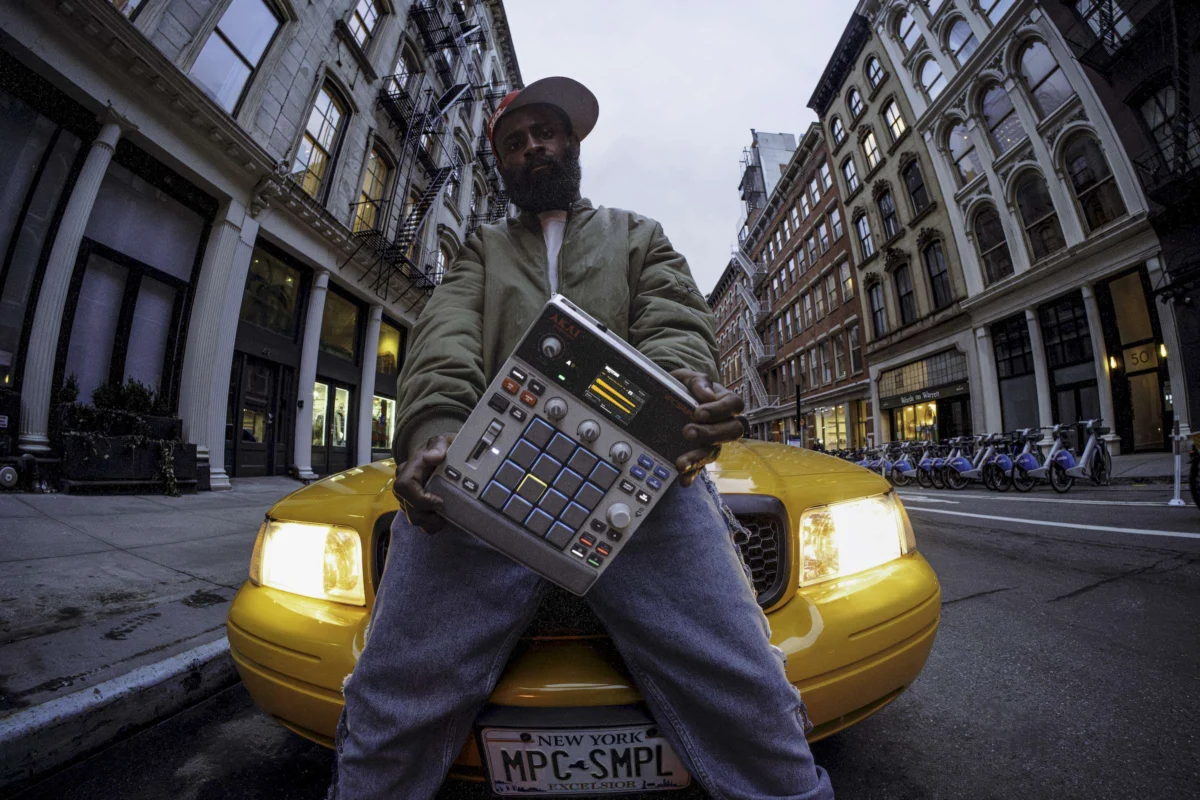
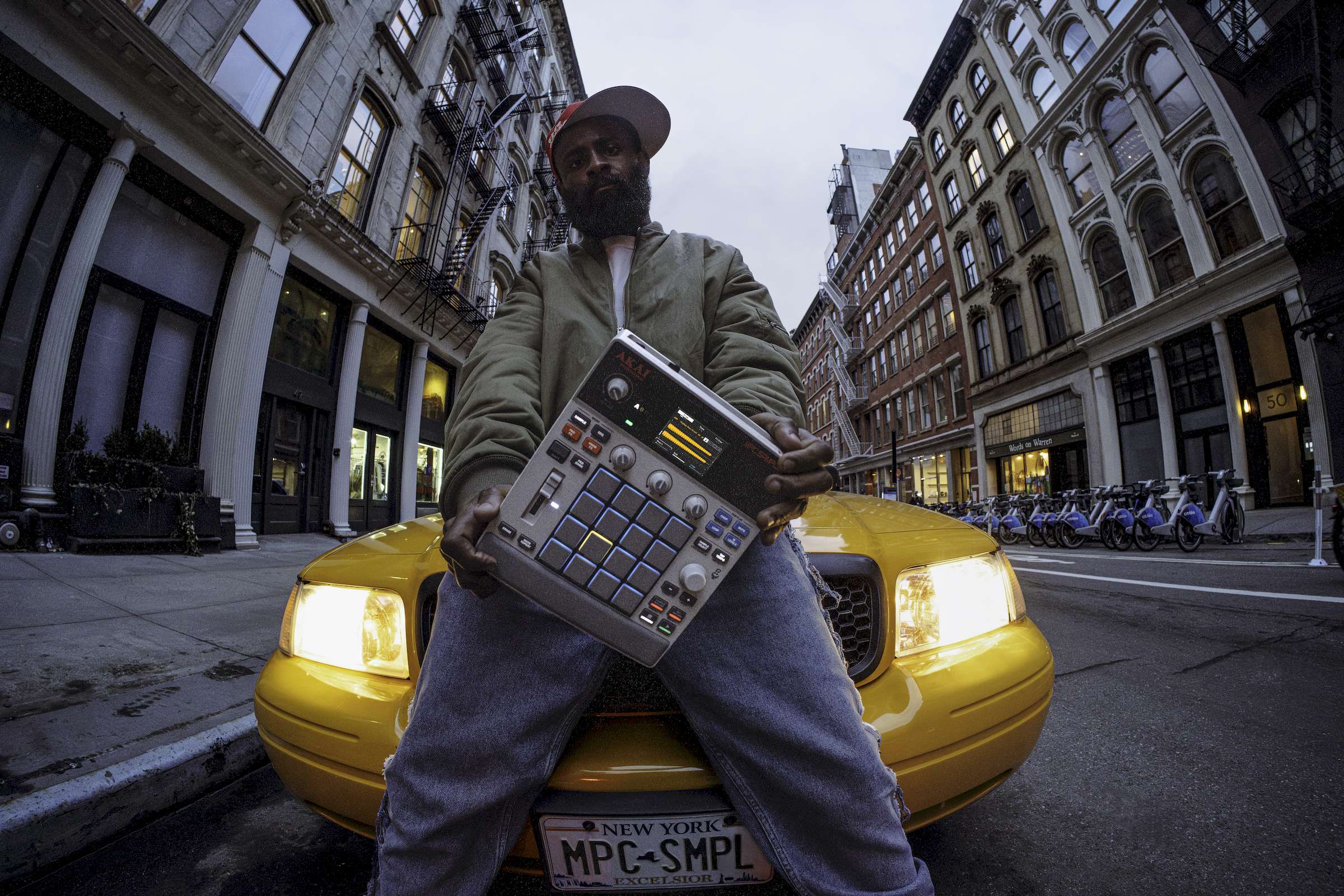
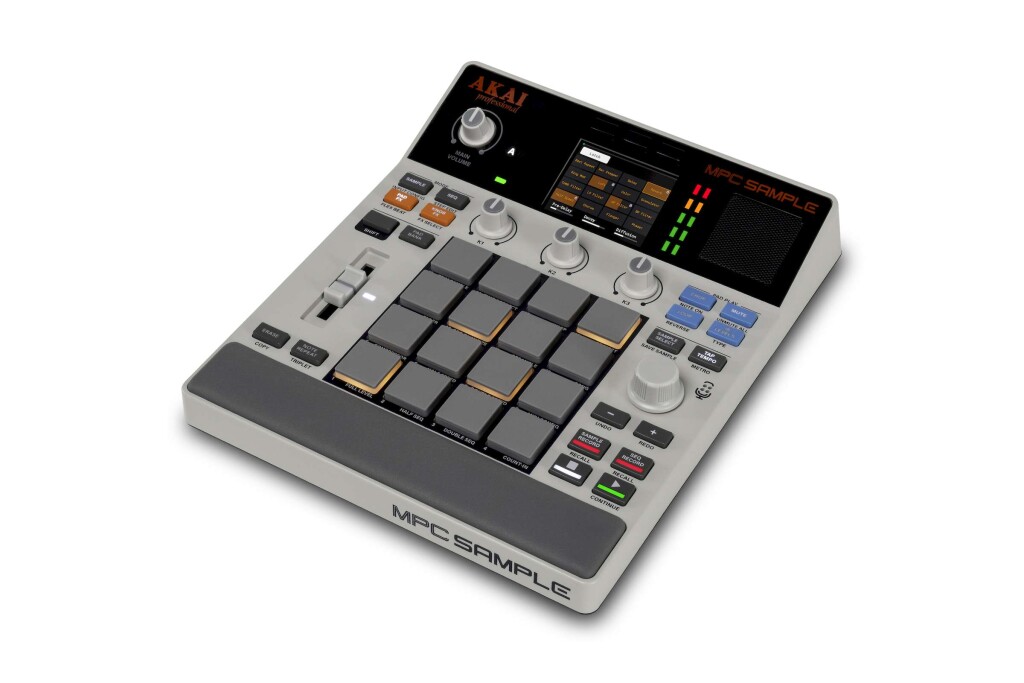
The music production landscape has undergone a seismic shift, with the advent of powerful, portable devices that democratize the art of beatmaking. At the forefront of this evolution is Akai Professional’s new MPC Sample, a compact groovebox that reimagines the iconic MPC workflow for the modern era. Priced at an accessible $399, this diminutive device promises to fit entire studios into the palm of your hand, a stark contrast to the behemoths of yesteryear. To fully appreciate this technological leap, a direct comparison with its legendary progenitor, the 1988 Akai MPC60, is not just insightful, but essential.
The Dawn of Portable Production: A New Era for Musicians
The current market is experiencing a renaissance of affordable, portable music-making tools, a trend that recalls the innovative spirit of devices like the Casio SK-1. Musicians now have an unprecedented array of options that prioritize portability without compromising on functionality. Ableton’s Move, with its expanding ecosystem of official and unofficial add-ons, stands out as a highly flexible solution. Roland has entered the fray with its compact P-6 and the ever-popular SP-404MKII, known for its affordability and robust feature set. Elektron offers the model:samples, Korg delivers the incredibly budget-friendly Volca Sample 2 at just $149, and Yamaha has introduced the innovative SEQTRAK. Even Casio, a name synonymous with early digital music experimentation, is making a comeback with a new device that has generated considerable excitement. Teenage Engineering continues to expand its popular PO series with variations like the EP-133 KO II. This surge in accessible hardware, including offerings from Polyend and 1010music, creates a vibrant ecosystem where creative exploration is encouraged and impulse buys are within reach. These "cute little beasties," as they’re sometimes affectionately called, are not about compromise; they represent a paradigm shift where smaller form factors can enhance the creative process, making music production more intuitive and enjoyable.
Akai Professional, a company with a storied legacy in beatmaking hardware, appears poised to capitalize on this trend with the MPC Sample. The device’s design immediately evokes the classic MPC60, a deliberate choice that bridges the gap between nostalgia and cutting-edge technology. This strategic design decision, coupled with its accessible price point and portable form factor, positions the MPC Sample as a strong contender for widespread popularity within Akai’s own product line. It is, in essence, "recession-proof" gear, ideal for creators on the go or those looking for a robust yet unobtrusive addition to their production setup.
A Tale of Two MPCs: A Spec-for-Spec Comparison
To understand the magnitude of Akai’s achievement with the MPC Sample, it’s crucial to examine its technical specifications against those of the original MPC60, a groundbreaking instrument designed by the legendary Roger Linn.
Hardware Foundations: Pads and Displays
Pads:
- MPC60: Features 16 velocity-sensitive pads. This pad mechanism, an innovation by Roger Linn, was a pivotal development in electronic music technology, offering a tactile and expressive interface for triggering sounds.
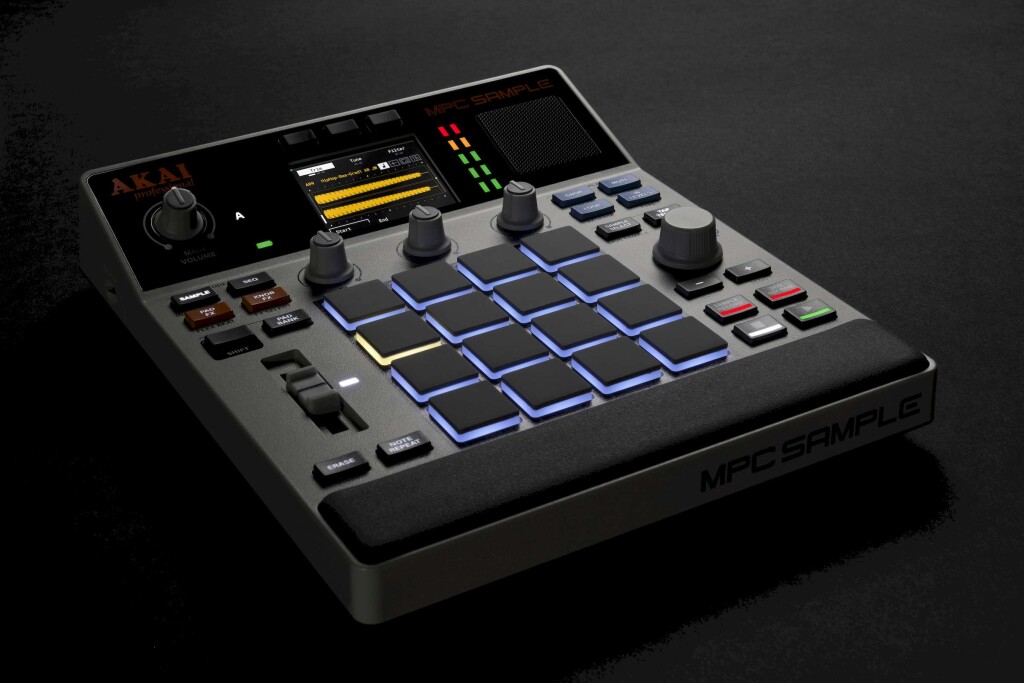
- MPC Sample: Boasts 16 velocity-sensitive pads, enhanced with RGB color backlighting and polyphonic aftertouch. The addition of RGB lighting provides visual feedback for different pad states, while polyphonic aftertouch allows for more nuanced control over expression after the initial note strike.
Display:
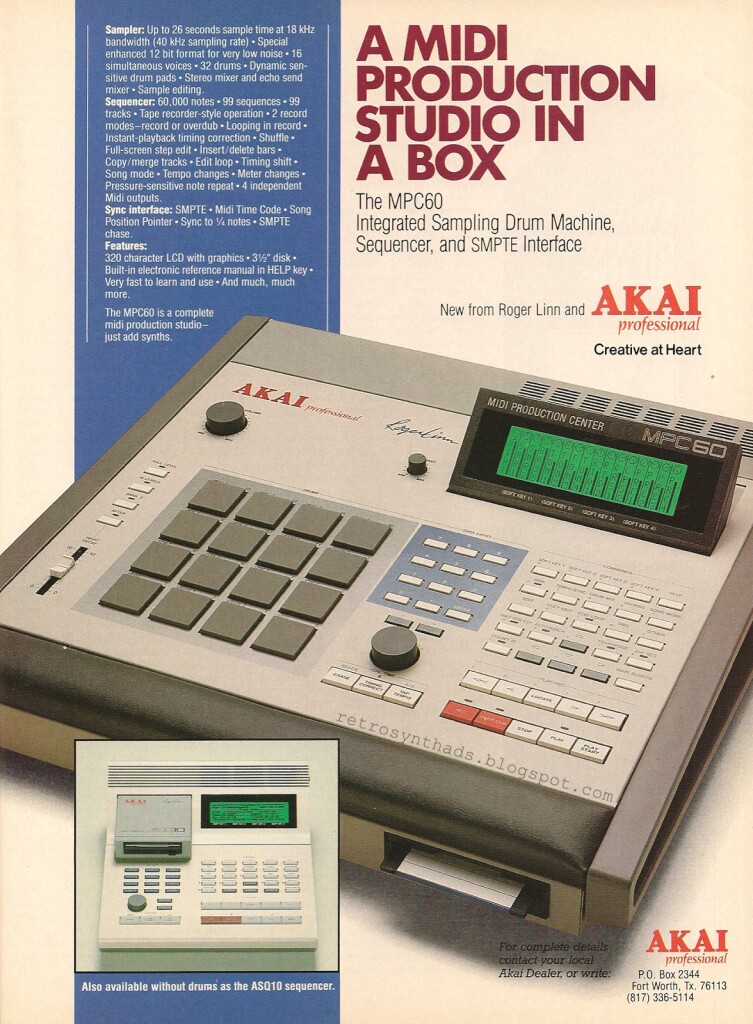
- MPC60: Equipped with a large, 8-line by 320-character backlit LCD display. This monochrome display was state-of-the-art for its time, providing essential information for navigating its complex functions.
- MPC Sample: Features a modern 2.4-inch full-color display. This vibrant screen offers significantly improved visual clarity, making it easier to read menus, view waveforms, and manage projects.
Form Factor and Weight:
- MPC60: A substantial unit measuring 48.5 x 45 x 12.7 cm and weighing approximately 10.4 kg. This was a piece of studio equipment designed to be a central hub.
- MPC Sample: Dramatically more compact at 23.6 x 19.4 x 5 cm and a mere 0.9 kg. This ultralight and small footprint underscores its portability, easily fitting into a backpack.
Connectivity: I/O and Synchronization
Input/Output (I/O):
- MPC60: Offered extensive connectivity for its era, including 2x MIDI In (with merge capability), 4x MIDI Out, an RS-232 connector, a dedicated metronome out, TRS stereo input, main stereo output, eight assignable individual or mix outputs, and echo send with stereo returns.
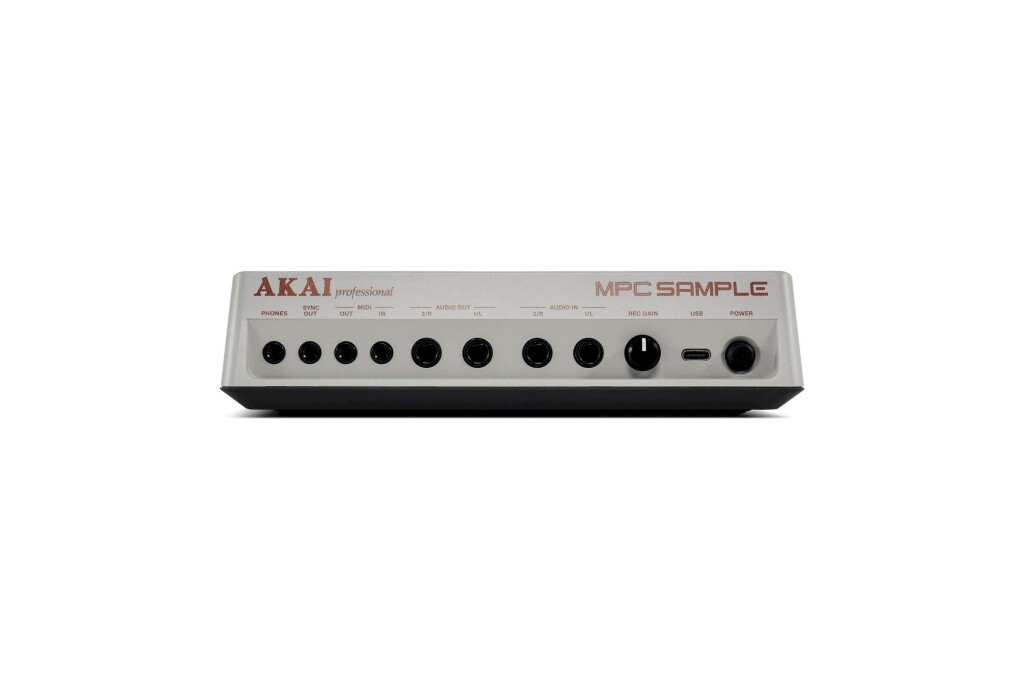
- MPC Sample: Streamlined for modern workflows, featuring USB-C for power, MIDI, audio, and file transfer. It includes 1x MIDI In and 1x MIDI Out, 2x 1/4” TRS inputs, 2x 1/4” TRS outputs, a 1/8” headphone output, and a sync output. While the MPC60 boasts more physical I/O, the MPC Sample’s internal effects and USB-C integration offer significant advantages in contemporary production environments.
Synchronization:
- MPC60: Supported a remarkable array of synchronization formats, including SMPTE, MTC, MIDI clock, MIDI SPP, FSK, pulse wave, and quarter-note metronome clicks. It also featured MIDI Sample Dump, a function largely superseded by more efficient transfer methods.
- MPC Sample: Primarily relies on USB-C for MIDI clock and communication, offering a more streamlined but less diverse synchronization palette compared to the MPC60’s extensive legacy options.
Sonic Engine and Capacity: The Heart of the Beat
Sound Engine and Sample Memory:
- MPC60: Operated at a 40kHz sampling rate with an 18kHz frequency response, utilizing 16-bit A/D and D/A converters. Its sequencer memory was also 16-bit, though sample memory was recorded at 14-bit resolution. It featured 16-voice polyphony. The total sample memory was a mere 13.1 seconds, expandable to 26.2 seconds with an additional 768K of RAM, costing $599.95 in 1988.
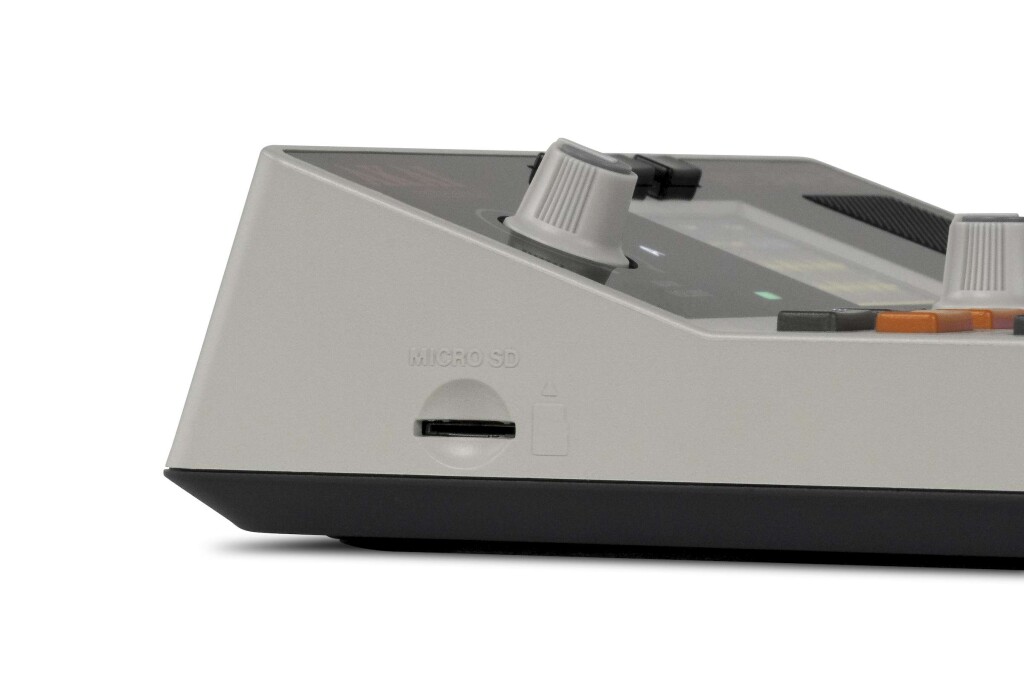
- MPC Sample: While Akai has not explicitly stated the sample rate, it is widely assumed to be stereo 44.1 kHz, 16-bit, a standard for digital audio. It offers a generous 32 stereo voices of polyphony with disk streaming capabilities. The internal storage is substantial, with 2 GB of RAM and 8 GB of internal storage, expandable via microSD card. This represents a colossal leap in sample storage capacity, a critical factor in modern music production.
Sequencer Capabilities:
- MPC60: Supported step and live recording with 96 PPQ timing resolution. Quantization options ranged from 1/8 to 1/32 note triplets, with the ability to quantize while recording. It also featured punch-in and punch-out capabilities. A significant limitation of the MPC60 was that sampling would wipe the sequencer memory, forcing users to choose between recording new audio or composing sequences.
- MPC Sample: Features the renowned MPC sequencer with real-time swing at a high resolution of 960 PPQN. This advanced timing engine allows for intricate rhythmic programming and expressive groove creation. The ability to sample and sequence concurrently, without the memory conflict issues of the original, is a fundamental improvement.
Storage and Price: A Monumental Shift
Storage and Sample Memory:
- MPC60: Limited to a meager 13.1 seconds of total sample memory (individual samples capped at 5.3 seconds) with its base configuration of 768K sampling RAM. The sequencer boasted 512K RAM, capable of storing approximately 60,000 notes.
- MPC Sample: Equipped with 2 GB of RAM and 8 GB of internal storage, expandable via microSD. This offers an astronomical increase in storage, allowing for vast sample libraries and longer audio recordings.
Price Point:
- MPC60: Launched with a formidable price tag of $4,999.95 in 1988. Adjusting for inflation, this would equate to roughly $13,800 in today’s currency for the base model alone. The sampling expansion, crucial for many users, added another $599.95.
- MPC Sample: Available for a highly accessible $399. This price point democratizes access to professional-grade MPC functionality, making it attainable for a much broader audience. While the MPC One exists as a more feature-rich alternative at $699, the MPC Sample’s appeal lies in its unparalleled portability and iconic aesthetic.
Additional Features of the MPC Sample
The MPC Sample distinguishes itself with a suite of modern features that would have required extensive external hardware for the MPC60:
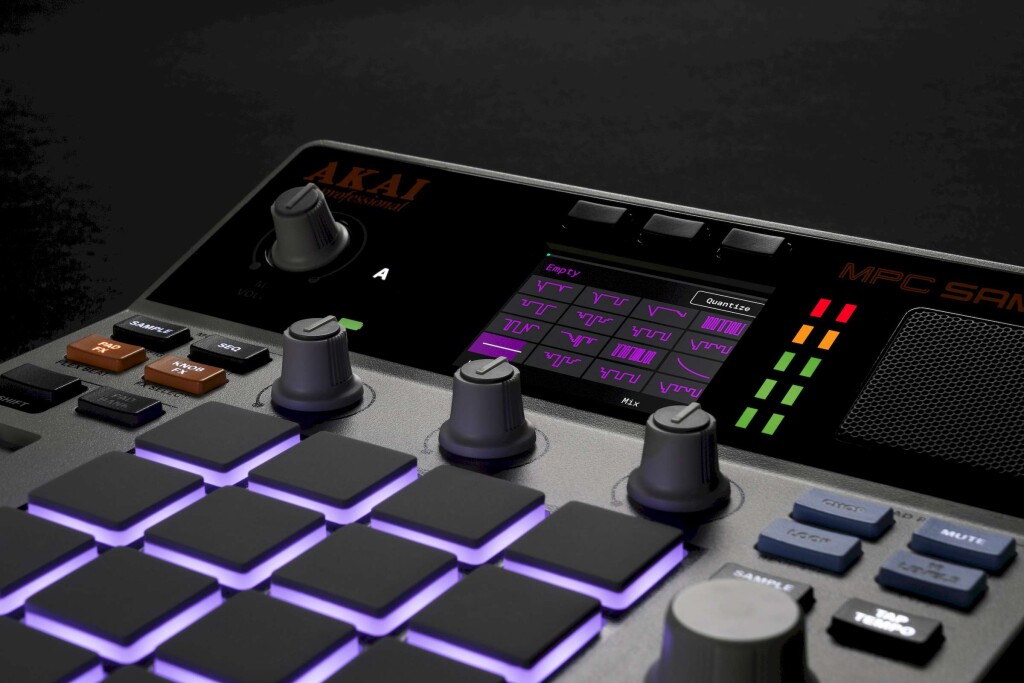
- Built-in Effects: A comprehensive suite of built-in effects, including reverbs, delays, and modulation, significantly enhances sonic sculpting capabilities without the need for outboard gear.
- Battery Power: Operates on battery power, offering true standalone operation and freedom from mains power outlets.
- USB Audio Interface: Functions as a USB audio interface, allowing direct recording into a computer or DAW.
- Built-in Microphone: Features an integrated microphone for spontaneous sampling on the go.
- Speaker: Includes a built-in speaker for immediate playback and idea generation.
- CV/Gate Outputs: Offers CV/Gate outputs for controlling analog synthesizers and modular setups.
- Onboard Synthesizer Engine: Incorporates a versatile onboard synthesizer engine, expanding its creative potential beyond sampling.
Roger Linn’s Vision: The Genesis of the MPC
Reflecting on the MPC60’s legacy, Roger Linn, the visionary behind its design, shared his insights. In a 2011 interview, Linn expressed surprise at how the MPC60’s sampling capabilities, initially limited to just 13 seconds, were utilized for entire sampled loops rather than solely for drums. He noted the emergence of new forms of dance music, a constant in his observations of musical trends. Linn drew parallels between the "disco sucks" sentiment of the 1970s and the modern acceptance of dance music, recognizing the shared musical styles and production techniques. He recounted how Giorgio Moroder, a pioneering producer, utilized his earlier LM-1 Drum Computer to create sampled drum sounds before dedicated samplers existed, a testament to the innovative spirit of the era.
Linn emphasized that fundamental concepts he pioneered, such as loop recording, quantization, and swing, have endured and evolved within modern DAWs. These features were born from a desire to streamline the creative process, allowing musicians to capture ideas quickly without technological impediments. He viewed loop recording as a more convenient evolution of tape overdubbing and quantization as a practical solution for correcting timing errors. The concept of swing, he explained, was deeply influenced by his work with Leon Russell, highlighting the importance of subtle rhythmic nuances that contribute to a recording’s "feel." Linn astutely observed that variable swing would become a cornerstone of hip-hop production, a prediction that has proven remarkably accurate.
The Verdict: A Monumental Leap Forward
The comparison between the Akai MPC Sample and the original MPC60 underscores the incredible advancements in music technology over the past four decades. By the numbers, the MPC Sample represents less than 9% of the original’s weight and a mere fraction of its inflation-adjusted cost. Yet, it offers over 10,000 times the sample storage capacity. This dramatic shift in accessibility and power is not merely an upgrade; it’s a revolution. The MPC Sample democratizes the creative tools that once belonged to a select few, empowering a new generation of musicians to craft beats and produce music anywhere, anytime. It honors the legacy of the MPC line while boldly forging a new path for portable, powerful music production.