Mia Khoirunisa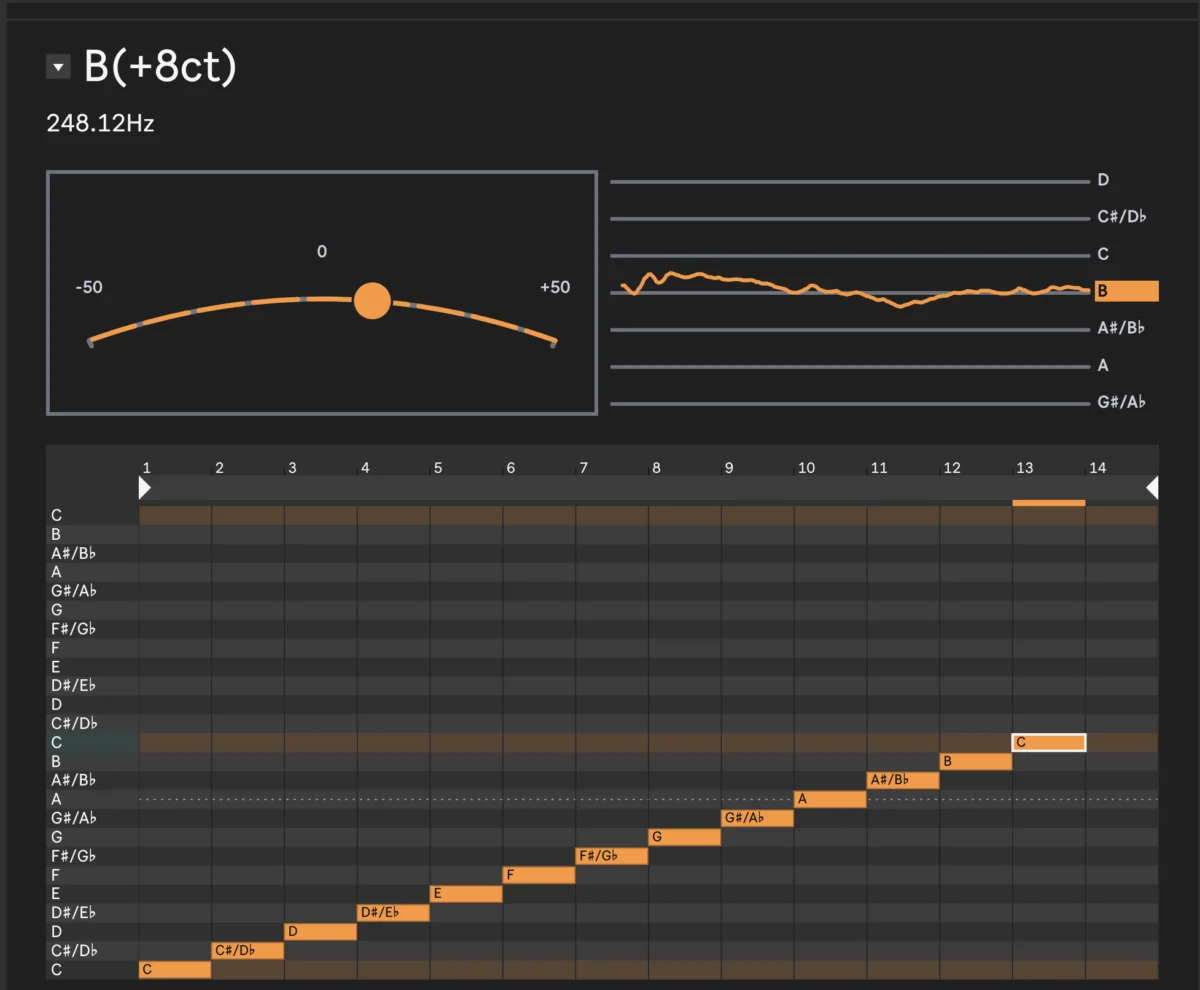
Feeling the need to make music making a little less solitary? In this multi-part series, we’ll be exploring some resources for adapting Ableton Live to playing with others – playing in tune, in sync, sharing ideas, and producing together. So let’s start as instrumental ensembles do: by tuning up.
Thanks to Ableton for helping support this series. This article contains some affiliate links; if you buy something from a CDM link, we may earn a commission.
While the allure of solitary creation is undeniable for many artists, the desire to collaborate and connect through music is equally powerful. Shifting from individual practice to group performance, especially within the digital realm, often requires a thoughtful approach to preparation and technical setup. This series aims to compile practical strategies and tools for navigating this transition, fostering discussion and expanding our collective understanding of collaborative music-making in Ableton Live. We begin with the fundamental aspect of playing in tune, a crucial element for any ensemble, whether acoustic or electronic.
The Foundation of Ensemble: Mastering Pitch and Tuning
In the world of digital music production, achieving precise intonation and harmonic coherence is paramount for successful collaboration. Ableton Live, a powerful Digital Audio Workstation (DAW), offers a range of tools and integrations designed to facilitate this, from basic tuning to complex microtonal systems. This section delves into the core functionalities and third-party solutions that empower musicians to play in tune, both individually and in ensemble settings.
Accurate Pitch Reference: Ableton’s Built-in Tuner and Beyond
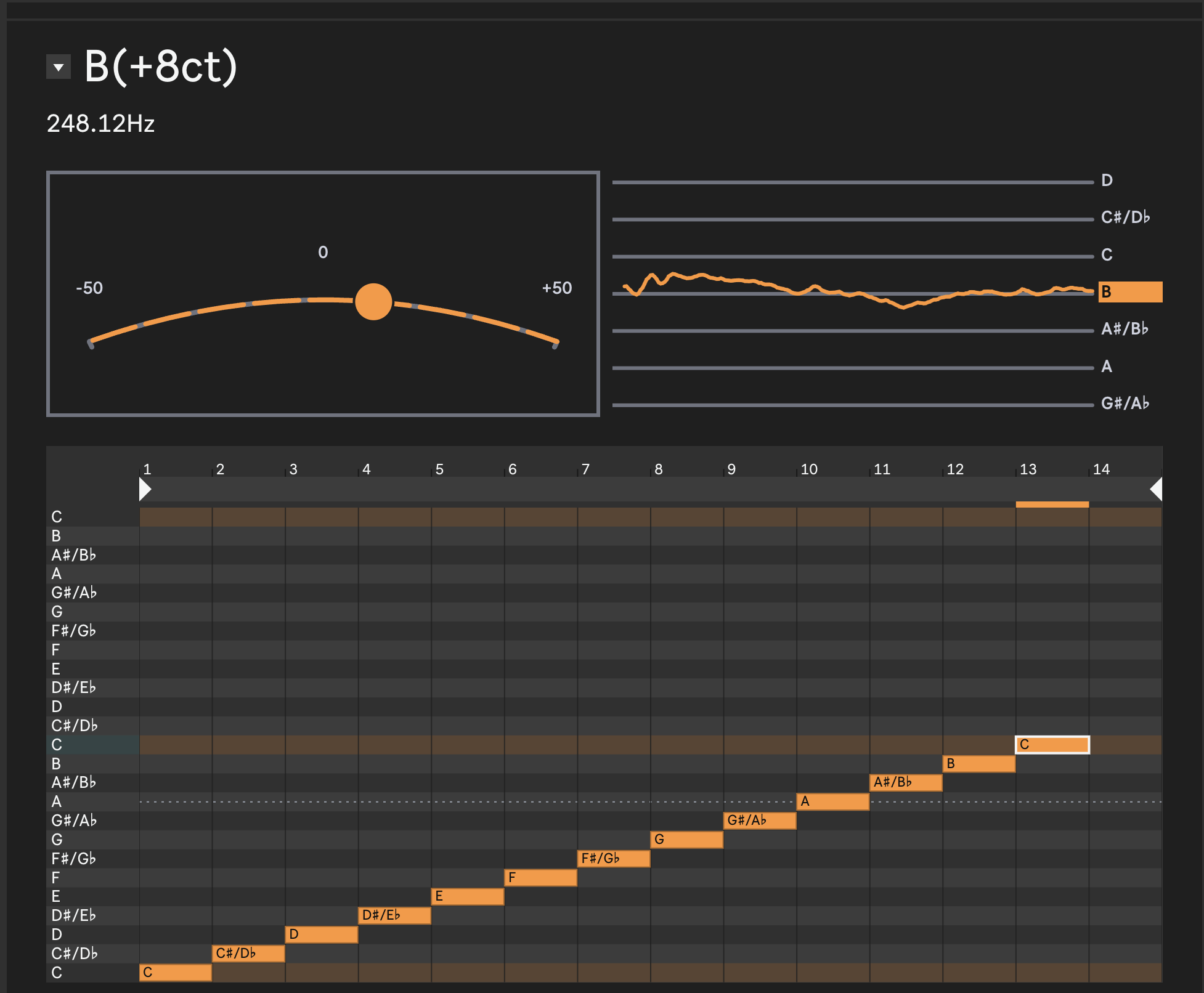
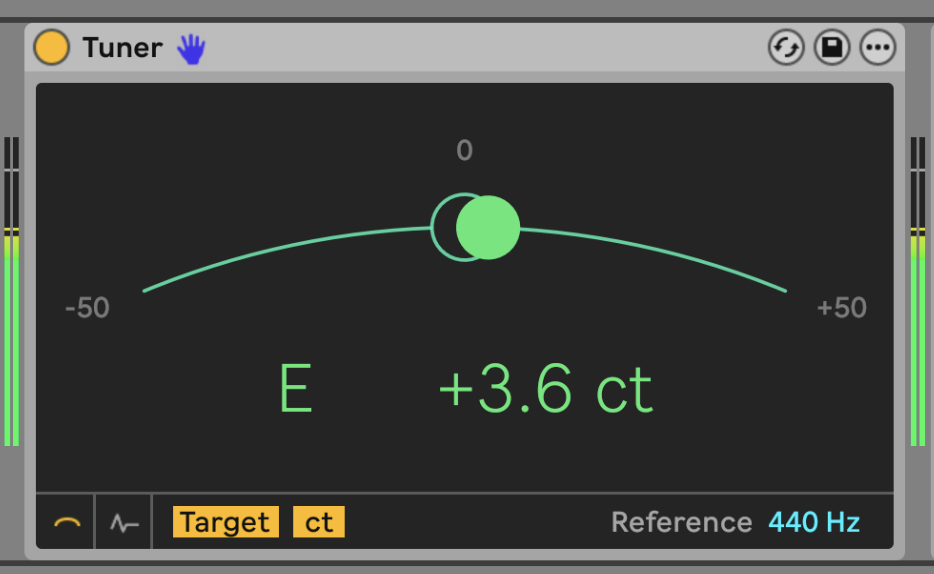
Ableton Live, by default, does not enforce a singular pitch reference, allowing for flexibility in tuning systems. However, to ensure consistency and accuracy, especially when working with external instruments or multiple instances of synthesizers, the Ableton Tuner, introduced in Live 9.2, serves as an invaluable utility. This device, when inserted on an audio track or after a software synthesizer, can precisely measure incoming pitch. It functions both as a diagnostic tool for external instruments and as a reference for tuning the Live session or individual virtual instruments.
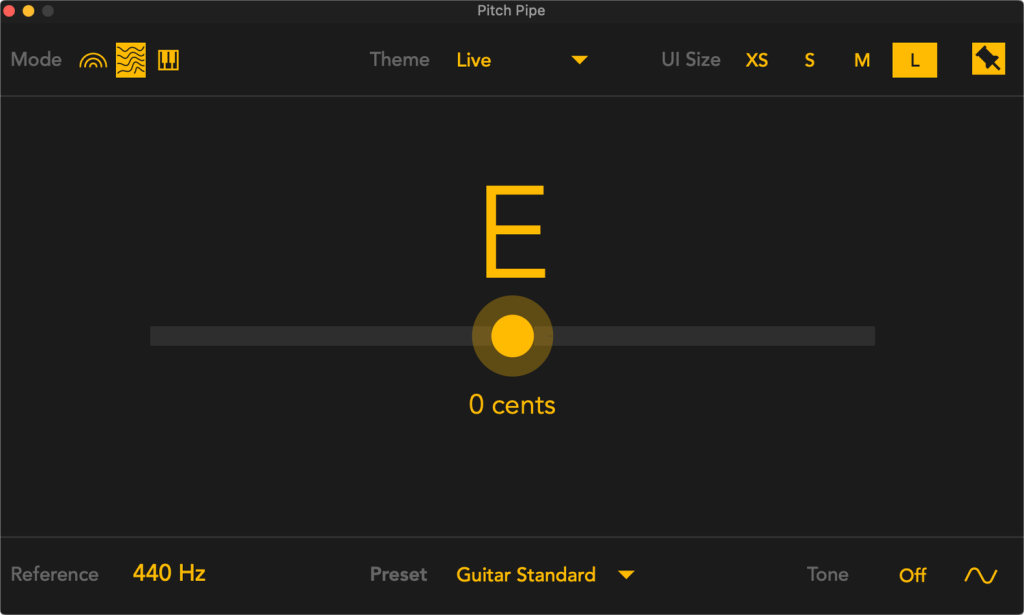
For a more sophisticated and accessible tuning experience, Iftah’s Pitch Pipe, a Max for Live device, offers advanced features. Designed with inclusivity in mind, it provides accessibility options for visually impaired users while also catering to sighted individuals. The Pitch Pipe includes specialized modes for tuning string and percussion instruments, broadening its applicability across diverse musical contexts. As with Iftah’s other software, it operates on a pay-what-you-choose model, ensuring cost is not a barrier to entry while allowing users to support ongoing development. This approach democratizes access to high-quality musical tools.
Bridging the Analog and Digital Divide: CV Tools and Modular Integration
The integration of Ableton Live with analog modular synthesizers presents unique challenges and opportunities for precise tuning. The Ableton CV Tools suite, compatible with Live 10.1 and later, provides a bridge between the digital and analog worlds. For users with Push 3 hardware, the integrated capabilities, including its standalone functionality, further enhance this connection.
The CV Instrument within CV Tools is instrumental in calibrating and tuning modular equipment. Comprehensive guides, such as the one provided by Kirk Degiorgio, offer detailed insights into its application. A critical technical consideration for utilizing CV Instrument is the requirement for a DC-coupled audio interface. Unlike standard AC-coupled interfaces, DC-coupled interfaces can pass direct current signals, which are essential for CV (Control Voltage) transmission. Resources like Ableton’s FAQ and Sweetwater’s guide to DC-coupled audio interfaces offer further clarification on this technical necessity.
Even without a dedicated DC-coupled interface, several components of CV Tools remain highly useful. CV Clock, CV Clock Out, and CV Triggers enable synchronization and rhythmic control. The ‘Pitch’ mode of CV In can convert incoming audio pitch into CV signals, allowing for expressive control of modular parameters. Furthermore, any MIDI-to-CV interface can be employed for pitch calibration, with some interfaces offering their own built-in calibration routines. For a deeper understanding of integrating Ableton Live with Eurorack modular systems, extensive tutorials are available, providing strategies applicable to various rig configurations.
Software Modulars and Pitch Tracking: Expanding Possibilities
The realm of software modular synthesis within Ableton Live opens up further avenues for pitch detection and control without the need for external hardware. Numerous free and paid software modular environments can be integrated into Live, offering robust pitch-tracking capabilities.
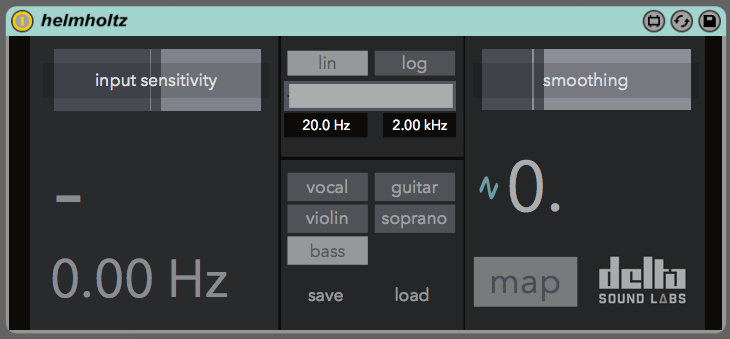
While Ableton Live features a built-in Envelope Follower, it lacks a dedicated Pitch Follower. However, the Helmholtz Pitch Follower by Delta Sound Labs, a free Max for Live device, fills this gap effectively. This powerful tool can analyze incoming audio and translate its pitch into control signals, enabling dynamic modulation of parameters within Live.
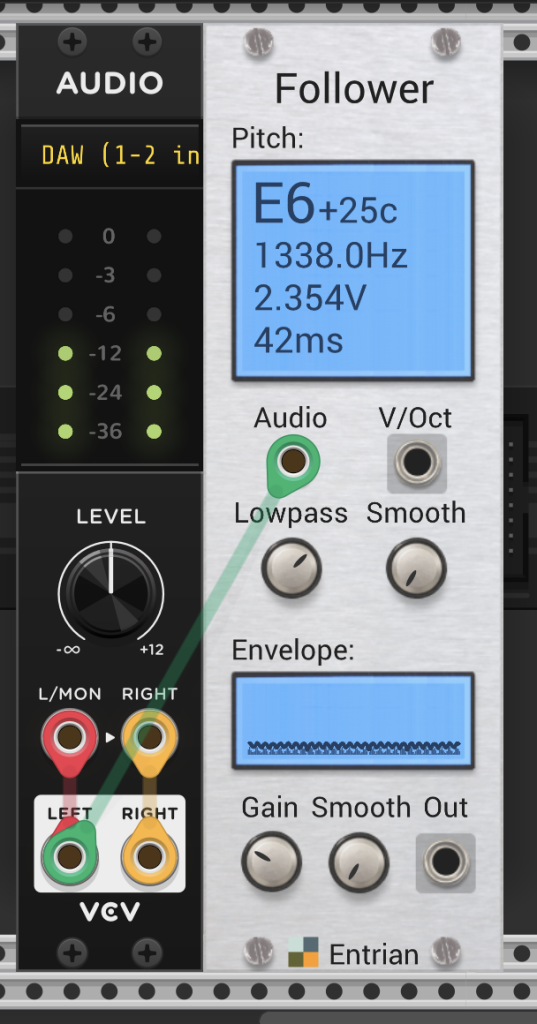
In the broader software modular ecosystem, the Entrian Follower from the VCV Rack Library stands out as a free and potent option. This device excels at pitch detection and envelope following, outputting CV signals that can be patched to control various parameters. It operates within VCV Rack, a free open-source modular synthesizer platform. While the free version of VCV Rack is highly capable, the Pro version is required to use it as a plugin within Ableton Live.
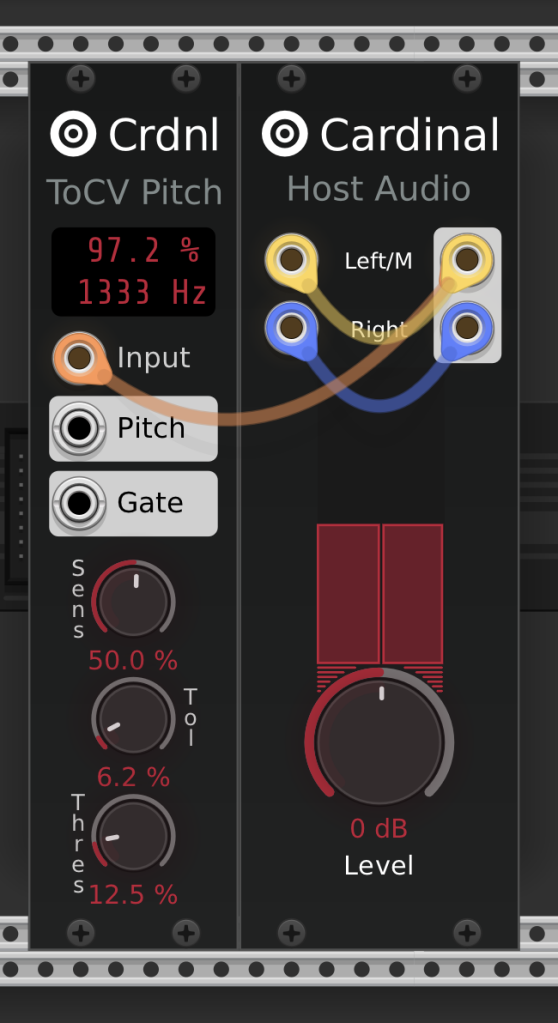
A notable fork of VCV Rack, Cardinal, offers a free plugin version that includes its own integrated pitch detector, aptly named ToCV Pitch. This allows for seamless conversion of audio pitch into control voltage directly within a DAW environment.
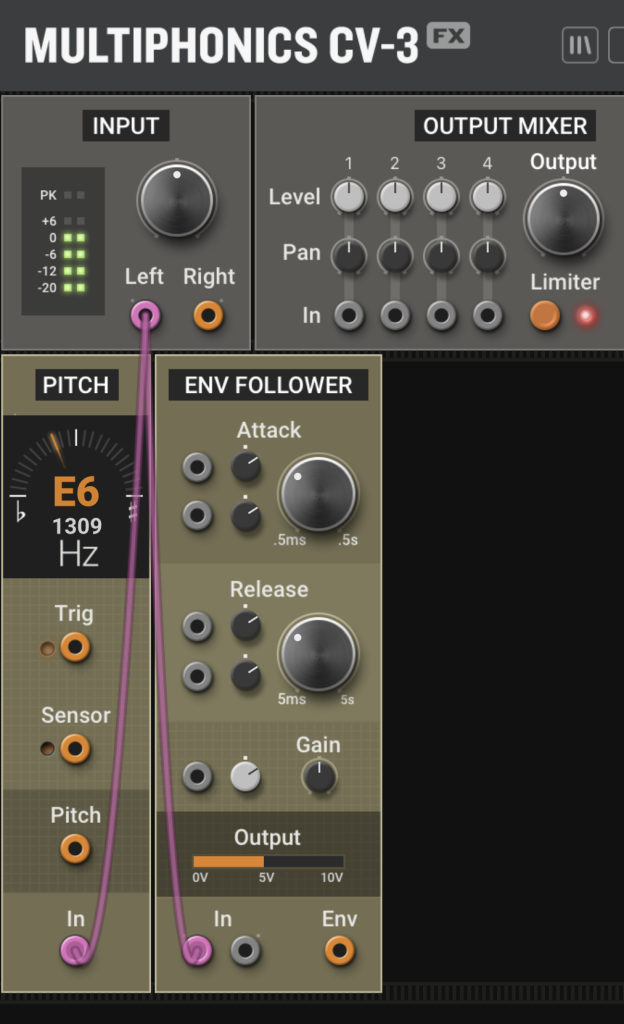
Another compelling option is AAS Multiphonics CV-3, a software modular environment that boasts its own integrated pitch and envelope following capabilities. This further expands the toolkit for musicians seeking to harness audio input for expressive control and modulation.
Navigating Harmony: Scales, Modes, and Microtonality
Beyond basic pitch accuracy, understanding and implementing scales and tuning systems are crucial for creating harmonically rich and coherent music, especially in collaborative settings. Ableton Live 12 introduces significant advancements in this area, providing powerful tools for both conventional and experimental harmonic exploration.
Scale Awareness: Constraining Notes and Inspiring Creativity
For those working within 12-Tone Equal Temperament (12-TET) or closely related tuning systems, Ableton Live’s Scales and Scale Root features are indispensable for live performance and composition. While these tools are often associated with clip editing, their utility extends significantly to live playing scenarios.
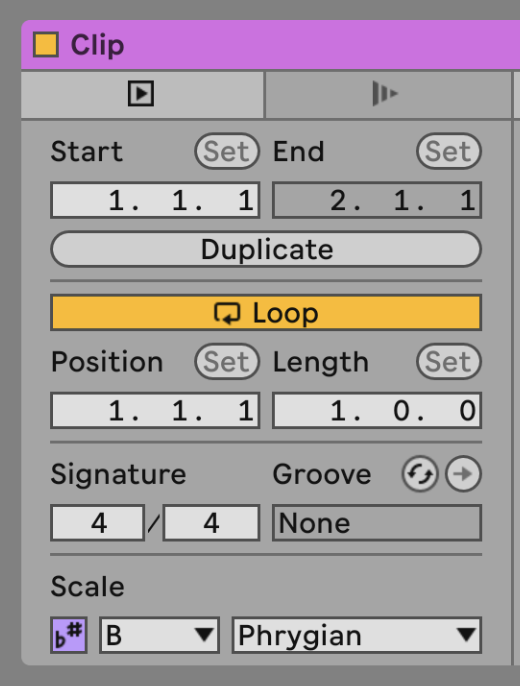
Users can define the Scale Root (key signature) and Scale Name in the toolbar, alongside toggling Scale Mode. It is important to note that this feature does not alter the fundamental tuning of the instrument; rather, it constrains MIDI note input to the selected scale. This offers a "no wrong notes" experience, encouraging improvisation and experimentation within a defined harmonic framework. While some scale names, particularly those from non-Western traditions like Pelog, might have nuances in their traditional tuning, modern interpretations and common usage in Western music often align with 12-TET approximations for scales like Hirajoshi and Iwata.
A variety of Ableton devices incorporate Scale Awareness, meaning their behavior dynamically adjusts based on the selected scale and root note. When applied to a MIDI track, these devices ensure that all played notes adhere to the chosen scale, facilitating a more cohesive and harmonically pleasing output. This feature is particularly beneficial when performing live or collaborating, as it helps maintain musical consistency across different parts.
Furthermore, the Quantizer with its Auto Shift function can be used for auto-tuning, and this extends to tuning oscillators and filters within devices like Meld. Identifying the scale icon on a device’s toolbar indicates its scale-aware capabilities.
The ability to automate scale changes adds another layer of creative control. By setting desired root notes and scales/modes within clips, users can trigger different clips to instantaneously transpose the harmonic context of their performance. This opens up possibilities for dynamic harmonic shifts during live sets or complex compositional arrangements.
On hardware controllers like Push and Move, Scale settings can be accessed and manipulated directly on the device, offering an immediate and tactile experience of harmonic manipulation. For an in-depth exploration of Scale Mode and its applications, comprehensive tutorials by artists like Ned Rush provide invaluable insights.
For advanced users seeking to automate scale changes from Arrangement view, a dedicated Max for Live device offers sophisticated control. This enables musicians who prefer working within the timeline to dynamically alter harmonic palettes, further enhancing the creative workflow.
Advanced Harmony Tools: Tritonet and Chord Change
Beyond Ableton’s native features, the Max for Live community offers powerful third-party tools that extend the possibilities for collaborative harmony. Tritonet v3 by Tolga Zafer Özdemir is a standout device that provides an immersive harmonic experience. It features live visualizations of the circle of fifths, access to hundreds of scales, chord generation capabilities, and integrations with both MIDI and audio signals. Tritonet v3 is particularly well-suited for use with Push or Move controllers but also functions effectively with other MIDI controllers.

Complementing Tritonet, Chord Change by XY Studio Tools focuses on real-time chord progressions. This device can synchronize harmonic changes across up to eight tracks simultaneously, empowering musicians to "conduct" the harmonic flow of their ensemble in real-time. This level of harmonic control can significantly enhance the collaborative improvisational process.
Exploring Diverse Tunings: Live 12’s Tuning Systems
Recognizing that not all musical traditions adhere strictly to 12-TET, Ableton Live 12 introduces Tuning Systems, a groundbreaking feature that allows for precise control over microtonal and non-standard tunings. This feature is critical for musicians aiming to collaborate with instruments or traditions that employ different harmonic frameworks.
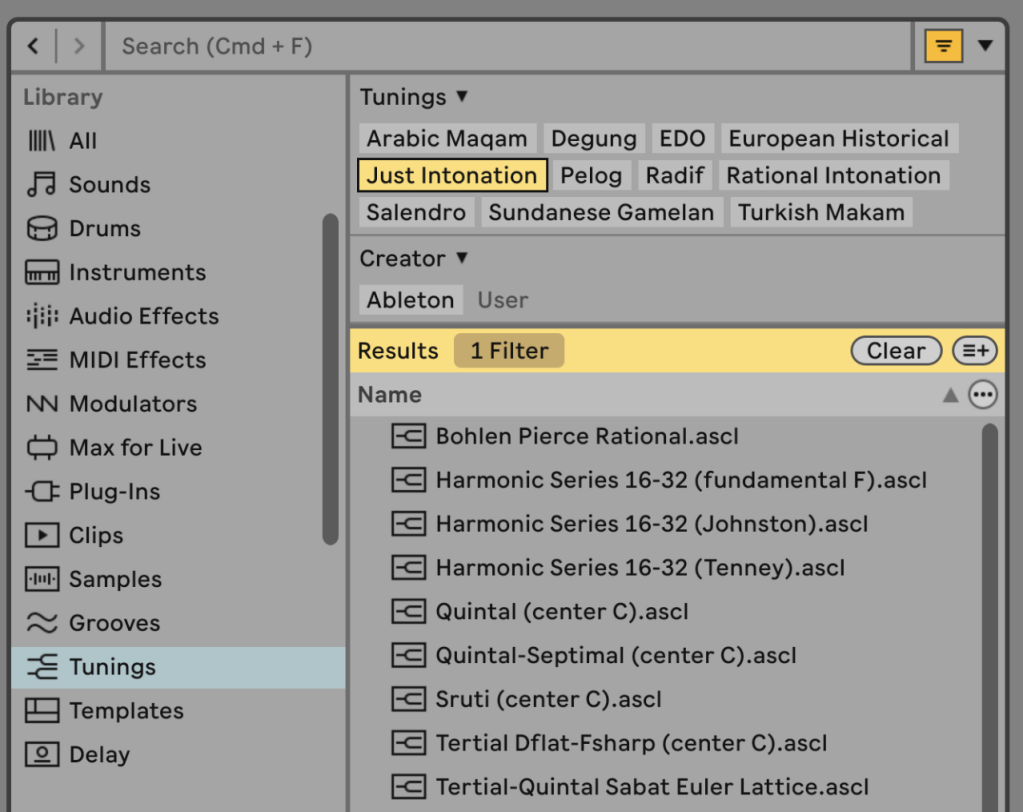
Users can select from a library of built-in tuning presets or import custom Scala files, a common format for microtonal tuning data. Activating a Tuning System in Live disables the standard Scale Mode, as Tuning Systems operate on a more fundamental level of pitch definition. This ensures that all tuning-aware devices within Live, including Ableton’s native instruments and select audio effects, will render notes according to the chosen tuning.
For third-party plugin support, the integration relies on MPE (MIDI Polyphonic Expression) compatibility. By enabling MPE Mode and "Apply Tuning to Per-Note Pitch Bend" within a plugin’s settings, these instruments can accurately interpret and render the chosen tuning system. Many modern synthesizers, such as Arturia’s Pigments, offer internal MPE pitch settings that align with this functionality. It is often advisable to test new tuning systems with simpler, built-in Ableton instruments like Drift before implementing them with complex third-party plugins.
The increasing prevalence of MPE support across plugins and software modular environments means that per-note pitch control, essential for microtonal performance, is becoming more accessible. This allows musicians to explore a vast sonic landscape beyond the confines of equal temperament.
For musicians interested in creating their own unique tunings, Ableton provides a free online tool, Make your own tuning. This platform offers detailed resources for learning about tuning systems and constructing custom tunings, with support for MIDI and pitch input. The resulting tuning data can be exported as Scala files and directly imported into Live.
For more advanced tuning design, Leimma by Counterpoint and Khyam Allami offers sophisticated tools for ratio-based tuning and fine-tuning measurements. While Ableton’s browser tool is convenient, Leimma provides a deeper level of precision for crafting new tunings from scratch. Scala files generated by Leimma can be seamlessly integrated into Ableton Live.
Alternative Tuning and Microtuning Solutions
Beyond Ableton’s native capabilities, several third-party tools offer advanced microtuning functionalities. MTS-ESP provides automated tuning across a wider range of devices, extending beyond the Ableton and MPE ecosystem. It also offers advanced tuning editing features directly within the software.
Scale Breaker by Chaos Culture is another powerful tool that works with Ableton Live 10 and later. It boasts unique microtuning features, including morphing and adaptive just intonation, offering a distinct approach to harmonic manipulation.
Preparing for Collaboration: What’s Next
The journey into collaborative music-making with Ableton Live is multifaceted. Having explored the critical aspects of tuning and harmony, the next logical step is to address the temporal synchronization of musical performances. Upcoming segments in this series will delve into the intricacies of clock synchronization, Ableton Link, latency management, and the exciting new Ableton Link Audio feature. We will also examine effective methods for project exchange and explore a plethora of engaging techniques for live collaboration and jamming.
Musicians are encouraged to share their questions, ideas, and tips, contributing to a dynamic and evolving resource. This series aims to serve as a practical guide, a bookmarkable reference for musicians preparing for their next creative endeavor.
The continuous evolution of Ableton Live, particularly with the introduction of Live 12 and its advanced tuning and scaling features, empowers musicians to push the boundaries of sonic exploration and collaborative creation. By mastering these tools, artists can unlock new levels of musical expression and forge deeper connections through the shared language of music.