Nana Wu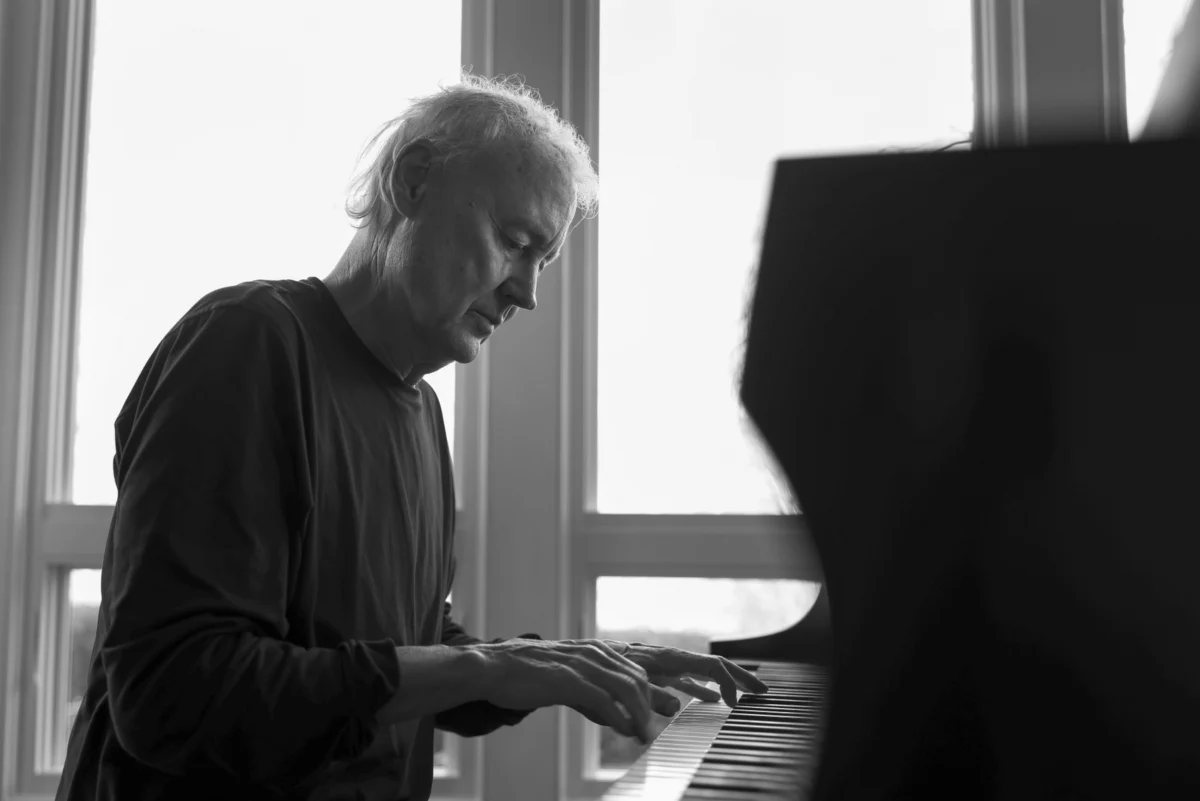
Released on April 3, Bruce Hornsby’s latest album, Indigo Park, marks an unexpected yet profound addition to his storied discography, arriving at a time when the veteran musician had firmly intended to step back from the creative process. The album’s genesis, described by Hornsby himself as "very clear" and intriguing, stands in stark contrast to his initial plans for a much-needed respite from writing, recording, and producing. This unanticipated project emerges from a remarkably prolific period for Hornsby, adding another layer to a recording career spanning four decades since his triple-platinum debut, The Way It Is, in 1986. Since 2019 alone, Hornsby has released five albums in six years, a testament to an artist consistently pushing boundaries and exploring new sonic territories. This recent output includes critically acclaimed works such as Absolute Zero, constructed from instrumental pieces composed during his tenure scoring for Spike Lee, and two distinctive collaborations with the New York chamber ensemble yMusic, showcasing his ongoing commitment to diverse artistic partnerships.
The Unforeseen Genesis: From Burnout to Irresistible Inspiration
Hornsby’s candid admission reveals a profound creative exhaustion that preceded Indigo Park. "I was trying not to write songs," he shared with Billboard from his home in Williamsburg, Virginia. "I’d been so feck and so fertile creatively, so I was kind of burnt with all that — not just with the writing process but burnt with the recording and producing. So I was ready for a break from it all." This sentiment highlights a common challenge for prolific artists who, despite their passion, can reach a saturation point where the well of inspiration feels temporarily dry, or the mechanical demands of creation become overwhelming. For Hornsby, a musician celebrated for his intricate compositions and relentless innovation, this desire for a pause was a deliberate attempt to recharge after a sustained period of intense artistic output that included the nuanced jazz-rock of Absolute Zero (2019), the eclectic soundscapes of Non-Secure Connection (2020), and the deeply personal reflections of Flicted (2022).
However, artistic inspiration often operates on its own unpredictable timeline, defying human intentions. A new song idea, which would ultimately become the reflective and autobiographical title track, "Indigo Park," forcefully intervened with Hornsby’s plans for creative dormancy. He recounts its persistent nature: "It just wouldn’t let me go. I kept giving it the Heisman, giving it the stiff-arm, but to no avail. After about four or five months into trying to not deal with this and having it come roaring into my head at three in the morning, four in the morning, I finally succumbed to the insistence of this idea and decided, ‘OK, I’ll take a deep dive and write this song.’" This anecdote underscores the powerful, often subconscious drive that defines true artistic calling, where ideas demand expression regardless of an artist’s personal exhaustion or strategic breaks.
The validation for pursuing this unexpected path came not only from the sheer persistence of the melody and lyrics but from Hornsby’s visceral reaction during the creative process. "I was getting chills while I was writing it and recording it, and that’s telling you something because you can’t force chills. It either happens or it doesn’t, but when it does happen you need to listen to that. You need to follow the chills." This internal barometer of artistic significance, a profound emotional and physical response to one’s own work, served as an undeniable signal. Further affirmation arrived from his "little coterie of like-minded nerds and geeks whose opinions I trust," including his brother and longtime lyricist John Hornsby. Their enthusiastic reception sealed the album’s fate: "it made me go, ‘OK, motherf**er, I guess you have to write nine more.’" This blend of personal intuition and trusted external validation propelled Indigo Park* from a single insistent idea into a fully realized, multi-faceted album.
A Tapestry of Collaborations and Diverse Influences
Indigo Park distinguishes itself not only by its spontaneous origin but also by its rich array of collaborations and its broad stylistic reach, making it one of Hornsby’s most ambitious undertakings across his 22 studio releases. The album features a remarkable lineup of guest artists, each bringing a unique texture to Hornsby’s vision. Legendary blues-rock icon Bonnie Raitt lends her distinctive vocals, indie rock luminary Ezra Koenig of Vampire Weekend contributes his unique perspective, and acclaimed producer and multi-instrumentalist Blake Mills adds his instrumental prowess. These diverse contributions underscore Hornsby’s ability to bridge seemingly disparate musical worlds, inviting artists from various genres to participate in his expansive sonic experiments.
Beyond the guest vocalists and instrumentalists, the album carries profound historical weight through its songwriting collaborations. Indigo Park includes two of the final lyrical contributions from Robert Hunter, the revered lyricist best known for his work with the Grateful Dead, who passed away in 2019. Hunter’s poetic and often surreal lyrical style finds a fitting home in Hornsby’s adventurous musical frameworks, particularly on tracks like "Alabama" and "Might As Well Be Me, Florinda." Hornsby notes that "‘Alabama’ is a totally wild song lyrically. It’s completely whacky, and I love it. And it made me feel like, ‘OK, here are these lyrics that are definitely atypical, so I need to write atypical music…something as crazy as the words,’" drawing inspiration from Austrian classical pianist and composer Arnold Schoenberg. The inclusion of these posthumous works serves as a poignant tribute to Hunter’s enduring legacy and his profound impact on the American songbook, connecting Indigo Park to a lineage of improvisational and narrative-driven music.
Further deepening its historical resonance, the album features one of the last recordings by Grateful Dead co-founder Bob Weir. Weir, a long-time associate and musical collaborator of Hornsby, contributes to "Might As Well Be Me, Florinda," the other Hunter co-write. Hornsby’s connection to the Grateful Dead runs deep, having played as an adjunct member during the early 1990s, participating in the spin-off band The Other Ones, and joining the iconic Fare Thee Well 50th-anniversary concerts in 2015. The presence of Weir, recorded in May 2023 at Sound City, adds a layer of emotional depth to the album, with Hornsby recalling the collective joy at Weir’s performance: "We were all so happy about it when he sang it down to us at Sound City." Hornsby describes Weir’s performance as "fairly unbridled in the best way, kind of unhinged in a fantastic way, which of course fits the song." Reflecting on conversations with Weir and others like Bill Walton and Robbie Robertson, Hornsby shares a poignant insight into the urgency of creative output in later life: "He said, ‘Man, I just don’t know how much time I have left, and I want to get as much in as I can’ — which, of course, at this point feels prophetic." While the original article contained an unfortunate factual error regarding Bob Weir’s passing, Hornsby’s quote accurately captures a universal sentiment about appreciating the finite nature of life and the drive to maximize one’s contributions.
Sonic Architecture: Pushing Boundaries and Embracing the Unexpected
Hornsby’s career has been defined by his refusal to be confined to a single genre, a trait that Indigo Park amplifies. His catalog hopscotches across pop, jazz, bluegrass, folk, contemporary classical, and improvisational rock. This latest offering is no exception, even while Hornsby remains anchored to his piano across its ten tracks. A notable sonic departure is his embrace of the Rickenbacker 12-string guitar on six of the tunes. Playfully dubbing it his "Bruce McGuinn" record, a clear nod to The Byrds’ co-founder Roger McGuinn, who popularized the instrument, Hornsby signals a deliberate move to integrate a brighter, jangling, and often psychedelic folk-rock texture into his arrangements. This choice not only expands his personal instrumental palette but also imbues the album with a distinct character, differentiating it from his piano-centric past.

The album’s production, co-helmed by Hornsby alongside Tony Berg and Will Maclellan, and largely recorded at the legendary Sound City in Van Nuys, California, is central to its adventurous sound. Sound City, known for its iconic analog board and a history of producing seminal rock albums, provides a fitting backdrop for Hornsby’s experimental inclinations. His stated goal for Indigo Park was clear: "I’m just interested in pushing the norms and forms of the popular song and make a sound that I haven’t heard before." This ambition, he admits, might sound "pompous," but he hopes "every third song or so there’s something that’s hopefully gonna bend your ear and take you to a new and adventurous place where you may not have dealt with in the basically white-note universe we live in in popular music." This statement reveals Hornsby’s conscious effort to challenge musical conventions and inject complexity and innovation into accessible song structures.
A significant aspect of Hornsby’s boundary-pushing approach is his deep engagement with modern classical music. Beyond Schoenberg, he openly acknowledges tapping sources such as Elliott Carter, György Ligeti, and Dmitri Shostakovich for inspiration on various Indigo Park tracks. This is not a new development for Hornsby; he notes, "Modern classical music has been informing my music for quite a while." This influence manifests in unconventional harmonies, shifting time signatures, and intricate melodic lines that subtly weave into the album’s fabric, offering listeners an intellectually stimulating experience alongside compelling narratives. For instance, "Silhouette Shadows" is derived from yet another unused instrumental cue originally written for a Spike Lee film, further illustrating his practice of repurposing and evolving his diverse compositional works into new contexts. This intellectual rigor, combined with his pop sensibilities, positions Hornsby as a unique bridge between high art and popular music, enriching the latter with sophisticated harmonic and structural ideas rarely found in mainstream releases.
Thematic Resonance: Life, Loss, and Ecstatic Delight
The lyrical landscape of Indigo Park is as rich and varied as its musical composition, deeply engaging with themes of mortality, aging, and the acceptance of life’s inherent complexities. Throughout the album, Hornsby’s songs wax nostalgic and sentimental, yet also pensive and, at times, celebratory. The title track, "Indigo Park," serves as a thematic anchor, with lyrics that directly address this journey: "Oh let these days be your delight…It’s only life, and life is enough/So whatever, it’s life and life only." Hornsby elaborates on this overarching theme: "I thought, ‘OK, I’ve got this song, and it has a little bit to do with sort of aging and hopefully getting to be a little less of an idiot and a little smarter about things as you get older, ’cause you have a better perspective.’ That sent me heading into this idea that, ‘OK, I’m just going to write about where I am now.’ It’s the story of the record." This self-aware introspection gives the album a profound sense of authenticity, inviting listeners to reflect on their own passages of time.
Amidst these profound reflections, Indigo Park also showcases moments of pure, unbridled joy and playful experimentation. The track "Ecstatic," featuring Bonnie Raitt, is a prime example of this lighter, rhythmic departure. The song’s unique origin stems from AAU (Amateur Athletic Union) basketball cheers, demonstrating Hornsby’s knack for drawing inspiration from unexpected corners of everyday life. The accompanying music video further amplifies this energy, featuring the Louisiana State University women’s basketball team chanting and dancing, creating a vibrant visual complement to the track’s infectious rhythm. Raitt’s involvement, though perhaps unexpected in this specific musical environment, proved to be a triumph. Hornsby recounts her initial surprise, "She heard it and was like, ‘Wow, I wasn’t expecting this.’ She said, ‘It’s so you,’ maybe because of the sports origin story, but she’s so good on it." Her performance elicited an enthusiastic response from the production team: "When she sent it down, we just went crazy. (Berg) got her on the speaker phone and we’re all exulting and he said to her, ‘Bonnie, I’ve always loved you, but now I’m in love with you…’" This blend of personal reflection, sophisticated musicality, and buoyant celebration exemplifies the album’s multifaceted emotional landscape.
Four Decades of Evolution: Beyond "The Way It Is"
The release of Indigo Park arrives almost exactly 40 years after Hornsby’s seminal debut album, The Way It Is, whose chart-topping title track propelled him to international fame and earned him the Grammy Award for Best New Artist. This debut, following a period playing in Sheena Easton’s band, established Hornsby as a formidable talent. However, despite its commercial success and enduring legacy, Hornsby has frequently expressed a complex relationship with his early work, often finding it "unlistenable" due to his self-professed dissatisfaction with his younger singing voice.
This sentiment underscores a critical aspect of Hornsby’s artistic journey: his unwavering commitment to evolution over replication. "The mass of the world knows me for that one song," he acknowledges, referring to "The Way It Is." "In America I was sort of a four- or five-hit wonder, but in the rest of the world it’s that song. Even (Don Henley’s) ‘The End of the Innocence’ wasn’t that big abroad. What I really feel in this area is that they missed the best part. I feel like I’ve continued to grow and develop through the years, evolve. I’ve just never allowed myself to be shackled in that prison people would like to place me in." This "creative prison" refers to the common expectation from audiences for artists to faithfully reproduce their most popular hits, a phenomenon that Hornsby has actively resisted throughout his career by consistently reinterpreting his material and venturing into new sonic territories.
His defiance of these expectations, while artistically liberating, has not been without its challenges. Hornsby admits to receiving "nasty letters all the time, nasty Facebook screeds," from fans frustrated by his refusal to offer static, nostalgic performances. Yet, he has learned to embrace this dynamic: "I’ve learned to live with that for 40 years now." This steadfast dedication to artistic growth, even in the face of audience resistance, has cemented his reputation as an artist of profound integrity and ceaseless curiosity. Indigo Park, with its unexpected origins, diverse collaborations, and sophisticated musical and lyrical themes, stands as a powerful testament to this enduring philosophy, proving that for Bruce Hornsby, the way it is is always subject to change and reinvention.
Continuing Horizons: Tours and New Ventures
Unafraid to once again challenge expectations and present his latest musical explorations, Bruce Hornsby and his band, the Noisemakers, embarked on a tour shortly after Indigo Park‘s release, with dates currently booked into October. These live performances offer an opportunity for audiences to experience the new material alongside reinterpreted classics, embodying Hornsby’s philosophy of constant musical evolution.
Beyond the touring circuit, Hornsby remains creatively engaged in multiple projects. He has been collaborating with his friend, actor and musician Jeff Daniels, on music for a new play, showcasing his versatility in contributing to different artistic mediums. And, echoing the serendipitous genesis of Indigo Park, another musical idea is already beginning to take shape, potentially hinting at his next venture. "I’ve just about written a song about an artificial friend, inspired by the Kazuo Ishiguro novel Klara and the Sun, and I kinda like this one," he reveals. "It feels like a Beatles/Beach Boys thing, with some interesting chord movement. I can almost sit there and play it for someone so…maybe that’s the start of something." This nascent idea, drawing from contemporary literature and hinting at classic pop influences, underscores Hornsby’s perpetual state of artistic inquiry and his readiness to follow inspiration wherever it may lead, ensuring that his creative journey continues to surprise and captivate. Indigo Park is not merely an album; it is a profound chapter in the ongoing narrative of an artist who continually redefines the boundaries of popular music.