Jia Lissa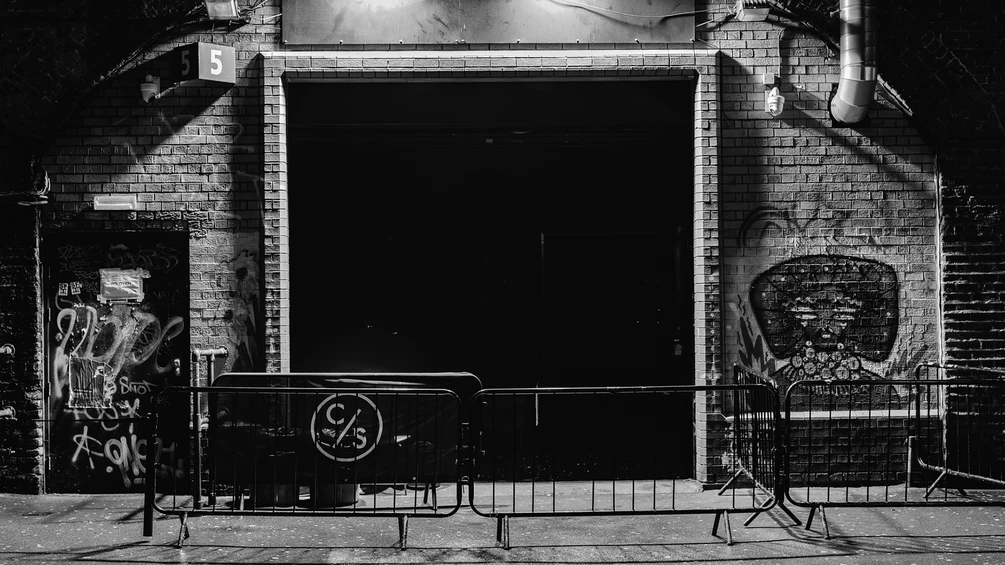
After 24 years as a vital space for underground club culture, Corsica Studios, a beloved institution in London’s electronic music scene, has officially closed its doors. The iconic venue, nestled in the Elephant and Castle district, concluded its quarter-century run with a marathon 30-hour closing weekend, marking the culmination of two months of farewell parties hosted by an array of promoters who had shaped its legendary reputation. This closure, on April 3, 2026, signals the end of an era for a venue celebrated for its open-minded, artistic approach, formidable sound system, and immeasurable impact on electronic music.
The Final Chapter: A Farewell to a Legend
The final weekend was a testament to Corsica Studios’ enduring legacy, drawing a diverse crowd of loyal patrons, artists, and industry figures. From navigating the labyrinthine corridors of Elephant and Castle station to feeling the bass reverberate through brickwork, the pilgrimage to Corsica was a ritual for many. Inside, the "sweat-soaked communion" and "music like you’ve never heard before" defined countless nights. The extensive series of closing events, featuring a veritable who’s who of groundbreaking artists and scene-forming parties, underscored why Corsica not only survived for so long but became so deeply cherished. As Double O of the renowned jungle/drum & bass party Rupture articulated, the venue’s founders consistently "see the art, and they value the art," a philosophy that permeated every aspect of its operation.
A Genesis in Art, Not Clubbing
The genesis of Corsica Studios lay far from its eventual identity as a pulsating club. It began as an art space, initially located on Corsica Street in Highbury, North London. Founded by artist Amanda Moss and experimental musician Adrian Jones, the venue embodied a raw, "warehousey" aesthetic. Early iterations were characterized by white-painted walls, reminiscent of a gallery, and hosted a diverse programme encompassing "performance art and sculptures and stuff, as well as electronic music," as recalled by Posthuman, founder of the I Love Acid party, who played at the original Highbury spot.
The pivotal relocation to Elephant and Castle occurred in 2002. Despite the change of address, the core artistic mission endured, initially maintaining the minimalist white interior. Throughout the 2000s, the space gradually evolved into a club, driven by economic realities. Bar sales, a consistent revenue stream, became crucial in subsidizing other artistic ventures, including live bands and dance classes. Jamie Shearer, who became Corsica’s general manager in February 2011, recounted the venue’s initial DIY charm: "When I looked around Corsica I was like, ‘Wow, this is very DIY’. The bar was literally just a plank of wood." This ethos, he explained, was to "set up a kind of community arts space where you can come and do whatever the fuck you want."
While weekday bands, workshops, and cultural events continued, Corsica Studios solidified its identity as a club, gradually acquiring proper bars, wood-panelled walls, and sophisticated lighting rigs. Crucially, it also developed one of London’s most formidable sound systems. Although much of the original white paint gave way to a darker, more utilitarian aesthetic, traces remained, and the spirit of improvisation persisted. Elements like house party-esque sheets hanging from the ceiling, a modular setup introduced post-pandemic, and the innovative use of the adjacent Colombian restaurant as a third room or separate venue, ensured Corsica never shed its distinctive DIY charm.
The Unpolished Aesthetic and Open-Door Policy
Interviewees frequently described Corsica Studios as "quirky," "higgledy-piggledy," and "beautiful chaos." This unpolished finish was, in fact, integral to its allure. Mantra, co-founder of Rupture, observed, "The messiness of it just makes you feel comfortable. You feel at home. It’s not precious. It’s not sleek. And I think it really taps into the music that we play, which is rough and rugged and raw and aggressive and wild." Essentially, the venue remained a blank canvas for artists, true to its original vision. Jamie Shearer emphasized the core principle: "You have to just respect people and what they want to do. Somehow, through that kind of mantra, it’s always been really quality stuff."
This open-door policy was particularly vital for emerging promoters and artists. Josh Doherty (Posthuman) highlighted how Corsica’s founders were "welcoming to new ideas. When you’re a young promoter and you’ve got a new idea and you don’t have a history, a lot of people don’t want to know… Most established venues of that size would have just said, ‘No, jog on’." This willingness to take risks on unproven talent allowed countless nascent scenes to flourish. Posthuman candidly recalled the "fucking disaster" of his first I Love Acid event, which resulted in significant financial loss due to an accident. Yet, Adrian and Amanda recognized the unique "vibe" and offered him a coveted Halloween slot, which proved a massive success and "made I Love Acid."
Cultivating Community and Creativity
The venue’s unique physical layout, featuring two roughly equal-sized rooms, played a significant role in fostering a sense of community over individual stardom. Posthuman explained, "It pushes you to do interesting line-ups, rather than cashing in on a big headliner and putting on support acts. You can’t put on a big act that everybody will try and crowd into one room [to see]. You have to build a line-up that will spread a crowd out. I think that’s the thing that’s really cultivated nights that end up being more like communities, because you don’t have that singular focus on a big thing. You have to have something that works for everybody, and that changes the vibe a lot."
This approach led to a vibrant tapestry of events. Hyperdub’s Ø (Zero) night, for instance, transformed Room 1 into an art gallery while reducing Room 2 to a pitch-black dancefloor with a single laser. Evian Christ’s Trance Party pushed sensory boundaries with extreme strobes, lasers, and eclectic selections. Digital City created a classic, beanbag-laden chillout space in Room 2. Nights like Plex, Colony, and Machine were instrumental in revitalizing London’s techno scene in the early 2010s, providing a crucial platform during a period of flux. Jaded kept the party alive well into Sunday mornings. In-house parties such as Trouble Vision and Find Me In The Dark became essential launchpads for future stars like Bicep, Avalon Emerson, Axel Boman, and Midland. More recently, Small Talk continued this mission, supporting a new generation of artists.
When Rupture, the jungle/drum & bass heavyweight, moved to Corsica in 2008, the venue had no prior history with the genre. Yet, the trust between the founders and promoters allowed Rupture to blossom, becoming a global destination for junglists. They hosted two-day birthday events, commissioned murals in the corridors, and even recorded "fly-on-the-wall" audio for a special radio show. Mantra fondly remembered Adrian Jones’s reaction to ambitious line-ups: "I remember talking to Adrian ages ago about line-ups. He was like, ‘How are you going to afford that?’ I went, ‘I don’t fucking know, who cares?’ He cracked up, and was like, ‘Yes, that’s the vibe. You make the party that you want happen’." This anecdote perfectly encapsulates Corsica’s philosophy of prioritizing artistic vision over commercial expediency.
The Science of Sound: A Sonic Sanctuary
If there was one element that consistently captivated attendees, it was Corsica Studios’ unparalleled sound system. "I just remember being hit by the bass," said Double O of his first visit, a sentiment echoed by nearly every regular. Tales abound of the bass making water ripple in toilet bowls, akin to a scene from Jurassic Park. Will Taylor, Corsica’s production manager, who first visited for a Rhythm Section night in 2017, recalled it being "really loud and extremely dark," a memory he cherishes.
The venue’s commitment to sound was unwavering, featuring Funktion-One systems throughout, constantly tweaked and refined. Over the years, Room One saw several iterations, from original understage bassbins to three stacks, culminating in its final configuration of an Evo 6 speaker in each of the four corners and a mono stack of six BR218 bassbins at the side. For the final two weeks, an additional six 21-inch subwoofers were added, simply "because why not?" Will Taylor affectionately described the team as "sound nerds. We don’t necessarily know the science, but we know what sounds good, and when you’ve been listening to that room for 10 years and you’ve heard how good it can sound, it’s just constantly chasing that."
The challenge lay in making the system versatile enough for Corsica’s varied programming. "You might have drum & bass one day and then the next day will be a full rock band," Taylor noted. "How do you make the system work for both? And make the layout work for both? That’s something that we always had to keep in mind. If this was just a club that remains in the same position the entire time, maybe the sound system would be configured differently, but because the space is modular, we have to make it work in a variety of different layouts." The low ceilings, volume, and precise placement of cabinets—most notably Room 2’s iconic back wall of bass—created an immersive, all-encompassing sonic experience. Even the former third room, The Colombian, received the full treatment, with a Funktion-One wheeled in and out for each event. Posthuman recalled a Machine event there, with a pristine white Funktion-One rig in a white-painted room, serving "dirty techno – and then a pastry shop at the front." This unwavering focus on sound was largely attributed to Adrian Jones’s personal passion. "When the actual owner of the club is passionate about sound and music themselves, that’s the thing that changes it," Posthuman affirmed. "The sound of Corsica was always banging."
Challenges and Resilience: A Quarter-Century Under Pressure
Corsica Studios’ journey was not without significant challenges. In 2017, the scene mourned the "devastating" loss of co-founder Amanda Moss to ovarian cancer, an outpouring of love and tributes underscoring her profound impact. The global pandemic brought another existential threat, forcing the club’s closure. During this period, Adrian Jones ingeniously transformed the space into a "Colombian butchers/money exchange/shopping market," a testament to the venue’s adaptable, entrepreneurial spirit. Despite these hurdles, Corsica Studios persevered, a testament to the dedication of its team and the unwavering support of its community. Jamie Shearer highlighted the unique nature of Corsica’s staff: "Corsica is such a specific beast that you kind of need to get it. And I think it’s more worthwhile investing in developing your current staff than it is getting someone who’s already got their own ideas about what the role should be." This internal development fostered a deep understanding of the venue’s "chaos which just makes sense."
The Inevitable March of Gentrification: Elephant & Castle’s Transformation
Ultimately, the club’s closure was a long-anticipated outcome, a consequence of the relentless gentrification reshaping Elephant and Castle. Jamie Shearer revealed that the club had always operated with a six-month break clause in its contract, creating constant "uncertainty." The final blow came from the 20-year regeneration project in the area, specifically new residential flats built overlooking the venue, making its continued operation in its current form unviable. "Gentrification comes for us all," remarked Posthuman, succinctly capturing the prevailing sentiment.
Regular partygoers witnessed the district’s rapid transformation firsthand. The Heygate Estate, a Brutalist housing complex built in the 1970s that once housed over 3,000 people, was "socially cleansed" in the 2000s and demolished in the early 2010s to make way for upscale developments. In 2020, the iconic Elephant & Castle shopping centre, a local landmark, closed its doors and was torn down the following year. By 2022, when DJ Mag conducted a cover shoot with Mantra and Double O at Corsica, the gaping void left by the shopping centre resembled a "gigantic bomb crater," instilling a palpable sense of impending doom. It was, many felt, only a matter of time before Corsica Studios too would be impacted. The area saw an influx of luxury apartments and commercial spaces, driving up property values and fundamentally altering the demographic and character of the neighbourhood.
A Hard-Fought Legacy: Agent of Change in Action
Despite the inevitability of closure, Corsica Studios’ story is not one of complete defeat. Jamie Shearer explained Adrian Jones’s pragmatic and determined approach to engaging with developers. While conversations were slow, City Hall, including former Night Czar Amy Lamé, and the local council actively championed the club’s cause. Although a resolution couldn’t be reached to save the club in its original guise, significant progress was made. Due to Section 106 laws, which mandate developers to mitigate the impact of new developments, and the Agent of Change principle, designed to protect existing venues from noise complaints by requiring new developments to bear soundproofing costs, developer Delancey is legally obligated to soundproof the arches at its own expense. Crucially, the Corsica team has first refusal on operating the space as a cultural venue in the future.
"Adrian was very adamant that he didn’t want to be muscled out or paid off or whatever," Jamie stated. "He wanted to ensure that there’d still be a venue here that serves the community, and it took a lot of time and a lot of effort. I know people want to have this story of, like, ‘Once again, the developers muscle people out’. And it could have been that, they could have done that, but they didn’t." This outcome represents a hard-won victory for London’s embattled nightlife, demonstrating that through sustained advocacy, existing cultural institutions can secure a future, even if transformed. The Agent of Change principle, enshrined in planning policy, proved instrumental in preventing the complete eradication of the space’s cultural potential, offering a glimmer of hope for other venues facing similar pressures.
Looking Forward: The Future of the Arches and The Carpet Shop
The narrative of Corsica Studios, therefore, isn’t entirely concluded. Whether the team will return to operate the Elephant Road arches remains uncertain, but as Will Taylor notes, "it’s a late-night space available in Zone One in London, and that is an incredible opportunity for anyone… There is going to be a club there, which is a win." Jamie Shearer echoed this forward-thinking sentiment: "Everything good should come to an end. It’s time to do something new. Like, what are we going to do with what we’ve learned over the last 25 years, and make it even better, and make it last another 25 years?"
Indeed, the Corsica crew has already begun applying their wealth of knowledge to a new venture: The Carpet Shop in Peckham, opened in 2024. This smaller space allows them to continue supporting emerging promoters and artists, serving as an incubator for future talent, and experimenting with new concepts, such as operating as a taco restaurant during the day. This adaptable approach reflects the resilience and innovative spirit that defined Corsica Studios.
An Enduring Impact on London’s Club Culture
Even without a definitive comeback or new projects, Corsica Studios’ story will resonate through its profound and indelible impact on electronic music and London’s wider cultural landscape. The sheer number of individuals who were empowered to create groundbreaking art within its arches, and in turn, the countless lives transformed by those experiences, is immeasurable.
Posthuman unequivocally declared, "It should literally be revered in the same way that the people talk about the Haçienda. It’s up there with the most important clubs in dance music history… When you talk about clubs that were also part of entire scenes starting and communities building, you would mention places like Haçienda and Plastic People, and Corsica is that." He attributed this stature to the club’s unique programming philosophy, layout, and unwavering commitment to the underground. Unlike many mega-clubs dominated by headliner culture, Corsica Studios, while no stranger to top-tier artists, consistently prioritized its open-minded, art-first approach. This ensured that new artists, the "risky unknowns," always had a space to experiment, forge the sounds of tomorrow, and cultivate vibrant communities of passionate DJs, musicians, designers, graffiti artists, photographers, and, crucially, ravers.
Mantra encapsulated the venue’s immense contribution: "I think in terms of what Corsica has done for London club culture, it’s impossible to really fathom. They really understand the importance of having a space for new and exciting music to come through – forward-thinking, experimental, the weird and the wonky – and for young people to have a chance to build something." She humorously recalled how Corsica "took a total risk on us, completely. They had no idea who we were. They didn’t like jungle and drum & bass, but they saw the desperation in our eyes, and they gave us a chance." This ethos, she argued, is "how culture is built and maintained, and that the heartbeat of what we all say we love about London is literally what Corsica has provided: new and exciting opportunities and music."
The final word comes from club regular and photographer Clayton Burke, whose evocative imagery captured the essence of Corsica Studios. He described the challenge and privilege of documenting the energy in his "favourite space in the world," a "sweaty, hazy cave" that demanded he "raise my game." Burke lauded Adrian, Amanda, Jamie, and the team for creating "a sacred space built on community, taking risks and giving opportunity, a place that should be spoken about with the same reverence as CBGB’s in New York." He concluded with a deeply personal reflection: "Corsica showed me liberation on dancefloors is possible and allowed me to feel comfortable in my own skin. It also modelled that when you do something with integrity, magic can happen. There was a moment on Sunday night, cocooned in Room 2 where Kode9 was playing, I was dancing in the middle of my crew, tears in my eyes and I’d never felt more safe and more myself in my life. What I’m left with are not just memories of the fearless artistic programming, the best sound system in London or staff that felt like family to each other but, ultimately, the friendships I’ve made there over the years. To me, this is what Corsica Studios is really all about. Corsica Studios forever."