Mia Khoirunisa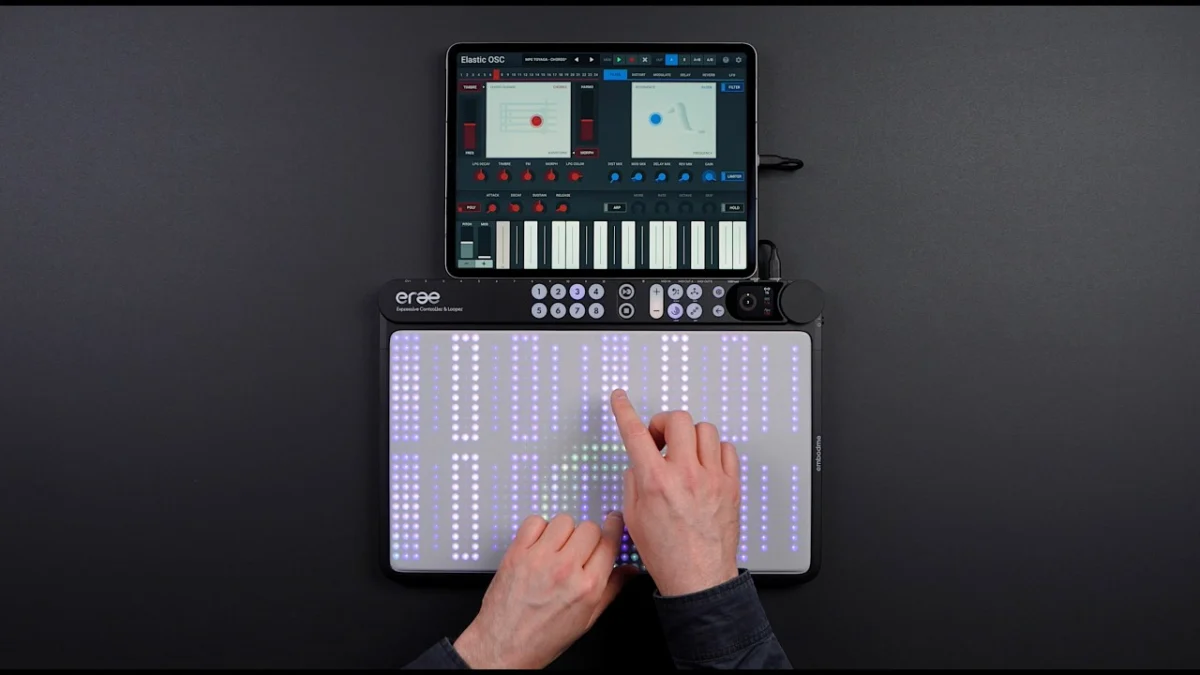
Oliver Greschke’s Elastic OSC, a mobile music application that harnesses the renowned open-source algorithms of Mutable Instruments’ Plaits, has undergone a significant evolution. The latest updates introduce robust modulation capabilities and expand platform compatibility to include Android, alongside enhanced support for MIDI Polyphonic Expression (MPE). This advancement transforms Elastic OSC from a mere emulation of a popular Eurorack module into a sophisticated and versatile mobile instrument, offering a glimpse into a potential alternate reality where the Plaits concept was conceived as a standalone synthesizer.
The Genesis of Elastic OSC: A Vision for Accessible Algorithmic Synthesis
The core of Elastic OSC’s appeal lies in its faithful implementation of the Plaits oscillator engine. Mutable Instruments, under the stewardship of Émilie Gille, has been instrumental in popularizing complex digital synthesis techniques within the accessible format of Eurorack modular systems. Plaits, a macro-oscillator module, is celebrated for its diverse sonic palette, offering a wide array of synthesis models ranging from analog-inspired waveforms to more abstract and experimental digital algorithms. Greschke’s ambition with Elastic OSC was to democratize access to these powerful algorithms, making them available not just to modular synth enthusiasts but to a broader audience of mobile musicians.
The project is built upon the principles of open-source development. The code for Plaits is MIT-licensed, and Elastic OSC adheres strictly to these requirements, making its source code publicly available for scrutiny and further development. This commitment to openness reflects a philosophy that mirrors Émilie Gille’s own vision for Mutable Instruments – empowering users with flexible and inspiring tools that unlock a spectrum of creative possibilities through intuitive control schemes. While Elastic OSC is an independent project and unaffiliated with Mutable Instruments, its design ethos is deeply rooted in the spirit of accessible innovation that characterized the original hardware.
Chronological Development: From Basic Oscillator to Feature-Rich Synthesizer
The journey of Elastic OSC can be traced through its iterative development, each stage building upon the foundational strength of the Plaits engine. Initially, the application provided users with a direct interface to the Plaits oscillator models, allowing for sonic exploration through touch-based controls. This early version already offered a compelling way to experiment with complex waveforms and textures on a mobile device, a significant step towards making advanced synthesis accessible outside of a dedicated studio environment.
A pivotal moment in Elastic OSC’s development arrived with the introduction of comprehensive modulation capabilities. Recognizing that the expressive potential of any synthesizer is amplified by dynamic modulation, Greschke integrated powerful LFO (Low-Frequency Oscillator) and envelope generator functionalities. This update, detailed in accompanying walkthroughs and explanations, significantly broadened the sonic landscape achievable with the app. Users could now sculpt evolving timbres, create rhythmic pulsations, and introduce subtle or dramatic movement to their sounds, moving beyond static waveform generation.
The most recent major update has further solidified Elastic OSC’s position as a leading mobile synthesis tool. The inclusion of Android support marks a significant expansion of its user base, making these advanced sonic capabilities available to a wider array of mobile devices. Simultaneously, the implementation of MIDI Polyphonic Expression (MPE) support has opened up new frontiers for expressive performance.
Technical Advancements and Their Implications
The Power of Plaits Algorithms on Mobile
At its heart, Elastic OSC remains a sophisticated platform for exploring the Plaits oscillator algorithms. These algorithms, originally designed for the Eurorack format, encompass a remarkable range of sound-generation techniques:
- Analog Oscillators: Emulations of classic analog waveforms like sine, saw, square, and triangle, offering familiar yet highly refined timbres.
- Wavetable Synthesis: The ability to scan through pre-defined or user-generated wavetables, creating complex and evolving harmonic content.
- Granular Synthesis: Techniques for breaking down audio into tiny "grains" and manipulating their playback for ethereal textures and abstract soundscapes.
- Harmonic Synthesis: Algorithms that focus on the additive combination of harmonics, allowing for rich and resonant tones.
- Speech Synthesis: Models that can generate vocal-like sounds, opening up possibilities for experimental sound design and vocal manipulation.
- FM Synthesis: The classic frequency modulation technique, capable of producing metallic, bell-like, and complex timbres.
- Formaldehyde/Turing Machine-style algorithms: More experimental and chaotic algorithms that introduce unpredictability and unique sonic artifacts.
The integration of these algorithms into a mobile application is a testament to advancements in mobile processing power and efficient software design. Users can now access this diverse sonic palette with the convenience of a smartphone or tablet.
Modulation: The Key to Dynamic Sound Design
The addition of robust modulation capabilities in Elastic OSC addresses a fundamental requirement for expressive sound design. The LFOs and envelope generators allow users to control various parameters of the Plaits oscillators, including:
- Pitch: Creating vibrato, pitch sweeps, and other pitch-bending effects.
- Timbre: Modulating waveform selection, wavetable position, or harmonic content to create evolving textures.
- Amplitude: Shaping the dynamics of the sound with ADSR envelopes, creating plucky, sustained, or decaying sounds.
- Filter Parameters: (Where applicable within specific Plaits models) Modulating cutoff frequencies and resonance for dynamic filter sweeps.
- Wave Folder/Shaper Parameters: Introducing distortion and harmonic complexity in a controlled manner.
This level of control transforms Elastic OSC from a simple sound generator into a dynamic performance instrument capable of producing complex and evolving sonic textures that are essential for contemporary electronic music production.
MIDI Polyphonic Expression (MPE): Unleashing Expressive Performance
The integration of MPE support represents a significant leap forward for Elastic OSC, enabling a more nuanced and expressive performance paradigm. MPE allows for per-note control of parameters such as pitch bend, pressure, and timbre, moving beyond the limitations of traditional MIDI.
- On-Device MPE: For iPad users, MPE is accessible directly through the on-screen keyboard. By utilizing the two-axis touch control inherent in the display, users can perform expressive pitch bends and modulation gestures with individual fingers. This offers an intuitive way to explore MPE without external hardware.
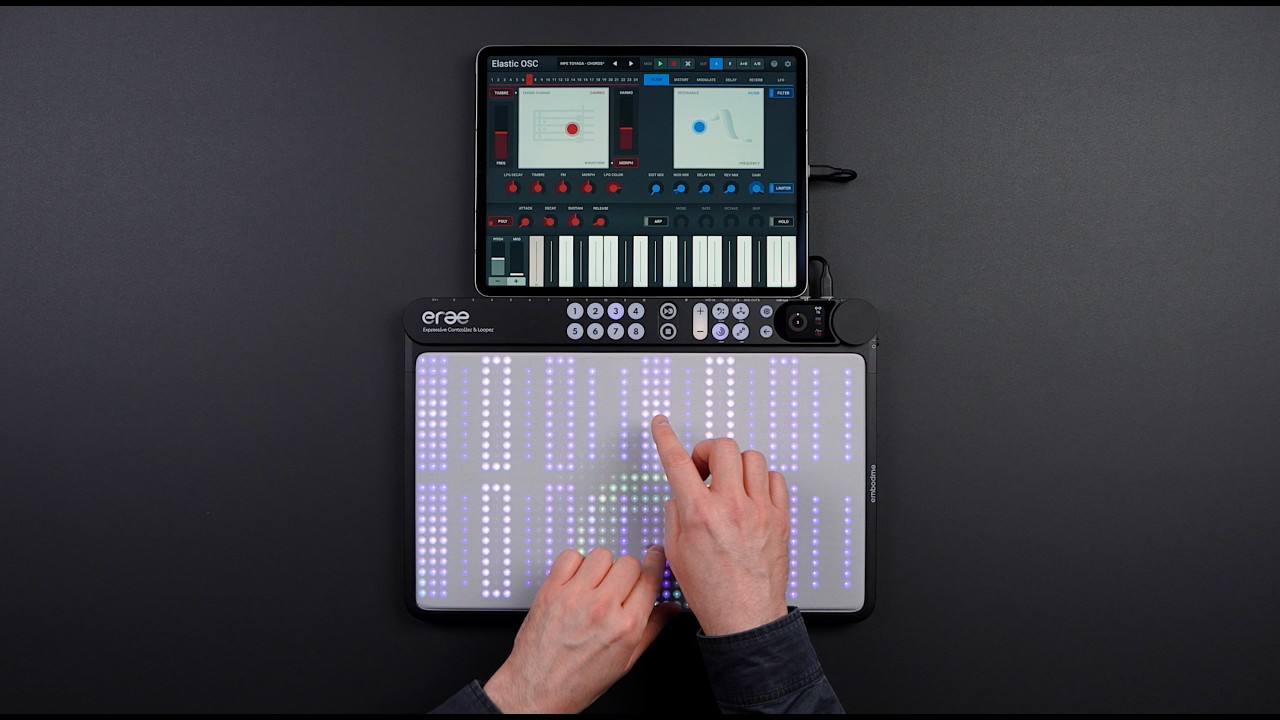
- External MPE Controllers: Elastic OSC also functions as a powerful MPE voice for external controllers. This means that users can connect MPE-capable devices, such as the Erae 2 controller, to their mobile device and leverage Elastic OSC’s sophisticated Plaits engines as the sound source. This capability is particularly valuable for musicians who own MPE controllers but lack onboard sound generation, allowing them to quickly transform these controllers into fully functional instruments. This opens up a new dimension of mobile music-making, where dedicated hardware controllers can be seamlessly integrated with powerful software synthesizers.
The ability to convert external controllers into instruments, even those lacking internal sound engines, is a crucial aspect of modern mobile music production. It democratizes the use of advanced controllers and expands the creative possibilities for musicians on the go.
Platform Support and Monetization Strategy
The expansion of Elastic OSC to Android is a significant development, ensuring that its advanced synthesis capabilities are accessible to a wider global audience. The Android version is designed to be functionally identical to its iOS counterpart, offering the same sonic engine and features. The pricing structure for the Android version is tailored to the platform, reflecting its distinct market dynamics. Greschke’s emphasis on purchasing the Android version underscores the importance of user support for continued development and commitment to the platform.
On iOS, certain advanced features, namely LFO and MPE support, are offered as in-app purchases. This monetization strategy is a common approach in the mobile app market, particularly for complex applications requiring ongoing development and support. Greschke notes that this model is essential for sustaining development, as sales often taper off after the initial launch period, and a perpetual upgrade fee structure is not always viable. This approach ensures that the application can continue to evolve and incorporate new features while providing a sustainable revenue stream for the developer.
Broader Impact and Implications for Mobile Music Creation
The evolution of Elastic OSC signifies a growing trend towards sophisticated and powerful music creation tools on mobile platforms. The application’s success demonstrates that mobile devices are no longer just secondary tools for sketching ideas but can serve as primary instruments for professional-level sound design and performance.
- Democratization of Advanced Synthesis: By bringing the Plaits algorithms and advanced modulation to a widely accessible format, Elastic OSC lowers the barrier to entry for experimental and complex synthesis techniques. This empowers a new generation of musicians to explore sonic territories previously confined to specialized hardware or desktop software.
- Enhanced Mobile Performance Capabilities: The integration of MPE support, in particular, elevates the expressive potential of mobile music performance. It bridges the gap between tactile hardware control and the digital flexibility of software, offering a more nuanced and humanistic approach to electronic music.
- A Growing Ecosystem of Mobile Music Tools: Elastic OSC joins a burgeoning ecosystem of high-quality music applications for iOS and Android. Its existence, alongside other innovative apps like those from IRCAM, reinforces the idea that mobile devices are becoming indispensable components of a modern musician’s toolkit. This trend is likely to encourage further innovation in the mobile music software space, leading to even more powerful and versatile creative tools.
- The Future of Algorithmic Music: The success of projects like Elastic OSC, built on open-source foundations and leveraging cutting-edge algorithms, points towards a future where algorithmic music creation becomes increasingly accessible and integrated into mainstream music production.
The dedication of developers like Oliver Greschke, who meticulously implement and enhance complex synthesis engines for mobile platforms, is crucial for this evolution. The continued support from users through purchases and engagement will undoubtedly fuel further advancements, solidifying Elastic OSC’s place as a vital instrument in the mobile music landscape. The platform’s ongoing development promises even more exciting possibilities for sonic exploration and creative expression for musicians worldwide.