Muhammad Ibadurrohman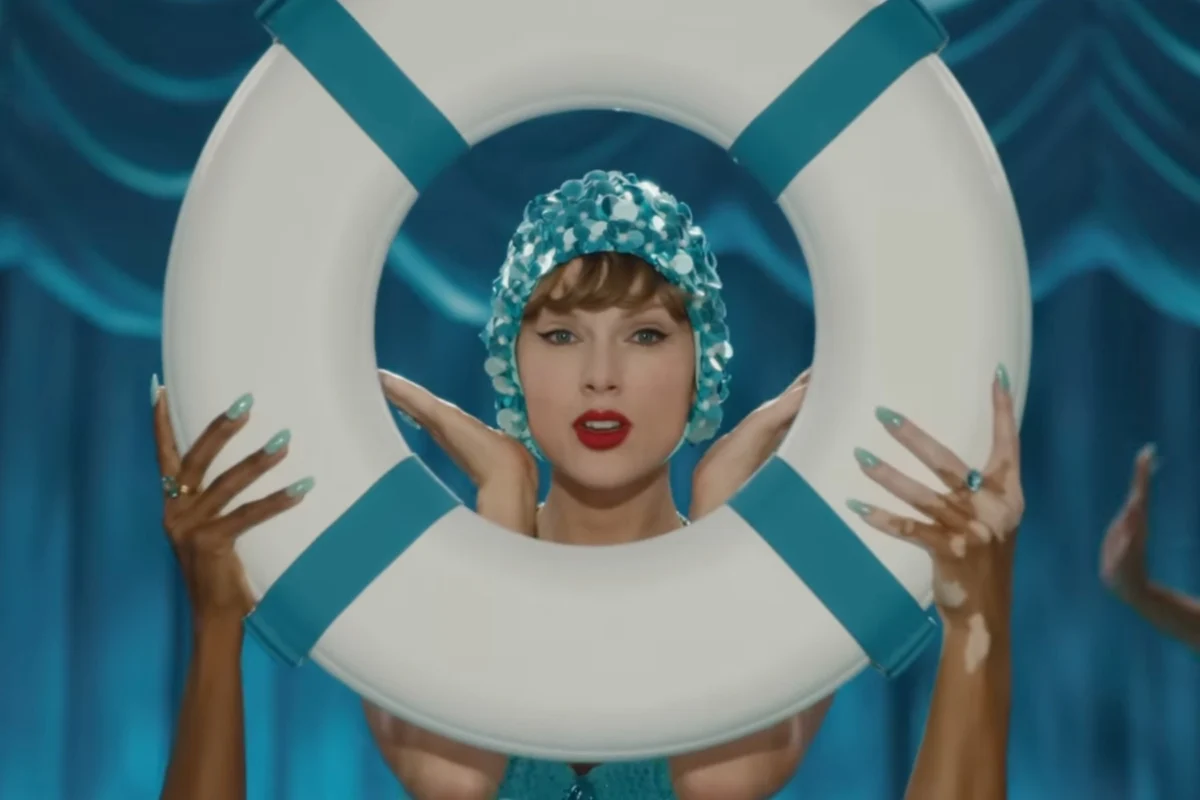
To commemorate what was billed as Cheap Trick’s final performance at the iconic Nippon Budokan – the very Tokyo arena that catapulted the Rockford, Illinois, rockers to international fame with their seminal 1979 album, Cheap Trick at Budokan – the band invested a reported $12,000 last October to hire a four-person film crew. The meticulously captured footage culminated in the release of "The Best Thing," a poignant music video offering a sentimental reflection on the band’s enduring relationship with its devoted Japanese fanbase. Despite generating approximately 77,000 views on YouTube, a figure that represents only a fraction of the cost of one of guitarist Rick Nielsen’s signature five-neck guitars, the financial return was never the primary objective of the endeavor. This strategic investment in visual storytelling underscores a profound evolution in the role and economics of music videos, moving far beyond simple revenue generation to encompass brand building, fan engagement, and long-term legacy.
The Enduring Resonance of Budokan: Cheap Trick’s Strategic Visual Investment
Cheap Trick’s connection to the Nippon Budokan is legendary, a cornerstone of their global appeal. Their live album, Cheap Trick at Budokan, recorded in April 1978 and released in February 1979, was a watershed moment, transforming them from a cult power-pop band into bona fide arena rock superstars, particularly in Japan where they had already garnered immense popularity. The album’s raw energy and the fervent crowd reactions captured the essence of their live performance, making it one of the most celebrated live albums in rock history. Decades later, returning to this hallowed ground for a "last-ever" show was more than just a concert; it was a pilgrimage, a full-circle moment demanding documentation.
Dino Paredes, the band’s manager, articulated the core philosophy behind the $12,000 investment, stating, "You look at it as promotion. The whole point is to capture the relationship between the band and this culture. Clearly, on the business side, it isn’t always a great return on investment." This perspective highlights a critical shift in the music industry: while direct revenue from video views can be substantial for megastars, for many artists, the value of a music video is primarily promotional and intangible. Paredes further described "The Best Thing" as an "evergreen" piece of content, predicting that its 77,000 YouTube views would likely "add a couple zeroes to that number" in a decade. This concept of evergreen content—material that remains relevant and continues to attract viewership over extended periods—is increasingly vital in the digital age, contributing to an artist’s long-term catalog value and fan discovery.
From Broadcast Domination to Digital Dispersion: The Music Video’s Journey
The journey of the music video from a niche promotional tool to a cultural phenomenon and back again is a testament to the dynamic nature of media consumption. For decades, the landscape was dominated by MTV, which launched in 1981 and swiftly became the arbiter of musical taste and visual trends. The "golden age" of MTV, roughly spanning the 1980s and 1990s, saw music videos evolve into elaborate, cinematic productions, often as iconic as the songs themselves. Videos like Michael Jackson’s "Thriller," Peter Gabriel’s "Sledgehammer," and Madonna’s "Vogue" were not just promotional clips; they were cultural touchstones that broke artists, defined eras, and influenced fashion, art, and filmmaking. MTV provided a singular, powerful platform that offered artists unparalleled reach and exposure, shaping mainstream culture in an unprecedented way.
However, the turn of the millennium marked a gradual but undeniable decline in MTV’s focus on pure music programming. As the channel pivoted towards reality television and other youth-oriented content, the traditional music video found itself without its primary broadcast home. This shift culminated in a significant milestone just three months prior to the original article’s publication, when MTV officially removed the last of its on-air music video channels, signaling the definitive end of an era.

Yet, the demise of MTV as a music video purveyor did not signify the end of the format itself. Instead, it heralded a new era of digital proliferation. Billions of users continue to watch music videos monthly on platforms like YouTube, which emerged in 2005 and quickly democratized access to visual music content, offering an on-demand, global library that MTV could never match. Beyond YouTube, the ecosystem has further fragmented across social media giants such as Instagram, TikTok, and Facebook. These platforms have not only become distribution channels but have also fundamentally altered the form and function of music videos, favoring shorter, more shareable, and often interactive content that caters to diverse audience behaviors. This dispersion means that while a single "critical mass" platform like 1980s MTV no longer exists, the sheer volume and variety of visual content surrounding music have never been greater.
The Evolving Economics: Production Costs, Revenue Streams, and Strategic Budgeting
The financial outlay for music videos varies wildly, reflecting the diverse strategies artists and labels employ. According to Mike Chester, General Manager of Warner Records, production costs can range from as little as $20,000 for a basic concept to a staggering $1 million for a superstar-level production, though he notes, "I’m not approving $1 million videos very often. Hardly ever." Other industry sources place the typical range between $30,000 and $250,000, with occasional high-budget projects reaching $850,000. Nashville-based director Justin Clough, who has worked with country giants like Morgan Wallen, HARDY, and Bailey Zimmerman, caps his maximum budget at around $400,000 but remains open to innovative ideas on a shoestring, famously stating, "If somebody has a cool song and they got $10,000, let’s rip it." These figures underscore the flexibility required in an industry where visual content is essential but direct monetary returns are often elusive.
When it comes to revenue, the picture is complex. Data from two major labels indicates that the blended video stream rate for premium, ad-supported official videos and ad-supported, user-generated videos in 2025 was approximately $0.0038 per stream, or $3.80 per 1,000 views. To put this into perspective:
- Taylor Swift’s "The Fate of Ophelia" video, released last October (presumably 2023), amassed 345 million views, translating to an estimated gross revenue of $1.31 million.
- Alex Warren’s "Ordinary," released on February 25 (presumably 2024), garnered nearly 328 million views, yielding roughly $1.25 million.
These figures, while impressive, represent the upper echelons of viewership achieved by global megastars. For the vast majority of artists, generating millions of views – and thus, significant direct revenue – from a single music video is an exceptional feat. This disparity between potential production costs and typical revenue generation for most artists highlights why the strategic value of a music video often transcends immediate financial returns.
Indeed, the economic realities have prompted a significant reallocation of resources within record labels. Director Justin Clough notes that labels have "redisbursed" their video budgets in recent years. For new artists, securing large budgets for a single, high-production video has become increasingly difficult. Instead, budgets are now often "allocated to two small-to-medium-sized videos and 20 days of content shooting." This shift reflects the demand for a continuous stream of diverse visual content across multiple platforms rather than relying on one blockbuster video. While this "stings a little bit" for directors accustomed to grander productions, it aligns with the fragmented consumption habits of modern audiences, who expect frequent engagement.
Beyond the Numbers: Strategic Imperatives and the New "Golden Age"
The sentiment that the "golden age" of the music video is over is not uncommon. Lizzo, the Grammy-winning artist, declared on TikTok last September that most music videos "do not move the needle," revealing that she chose to release her video for "STFU" exclusively on Instagram for this very reason. She lamented the absence of a unified "critical mass" and "mainstream culture," asserting, "There will never be another ‘Thriller,’ ‘Lady Marmalade,’ or ‘Ladies Night,’ because critical mass and mainstream culture just don’t exist anymore."

While Lizzo’s observation accurately reflects the fragmentation of audience attention, it doesn’t necessarily mean music videos are less important. Rather, their importance has evolved, shifting from singular cultural events to multi-faceted strategic tools. As Justin Clough optimistically states, "I’m not necessarily worried that the music video, as a whole, is going to go away. The shining light on all of this is there’s more video than ever."
This abundance of video content is being leveraged in innovative ways. For artists like Bailey Zimmerman, a music video serves as a powerful marketing engine for other ventures. His "New to Country" video, for instance, opens with a satirical sketch featuring a music executive complaining about a fictitious $2.3 million budget, including $150,000 for a private jet and $12,000 for "redneck shit." Despite drawing 3.6 million YouTube views—a respectable but not astronomical number—Clough emphasizes its strategic value for Zimmerman, who used it extensively to market his "New to Country" tour. "With certain artists, the number is less important than making sure the product is delivered properly," Clough explains. This highlights how videos are now crucial components of broader marketing campaigns, directly supporting touring, merchandise sales, and overall artist branding.
Similarly, HARDY’s 2024 video for "Rockstar," which garnered 7 million views, was instrumental in helping the artist transition from a purely country audience into the rock genre. Clough noted that the video "cemented him in the rock space," demonstrating how visual content can be a powerful tool for artistic evolution and genre crossover.
The ecosystem for visual music content continues to expand. In a significant development last November (2023), streaming giant Spotify began rolling out music videos for its customers in the U.S. and Canada, adding another major platform to the increasingly diversified landscape. This move by Spotify, a dominant audio streaming service, further validates the enduring appeal and necessity of visual components in music consumption.
The Multi-Faceted Visual Campaign: A YouTube Era Imperative
Consumption data further underscores the enduring relevance of music videos. According to Luminate, overall consumption for music videos has shown moderate growth, increasing from 93 billion streams in 2024 to 96 billion in 2025, with an additional 19.4 billion recorded through March 19 of this year alone. These figures do not even account for the vast amount of user-generated content (UGC) set to existing songs, which amplifies an artist’s reach exponentially.
While the cautious approach to "giant, giant video budgets" is prevalent, as noted by JP Evangelista, Vevo’s executive VP of content, programming, and marketing, high-budget productions are far from extinct. Vevo, a leading music video platform, still identifies approximately 30 "mass-budget" videos per year, costing an estimated $750,000 to over $1 million. "That hasn’t slowed down," Evangelista confirms, indicating that these substantial investments are reserved for "large-scale, tier-A artists where they feel like they can justify the investment and hire a mass-scale director." For established superstars, the spectacle and production value of a major music video remain crucial for maintaining their global profile and engaging massive fan bases.
Stephen Bryan, YouTube’s global head of label partnerships, offers a comprehensive view of the modern music video’s utility in the "TikTok era." He emphasizes that music videos now serve more diversified purposes than simply airing in full, classic-MTV-style, to an artist’s superfans. The contemporary approach involves releasing multiple pieces of video content, both large and small, that collectively form an integrated visual campaign. This includes:

- Official music videos: Still the centerpiece for major single releases.
- Behind-the-scenes footage: Offering an intimate glimpse into the creative process, fostering deeper fan connection.
- Live performance clips: Showcasing an artist’s talent and stage presence.
- Dance videos and tutorials: Encouraging user engagement and virality, especially on platforms like TikTok.
- Remix visuals: Extending the life and reach of a song.
- Excerpts from television appearances: Clips from shows like The Tonight Show Starring Jimmy Fallon or intimate performances like NPR’s Tiny Desk concerts.
Bryan explains, "When we talk with our partners, we talk about how all those pieces can come together in an effective campaign to release a new song, then extending through the promotional cycle." This holistic strategy ensures that artists maintain a continuous visual presence, catering to different platforms and audience preferences. He concludes, "In many ways, music videos are more important, really, than ever before," but their role has fundamentally transformed from a singular event to an ongoing, multi-platform narrative.
The Future Outlook: Adaptability and Innovation in Visual Music
The evolving landscape of music videos presents both challenges and opportunities. While the era of a single, dominant broadcast platform is over, the digital age has ushered in an unprecedented era of visual content creation and consumption. Artists and labels are adapting by prioritizing promotional and brand-building value over immediate direct revenue, strategically reallocating budgets to support a diverse array of visual content tailored for various digital platforms.
The case of Cheap Trick’s sentimental return to Budokan, investing in a video for its long-term, evergreen value rather than quick financial returns, perfectly encapsulates this new paradigm. The continued investment in mass-budget videos for tier-A artists, alongside the proliferation of smaller, more frequent content for emerging acts, demonstrates a flexible and dynamic industry. As platforms like Spotify integrate music videos, and social media continues to innovate in visual storytelling, the music video – in its myriad forms – remains an indispensable tool for artists to connect with audiences, build their brands, and sustain their careers in the complex, ever-shifting digital symphony of modern music.
Additional reporting by Ed Christman.