Johan Budi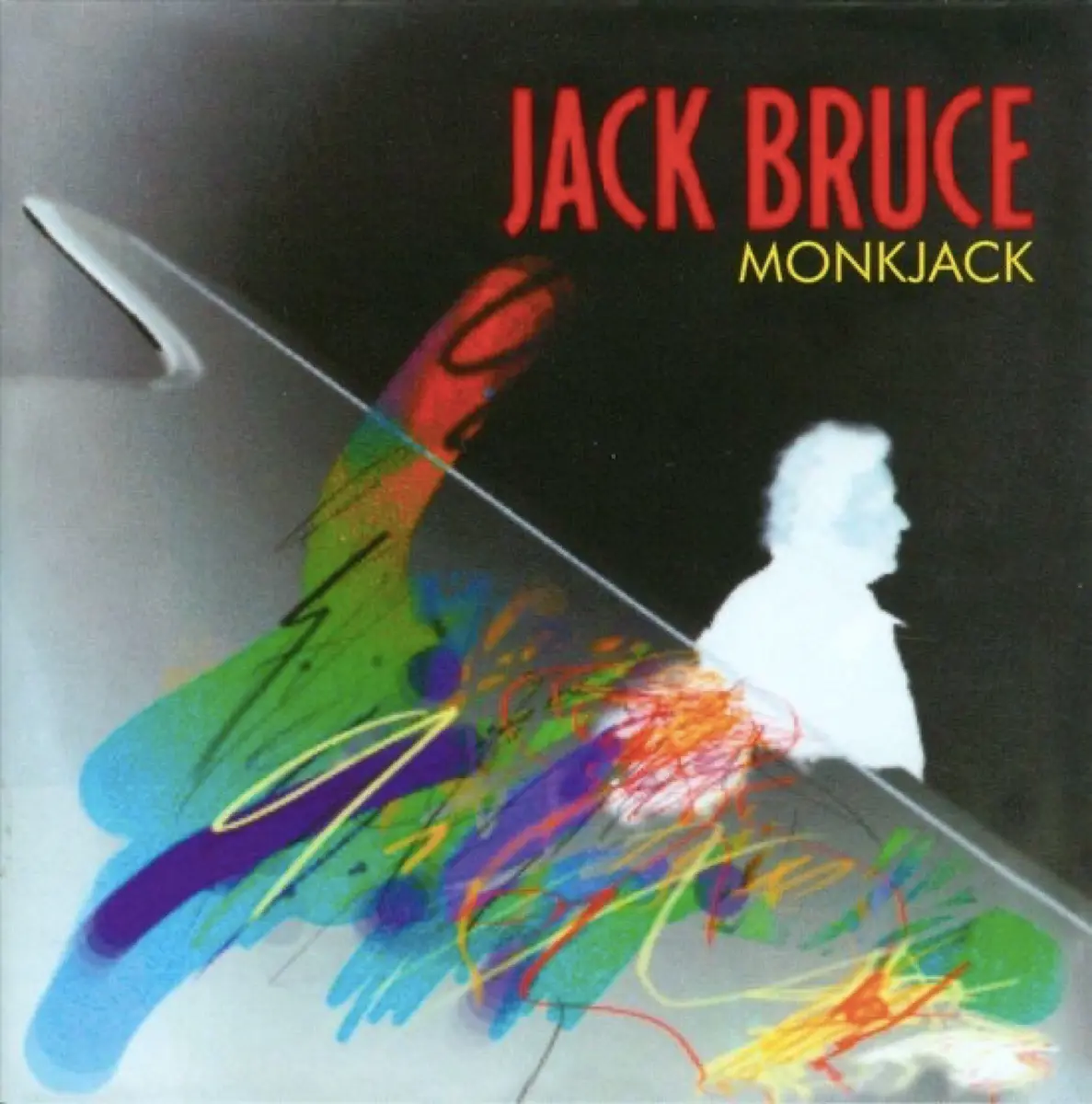
In the spring of 1996, the jazz and experimental music communities were presented with a recording that defied the conventional expectations of rock-era virtuosity. Originally reviewed in the March 1996 issue of Jazz Journal by Simon Adams, the album Monkjack represented a significant stylistic pivot for Jack Bruce. Known globally as the powerhouse bassist and vocalist of the 1960s blues-rock trio Cream, Bruce’s mid-90s output often sought to reconcile his classical training and jazz sensibilities with the grit of his blues roots. Recorded in May 1995 at Zerkall Studios in Germany, Monkjack stripped away the thunderous amplification of the electric bass, placing Bruce behind a grand piano in a stark, intimate duo setting with Hammond B3 organist Bernie Worrell. This collaboration between two disparate titans of 20th-century music—Bruce, the Scottish pioneer of heavy rock, and Worrell, the architect of Parliament-Funkadelic’s futuristic synth-funk—produced a work that remains an idiosyncratic pillar in both artists’ discographies.
A Departure from the Electric Bass Tradition
The primary significance of Monkjack lies in Jack Bruce’s decision to lay aside the Gibson EB-3 bass guitar, an instrument with which he had become synonymous. For decades, Bruce’s melodic, high-volume bass lines had influenced generations of musicians, from Geezer Butler to Geddy Lee. However, Bruce’s musical foundation was originally built upon the cello and the piano, having studied at the Royal Scottish Academy of Music and Drama. By returning to the grand piano for Monkjack, Bruce was not merely experimenting with a new sound but returning to his formal roots.
This transition allowed for a different type of rhythmic and harmonic exploration. On the piano, Bruce’s playing is described as precise and economical, a far cry from the improvisational density of his work with Eric Clapton and Ginger Baker. The choice of instrument forced a focus on composition and vocal delivery. The 12 tracks on the album, spanning a total of 51 minutes and 32 seconds, showcase a musician interested in the space between the notes rather than the sheer volume of the performance. This restraint is central to the album’s "atmospheric" and "portentous" quality, as noted by contemporary critics of the era.
The Alchemy of Bruce and Worrell
The pairing of Jack Bruce with Bernie Worrell was, on paper, an unexpected alignment. Bernie Worrell was a classically trained prodigy who became a cornerstone of George Clinton’s P-Funk empire, known for his pioneering use of the Minimoog and his ability to weave complex textures into danceable funk. In Monkjack, however, Worrell’s role is one of atmospheric support. Utilizing the Hammond B3 organ, he provides a bed of "occasional dashes of colour" that complement Bruce’s stark piano chords.
The synergy between the two musicians is rooted in their shared background in formal theory and their mutual respect for the jazz tradition. While Bruce handles the melodic leads and vocal duties, Worrell’s organ work serves as a secondary voice, often mimicking the swell of a small chamber orchestra. This duo format creates a sense of vulnerability; without a drummer or a traditional rhythm section, the timing is dictated by the natural phrasing of Bruce’s vocals and the decay of the piano strings. The result is a recording that feels both live and deeply personal, capturing a specific moment of creative intersection in a German studio.
Recording at Zerkall Studios and the CMP Records Aesthetic
Monkjack was released under CMP Records (Creative Music Productions), a label founded by Kurt Renker in 1977. Based in Zerkall, Germany, CMP became a sanctuary for artists who occupied the fringes of jazz, world music, and avant-garde rock. The label was known for its high-fidelity recordings and its willingness to let artists pursue "pure" projects without commercial pressure. Other notable artists on the label included Trilok Gurtu, David Torn, and Terumasa Hino.
The recording environment at Zerkall Studios played a crucial role in the sonic character of the album. The studio was famous for its natural acoustics and state-of-the-art equipment, which captured the nuances of the Hammond B3’s Leslie speaker and the resonant depth of the grand piano. This clarity was essential for an album that relied so heavily on "Brechtian performance art" dynamics. The technical precision of the recording ensured that Bruce’s "restrained" vocals remained at the forefront, allowing the listener to engage with the complex lyrical themes provided by his longtime collaborators.
Lyrical Landscapes: The Pete Brown and Kip Hanrahan Connection
The thematic weight of Monkjack is largely carried by the lyrics, which were penned by two distinct but equally influential figures: Pete Brown and Kip Hanrahan. Pete Brown had been Bruce’s primary lyricist since the Cream era, responsible for the surrealist imagery of "White Room" and "Sunshine of Your Love." His contributions to Monkjack—such as "The Food," "Laughing On Music Street," and "Weird of Hermiston"—continue this tradition of vivid, often melancholic storytelling.
Kip Hanrahan, an American percussionist and producer known for his "Exotica" jazz projects, provided lyrics that leaned toward the cinematic and the dramatic. The interplay between Brown’s British poetic sensibilities and Hanrahan’s avant-garde leanings gave the album a transatlantic depth. This lyrical complexity is what prompted comparisons to the "heightened dramatics of Scott Walker." Much like Walker’s later work, the songs on Monkjack often feel like short plays or character studies, delivered with a gravitas that suggests a deeper, perhaps more "portentous" meaning beneath the surface.
A Detailed Examination of the Monkjack Tracklist
The album’s structure is a mix of original compositions and a single, notable blues cover. The opening tracks, "The Food" and "The Boy," set a somber tone, establishing the piano-and-organ dialogue that defines the record. "Shouldn’t We" and "David’s Harp" showcase Bruce’s ability to maintain melodic interest through minimalist arrangements.
A focal point of the album is the inclusion of "Third Degree," a blues standard written by Eddie Boyd and Willie Dixon. This track serves as a bridge between Bruce’s past and his 1995 reality. As Simon Adams noted, Eric Clapton had famously "mangled" the song early in his career (most notably on the 1994 album From the Cradle). Bruce’s version on Monkjack is a deconstruction. By removing the traditional blues-rock tropes and replacing them with his precise piano work, Bruce reclaims the song’s emotional core, presenting it as a stark lament rather than a guitar showcase.
The title of the album itself is a nod to Thelonious Monk, the high priest of bebop known for his angular, dissonant piano style and unique sense of timing. While Bruce does not attempt to mimic Monk’s playing style, the tracks "Know One Blues" and "Immortal Ninth" reflect a "Monk-ish" approach to space and harmonic tension. The album concludes with "Immortal Ninth," a 51-minute journey that leaves the listener in a state of quiet contemplation.
Comparative Context: From Brechtian Performance to Scott Walker
To understand the critical reception of Monkjack in 1996, one must look at the broader cultural landscape. The mid-1990s were a period of intense experimentation for veteran rock artists. The "Unplugged" phenomenon had popularized acoustic reinterpretations, but Bruce went a step further into the avant-garde. The comparison to Bertolt Brecht’s "epic theatre" is apt; Brecht’s work often sought to distance the audience from emotional identification to provoke critical thought. Bruce’s restrained vocal delivery on this album performs a similar function, presenting the songs as artifacts to be examined rather than anthems to be felt.
Furthermore, the reference to Scott Walker highlights the album’s place in the lineage of "Art Pop." Like Walker, Bruce was a former pop star who had retreated into more difficult, uncompromising territory. Both artists shared an interest in the baritone vocal range and the use of silence as a musical instrument. Monkjack occupies the same "hard to categorise" space as Walker’s Tilt (released in 1995), marking a period where the boundaries between jazz, classical lieder, and experimental rock were becoming increasingly porous.
The Legacy of Monkjack in the Jack Bruce Canon
Thirty years after its initial review, Monkjack stands as a testament to Jack Bruce’s restless creativity. While it may not have achieved the commercial success of his blues-rock ventures, its influence is felt in the way it challenged the "bass hero" archetype. It proved that Bruce was a polymath, capable of leading a session from the piano bench with the same authority he wielded with a bass.
For Bernie Worrell, the album was a rare opportunity to showcase his subtler, more textural capabilities. Often pigeonholed as a funk musician, his work here demonstrates a profound understanding of harmonic color and atmospheric tension. The album remains a "surprisingly good set" for those willing to engage with its austere beauty.
In the final analysis, Monkjack serves as a reminder of a specific era in music production—a time when labels like CMP Records provided the resources for established artists to take genuine risks. It is a record that demands a "right mood" from the listener: a willingness to sit with the silence and appreciate the precise, unhurried craftsmanship of two masters at work. As the music industry continues to gravitate toward high-density, algorithm-friendly production, the minimalist integrity of Monkjack remains a vital point of reference for the enduring power of the duo format.