Johan Budi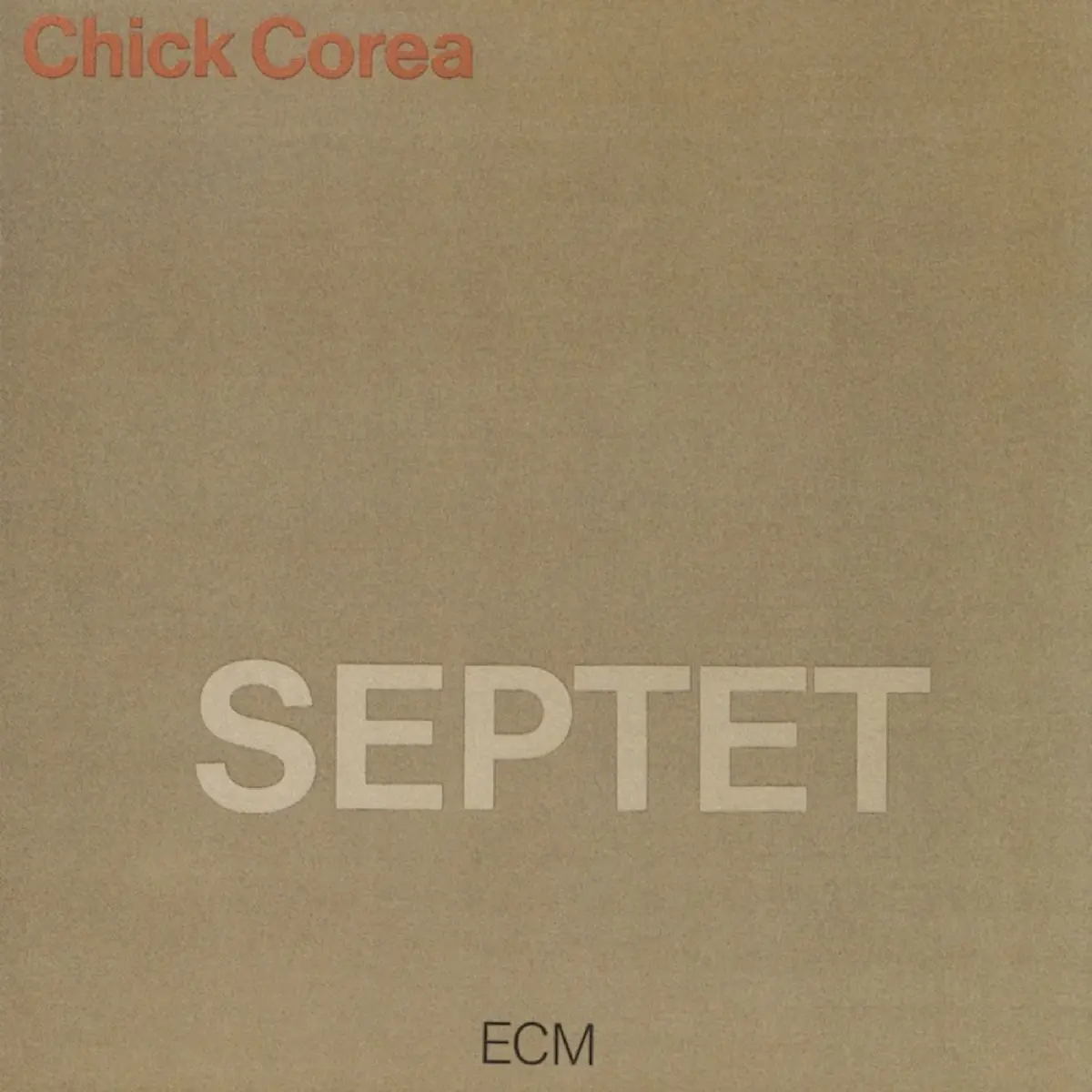
The release of Chick Corea’s Septet on the ECM Records label (ECM 1297) represents a significant departure from the traditional jazz paradigms typically associated with the prolific pianist and composer. Recorded in Los Angeles in October 1984, the album serves as a definitive statement in Corea’s mid-career exploration of Western classical forms, bridging the gap between his improvisational roots and the structured rigor of chamber music. While ECM has long been established as a vanguard for jazz that defies easy categorization, this specific project moves almost entirely into the realm of through-composed classical music, featuring a unique ensemble consisting of piano, string quartet, flute, and French horn.
The work is divided into two primary sections: the five-movement "Septet" and a concluding piece titled "The Temple of Isfahan." This recording follows closely on the heels of Corea’s highly acclaimed "Children’s Songs" (1984), further cementing his reputation as a composer of considerable breadth. However, where "Children’s Songs" focused on the simplicity of the miniature, the "Septet" aims for a more complex, orchestral texture, utilizing the diverse timbres of its instrumentation to evoke the styles of early 20th-century European masters.
Compositional Framework and Stylistic Influences
The "Septet" is a meticulously structured work that demonstrates Corea’s command over orchestral arrangement. Despite the composer’s own modest suggestions that the piece was written until time ran out, the internal logic of the movements suggests a highly disciplined approach to counterpoint and thematic development. The music is largely devoid of the extended improvisations that defined Corea’s work with Return to Forever or his various trios, opting instead for a "Third Stream" approach where the jazz influence is felt more in rhythmic vitality than in harmonic or structural freedom.
Analytically, the "Septet" draws heavily from the neoclassical and impressionist traditions. Listeners and critics have noted the distinct influence of Igor Stravinsky, particularly in the jagged, syncopated rhythmic patterns that drive the more energetic movements. Furthermore, the lush harmonic language of French impressionists, most notably Maurice Ravel, is evident in the work’s lyrical passages. The use of the flute, played by Steve Kujala, and the French horn, performed by Peter Gordon, adds a pastoral quality that recalls the chamber works of Benjamin Britten or the folk-inspired modernism of Béla Bartók.
The instrumentation itself is a point of academic interest. By combining a standard string quartet (violins, viola, cello) with the specific colors of the flute and French horn, Corea creates a sonic palette that is rarely found in the jazz or classical canon. This allows for a shifting focus between the percussive nature of the piano and the sustained, breath-oriented lines of the winds, mediated by the versatile textures of the strings.
The Temple of Isfahan: A Divergent Narrative
Contrasting with the formal rigor of the "Septet," the album’s second major work, "The Temple of Isfahan," offers a more episodic and experimental experience. While the "Septet" is praised for its disciplined construction, "The Temple of Isfahan" has been described as a collection of varied musical "effects." The piece purports to incorporate Spanish influences—a recurring theme in Corea’s oeuvre, most famously in his 1972 hit "Spain"—but here the Hispanic elements are treated with a more cinematic, almost incidental approach.
The composition transitions through several distinct phases, some of which lean into pastiche. Notably, the piece includes a transposition of Sidney Bechet’s "Petite Fleur" for the French horn, an unexpected nod to early jazz within a modern chamber context. This is followed by sections that evoke "Palm Court" style Mexican music and, most surprisingly, a series of flute lines by Steve Kujala that mimic the "spaghetti western" scores of Ennio Morricone, specifically those associated with films like "The Good, the Bad and the Ugly." While these elements provide a sense of intrigue and playfulness, they have led some analysts to view the piece as less of a serious contribution to the chamber music genre and more of a stylistic montage.
Chronology and Career Context
The 1984 recording of "Septet" occurred during a pivotal decade for Chick Corea. After dominating the 1970s with high-energy jazz fusion, the 1980s saw Corea diversifying his output with an unprecedented intensity.
- Early 1980s: Corea focused heavily on solo piano performances and duets, including collaborations with Nicolas Economou and Friedrich Gulda, which signaled his increasing interest in the classical repertoire.
- 1984 (Spring): Release of "Children’s Songs," a collection of 20 short piano pieces that emphasized melodic clarity and pedagogical structure.
- 1984 (October): Recording of "Septet" in Los Angeles. This session brought together a mix of classical virtuosos and frequent Corea collaborators.
- 1985-1986: Following the release of "Septet," Corea pivoted back toward electric music, forming the Chick Corea Elektric Band, which would dominate the fusion scene for the remainder of the decade.
This timeline highlights "Septet" as a specific window into Corea’s compositional ambitions. It was a moment where he sought to be judged not just as a virtuoso performer, but as a "prentice composer" capable of handling the sophisticated requirements of the Western chamber tradition.
Personnel and Performance Dynamics
The ensemble assembled for this recording features a blend of high-caliber musicians from the classical and crossover scenes.
- Chick Corea (Composer, Piano): Providing the harmonic anchor, Corea’s piano playing on this record is restrained, serving the needs of the ensemble rather than acting as a lead soloist.
- Ida Kavafian and Theodor Arm (Violins): Kavafian, a founding member of the TASHI ensemble, brings a level of prestige and technical precision to the first violin chair.
- Steven Tenenbom (Viola) and Fred Sherry (Cello): These members of the string quartet provide the essential mid-range and bass textures required for the "Septet’s" dense harmonic structures.
- Steve Kujala (Flute): A longtime collaborator with Corea, Kujala’s ability to blend jazz phrasing with classical technique is central to the album’s success.
- Peter Gordon (French Horn): Gordon’s contribution provides the "Septet" with its unique orchestral weight, particularly in the more dramatic movements.
The synergy between these players allows Corea’s compositions to transcend the "jazz musician writing for strings" cliché. The performances are characterized by a high degree of technical proficiency, ensuring that the intricate rhythmic demands of the Stravinsky-esque passages are met with clarity.
The ECM Aesthetic and Production Standards
The role of ECM Records and its founder, Manfred Eicher, cannot be overstated in the context of this release. ECM (Edition of Contemporary Music) has long maintained a philosophy of "the most beautiful sound next to silence." The label’s signature production style—clear, resonant, and spacious—is perfectly suited for a chamber work of this nature.
Recording in Los Angeles allowed for a crispness of sound that highlights the individual characteristics of the flute and the strings. Eicher’s involvement usually ensures that the recording itself becomes an instrument, and on "Septet," the balance between the piano and the six other instruments is handled with surgical precision. This album fits within the broader ECM "New Series," which began around the same time (1984) to house the label’s classical and contemporary composed music, such as the works of Arvo Pärt.
Broader Impact and Implications for the Genre
The release of "Septet" served as a bellwether for the increasing fluidity between musical genres in the mid-1980s. While some jazz purists at the time expressed confusion over the lack of "swing" or improvisation, the album anticipated a future where the distinction between "jazz" and "classical" would become increasingly irrelevant for many artists.
Corea’s foray into this space paved the way for other jazz figures to pursue formal composition. It also challenged the classical establishment to recognize the compositional merit of artists coming from the improvisational tradition. The "Septet" is now viewed as an important stepping stone toward Corea’s later, even more ambitious projects, such as his piano concertos and his "Lyric Suite" for sextet.
In summary, Chick Corea’s "Septet" is a work of great charm and lyrical absorption. While it may wear its influences on its sleeve—echoing the masters of the early 20th century—it remains a testament to Corea’s restless creativity. It stands as a sophisticated, if derivative, exploration of chamber music that expanded the boundaries of what a "jazz label" could represent and what a "jazz pianist" could achieve in the realm of formal composition. For the listener, it offers a window into a master musician’s process of self-education and stylistic expansion, resulting in a recording that is as intellectually stimulating as it is melodically engaging.