Johan Budi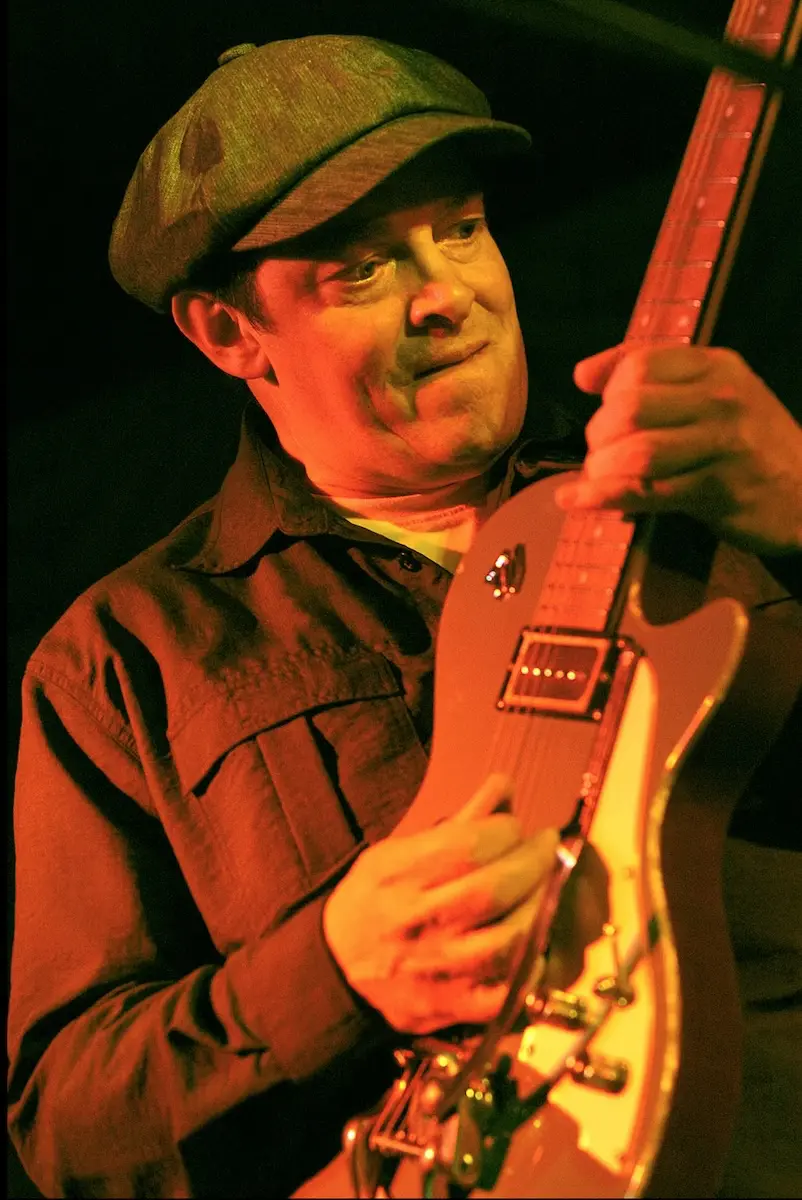
The contemporary landscape of guitar-driven music is currently witnessing a significant convergence of legacy artistry and modern innovation, as evidenced by three major new releases from Bill Nelson, Julian Lage, and Dave Stryker. These recordings, while disparate in genre—ranging from ambient avant-garde to virtuoso jazz and classic organ-trio blues—collectively highlight the enduring influence of the guitar as a tool for both experimental soundscapes and traditional storytelling. The release of Orchestra Futura’s live recordings, Julian Lage’s "Scenes From Above," and Dave Stryker’s "Blue Fire – The Van Gelder Session" marks a pivotal moment for collectors and aficionados of the instrument, offering a comprehensive look at how technical mastery evolves over decades of performance and studio practice.
The Avant-Garde Progression of Bill Nelson
The career of Bill Nelson serves as a primary case study in the transition from rock stardom to experimental independence. Nelson first achieved international recognition in the 1970s as the frontman for Be Bop Deluxe. During this era, the band became a cornerstone of the UK art-rock scene, particularly with the 1976 album "Sunburst Finish." The track "Ships In The Night" provided the group with a significant chart presence, though Nelson has frequently noted in retrospectives that the song was among his least favorite compositions, representing a pop sensibility he would eventually seek to transcend.
By 1979, Nelson moved toward a more experimental aesthetic with the formation of Bill Nelson’s Red Noise. The project’s sole album, "Sound-On-Sound," signaled a departure from traditional rock structures, embracing the burgeoning "new wave" and electronic influences of the late 70s. This trajectory continued through more than a dozen solo albums and high-profile collaborations, most notably with ambient pioneer Harold Budd.
The latest release, "Live At Nelsonica & Clothworkers Hall," documents the work of Orchestra Futura, a trio that represents Nelson’s furthest departure yet from the rock idiom. Recorded between 2009 and 2019, the album features saxophonist and flautist Theo Travis and bassist Dave Sturt. Travis brings a pedigree that includes work with Gong, Travis & Fripp, and Soft Machine, while Sturt’s history with Gong and Jade Warrior provides a deep, progressive foundation.
The compositions on this live recording prioritize atmosphere over traditional melody. "A Marble Solace" utilizes glockenspiel effects and legato guitar lines to create a sense of suspended time, while "Pixels By Moonlight" incorporates heavy guitar chords into a dense electronic backing. Critics and musicologists have noted the parallels between this work and the ambient soundscapes pioneered by Robert Fripp and Brian Eno in the 1970s, though Nelson’s palette is arguably more diverse, integrating woodwinds and complex bass textures. The album’s conclusion, "Perfect Cloud," spans 13 minutes, showcasing a level of improvisational cohesion that blurs the line between a live performance and a meticulously layered studio production.
Julian Lage: The Evolution of a Virtuoso Supergroup
While Bill Nelson explores the boundaries of ambient sound, Julian Lage continues to redefine the parameters of modern jazz guitar. With the release of "Scenes From Above," his fifth album for the prestigious Blue Note label and his 17th overall, Lage has solidified his position as one of the most prolific and technically gifted guitarists of his generation.
Lage’s career began with "Sounding Point" in 2009, an album that earned him a Grammy nomination and established his partnership with Peruvian bassist Jorge Roeder. For "Scenes From Above," Lage has expanded his sonic range by recruiting two titans of the New York jazz scene: John Medeski on organ and piano, and Kenny Wollesen on drums. Medeski, a founding member of Medeski, Martin & Wood, brings a gritty, soul-jazz sensibility to the project, while Wollesen, a frequent collaborator of Bill Frisell and John Zorn, provides a rhythmic flexibility that spans from delicate hand drumming to driving avant-garde beats.
The album, recorded in New York in May 2025, reflects a "supergroup" dynamic where the interplay between the four musicians is the primary focus. Tracks like "Red Elm" demonstrate a gradual build in intensity, allowing Lage to showcase his signature fluid soloing style against Medeski’s swirling organ textures. Conversely, "Night Shade" highlights Lage’s acoustic capabilities, utilizing a haunting hook that leans into a "prayer-like" atmosphere.
Industry analysts suggest that Lage’s continued success on Blue Note is indicative of a broader trend in the jazz market: a return to melodic, accessible compositions that do not sacrifice technical complexity. "Scenes From Above" is being positioned as a career-best for Lage, largely due to the synergy between his guitar work and Medeski’s keyboard contributions, which complement rather than compete with the lead instrument.
Preserving the Van Gelder Legacy: Dave Stryker’s Tribute
The third pillar of this current wave of guitar releases is Dave Stryker’s "Blue Fire – The Van Gelder Session." Unlike the experimental forays of Nelson or the modern jazz fusion of Lage, Stryker’s latest work is a deliberate homage to the history of jazz recording. The album was recorded at the legendary Englewood Cliffs studio of Rudy Van Gelder, the recording engineer responsible for the sound of Miles Davis, John Coltrane, and Thelonious Monk.
Van Gelder passed away in 2016 at the age of 91, but his studio has been preserved by his assistant Maureen Sickler and her husband Don. For Stryker, recording in this space was the fulfillment of a lifelong ambition. The session features his long-standing trio, including organist Jared Gold and drummer McClenty Hunter. Gold’s contribution is of particular historical note; he performed on the original Hammond B3 organ used by icons Jimmy Smith and Larry Young in the same studio decades prior.
The music on "Blue Fire" is a masterclass in the organ-trio format. The opening track, "Van Gelder’s Place," is a classic 12-bar blues that serves as a sonic greeting to the venue. Stryker’s use of a Gibson ES-347 provides a warm, crystalline tone that cut through the dense organ textures on tracks like the title piece and a reimagined version of Charlie Parker’s "Dexterity."
Stryker also ventures into pop-standard territory with a Latin-infused take on Lennon and McCartney’s "The Fool On The Hill" and Jerome Kern’s "The Folks Who Live On The Hill." These selections demonstrate Stryker’s versatility, proving that he can transition from high-velocity bebop lines to sensitive, ballad-style phrasing with ease. The recording is seen as a preservation effort as much as an artistic one, keeping the "Van Gelder sound" alive for a new generation of listeners.
Chronology of Recordings and Release Timeline
To understand the broader impact of these releases, it is necessary to view them within the context of their recording timelines:
- 2009–2019: The archival period for Bill Nelson’s "Orchestra Futura." These recordings represent a decade of live evolution, captured at various venues including Leeds and York.
- May 22, 2025: The recording date for Julian Lage’s "Scenes From Above" in New York City. This marks a rapid turnaround for Blue Note, emphasizing the label’s commitment to contemporary releases.
- July 14, 2025: The recording of Dave Stryker’s "Blue Fire" at the Van Gelder Studio in New Jersey. This session represents the most recent high-profile recording at the historic site.
Broader Impact and Implications for the Music Industry
The release of these three albums highlights several key trends in the modern music industry. First, there is a clear demand for "legacy-plus" content—recordings that honor the history of the genre (as with Stryker and Van Gelder) while pushing into new territory (as with Nelson’s ambient work).
Second, the technical data surrounding these releases suggests a shift in how "live" albums are perceived. Bill Nelson’s "Orchestra Futura" is so precisely executed that the presence of an audience is only revealed through applause at the end of the final track. This high fidelity in live recording techniques allows artists to release concert material that rivals studio albums in quality, providing a more authentic look at their improvisational skills.
Finally, the recruitment of "supergroup" lineups, such as the Medeski-Lage-Wollesen-Roeder quartet, indicates a strategy by labels like Blue Note to create "event" albums. By combining the fan bases of established experimentalists like Medeski with the rising stardom of Lage, labels can ensure commercial viability in a fragmented streaming market.
In conclusion, these three releases—Bill Nelson’s "Orchestra Futura," Julian Lage’s "Scenes From Above," and Dave Stryker’s "Blue Fire"—represent the past, present, and future of the guitar. From the preservation of historic studio sounds to the exploration of ambient textures and the formation of modern jazz quartets, these artists continue to prove that the six-string remains at the forefront of musical innovation. For the listener, these albums offer a rich, diverse palette of sounds that invite repeated listening and critical study.