Nayara Elvina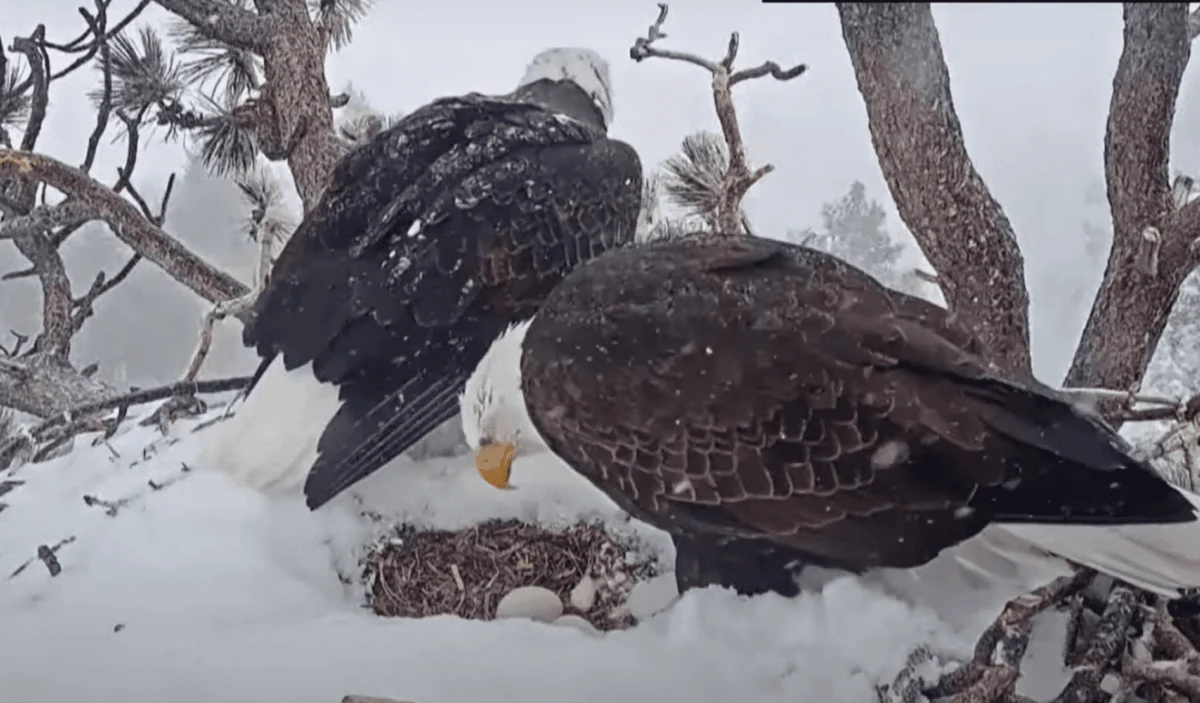
The pristine alpine environment of Big Bear Lake, California, has become the staging ground for a high-stakes confrontation between luxury real estate interests and wildlife conservationists. At the heart of the conflict are Jackie and Shadow, a pair of bald eagles whose lives have been broadcast to millions of viewers worldwide via a 24-hour nest camera. The birds, who have become symbols of the San Bernardino National Forest’s ecological vitality, now face the potential loss of their habitat unless a coalition of non-profit organizations can raise $10 million by July 31. This capital is required to purchase a 62-acre tract of land currently slated for a luxury housing development known as "Moon Camp."
For years, Jackie and Shadow have utilized a towering Jeffrey pine on the northern shore of the lake to raise their young. Their most recent offspring, eaglets named Sunny and Gizmo, hatched in April and are currently the focus of the pair’s intensive parenting efforts. However, the serenity of their nesting site is threatened by a long-standing development plan that environmentalists argue would irrevocably disrupt the eagles’ hunting grounds and nesting security.
The Biological Significance of Jackie and Shadow
Bald eagles (Haliaeetus leucocephalus) were once on the brink of extinction in the lower 48 states, primarily due to habitat loss and the effects of the pesticide DDT. While the species was removed from the federal list of endangered and threatened wildlife in 2007, they remain protected under the Bald and Golden Eagle Protection Act and the Migratory Bird Treaty Act. These federal protections prohibit the "take" of eagles, which includes disturbing them to the point of interfering with their breeding, feeding, or sheltering behavior.
Jackie and Shadow represent a rare success story for Southern California’s avian population. Bald eagles are massive raptors, often reaching 40 inches in height with wingspans exceeding seven feet. Their nests, or eyries, are among the largest of any bird species; some have been documented to weigh over two tons and measure several feet across. Because bald eagles are highly territorial and exhibit high site fidelity—meaning they return to the same nest year after year—the loss of a specific nesting tree or the degradation of the surrounding environment can result in a permanent cessation of breeding for that pair.
The Big Bear nest is strategically located to provide the eagles with a panoramic view of the lake, allowing them to monitor for prey and potential predators. The proximity to the water is essential, as fish constitute the primary portion of their diet. Conservationists argue that the introduction of high-density luxury housing in this specific corridor would create noise, light pollution, and physical obstructions that are incompatible with the eagles’ survival.
The History of the Moon Camp Development
The "Moon Camp" project is not a new threat to the Big Bear landscape. The proposal for a luxury residential community on the lake’s north shore has been in various stages of planning and litigation for over two decades. The project, as currently envisioned, would involve the subdivision of the 62-acre property into several dozen luxury home sites.
For years, the Friends of Big Bear Valley (FOBBV), the nonprofit organization that manages the popular nest camera, has led the opposition to the development. The group has argued that the Environmental Impact Reports (EIRs) associated with the project did not sufficiently account for the presence of the eagles or the impact on the local ecosystem. Despite multiple legal challenges and public protests, the developers have historically maintained the legal right to proceed, provided they adhere to state and federal mitigation requirements.
The conflict reached a critical juncture when the developers expressed a willingness to sell the land to conservation groups—provided the full market value of the property could be met within a strict timeframe. This led to the involvement of the San Bernardino Mountains Land Trust (SBMLT), an organization dedicated to preserving the natural heritage of the region.
The $10 Million Fundraising Challenge
The San Bernardino Mountains Land Trust, in coordination with Friends of Big Bear Valley, has set a goal of $10 million to acquire the "Moon Camp" property. This figure represents the appraised value of the land as a prime development site. If the funds are raised, the land will be converted into a permanent wildlife preserve, ensuring that Jackie, Shadow, and future generations of eagles remain undisturbed.
As of early June, the campaign has raised approximately $2 million, or 20% of the total goal. The deadline of July 31 is described by organizers as a "hard" cutoff, dictated by the terms of the purchase agreement with the current landowners.
"We are working hard to raise $10 million dollars to purchase land near to Jackie and Shadow’s nest currently earmarked for luxury development," a spokesperson for Friends of Big Bear Valley stated. "Right now we are at nearly 20% of our goal. It is a monumental task, but the outpouring of support from the community and eagle lovers around the world gives us hope."
The campaign relies heavily on small-dollar donations from the "eagle fam"—the global community of viewers who watch the live stream. However, the SBMLT is also seeking support from major philanthropic donors and state grants to bridge the $8 million gap.
Legal and Environmental Implications
The situation in Big Bear highlights a common tension in environmental law: the protection of a species versus the rights of private property owners. Under the Bald and Golden Eagle Protection Act, the U.S. Fish and Wildlife Service (USFWS) provides guidelines for development near eagle nests. Typically, these guidelines suggest a buffer zone of 330 to 660 feet, depending on the visibility of the project from the nest and the existing level of human activity in the area.
However, conservationists argue that these minimum buffers are insufficient for Jackie and Shadow. The eagles use the entirety of the 62-acre tract for foraging and as a perching ground to monitor the lake. Furthermore, the construction process itself—involving heavy machinery, blasting, and increased human presence—could cause the eagles to abandon their current brood or the nest site entirely.
If the land is developed, the developers would be required to obtain "incidental take permits" if their activities are likely to disturb the eagles. These permits often come with strict conditions, but they do not necessarily stop a project. By purchasing the land outright, the SBMLT aims to remove the threat of development permanently, bypassing the need for regulatory oversight and potential mitigation failures.
The Power of the Nest Cam: A New Era of Conservation
The global popularity of Jackie and Shadow cannot be understated. The live stream, which captures everything from the eagles weathering blizzard conditions to the first moments of an eaglet’s life, has turned the pair into avian celebrities. This digital window into their lives has transformed a local zoning issue into an international conservation cause.
Sociologists and environmentalists note that "ambassador animals" like Jackie and Shadow play a crucial role in public education. By allowing the public to form an emotional connection with specific animals, conservation groups can more effectively mobilize resources for broader habitat protection. The $10 million campaign is, in many ways, a test of whether digital engagement can translate into the significant capital required for land acquisition in high-value real estate markets.
A Timeline of Key Events
- 1990s-Early 2000s: Initial proposals for the Moon Camp development are introduced; local opposition begins to form.
- 2012: Jackie and Shadow begin to gain local prominence as a nesting pair in the Big Bear area.
- 2015: Friends of Big Bear Valley installs the first high-definition nest camera, bringing the eagles to a global audience.
- 2018-2022: Multiple legal challenges are filed by environmental groups to halt the Moon Camp project based on environmental concerns.
- January 2024: Jackie and Shadow lay a new clutch of eggs, drawing record viewership to the live stream.
- April 2024: Sunny and Gizmo hatch, intensifying the urgency of the habitat protection campaign.
- May 2024: The San Bernardino Mountains Land Trust enters into a formal agreement to attempt to purchase the 62-acre Moon Camp site for $10 million.
- July 31, 2024: The deadline for the fundraising campaign to close the deal and secure the property.
Broader Impact on Southern California Ecosystems
The outcome of the Big Bear fundraising effort will have implications far beyond the north shore of the lake. Southern California is one of the most biodiverse regions in the United States, yet it faces constant pressure from urban sprawl and luxury development. The successful acquisition of the Moon Camp property would serve as a blueprint for other communities seeking to protect "critical habitat" on private land.
Furthermore, the San Bernardino National Forest serves as a vital corridor for various species, including mountain lions, black bears, and several rare plant species. Protecting the 62-acre tract for the eagles also provides a "halo effect," safeguarding the habitat for these other species and maintaining the overall health of the mountain ecosystem.
As the July 31 deadline approaches, the San Bernardino Mountains Land Trust and Friends of Big Bear Valley are ramping up their outreach. The organizations emphasize that this is a "once-in-a-generation" opportunity. If the funds are not raised, the property will likely return to the development track, and the future of Jackie and Shadow’s residency in Big Bear Lake will be placed in jeopardy.
For the millions who have watched the eagles raise their young against the backdrop of the San Bernardino Mountains, the stakes are clear. The campaign represents a final effort to ensure that the "view" Jackie and Shadow currently enjoy remains a wild one, rather than a landscaped vista for a luxury estate. After all, as supporters frequently point out, the eagles were there first.