Jia Lissa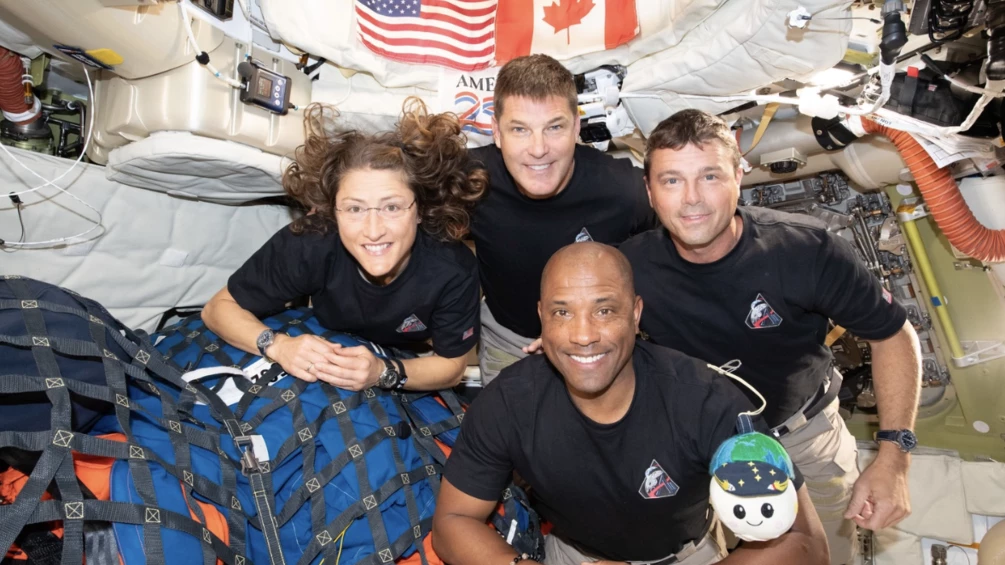
The National Aeronautics and Space Administration (NASA) has officially unveiled the meticulously curated playlist of songs that serves as the daily wake-up call for the four-person crew aboard its groundbreaking Artemis II mission. This mission, which commenced on April 1, 2026, marks a pivotal moment in human space exploration, sending astronauts on a historic ten-day journey around the Moon and back – a feat not attempted with a human crew in over five decades. The selection of these musical accompaniments underscores a long-standing tradition in spaceflight, providing a touch of home and motivation as the crew embarks on an endeavor designed to push the boundaries of our understanding of lunar space.
The Genesis of Artemis II: A Return to Lunar Exploration
The Artemis program represents NASA’s ambitious initiative to return humans to the Moon, establish a sustainable lunar presence, and ultimately prepare for human missions to Mars. Named after the twin sister of Apollo in Greek mythology, the program builds upon the legacy of the Apollo era while aiming for a more diverse and enduring presence beyond Earth orbit. Artemis II is the first crewed test flight of the Orion spacecraft and the Space Launch System (SLS) rocket, designed to certify the human-rated systems necessary for future lunar landings. Following the successful uncrewed Artemis I mission in late 2022, which validated the performance of the SLS and Orion in a lunar environment, Artemis II is tasked with a critical crewed flyby of the Moon. This mission will not only demonstrate Orion’s life support systems and communication capabilities with humans aboard but also allow the crew to observe parts of the Moon that have never been seen up close by human eyes, particularly the far side during their translunar coast. The mission’s success is paramount for paving the way for Artemis III, which aims to land the first woman and first person of color on the lunar surface.
The Enduring Tradition of Wake-Up Calls
The practice of waking astronauts with music or special messages dates back to the Apollo program, a tradition cherished by both the crews and the public on Earth. During the Apollo missions, Mission Control would often play songs selected by the astronauts’ families, or even humorous jingles, to mark the start of their workday in space. This tradition served multiple purposes: it provided a familiar and comforting link to home, helped to maintain a sense of routine in the disorienting environment of space, and offered a moment of levity or reflection. For missions that can span days, weeks, or even months, psychological well-being is as crucial as physical health. Music has been scientifically shown to influence mood, enhance cognitive function, and foster a sense of connection, making it an invaluable tool for maintaining morale in the isolated and high-stress environment of space travel. The continuation of this tradition for Artemis II, more than five decades after Apollo, highlights its enduring significance in the human experience of space exploration.
Artemis II: Mission Objectives and Crew Roster
The Artemis II mission, slated for a ten-day duration, involves a complex trajectory that will see the Orion spacecraft perform a lunar flyby. After launch, Orion will execute a series of maneuvers to build velocity for a trans-lunar injection burn, sending it on a free-return trajectory around the Moon. This path will loop the spacecraft around the far side of the Moon before slingshotting it back towards Earth, ensuring that even in the event of an engine failure, gravity would naturally return the capsule home. The four-member crew for this historic mission comprises seasoned astronauts Christina Koch, Victor Glover, Reid Wiseman, and Jeremy Hansen. Koch, a veteran of a record-breaking 328-day stay on the International Space Station (ISS), brings extensive experience in long-duration spaceflight. Glover, also an ISS veteran, is the first African American to be assigned to a lunar mission. Wiseman, another former ISS commander, leads the mission as commander, while Hansen, representing the Canadian Space Agency (CSA), is the first Canadian astronaut to be assigned to a lunar mission, underscoring the international collaboration inherent in the Artemis program. Their primary objectives include testing Orion’s environmental control and life support systems, assessing human performance in deep space, and validating operational procedures for future lunar missions.
A Cosmic Playlist: Analyzing the Crew’s Selections
On April 4, 2026, NASA initially teased the public by revealing that Chappell Roan’s breakout hit single ‘Pink Pony Club’ was among the tracks rousing the astronauts. Subsequently, the full playlist was disclosed via NASA’s official Instagram account, stating, "You asked for it. Here it is. The official Artemis II wake-up song playlist. Each track was selected by the Moon crew, continuing a tradition that started more than 50 years ago. Stay tuned to find out which songs they’ll choose next." The revealed selection offers a fascinating glimpse into the diverse musical tastes of the crew, spanning multiple genres and eras, yet each carrying a resonance that feels particularly apt for a journey into the cosmos.
-
Queen and David Bowie’s ‘Under Pressure’: This iconic 1981 collaboration is a timeless anthem known for its powerful vocals and poignant lyrics exploring themes of stress, societal pressures, and the human need for love and connection. For a crew embarking on a mission fraught with inherent risks and immense responsibility, the song’s title alone encapsulates the high stakes. Yet, its underlying message of finding solace and working together ("It’s the terror of knowing what this world is about / Watching some good friends screaming ‘Let me out’ / Pray tomorrow gets me higher / Pressure on people, people on streets") could serve as a powerful reminder of camaraderie and resilience under extreme conditions. The track’s enduring popularity also grounds the mission in a shared cultural experience.
-
John Legend and André 3000’s ‘Green Light’: Released in 2008, this R&B-infused track is characterized by its smooth grooves and optimistic outlook. With lyrics about moving forward and embracing new beginnings, ‘Green Light’ provides an upbeat and hopeful start to the astronauts’ day. The collaboration between a soulful crooner like John Legend and the eclectic André 3000 signifies a blend of classic and contemporary artistry, mirroring the Artemis program’s blend of traditional spaceflight principles with cutting-edge technology. The song’s message of progression and anticipation ("Give me the green light / Go") perfectly aligns with the forward-looking nature of space exploration.
-
Chappell Roan’s ‘Pink Pony Club’: A more recent addition to the pop landscape, ‘Pink Pony Club’ (2020) by Chappell Roan has garnered significant attention for its vibrant, unapologetically queer-pop aesthetic and themes of self-discovery and breaking free from small-town constraints. Its inclusion is notable as it reflects contemporary music trends and perhaps the personal journey or spirit of one of the younger crew members. The song’s message of finding one’s authentic self and embracing a unique path could resonate with the adventurous spirit required for space travel, where individuals push personal and scientific boundaries. It also highlights the generational diversity within the astronaut corps.
-
Denzel Curry and Glass Animals’ ‘Tokyo Drifting’: This 2020 collaboration is a genre-bending track that blends hip-hop, electronic, and indie-pop elements, creating an energetic and somewhat surreal soundscape. Its dynamic rhythm and modern production likely offer an invigorating wake-up call, injecting a dose of contemporary edge and youthful vigor into the mission’s daily routine. The choice speaks to the diverse tastes of the astronauts and NASA’s embrace of a wide range of musical expressions, connecting with a younger demographic and showcasing the universality of music.
The eclectic nature of this playlist suggests a conscious effort by the crew to select songs that not only uplift but also reflect the complexity and excitement of their mission. From timeless rock anthems to modern pop and hip-hop, these tracks create a unique auditory tapestry for their lunar odyssey.
Public Engagement and Astronaut Voices
NASA’s decision to share the playlist publicly through social media platforms like Instagram and X (formerly Twitter) is a strategic move to foster public engagement and demystify space travel. By revealing these personal selections, NASA creates a relatable connection between the public and the astronauts, humanizing these extraordinary individuals. The interactive nature of the announcement, with the promise of more songs to come, encourages ongoing interest in the mission.
One notable reaction came from artist Denzel Curry, who expressed his excitement on X, writing, "To infinity and beyond muthafucka," in response to his track ‘Tokyo Drifting’ being included. He then, in a moment of understandable exuberance, incorrectly added that he was "the First Rapper Played in Space." While Curry’s enthusiasm is palpable, it’s important to clarify the historical record regarding hip-hop in space.
Music’s Deep Space Legacy: From Apollo to Artemis
While Denzel Curry’s excitement was genuine, the honor of the "First Rapper Played in Space" belongs to another pioneer. In 2024, NASA indeed broadcast Missy Elliott’s groundbreaking 1997 debut single ‘The Rain (Supa Dupa Fly)’ towards Venus. This broadcast was part of a larger initiative to test new deep-space communication technologies and was a symbolic gesture acknowledging hip-hop’s global cultural impact. This event marked a significant milestone, proving that music, irrespective of genre, could traverse vast cosmic distances.
The history of music in space extends far beyond hip-hop. The very first song played in space is often attributed to the crew of Gemini 6 in December 1965, who, much to Mission Control’s surprise, pulled out a harmonica and sleigh bells to play ‘Jingle Bells’. Over the decades, astronauts have brought various musical instruments into space, from guitars to flutes, and even recorded original music aboard the International Space Station. Music serves not only as entertainment but also as a powerful psychological tool, combating monotony, boosting morale, and facilitating a sense of normalcy in an otherwise extraordinary environment. For long-duration missions, like those envisioned for Mars, the role of music and other cultural artifacts in maintaining crew well-being will become even more critical.
Beyond Playlists: NASA’s Symphonic Universe
NASA’s engagement with music extends far beyond astronaut wake-up calls. The agency has increasingly recognized the power of integrating arts and science to inspire and educate. One fascinating initiative involves transforming complex scientific data into audible "sonifications." For instance, data from black holes, cosmic microwave background radiation, and distant galaxies are translated into soundscapes, allowing scientists and the public to "hear" the universe in new ways. This not only offers a unique perspective on cosmic phenomena but also makes abstract scientific concepts more accessible and engaging.
Furthermore, NASA has actively collaborated with contemporary artists. A notable example is its partnership with acclaimed electronic musician Jon Hopkins. For a specific project, Hopkins’s new single was intended to be "sent to the Moon forever," symbolizing the enduring human creative spirit reaching into the cosmos. These collaborations bridge the perceived gap between STEM (Science, Technology, Engineering, and Mathematics) and the Arts, promoting a STEAM (Science, Technology, Engineering, Arts, and Mathematics) approach to education and public outreach.
The agency has also ventured into its own media distribution, launching a dedicated streaming service. This platform serves as a hub for educational content, documentaries, live mission coverage, and, naturally, features related to music and space. By directly engaging with the public through such diverse media, NASA aims to cultivate a deeper understanding and appreciation for space exploration, inspiring future generations of scientists, engineers, and artists.
The Broader Impact: Inspiring a New Generation
The unveiling of the Artemis II crew’s wake-up playlist is more than just a novelty; it is a strategic element of NASA’s broader public engagement efforts. By sharing these personal touches, the agency humanizes its astronauts and makes the awe-inspiring endeavor of space travel more relatable to the average person. This connection is vital for maintaining public support for expensive and ambitious space programs.
Moreover, such initiatives play a crucial role in inspiring the next generation. When young people see that astronauts, these figures of scientific prowess and courage, also connect with popular culture through music, it helps demystify the path to STEM careers. It shows that pursuing a life in science or exploration does not mean sacrificing personal interests or cultural connections. The inclusion of contemporary artists like Chappell Roan and Denzel Curry ensures that the message resonates with a diverse, modern audience.
As humanity looks towards establishing a permanent presence on the Moon and eventually venturing to Mars, the psychological and cultural aspects of long-duration spaceflight will become increasingly important. Music, with its universal appeal and profound emotional impact, will undoubtedly continue to play a vital role in keeping future explorers grounded, motivated, and connected to the home planet they left behind. The Artemis II playlist is not just a collection of songs; it is a soundtrack to humanity’s ongoing quest for knowledge, exploration, and the boundless pursuit of what lies beyond.