Nayara Elvina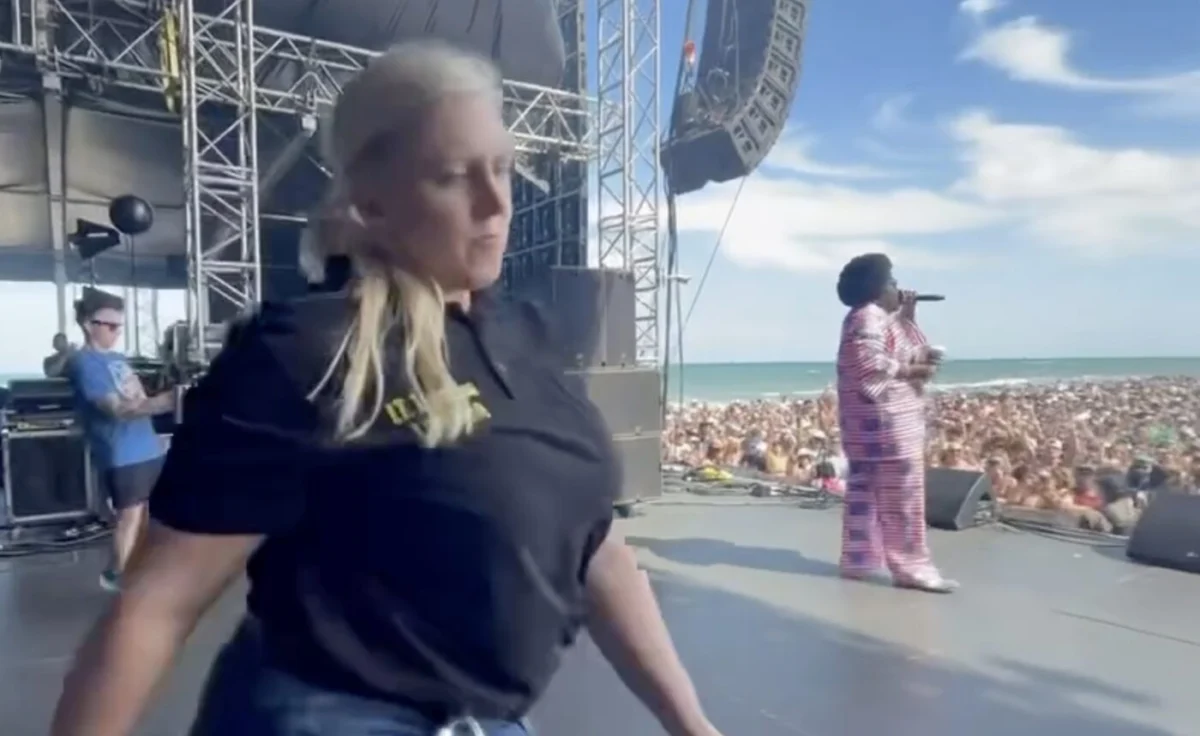
The Tortuga Music Festival, held annually on the sands of Fort Lauderdale Beach, Florida, is traditionally recognized for its blend of country, rock, and pop headliners, this year featuring prominent names such as Post Malone, Riley Green, and Kenny Chesney. However, the 2024 iteration of the festival gained significant social media traction and journalistic interest due to a provocative performance by Joseph Edgar Foreman, better known by his stage name Afroman. The rapper, famed for his turn-of-the-century hits, utilized his set to provide a live, theatrical epilogue to a protracted and highly publicized legal battle with law enforcement officials from his home state of Ohio. During his performance, Afroman introduced a lookalike of a sheriff’s deputy on stage, a move that served as a defiant celebration of a recent jury verdict in his favor regarding a defamation and privacy lawsuit.
The appearance at Tortuga follows a series of events that began in late 2022, involving a police raid, the subsequent use of security footage in music videos, and a courtroom showdown that tested the boundaries of the First Amendment. By bringing a satirical representation of Officer Lisa Phillips—one of the primary plaintiffs in the lawsuit against him—onto the festival stage, Afroman signaled that his legal victory has only emboldened his artistic commentary on police conduct and civil liberties.
The Genesis of the Conflict: The August 2022 Raid
The friction between Afroman and the Adams County Sheriff’s Department originated on August 21, 2022. On that afternoon, deputies executed a search warrant at the rapper’s residence in Manchester, Ohio. The warrant was reportedly predicated on an anonymous tip alleging that the property was being used for drug trafficking and was the site of a kidnapping.
According to reports and Afroman’s own documentation of the event, the raid was extensive. Deputies entered the home with weapons drawn, breaching the front door and moving through the residence while Afroman was not present. Despite the severity of the initial allegations, the search yielded no evidence of kidnapping or large-scale narcotics distribution. Law enforcement officials did seize a small amount of marijuana—which Afroman has long advocated for—and a significant sum of cash, totaling over $5,000. No criminal charges were ever filed against the rapper in connection with the raid.
The aftermath of the search, however, became the catalyst for a national conversation. Afroman alleged that the deputies caused more than $20,000 in physical damage to his property, including a broken gate and a splintered front door. Furthermore, he claimed that upon the return of his seized funds, the total was $400 short. These allegations of property damage and financial discrepancy formed the basis of Afroman’s subsequent public campaign against the department.
Artistic Retaliation and the "Lemon Pound Cake" Phenomenon
In the weeks following the raid, Afroman chose not to pursue traditional legal channels initially, but instead utilized his platform as a musician. He began posting snippets of his home security footage on social media, mocking the officers’ conduct during the search. This evolved into a series of music videos that incorporated the actual footage of the deputies inside his home.
The most notable of these releases were the songs "Will You Help Me Repair My Door" and "Lemon Pound Cake." The latter became a viral sensation, specifically highlighting a moment where a deputy was filmed staring at a plate of lemon pound cake in Afroman’s kitchen. The lyrics directly addressed the futility of the raid: "The Adams County Sheriff kicked down my door / Then I heard the glass break / They found no kidnapping victims / Just some lemon pound cake."
While the videos were met with widespread amusement from the public, they were viewed as a targeted harassment campaign by the officers involved. In early 2023, seven members of the Adams County Sheriff’s Office—including four deputies, two administrators, and a sergeant—filed a civil lawsuit against Afroman.
Legal Proceedings: Defamation and the Right of Publicity
The plaintiffs in the lawsuit, which included Officer Lisa Phillips, alleged that Afroman had engaged in the unauthorized use of their likenesses for commercial purposes. The lawsuit cited "humiliation, ridicule, mental distress, and loss of professional reputation." The officers argued that while they were public officials, the use of their images in music videos sold for profit constituted a violation of Ohio’s "Right of Publicity" statute and amounted to defamation.
The legal battle drew significant attention from civil rights advocates and legal scholars. At the heart of the case was the tension between an individual’s right to control their image and an artist’s First Amendment right to criticize the government and its agents. Afroman’s defense team argued that the music videos were a form of political speech and social commentary, protected under the umbrella of satire and parody.
During the trial, the atmosphere was notably tense. One of the most discussed moments occurred when the song "Licc’em Low Lisa" was played in the courtroom. The track, which contains vulgar and suggestive lyrics regarding Officer Phillips, was presented by the plaintiffs as evidence of the emotional toll the rapper’s actions had taken. Reports from the courtroom indicated that Officer Phillips was moved to tears during the testimony, describing the impact the social media attention had on her personal and professional life.
Afroman, taking the stand in his own defense, remained steadfast. He argued that the officers had forfeited their expectation of privacy the moment they entered his private residence under false pretenses. "This whole thing is their fault and they’re suing me for their mistake," he testified, emphasizing that the songs would never have existed had the raid not occurred.
The Verdict and Its Implications for Free Speech
In a decision that was hailed by Afroman as a victory for the American people, the jury ruled in favor of the rapper. The court dismissed the claims of defamation and privacy violations, reinforcing the precedent that public officials acting in their official capacity have a limited scope for privacy claims, especially when their actions are a matter of public concern.
Legal analysts suggest the verdict serves as a critical affirmation of the "Streisand Effect"—a phenomenon where an attempt to hide, remove, or censor information has the unintended consequence of further publicizing that information. By suing Afroman, the Adams County Sheriff’s Department inadvertently amplified his criticisms, turning a local dispute into a national discourse on police accountability.
Following the trial, Afroman released a new album titled Famous People, which included the tracks that were at the center of the litigation. He characterized the outcome not as a personal win, but as a preservation of constitutional rights. "I didn’t win, America won," he stated in a post-verdict press release. "America still has freedom of speech. It’s still for the people, by the people."
The Tortuga Performance: A Theatrical Statement
The performance at the Tortuga Music Festival served as the first major public celebration of this legal outcome. Afroman’s set, which drew a massive crowd of both longtime fans and curious onlookers, reached its climax when he performed the controversial tracks. The inclusion of an "Officer Lisa" impersonator—a woman dressed in a tactical uniform similar to those worn by the Adams County deputies—was a deliberate choice to lean into the satire that won him the case.
The crowd’s reaction was overwhelmingly positive, reflecting a broader cultural shift toward skepticism of law enforcement overreach. For many attendees, the performance was more than just a musical set; it was a live demonstration of the power of the First Amendment.
Broader Impact on Civil Liberties and Police Accountability
The Afroman case highlights several ongoing issues within the American legal system, particularly regarding civil asset forfeiture and the execution of search warrants based on anonymous tips. The $400 discrepancy reported by Afroman, while a relatively small sum in the context of federal litigation, underscores a persistent complaint in communities across the country regarding the handling of seized property by law enforcement.
According to data from the Institute for Justice, civil forfeiture programs have often been criticized for lack of transparency and for creating financial incentives for law enforcement agencies to seize property. While Afroman’s case was a civil matter regarding defamation, the underlying cause—the raid and the subsequent handling of his assets—resonates with broader calls for police reform.
Furthermore, the case sets a modern benchmark for how artists can use technology and social media to hold public institutions accountable. In an era where high-definition security cameras are ubiquitous, the "Afroman Defense" provides a blueprint for using real-time documentation as a shield against perceived injustice.
Conclusion
As the Tortuga Music Festival concluded, the conversation surrounding Afroman’s set continued to circulate online, bridging the gap between entertainment news and legal analysis. The rapper has signaled that he has no intention of quieting his criticism, with plans for further tours and media projects that explore his experiences with the legal system.
The saga of Afroman versus the Adams County Sheriff’s Department stands as a landmark instance where the traditional power dynamics between a citizen and the state were inverted through the use of art and the protection of the courts. While the emotional toll on the officers involved was evident throughout the trial, the legal system ultimately prioritized the right of the citizen to criticize the state’s use of force. For the music industry and the legal community alike, the events at Tortuga Beach were a vivid reminder that in the United States, the right to parody and the right to protest remain foundational pillars of the national identity.