Johan Budi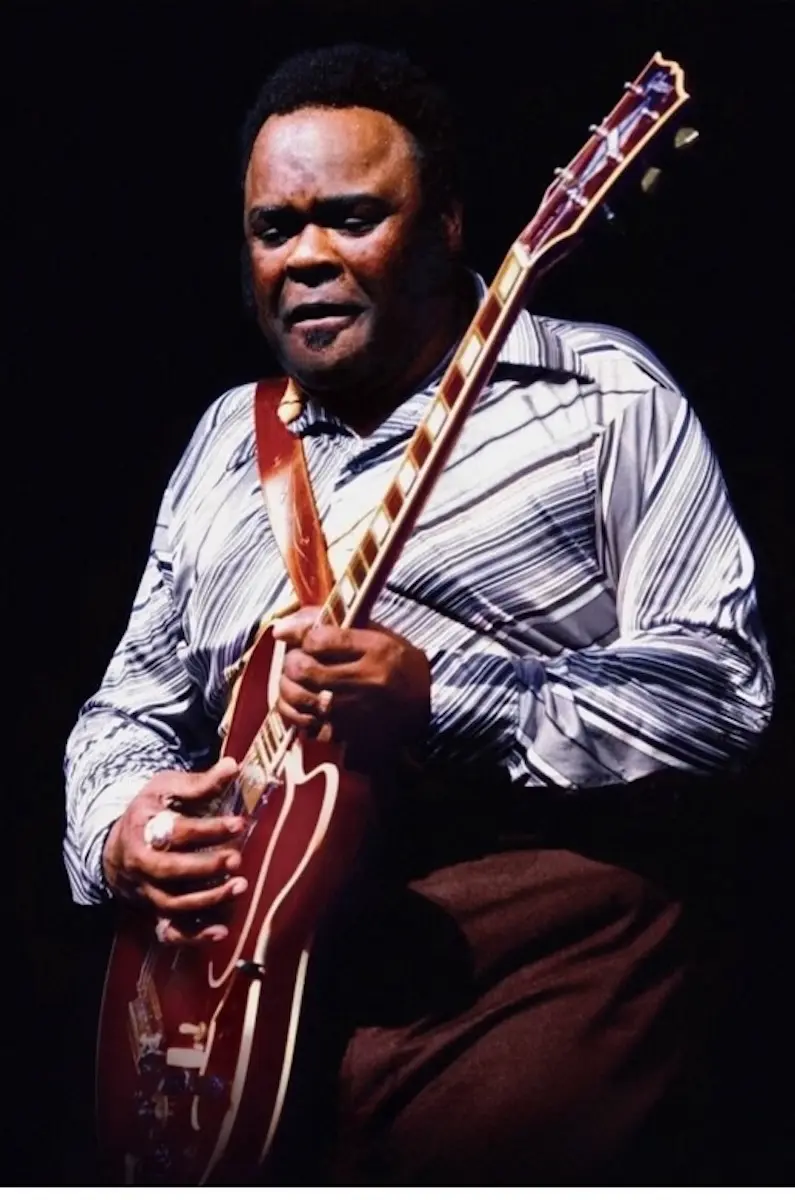
Historical Context and the 1975 European Tour
By the mid-1970s, Freddie King had successfully navigated several distinct phases of his career. Born in Gilmer, Texas, in 1934 and later moving to Chicago, King’s early work for the Federal and King labels in the late 1950s and early 1960s produced a string of influential instrumental hits, such as "Hideaway" and "San-Ho-Zay." These tracks were foundational to the British Blues Explosion. However, as the 1960s progressed, King found himself at a crossroads. While he remained a staple of the "chitlin’ circuit"—a network of venues safe and hospitable for African American performers during the era of segregation—his career found new momentum when he signed with Leon Russell’s Shelter label in 1969.
This transition allowed King to "cross over" to the burgeoning rock audience, performing at iconic venues like the Fillmore East and West. By 1975, King was a seasoned veteran of the international circuit. Unlike his contemporary B.B. King, who favored a more polished, big-band orchestral approach, Freddie King maintained a lean, high-octane format. His 1975 ensemble featured a hard-driving rhythm section capable of sustaining the loud-soft dynamics and extended grooves that became his signature. The Nancy Pulsations Concert captures this specific energy, recorded just a year before King’s untimely death in December 1976 at the age of 42.
Technical Specifications and Archival Production
The Elemental Music release is notable for its commitment to high-fidelity restoration. The sound quality of the Nancy recording is described as excellent, capturing the biting attack of King’s Gibson ES-345 and the visceral power of his vocal delivery. The production team, working with the King estate, has included rare photography and extensive liner notes. Crucially, the release features contributions from Wanda King, Freddie’s daughter, providing an intimate perspective on her father’s life on the road during this period.
The setlist is a sprawling journey through King’s repertoire and the broader blues canon. Disc one focuses on high-energy staples such as "Going Down" and the emotionally charged "Have You Ever Loved A Woman," a track that arguably serves as the definitive showcase for King’s ability to blend scorching guitar licks with raw, soulful vocals. Disc two expands into medleys and tributes to his peers, including a formidable rendition of John Lee Hooker’s "Boogie Chillun" and T-Bone Walker’s "Stormy Monday Blues."
Chronology of the Performance
The October 10, 1975, concert followed a rigorous schedule. The lineup for the evening included King on guitar and vocals, supported by a tight-knit unit: Alvin Hemphill on organ, Lewis Stephens on piano, Benny Turner on bass, and Caleb Emphrey on drums. This quintet was characterized by its ability to pivot between traditional Chicago blues structures and the more expansive, improvisational style of blues-rock that was popular in the mid-70s.
The performance began with a series of high-tempo numbers designed to engage the French audience, many of whom were seeing King for the first time as the blues revival reached its peak in Europe. The set moved through classic Federal-era hits before diving into the more contemporary, funk-infused blues that King had developed during his years with Shelter Records. The finale, "You’re The One," served as a showcase for the band’s collective synergy, ending a two-hour marathon that demonstrated King’s unparalleled stamina.
Contemporary Counterpoints: Charlie Wood’s "Your Love Is My Home"
While Freddie King’s release looks back at a pivotal moment in blues history, Charlie Wood’s new album, Your Love Is My Home, represents the modern evolution of the soulful, jazz-inflected R&B that King helped pioneer. Wood, a Memphis-born and New Orleans-bred keyboardist and vocalist, brings a different kind of intensity to his work. Recorded between October 2024 in Sussex and January 2025 in Copenhagen, Wood’s latest project on Stunt Records highlights the global nature of contemporary jazz and blues.
Wood’s career has been defined by his versatility, having accompanied legends such as Albert King and George Coleman. On Your Love Is My Home, Wood emphasizes a wistful, "purring" vocal timbre. The album is a mix of carefully curated covers and original compositions. Notable tracks include a reimagining of Jimmy Rowles’ "The Peacocks" (retitled "A Timeless Place") and a rhythmically inventive version of Amy Winehouse’s "Love Is A Losing Game." Wood’s ability to take disparate material—from Elvis Costello’s "Shipbuilding" to Sam Cooke’s "You Send Me"—and unify it through a consistent, organ-driven groove demonstrates the enduring flexibility of the soul-jazz genre.
Experimental Frontiers: Caleb Wheeler Curtis’s "Ritual"
Further broadening the scope of recent releases is Caleb Wheeler Curtis’s Ritual, an album that pushes into the realm of "cosmic post-bop." Recorded in Astoria on October 13, 2025, and released via Chill Tone Records, this project highlights the more avant-garde branch of the jazz lineage. Curtis is notable for his use of the "stritch" (a straight alto saxophone), an instrument popularized by Rahsaan Roland Kirk.
Ritual balances structured composition with radical improvisational freedom. The ensemble, featuring Orrin Evans on piano and Vicente Archer on bass, creates a gritty, interactive environment. Tracks like "Bleakout" and "Black Box Extraction" utilize hypnotic space grooves, while "Florence" offers a more plaintive, melodic approach. This release underscores the ongoing dialogue between tradition and innovation in jazz, where the use of rare instrumentation and "headstrong inaccessibility" serves to challenge and expand the listener’s expectations.
Broader Impact and Industry Implications
The simultaneous emergence of these three distinct recordings—Freddie King’s archival masterpiece, Charlie Wood’s soulful synthesis, and Caleb Wheeler Curtis’s experimental ritual—illustrates the current state of the jazz and blues market. There is a clear demand for high-quality, physical archival releases that provide historical context for the music’s evolution.
The Freddie King release, in particular, reinforces the importance of preserving live performances from the 1970s, a decade often overlooked in favor of the 1950s blues boom or the 1980s resurgence. By documenting the full two-hour set in Nancy, Elemental Music allows for a deeper analysis of King’s "loud-soft" dynamics and his ability to command large European festival crowds. This has implications for musicology and the study of the "blues-rock" transition, proving that King was not merely a bluesman playing for rock fans, but a versatile artist who could make genres like Traffic’s "Feeling Alright" entirely his own.
Furthermore, the involvement of family members like Wanda King in the curation process suggests a growing trend toward "estate-authorized" releases that prioritize biographical accuracy and respect for the artist’s legacy. This approach not only serves the fans but also ensures that the cultural contributions of figures like Freddie King are documented with the scholarly rigor they deserve.
In conclusion, Freddie King: Feeling Alright – The Complete 1975 Nancy Pulsations Concert is more than a live album; it is a testament to the enduring power of the electric blues. When viewed alongside the contemporary efforts of Charlie Wood and Caleb Wheeler Curtis, it becomes clear that the lineage King helped establish remains a vibrant, evolving force in global music. Whether through the preservation of 50-year-old tapes or the experimental use of a stritch in a modern studio, the spirit of innovation and raw emotional expression continues to define the genre.