Nayara Elvina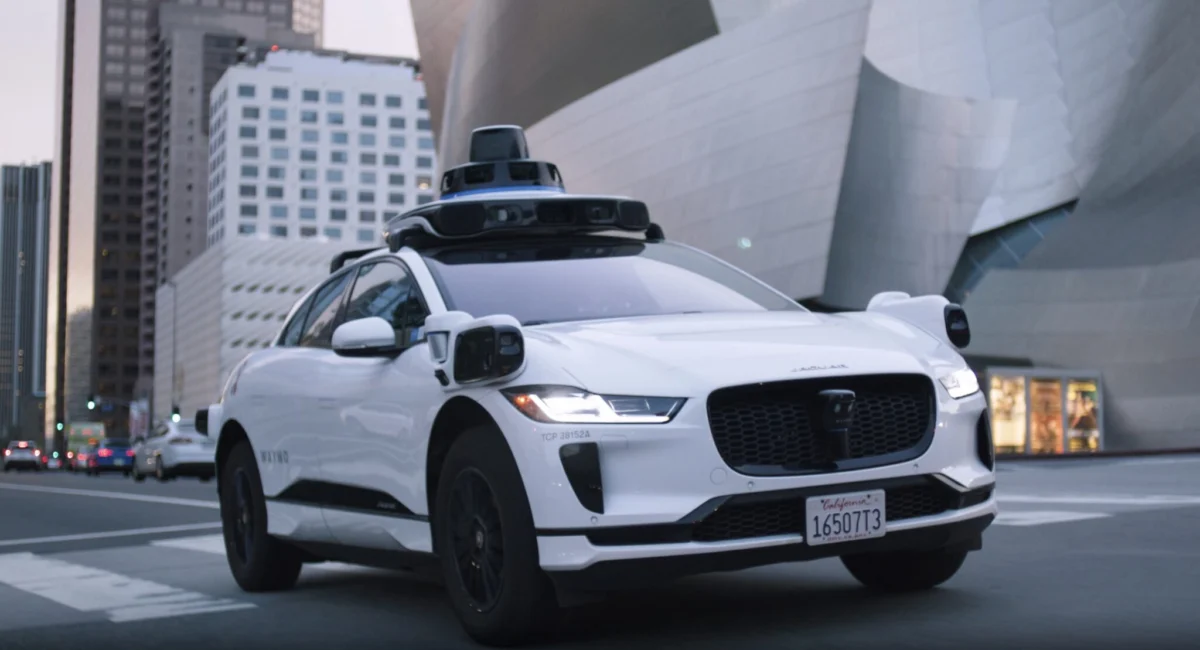
Waymo, the autonomous driving subsidiary of Alphabet Inc., officially integrated its driverless rideshare services into the Nashville, Tennessee, market last week, marking a significant milestone in the company’s national expansion strategy. The launch follows an extensive multi-month period of rigorous testing and geospatial mapping, during which a fleet of Waymo vehicles traversed the city’s complex grid to familiarize the artificial intelligence systems with local traffic patterns. This expansion introduces Nashville as a key hub for autonomous mobility, joining an elite list of American cities including San Francisco, Los Angeles, Phoenix, and Austin. However, the first days of commercial operation have highlighted the unique navigational complexities of Music City, particularly the presence of "transpotainment" vehicles and localized infrastructure quirks that have tested the limits of autonomous software.
The Nashville rollout is distinguished by a strategic partnership with Lyft, allowing users to hail Waymo vehicles directly through the existing Lyft mobile application. This integration aims to streamline the user experience, providing a familiar interface for passengers to summon a driverless vehicle, enter their destination, and initiate the trip via an in-car interface. Despite the technological sophistication of the Waymo Driver—the company’s proprietary suite of LiDAR, cameras, and radar—the transition from empty "training" runs to passenger-filled commercial service has encountered immediate real-world friction.
The Intersection of Technology and "Transpotainment"
One of the most significant hurdles identified during the first week of service involves Nashville’s ubiquitous pedal taverns. These slow-moving, multi-passenger vehicles, often powered by groups of tourists and a small electric motor, are a staple of the city’s downtown tourism economy. Currently, the Metro Transportation Licensing Commission has issued 26 permits for such pedal taverns to operate within the downtown core. These vehicles frequently travel at speeds significantly below the posted limit and often stop at irregular intervals, creating a unique "edge case" for autonomous driving algorithms.
Within five days of the official launch, a Waymo vehicle became the subject of social media scrutiny after a video surfaced showing the car stalled at a busy downtown intersection. The footage, originally shared via Instagram and later picked up by local news outlets, depicted the Waymo vehicle attempting to execute a maneuver before coming to a complete halt, effectively blocking oncoming traffic. According to official statements and subsequent analysis of the incident, the vehicle’s sensor array detected a pedal tavern in its intended lane. In an attempt to navigate around the slow-moving obstacle, the Waymo vehicle entered the intersection but failed to complete the pathing, resulting in a navigational deadlock.
A spokesperson for Waymo addressed the incident, noting that the vehicle acted out of an abundance of caution. The "confusion" stemmed from the car’s safety protocols, which are programmed to prioritize collision avoidance when faced with unpredictable or non-standard vehicle movements. In this instance, the proximity of the pedal tavern and the flow of oncoming traffic created a scenario where the vehicle’s software could not identify a 100% safe path forward, leading to a "fail-safe" stop.
Mapping Errors and Navigational Anomalies
The pedal tavern incident is not the only operational challenge Waymo has faced in its Nashville debut. Additional reports and viral video content have documented instances of autonomous vehicles entering restricted zones. One widely circulated TikTok video showed a Waymo vehicle inadvertently driving down a pedestrian-heavy alleyway behind the historic Ryman Auditorium. While the vehicle navigated the narrow space without incident, the presence of an autonomous car in an area traditionally reserved for foot traffic and delivery vehicles raised questions regarding the precision of the city’s digital twin mapping.
Furthermore, Nashville’s ongoing construction boom has presented a dynamic environment that contrasts with the static maps used by autonomous systems. Several vehicles were observed navigating into active construction zones where temporary barriers and manual flaggers were present. While human drivers can often interpret hand signals and non-standard road markings with ease, these scenarios require high-level cognitive processing from AI. Waymo has maintained that its vehicles are equipped to handle construction through real-time sensor data, but the Nashville launch suggests that the frequency of these "dynamic obstacles" in a rapidly growing city may require further software optimization.
Comparative Safety and Data Analysis
Despite the visibility of these early navigational hiccups, Waymo defends the safety and efficacy of its technology through a robust body of data. The company frequently cites a 2023 safety report which indicates that its autonomous vehicles are involved in 92% fewer injury-causing crashes and 57% fewer police-reported crashes compared to human drivers over the same distance.
The disparity between public perception and statistical safety is a central theme in the discourse surrounding autonomous mobility. Proponents of the technology argue that while a stalled Waymo vehicle in an intersection is a nuisance that generates social media engagement, human-led traffic violations and accidents occur thousands of times daily without similar scrutiny. The "novelty bias" ensures that every error made by an AI driver is highlighted, whereas the 40,000 annual traffic fatalities in the United States caused by human error are often viewed as a tragic but expected norm.
In Nashville, the introduction of Waymo comes at a time when the city is grappling with severe traffic congestion and a shortage of reliable public transit options. Supporters of the service highlight the benefits of a driverless fleet, including the elimination of impaired driving, the reduction of "distracted driving" incidents, and the provision of a consistent, climate-controlled environment for passengers. For individuals with mobility issues or those who prefer to avoid the social pressures of traditional ridesharing, the autonomous model offers a compelling alternative.
Regulatory Environment and Economic Impact
The legal framework for Waymo’s operation in Nashville is supported by Tennessee’s proactive stance on autonomous vehicle (AV) legislation. The state has previously passed measures that allow for the operation of fully autonomous vehicles without a human safety driver, provided the vehicles meet federal safety standards and are registered with the Department of Safety and Homeland Security. This regulatory clarity has made Tennessee an attractive destination for tech companies, yet it has also sparked a debate regarding the economic impact on the local workforce.
Local rideshare drivers, who have long relied on platforms like Uber and Lyft for their livelihoods, have expressed concerns regarding the long-term viability of their profession. The introduction of a driverless fleet represents a direct competitor that does not require a commission-split with a human operator. Critics argue that while the technology may be safer, the displacement of gig-economy workers could have ripple effects on the local economy.
The Metro Transportation Licensing Commission, which oversees traditional taxis and "transpotainment" vehicles, is now tasked with monitoring how these disparate modes of transport coexist. The conflict between the 19th-century concept of a pedal tavern and the 21st-century reality of a LiDAR-equipped SUV is a microcosm of the broader challenges facing modern urban planning.
Chronology of Waymo’s Nashville Integration
To understand the current state of operations, it is necessary to review the timeline of Waymo’s entry into the Tennessee market:
- Early 2025: Waymo announces Nashville as a primary target for expansion, citing the city’s growth and complex driving environment.
- Summer 2025: A small fleet of Waymo vehicles begins "mapping" runs. These vehicles are operated by human safety drivers who monitor the AI’s performance and tag specific local hazards, such as the Ryman Auditorium alleyways and frequent construction sites.
- Late 2025: Waymo transitions to "rider-only" testing, where vehicles operate autonomously without passengers to stress-test the system in Nashville’s nightlife districts, including Lower Broadway.
- April 2026: The official commercial launch occurs. Waymo vehicles become available to the general public via the Lyft app.
- Launch Week +3 Days: The first viral reports of "navigation loops" emerge, with vehicles struggling to merge near the Nissan Stadium during event traffic.
- Launch Week +5 Days: The "Pedal Tavern" incident occurs, leading to a public statement from Waymo regarding the car’s cautious programming.
Future Outlook and Urban Adaptation
The "kinks" observed in Nashville are viewed by industry experts as a necessary stage in the evolution of machine learning. Each time a Waymo vehicle encounters a pedal tavern or a mislabeled alleyway, the data is uploaded to a central server, allowing the entire fleet to "learn" from the encounter. This collective intelligence is a fundamental advantage of autonomous systems over human drivers, who cannot instantaneously share their experiences with every other driver on the road.
As Waymo continues to refine its Nashville operations, the city serves as a critical test bed for how autonomous vehicles handle "unstructured" traffic elements. If the Waymo Driver can successfully navigate the chaos of a Nashville Saturday night—complete with party buses, pedal taverns, tractors, and thousands of pedestrians—it will provide a powerful proof of concept for the technology’s readiness for any urban environment in the world.
For now, Nashville residents and visitors are witnessing a unique period of transition. The streets of Music City have become a laboratory where the future of transportation must learn to dance with the traditions of the past. While the pedal taverns remain a source of frustration for many, they have inadvertently become the ultimate litmus test for the most advanced artificial intelligence on the road today. Waymo’s success in Tennessee will ultimately depend on its ability to move past these early obstacles and prove that a driverless future is not only possible but preferable for the safety and efficiency of the modern city.