Aveline Kirana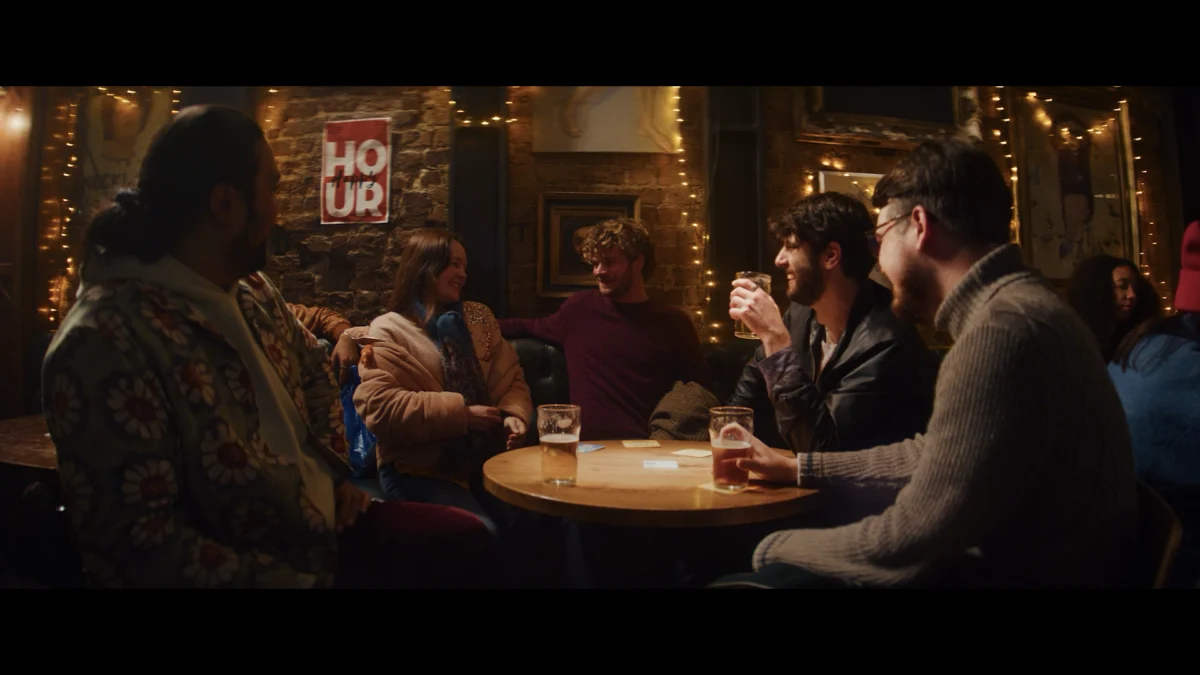
Robin Norton-Hale, a distinguished figure in the realms of theatre, opera, and film, is making waves with her innovative approach to operatic adaptation. As the Artistic Director and CEO of English Touring Opera and a seasoned freelance writer and director, Norton-Hale’s latest cinematic endeavor, a contemporary adaptation of Puccini’s "La Bohème," has garnered significant acclaim for its bold decision to feature live singing. Based between London and Sheffield, Norton-Hale, also an executive coach, previously co-founded the award-winning OperaUpClose, known for its imaginative English-language productions of classic operas and new chamber works. Her recent interview with OperaWire provided an in-depth look into the artistic choices and challenges behind her groundbreaking film, offering a fresh perspective on the intersection of opera and cinema.
The Audacious Choice of Live Singing in "La Bohème"
The most striking aspect of Norton-Hale’s "La Bohème" film is its commitment to live vocal performance, a departure from the conventional practice of lip-syncing to pre-recorded tracks in operatic cinema. This decision, though perhaps not entirely unprecedented in the history of filmed opera, imbues the production with a rare authenticity that resonated deeply with audiences and critics alike. Norton-Hale explained that this choice was rooted in the success of the original stage production, which first captivated audiences in a small pub in Kilburn.
"One of the reasons it worked so well and was so popular was its sort of authenticity," Norton-Hale stated, emphasizing the value of genuine connection. She elaborated on how the age of the performers in the intimate theatre setting mirrored the youth of the characters, a stark contrast to many large-scale opera house productions where singers are often older than the roles they portray. This youthful representation, coupled with the decision to perform in English, fostered an immediate and relatable experience for the audience.
The transition to film, Norton-Hale believed, necessitated the preservation of this immediacy. "What I really didn’t want to lose in transferring it to film was that immediacy and I felt that having it dubbed would lose that. And also it just always looks crap, I think," she candidly admitted, drawing a parallel with her own critical observations of other operatic film adaptations. Her sentiment echoed the sentiments of many viewers who find the artificiality of miming to be a significant detractor from the emotional impact of operatic performances, citing examples like the film versions of "Madama Butterfly" with Domingo or "Rigoletto" with Pavarotti.
Genesis of a Cinematic Vision: From Stage to Screen
The journey of "La Bohème" from a critically acclaimed stage production to a feature film was a testament to a long-gestating artistic vision, initiated not by Norton-Hale herself, but by the production company Finite Films. Having witnessed the opera’s success at the Soho Theatre in 2010, Finite Films approached Norton-Hale with the prospect of a cinematic adaptation. The filming finally took place in late 2023, culminating in its release in early 2026, marking a significant period of development.
Norton-Hale acknowledged the inherent challenges of translating opera to film, noting that opera’s fundamental premise – characters singing instead of speaking – is inherently unrealistic. While seasoned opera-goers quickly adapt to this convention, it can initially present a barrier for newcomers. However, she highlighted that opera’s strength lies in its ability to convey complex emotions and subtext through music, allowing for layers of meaning that spoken dialogue alone cannot achieve.
The Verismo style of "La Bohème," characterized by its focus on realism, proved particularly well-suited for the cinematic medium. Film, Norton-Hale posited, is inherently more realistic, with the director’s control over the camera guiding the audience’s focus. This contrasts with theatre, where the audience has a broader scope of visual attention. "In film, as the director, you have more control. You only show the viewer the thing you want them to see," she explained, underscoring the distinct directorial advantages offered by cinema.
Furthermore, "La Bohème’s" narrative structure, with its continuous musical flow and dialogue-driven arias, lends itself well to a filmic approach, mirroring the pacing and dramatic arc of a play or television script. This inherent dramatic coherence, Norton-Hale suggested, sets it apart from earlier operatic forms like those of Mozart or Handel, which often feature more self-contained musical numbers.
Navigating the Technical Labyrinth of Live Filming
The technical execution of live singing on screen, especially in outdoor scenes, presented a formidable undertaking. Norton-Hale described the process as "completely bonkers," particularly given that this was her directorial debut in film. The innovative solution involved pre-recording the orchestral score in a studio with the conductor, Alice, who then conducted along to her own filmed performance on set. This intricate synchronization ensured that the live vocals of the singers remained perfectly aligned with the orchestral backing.
"We also had to find places on set where Alice’s baton-waving wouldn’t be in the shot, which included a whole day of her conducting from within a chimney, sitting in the grate," Norton-Hale recounted, illustrating the unconventional methods employed to achieve the desired result. The challenges of outdoor recording, including ambient noise from wind, rain, and traffic, were significant but, paradoxically, contributed to the film’s realism. The nonchalant reaction of Londoners to the operatic performances unfolding around them further underscored the contemporary setting and added an element of unexpected charm.
Casting Brilliance: Discovering Rodolfo
Norton-Hale played an instrumental role in the casting process, particularly for the pivotal role of Rodolfo, which was entrusted to Matthew McKinney. His performance was lauded by the reviewer, who found him to be an "inspired choice." Norton-Hale shared her profound admiration for McKinney, describing him as "a superstar" and "really special." Although they had not previously worked together on a major production, McKinney had made a memorable impression in a small role in English Touring Opera’s "Lucrezia Borgia" and had been heard in auditions.
"His acting in this tiny role was just so extraordinary," Norton-Hale recalled. "When he was on stage, not the centre of attention, he was just so physically present and in the character." This nuanced performance, coupled with his vocal talent, made him the ideal candidate for Rodolfo, especially given the film’s intimate close-ups and McKinney’s youth, which aligned with the character’s age. The casting occurred in early 2023, and McKinney’s subsequent vocal development and accolades, including winning the Ferrier Award, have further solidified his status as a rising star, with upcoming performances at English National Opera. Lucy Hall, who portrays Mimì, also received high praise for her exceptional singing and acting abilities.
Reimagining Act III: A Director’s Insight
Norton-Hale’s directorial choices extended to reinterpreting the dynamics within the opera, particularly in the third act. She intentionally shifted the focus from the central love story of Rodolfo and Mimì to the often-overlooked relationship between Musetta and Marcello. This decision, she explained, stemmed from a deeper analysis of the opera’s thematic core.
"I really wanted to sort of establish that there’s something very male about the perspective of the opera. Rodolfo’s story, if you like. In a way, it’s about male friendship as much as anything else," Norton-Hale articulated. While acknowledging the opera’s romantic appeal, she argued that the central relationship is arguably between Rodolfo and Marcello, two young men with a shared history. By foregrounding Musetta and Marcello’s dynamic, Norton-Hale aimed to highlight the emotional maturity of the female characters in contrast to the less developed emotional landscape of the four male protagonists. Her insightful staging of Musetta’s distress and subsequent actions in Act III provided a moving and nuanced portrayal that enriched the overall narrative.
The Power of Opera in English: Bridging the Language Barrier
Norton-Hale is a fervent advocate for opera in English, a conviction that stems from her early experiences and her belief in making the art form accessible to a wider audience. She acknowledged the inherent difficulty of translation, particularly the challenge of matching English phrasing to the musicality and vowel sounds of the original score. However, she firmly believes that the gains in comprehension and emotional connection outweigh any perceived loss in linguistic beauty.
"I really passionately believe in opera in English for English speaking audiences," she asserted. "Because I think the proportion of the audience who are going to be fluent in Italian is tiny." Her approach prioritizes storytelling, aiming to remove barriers that prevent audiences from engaging with the narrative. While acknowledging the concerns of opera aficionados, Norton-Hale highlighted data from English Touring Opera’s audience surveys, which consistently identify a fear of not understanding as a significant deterrent to attending opera. "The language is a massive barrier," she stated unequivocally.
Norton-Hale’s experience at English Touring Opera, where she previously worked in marketing and press, further solidified her commitment to English-language productions. She recalled attending opera in English as a child, which she believes contributed to her early appreciation for the art form. Her early exposure to Jonathan Miller’s innovative, reinterpreted productions at English National Opera, such as a mafia-themed "Rigoletto," demonstrated the power of contextualizing opera in relatable settings.
A Multifaceted Career: From Journalism to Directing
Norton-Hale’s path to directing opera and film is a testament to her diverse talents and evolving artistic interests. After studying English at university and obtaining a postgraduate qualification in journalism, she found the creative limitations of journalistic work unfulfilling. Her first full-time role was as Marketing and Press Officer at English Touring Opera, where she leveraged her journalistic skills to promote the company’s productions.
Simultaneously, her passion for theatre grew, leading her to attend plays regularly. This dual immersion in opera and theatre eventually led her to assistant directing, primarily in opera, while also directing and producing her own fringe theatre productions. The convergence of these strands culminated in her groundbreaking fringe production of "La Bohème" in a pub, a novel concept at the time that garnered significant critical attention and laid the groundwork for her future success.
English Touring Opera: A Mission to Reach the Nation
As the Artistic Director and CEO of English Touring Opera (ETO) for the past three years, Norton-Hale feels a profound sense of privilege and responsibility. ETO’s mission is to bring opera to audiences across the United Kingdom, touring extensively from Cornwall to the northeast. The company is in the process of relocating its administrative base to Sheffield, a move that Norton-Hale believes better reflects its national ethos.
ETO performs at prestigious venues like the Hackney Empire and tours with an orchestra of up to 30 players, adapting performance spaces to accommodate musicians when necessary. The company’s current spring 2026 season features productions of "Pagliacci," set in a contemporary industrial environment, and Gilbert and Sullivan’s "The Gondoliers," presented in a vibrant 18th-century setting, both performed in English. Future productions include Gluck’s "Orpheus and Eurydice" with newly composed electronics and a double bill of Elena Langer’s "Ariadne" and Purcell’s "Dido and Aeneas." Norton-Hale’s directorial work also includes Britten’s "The Rape of Lucretia," showcasing ETO’s commitment to a diverse repertoire beyond mainstream hits.
Her ideological commitment to opera in English is unwavering, particularly for comedic works where timely punchlines are crucial. She believes that many composers intended for their operas to be translated, making the practice historically justifiable. Ultimately, her goal is to democratize opera, removing linguistic and cultural barriers to allow a broader audience to experience its transformative power.
Future Aspirations: Beyond the Opera House
While Norton-Hale has no immediate plans for further operatic films, her experience with "La Bohème" has been immensely rewarding. The film has successfully appealed to both opera enthusiasts and newcomers, a testament to its universal storytelling. The emotional impact on audience members, such as the woman moved to tears and another who found the film an accessible entry point into opera, underscores the project’s success.
Looking ahead, Norton-Hale expresses a desire to direct a film that does not involve live singing, allowing her to explore the possibilities of cinema as a medium without the intricate technical demands of pre-recorded orchestras and live vocals. She is particularly drawn to adapting Yael van der Wouden’s novel "The Safekeep," citing its potential for compelling pacing, tension, and seductive narrative, should the rights become available. This aspiration signals a continued evolution in her artistic trajectory, seeking new avenues to engage audiences with powerful storytelling.