Reynand Wu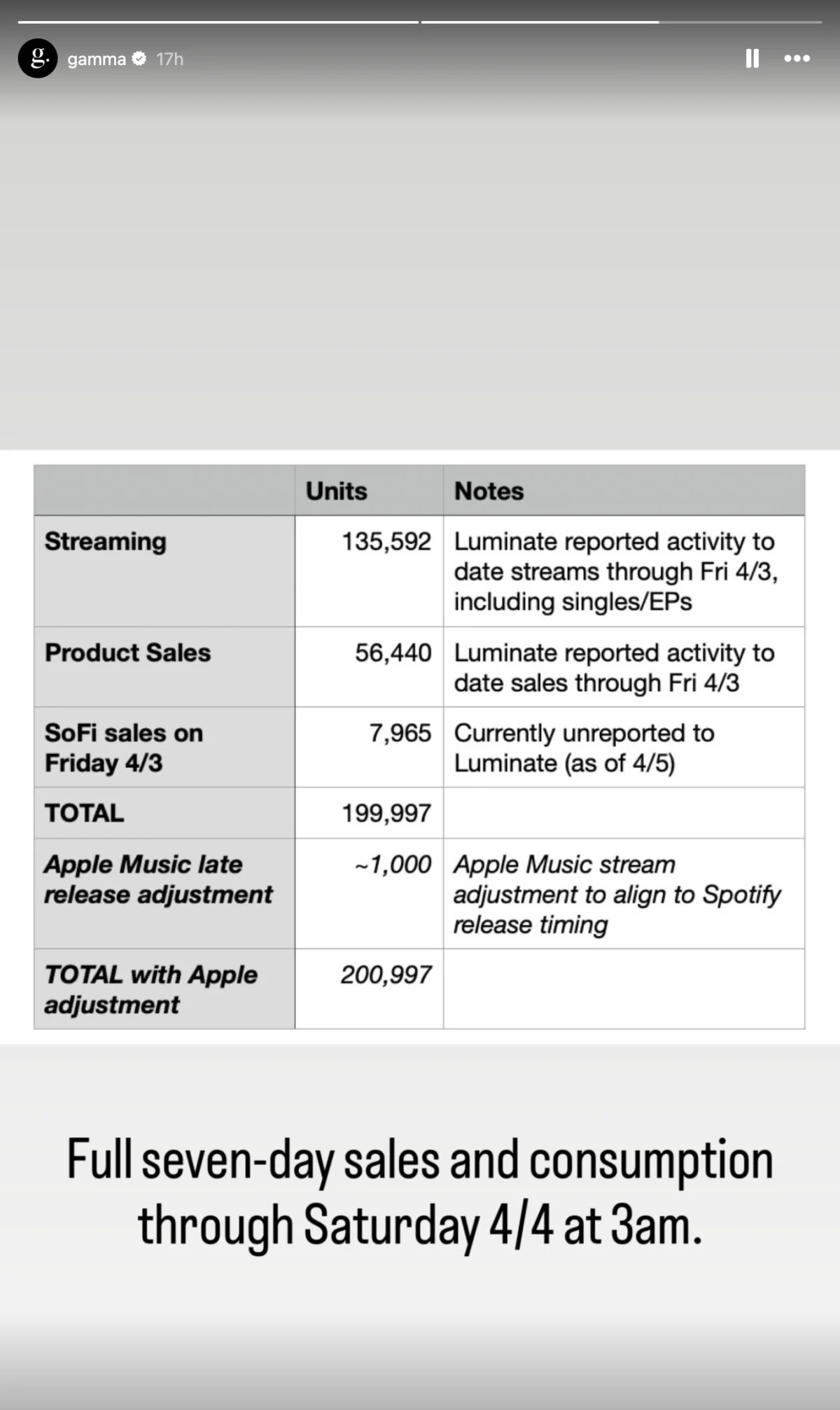
Kanye West’s latest album, Bully, has entered the Billboard 200 at the number two position, marking a significant deviation from his historically dominant chart performance and arriving amidst a swirl of controversy surrounding its release and the artist’s public conduct. The debut, while substantial, has been complicated by a dispute over official sales figures and intensifying scrutiny over West’s scheduled headlining performances at London’s Wireless Festival.
A Contested Chart Debut: Bully vs. ARIRANG
According to Billboard, the authoritative music industry chart, Bully secured 152,000 equivalent album units in its inaugural week, placing it just behind K-Pop juggernaut BTS’s tenth studio album, ARIRANG. The breakdown of West’s first-week performance reveals a strong showing in streaming, with 96,000 units derived from 98.43 million on-demand official streams, complemented by 56,000 units from traditional album sales. This performance represents a robust commercial launch for an artist whose career has recently been overshadowed by numerous non-musical controversies.
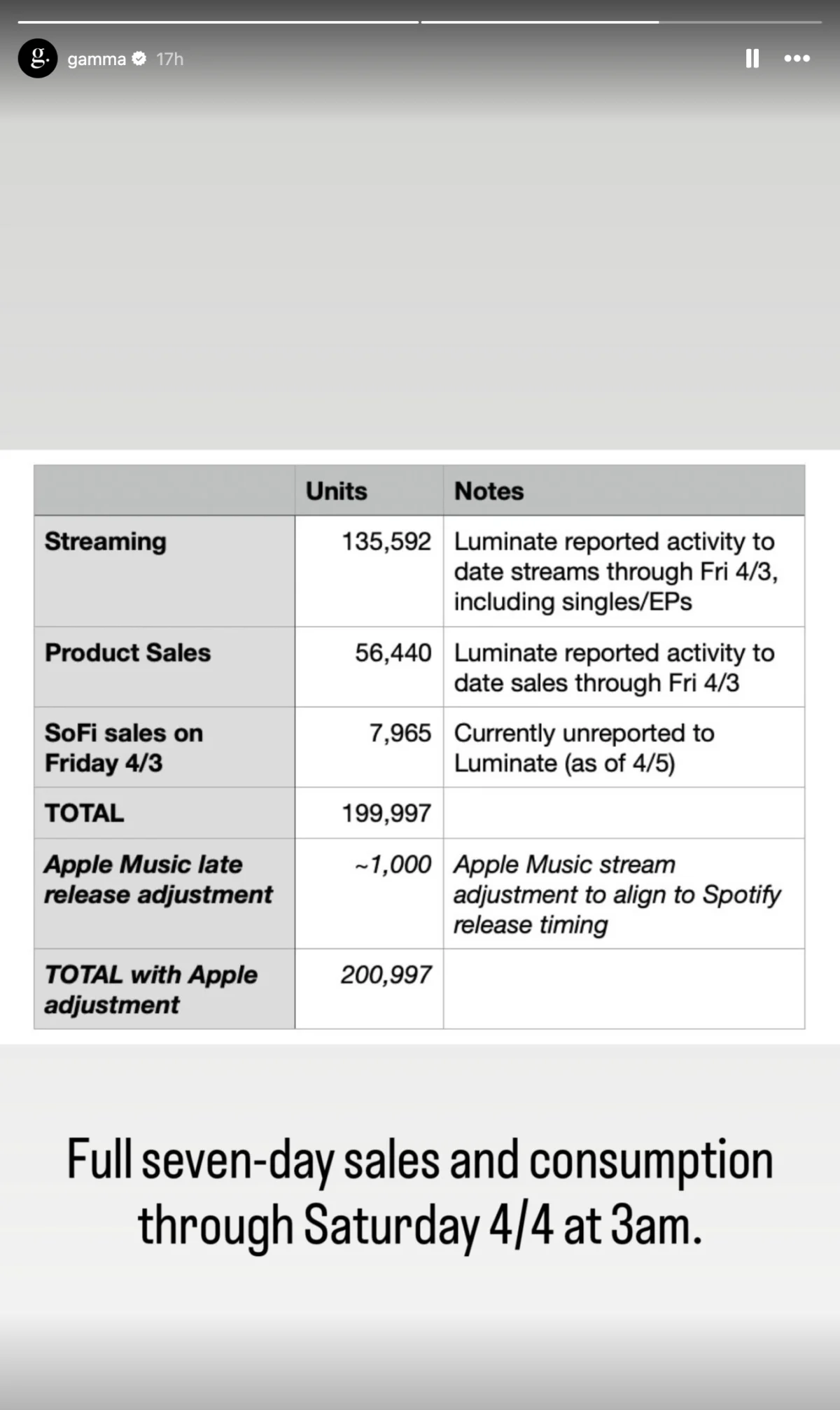
However, the reported figures have been swiftly challenged by Gamma., the distribution company founded by former Apple Music executive Larry Jackson, which handled Bully’s release. Gamma. has publicly asserted that the album garnered over 200,000 equivalent units in its first seven days, a figure that, if validated, would have been sufficient to claim the coveted number one spot on the Billboard 200, dethroning BTS. The company posted a "full seven-day sales and consumption" breakdown on its Instagram Stories, explicitly stating a total of 200,997 units for Bully. This direct challenge to Billboard’s official data, powered by Luminate (formerly Nielsen Music), introduces a rare public discrepancy in an industry typically reliant on the integrity and transparency of its chart reporting mechanisms. As of the time of this report, neither Billboard nor Luminate has issued a formal response to Gamma.’s claims, leaving the discrepancy unresolved and sparking discussions about the accuracy and methodology of chart compilation.
The Legacy of a Chart Dominator: Kanye West’s Streak Interrupted
The number two debut for Bully carries particular weight as it concludes an impressive 21-year streak of number one solo albums for Kanye West, often recognized as one of the most commercially successful and critically acclaimed artists of his generation. Since his breakthrough in the early 2000s, West has consistently commanded the top position with his solo LPs, establishing a formidable record of chart dominance. This makes Bully only the second solo album in his extensive discography to miss the Billboard 200’s pinnacle. The only other instance was his seminal 2004 debut, The College Dropout, which, despite its profound cultural impact and eventual multi-platinum status, also peaked at number two.
The interruption of this streak, regardless of the disputed figures, marks a notable moment in West’s career trajectory. In an era where streaming has reshaped consumption patterns, achieving a high chart position remains a significant indicator of an artist’s commercial pull and fan engagement. For West, whose recent public image has been fraught with controversy, a number one debut would have offered a clear vindication of his musical prowess over his contentious personal brand.
The Rise of a Global Phenomenon: BTS’s Continued Reign
The artist who ultimately denied West the top spot is the globally acclaimed K-Pop sensation BTS, whose album ARIRANG secured 187,000 equivalent units in its second week on the chart. This performance follows an astonishing blockbuster debut, where ARIRANG launched atop the Billboard 200 with a staggering 641,000 units, demonstrating the immense and sustained global power of the South Korean group.
BTS’s consistent ability to command massive sales and streaming numbers underscores the dramatic shift in the global music landscape, where K-Pop acts have transcended regional appeal to become dominant forces in Western markets. Their dedicated fanbase, often referred to as the ARMY, is renowned for its organized and passionate support, driving unprecedented engagement in album sales, streaming, and merchandise. ARIRANG’s continued success in its second week is a testament to this unwavering loyalty and the group’s established status as one of the world’s biggest musical acts, setting a formidable benchmark for any artist attempting to claim the top chart position.
Gamma.’s Challenge to Official Data: Implications for Industry Transparency
The public challenge by Gamma. regarding Bully‘s sales figures highlights an ongoing, albeit often subtle, tension within the music industry regarding chart accuracy and transparency. Larry Jackson, the founder of Gamma., is a veteran music executive with a deep understanding of digital distribution and streaming analytics, having previously held senior positions at Apple Music. His company’s decision to openly dispute Billboard and Luminate’s data is not a trivial matter. It implies a significant disagreement over how units are calculated, particularly in the complex landscape of equivalent album units, which factor in various consumption metrics like streaming equivalent albums (SEA) and track equivalent albums (TEA) alongside traditional album sales.
Such discrepancies can arise from differences in reporting windows, inclusion of certain retail channels, or variations in how digital bundles or pre-order campaigns are tallied. For instance, Gamma.’s "full seven-day sales and consumption" might encompass data points that Luminate’s standard reporting protocol either excludes or processes differently within its specific chart cycle. The absence of an immediate response from Billboard or Luminate raises questions about the protocols for resolving such public disputes and the potential for greater transparency in chart auditing processes. The outcome of this dispute could have broader implications for how artists and labels verify their commercial performance and for the perceived integrity of industry-standard charts.
Upcoming Album Expansion: Bully Deluxe on the Way
Despite the chart controversy, Gamma. has also teased further content from the Bully project. In a separate Instagram Story, the distribution company announced that a "Bully deluxe" edition is "on the way." The original album already features a substantial 18 tracks, making the prospect of an expanded edition a common strategy in the modern music industry to extend an album’s chart life and generate renewed interest.
While specific details regarding a release date or the number of bonus tracks remain undisclosed, the announcement suggests a strategic move to capitalize on the album’s initial momentum. Deluxe editions often include new songs, remixes, or alternative versions of existing tracks, providing an incentive for fans to re-engage with the project and potentially boosting streaming numbers and sales in subsequent weeks. This tactic is particularly relevant for an album aiming to regain momentum or consolidate its commercial standing.
The Wireless Festival Controversy: A Deep Dive into Ethical Bookings
Beyond the album’s chart performance, Kanye West’s public image and business ventures continue to be mired in controversy, most prominently exemplified by the escalating backlash against his scheduled headlining sets at London’s Wireless Festival in July. West is slated to headline all three nights of the festival, a decision that has drawn widespread condemnation due to his documented history of antisemitic remarks and other contentious public statements.
The controversy has reached a critical point with several major sponsors withdrawing their support from the festival. Among those that have pulled out are global beverage giant Pepsi, leading financial technology company PayPal, and Diageo, one of the world’s largest producers of spirits and beers, whose portfolio includes iconic brands like Guinness, Johnnie Walker, Smirnoff, and Captain Morgan. The withdrawal of such prominent corporate entities signifies a severe blow to the festival’s financial backing and public image, indicating that the commercial risks associated with aligning with West outweigh the potential marketing benefits. These companies often have strict corporate social responsibility guidelines and widespread consumer bases sensitive to issues of discrimination and hate speech.
Corporate Backlash and Political Condemnation
The controversy has also transcended the entertainment and corporate spheres, attracting strong condemnation from high-profile political figures in the United Kingdom. Sir Keir Starmer, the current leader of the Labour Party and the Leader of the Opposition, has publicly voiced his "deep concern" over West’s booking. Starmer specifically cited West’s "previous antisemitic remarks and celebration of Nazism" as reasons why his performance is inappropriate. Similarly, London Mayor Sadiq Khan has added his voice to the chorus of protest, highlighting the responsibility of festival organizers to ensure their events do not provide a platform for hate speech or discriminatory views.
The intervention of such senior political figures elevates the issue beyond mere public relations, turning it into a matter of public policy and ethical governance within the entertainment sector. Their statements underscore the societal impact of artists’ conduct and the increasing expectation for event organizers to demonstrate due diligence and moral responsibility in their programming decisions. The pressure on Wireless Festival and its organizers, Live Nation, is immense, as they navigate the balance between artistic freedom and public accountability.
Kanye West’s History of Controversy and Its Ramifications
Kanye West’s recent history is replete with incidents that have significantly damaged his public image and led to severe professional consequences. Over the past few years, particularly in late 2022, West made a series of antisemitic statements on social media and in interviews, including expressing admiration for Adolf Hitler and making false claims about Jewish people. These remarks led to an unprecedented corporate exodus, with major brands like Adidas, Balenciaga, Gap, and talent agency CAA severing ties with the artist, resulting in the loss of billions of dollars in brand deals and significantly impacting his business empire.
His erratic behavior and inflammatory rhetoric have alienated large segments of his fanbase and drawn condemnation from various human rights organizations and public figures. While West has occasionally offered ambiguous apologies, the cumulative effect of his actions has been a dramatic decline in his public approval and a reevaluation of his place in popular culture. The Wireless Festival controversy is the latest manifestation of this ongoing struggle, demonstrating that the commercial and reputational costs of his past actions continue to follow him.
The Broader Implications for Live Music and Artist Accountability
The unfolding situation with Wireless Festival and Kanye West carries broader implications for the live music industry, particularly concerning artist accountability and the ethical considerations of festival bookings. In an increasingly polarized social and political climate, artists’ past and present conduct is under closer scrutiny than ever before. Festival organizers, often operating on tight margins and relying heavily on corporate sponsorships, face the difficult task of balancing commercial viability with public sentiment and ethical responsibilities.
The withdrawal of major sponsors sets a powerful precedent, indicating that corporations are increasingly unwilling to risk brand damage by associating with controversial figures, especially when their controversies involve hate speech or discrimination. This trend suggests a potential shift towards more rigorous vetting processes for headlining acts and a greater emphasis on artists’ public conduct as a factor in booking decisions. The episode also highlights the ongoing debate about cancel culture versus accountability, and whether artistic expression should be entirely decoupled from an artist’s personal beliefs and public statements, particularly when those statements are deemed harmful or incite hatred.
Despite the controversies, Kanye West recently performed two sold-out shows at Los Angeles’ SoFi Stadium in support of Bully, indicating that a dedicated segment of his fanbase remains loyal. However, the broader challenges, from chart disputes to festival boycotts, underscore a critical juncture in his career, where his artistic output is increasingly inseparable from his public persona and its profound, often negative, ramifications.