 Nayara Elvina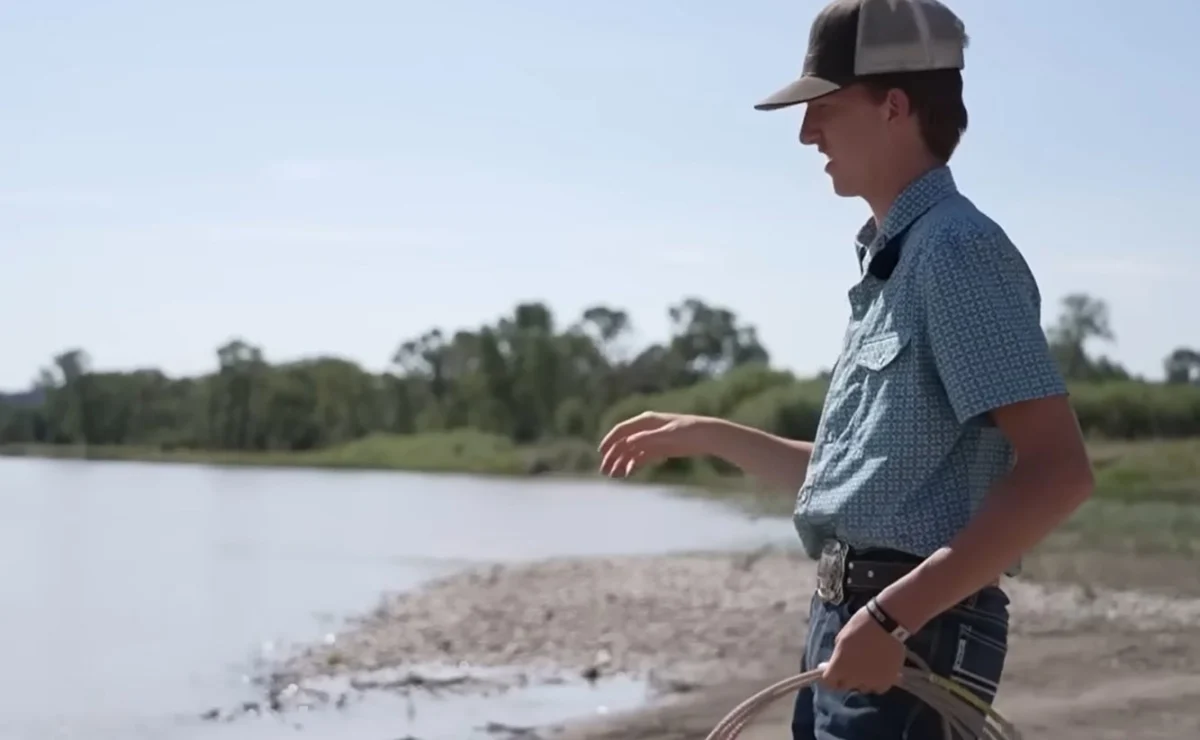
In a remarkable display of quick thinking and specialized skill, a 14-year-old Montana youth transformed a routine family camping trip into a life-saving mission on the banks of the Yellowstone River. Jory Thomas, a burgeoning ranch hand and rodeo enthusiast, successfully utilized a traditional lariat to rescue a man from the treacherous currents of the Yellowstone River earlier this July. The incident, which has garnered widespread attention across the Big Sky State, highlights the intersection of traditional agricultural skills and emergency response in rural America.
The Yellowstone River, known for its scenic beauty and its status as the longest undammed river in the contiguous United States, is also notorious for its deceptive and powerful currents, particularly during the early summer months when mountain snowmelt swells its banks. While the Thomas family had intended to spend their vacation enjoying the tranquility of the Montana wilderness, the environment quickly shifted from a recreational haven to a scene of imminent peril.
Chronology of the Rescue Operation
The events unfolded on a typical afternoon at a campground situated along the river. Jory Thomas was with his family when the sound of frantic cries for help broke the ambient noise of the rushing water. Upon investigation, the family observed multiple individuals—estimated to be two or three people—caught in the river’s main channel and being swept downstream at a significant velocity.
According to witness accounts and statements from Thomas himself, one individual was in particularly dire straits. While others in the group appeared to be clinging to a floating cooler, one man was visibly struggling to keep his head above the water’s surface. The victim was silent, a common sign of active drowning where the individual lacks the respiratory capacity to call out while fighting to stay afloat.
Recognizing the urgency of the situation, Thomas acted with a level of composure often reserved for seasoned first responders. He immediately emptied his pockets to ensure maximum mobility and sprinted along the shoreline to intercept the floating man. Calculating the speed of the current and the victim’s trajectory, Thomas identified a strategic point on the bank that would allow him the best vantage point for a rescue attempt.
The tool at his disposal was unconventional for water rescues but proved to be decisive: a rodeo lariat. In a move that combined athletic precision with high-stakes pressure, Thomas prepared his rope. As the man swept past his position, Thomas delivered a single, accurate throw. The loop of the lariat settled over the struggling swimmer on the first attempt, allowing the teenager to anchor the man and begin the process of hauling him toward the safety of the shore.
The Significance of Ranching Skills in Emergency Situations
The success of the rescue was not a matter of mere chance but the result of dedicated practice in the discipline of team roping and cattle ranching. Jory Thomas had recently immersed himself in the world of rodeo, a cultural cornerstone in Montana.
"I actually started really getting into roping this year," Thomas stated in an interview. "I went to brandings and started roping cattle then, and I started getting better. Every afternoon when it cools off, I go out and rope the roping dummy."
This daily regimen of "roping the dummy"—a stationary target used by rodeo athletes to perfect their timing and accuracy—translated into the muscle memory required to hit a moving human target in a turbulent river. In traditional ranching, a lariat (derived from the Spanish la reata) is a stiff, braided rope designed to remain open when thrown. Managing the "hondo" (the small eyelet the rope passes through) and the "coil" requires significant manual dexterity, especially when the target is moving unpredictably.
While Thomas had spent months preparing to work with livestock, he noted the surreal nature of applying those skills to a human life. The stakes of the Yellowstone River rescue far exceeded those of a local branding or a practice session, yet the fundamental mechanics remained the same.
Environmental Context: The Dangers of the Yellowstone River
To understand the gravity of Thomas’s actions, one must consider the hydrological conditions of the Yellowstone River in early July. During this period, the river often experiences "peak flow" or is just coming off its annual spring runoff. The water temperature remains significantly cold, often hovering between 50 and 60 degrees Fahrenheit, which can induce cold water shock in swimmers within seconds.
Cold water shock causes an involuntary gasp reflex, which, if the individual is submerged, leads to the aspiration of water and subsequent drowning. Furthermore, the Yellowstone’s current in certain stretches can reach speeds of 5 to 8 miles per hour. For a person in the water, these speeds make it nearly impossible to swim against the flow or to reach the bank without external assistance.
Data from the National Association of State Boating Law Administrators (NASBLA) indicates that river rescues are among the most dangerous types of water extractions due to the "strainers" (fallen trees) and "hydraulics" (recirculating currents) present in natural waterways. By using a lariat, Thomas was able to effect a "reach or throw" rescue—the preferred method taught by the American Red Cross—which kept the rescuer out of the dangerous water while providing a lifeline to the victim.
Community Response and the "Miracle" of Preparedness
The rescue has left the local community and the Thomas family in a state of reflection. Sandy Thomas, Jory’s grandmother, pointed to a series of unusual circumstances that placed the teenager in the right place at the right time with the right equipment.
The family has frequented this specific campground for years, yet Jory had never previously brought his roping gear on their camping trips. "Jory comes over quite frequently and has never, ever brought his lariat with him before. And that day he did," Sandy Thomas remarked. This departure from his usual routine proved to be the difference between a tragedy and a success story.
The community’s reaction has been one of overwhelming support and pride. In rural Montana, where self-reliance and neighborly assistance are deeply held values, Thomas’s actions are seen as an embodiment of the local spirit. His grandmother noted that his first instinct has always been to help others, a trait that was put to the ultimate test on the riverbank.
Analysis of Implications: Youth Empowerment and Skill Retention
The story of Jory Thomas provides a compelling case study for the value of traditional vocational and recreational skills in modern society. While the digitalization of youth entertainment is a global trend, the Thomas rescue highlights the tangible benefits of outdoor-based skill sets.
- Situational Awareness: Thomas demonstrated an ability to assess a complex, fast-moving environment and identify a solution using the tools available to him.
- Pressure Management: The ability to execute a technical skill (roping) on the "first try" under life-or-death pressure suggests a high level of psychological resilience.
- Cross-Disciplinary Application: The rescue shows how skills learned in one sector (agriculture/rodeo) can have life-saving applications in another (emergency services).
From a public safety perspective, this incident may encourage a renewed interest in "throw bag" training and basic water safety among hikers and campers. While not everyone is a trained rodeo roper, the principle of having a line to throw to someone in distress is a fundamental tenet of river safety.
The Role of Faith and Personal Philosophy
For Jory Thomas, the technical aspects of the rescue were secondary to a deeper sense of purpose. A soft-spoken teenager, Thomas has attributed his success and his presence at the scene to divine intervention. He described hearing a sense of internal guidance during the crisis, which provided him with the confidence to act.
"God was basically putting me in the place of all this," Thomas said. He recounted feeling a sense of encouragement during the rescue, believing that he was meant to be there with his lasso to prevent a tragedy. This perspective is common among many residents of the rural West, where faith and the harsh realities of nature often coexist.
Thomas admitted that he never expected his afternoon practice sessions to result in saving a human life. "I just thought I could help with cattle. Not really helping humans and stuff like that. But I’m glad I was here to help," he concluded.
Conclusion
The rescue on the Yellowstone River serves as a potent reminder of the unpredictability of nature and the importance of individual readiness. In an era where emergency response is often viewed as the exclusive domain of professionals with high-tech equipment, the actions of a 14-year-old with a rope and a sense of duty stand as a testament to the power of traditional skills and quick thinking.
As the man rescued from the water continues his recovery, the story of the "Yellowstone Lasso Rescue" will likely become a part of local lore, serving as both a cautionary tale about the power of the river and an inspiring example of youth heroism. For Jory Thomas, the focus remains on the future—continuing his education in the traditions of the West, one rope throw at a time.