 Mia Khoirunisa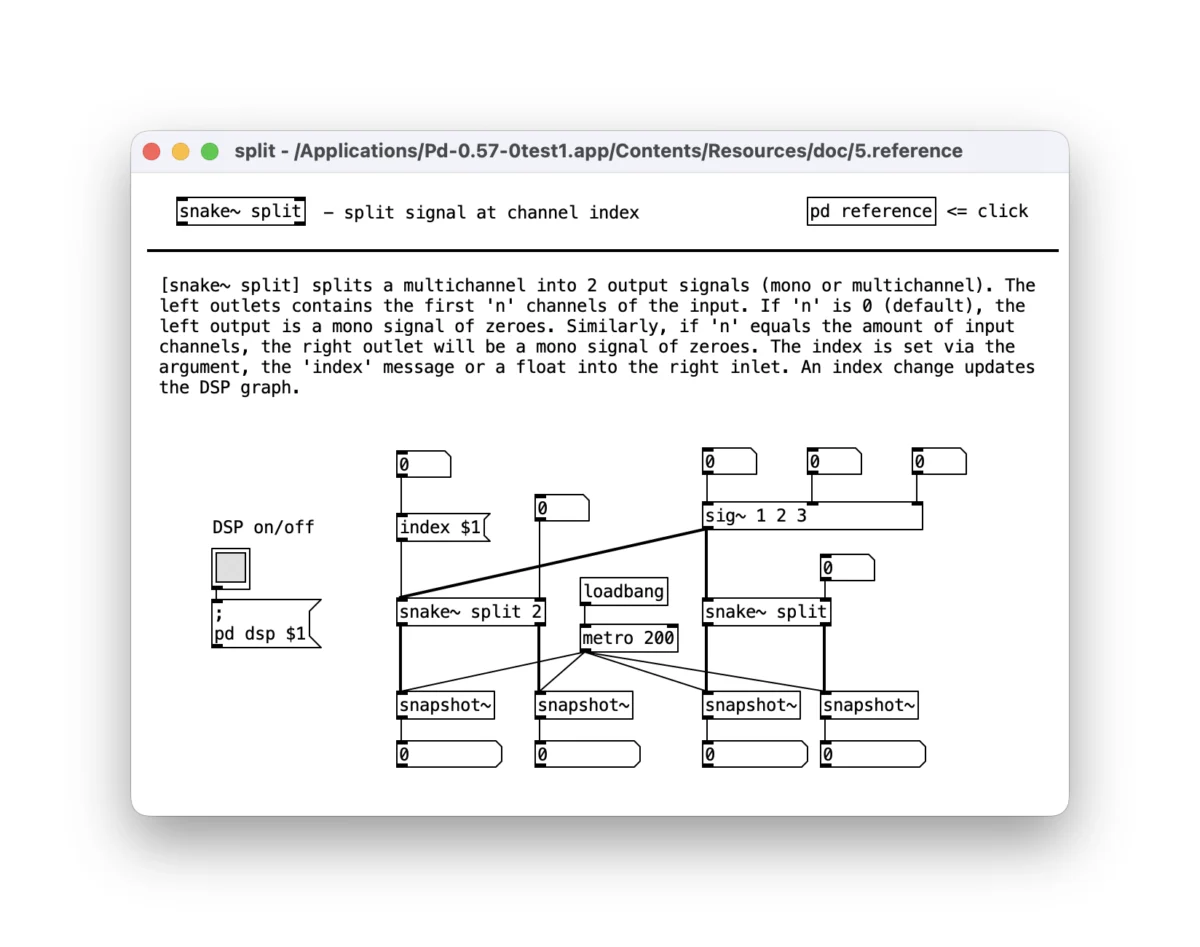
Pure Data (Pd), the widely utilized free and open-source visual programming language for multimedia and audio synthesis, has advanced toward its next major milestone with the release of test builds for version 0.57. Developed initially by Miller Puckette, Pd serves as the foundational architecture for various digital audio ecosystems, including libpd and the node-based plugdata interface. While it shares conceptual lineage and object architecture with proprietary visual languages like Max, Pd continues to maintain a distinct community-driven identity and open development model. The upcoming 0.57 release introduces crucial workflow refinements, most notably native multichannel signal routing objects and the long-awaited inclusion of curly brackets, which open new avenues for data parsing and dictionary integration.
Background Context and Evolution of Pure Data
Pure Data emerged in the 1990s as an evolution of Puckette’s earlier work on Max at IRCAM. Designed to process audio, video, and graphical data in real-time, Pd’s core philosophy emphasizes a lightweight, text-transparent patch format and a permissive open-source license. Over the decades, the software has grown beyond its academic origins to power interactive installations, mobile audio apps via libpd, and standalone plugin environments like plugdata.
Despite commercial alternatives dominating certain sectors of commercial electronic music production, Pd retains a robust following among sound artists, researchers, and developers who prioritize cross-platform portability, low overhead, and deep algorithmic customization. The release cycle managed by Puckette relies on steady, incremental improvements rather than radical overhauls, ensuring backward compatibility for complex patches built over many years. Version 0.57 continues this tradition by addressing specific developer bottlenecks while introducing high-level utilities that streamline complex signal flows.
Key Technical Updates in Version 0.57
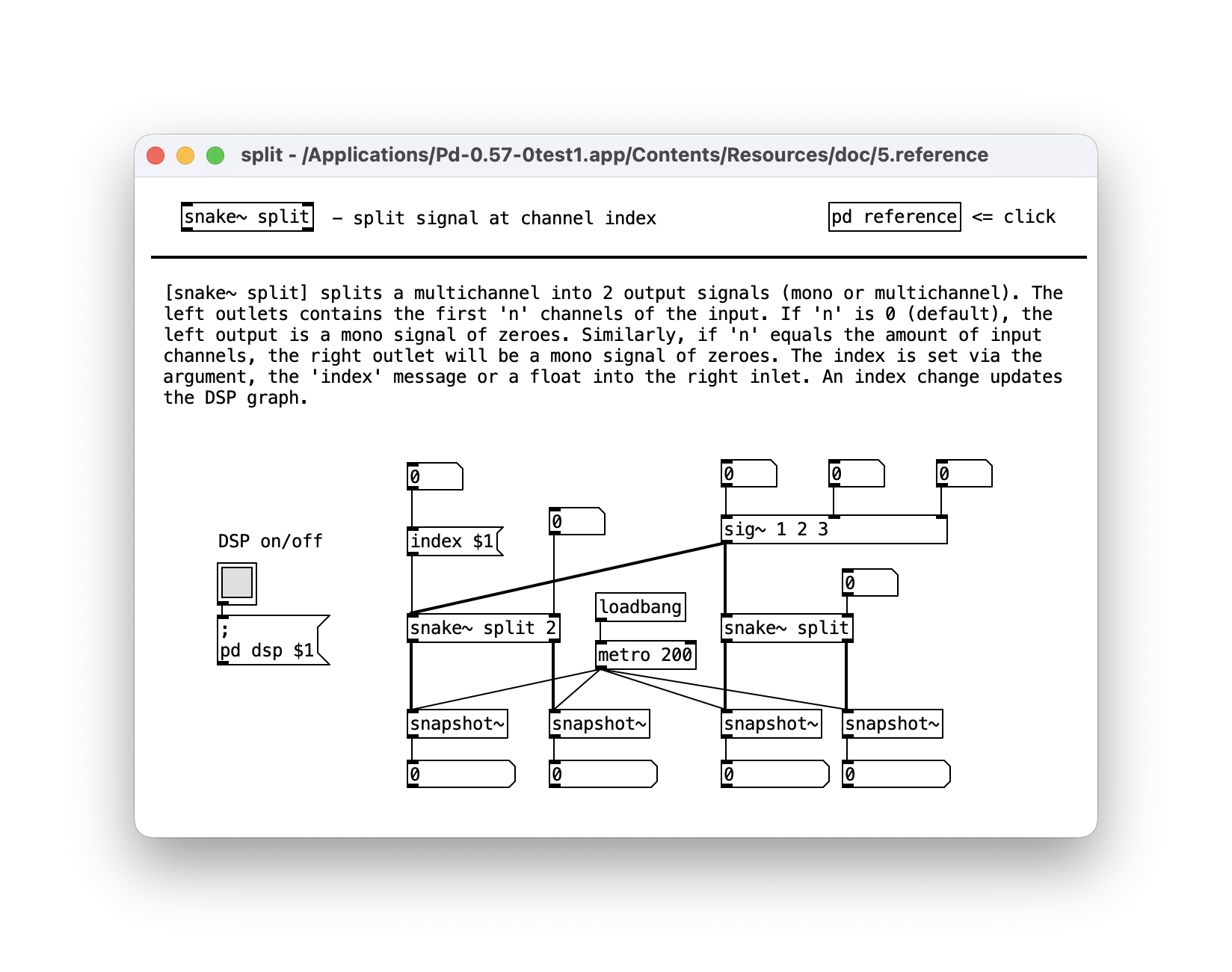
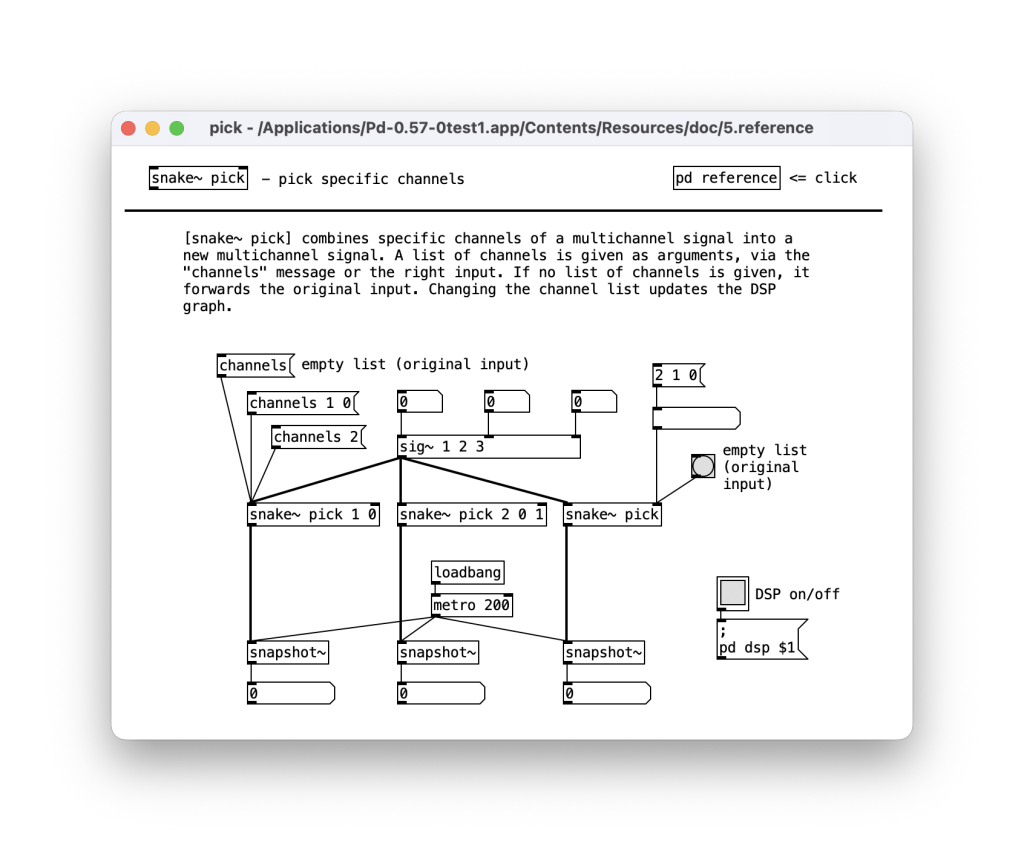
The headline feature of the 0.57 test builds is the introduction of the "snake" object family for multichannel audio handling. In digital signal processing, managing numerous discrete channels often requires cumbersome abstractions or cluttered patch cords. The new snake objects function analogously to physical audio snakes, allowing users to bundle inputs, split multichannel signals down to mono sums, route specific channels selectively, or extract targeted channels dynamically. For example, the [snake~ pick] object allows patchers to isolate specific channels of a multichannel signal into a newly defined stream via message arguments or right-input parameters, automatically updating the underlying DSP graph upon modification.
Equally significant for the developer and patching community is a seemingly minor character parsing fix: the ~ characters are no longer dropped within version 0.57 patches and message boxes. While trivial to casual users, this update removes a historical limitation that prevented the direct use of JSON-style syntax within standard Pd interfaces.
Community Implications and the ELSE Library Integration
The elimination of character-dropping restrictions has profound implications for third-party library developers. Alexandre Torres Porres, a prominent contributor to the Pure Data ecosystem and creator of the comprehensive ELSE (Elk Audio Library) extension, highlighted the change as a catalyst for advanced data structures.
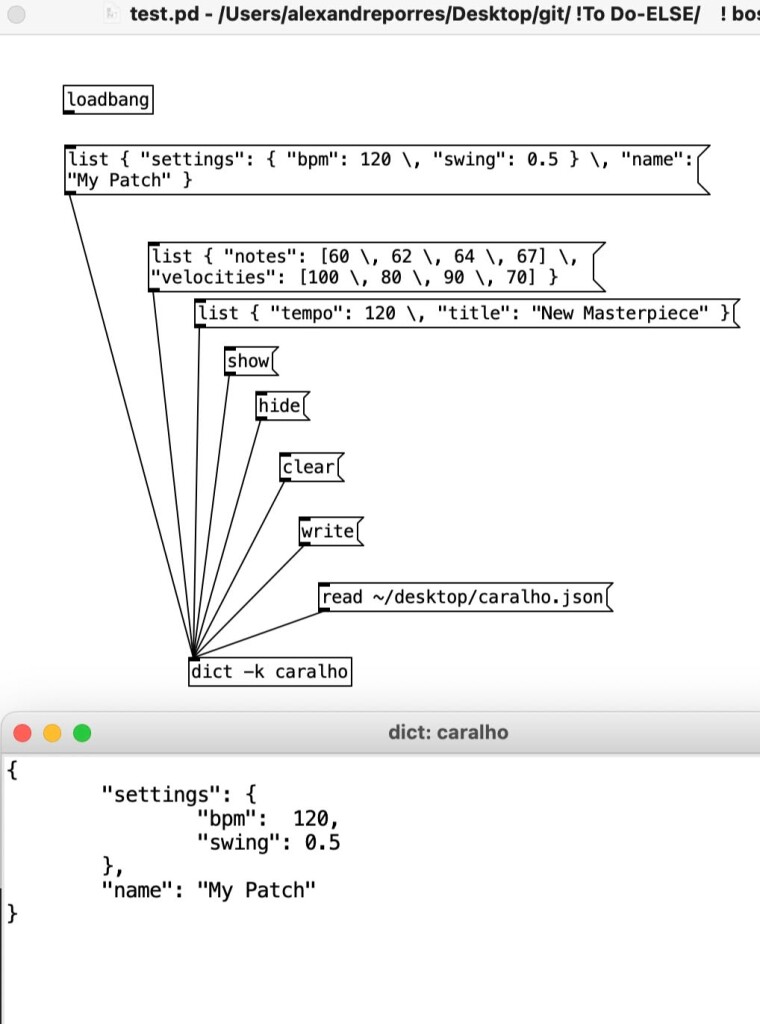
According to community disclosures from Porres, the support for curly brackets in version 0.57 enables the implementation of JSON-style dictionary objects directly inside Pd message boxes. Porres has indicated plans to introduce a native dictionary object family capable of handling nested lists and hierarchical data models. This development bridges a long-standing functional gap between Pd and other programming languages or environments that rely heavily on associative arrays and structured JSON payloads for state management and preset storage.
The ELSE library, which already features simplified dictionary alternatives such as the [messcoll] object inspired by Max’s [coll] architecture, stands to benefit substantially. Developers utilizing plugdata or installing ELSE independently can leverage these expanded capabilities to construct more modular, data-driven audio applications.
Ecosystem Expansion: Integration with VCV Rack and Modular Synthesizers
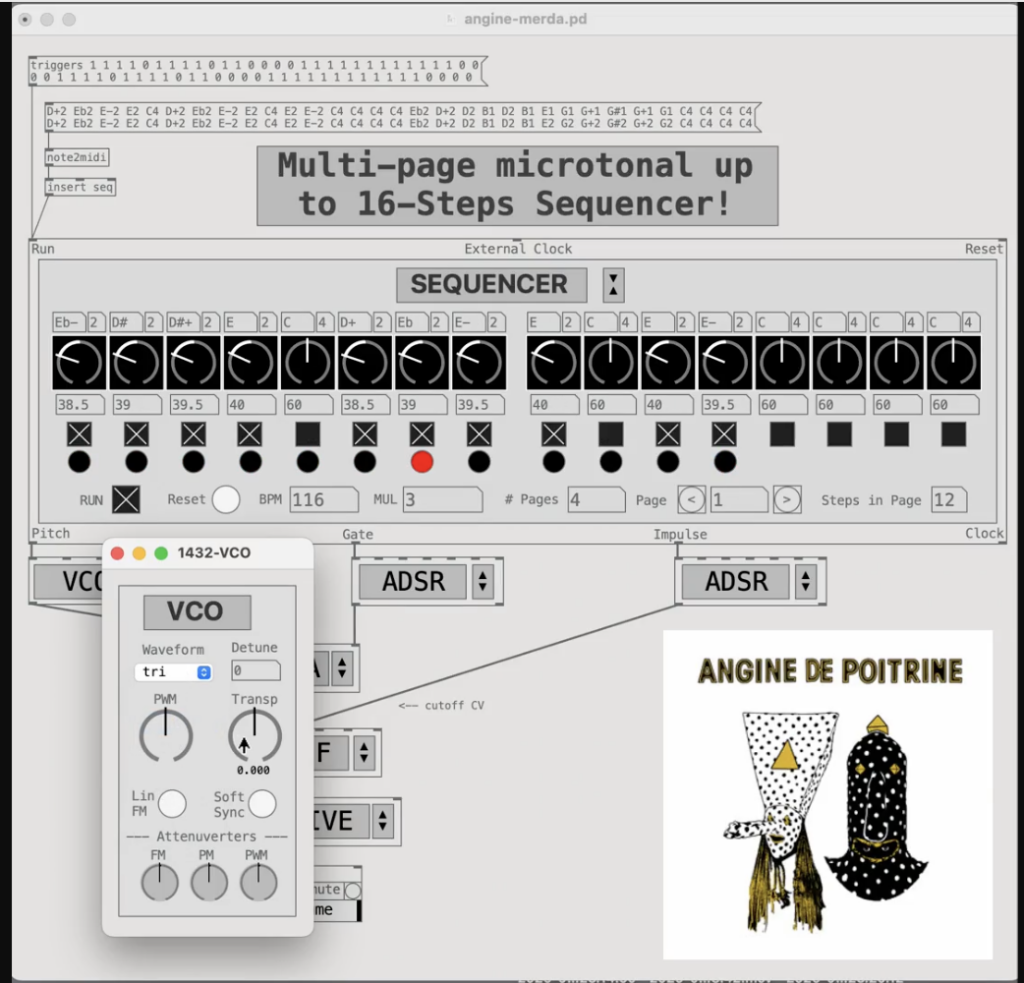
The vitality of the Pure Data ecosystem is further demonstrated by cross-platform integration projects spearheaded by community developers. Recent modules such as VCV-PureData bridge the gap between virtual modular synthesis hardware and Pd externals, allowing users to run native Pd code inside environments like VCV Rack. Similarly, specialized microtonal sequencing modules released earlier in the year illustrate how Pd’s core engine continues to underwrite experimental music technology hardware and software frameworks.
Timeline and Availability
Pure Data 0.57 is currently rolling out in test builds, allowing advanced users and library maintainers to stress-test the new DSP objects and syntax handling before a stable release is finalized. Meanwhile, the current stable version, 0.56-5, remains available for production environments. Both the canonical "vanilla" source distributions and experimental builds are hosted directly via Miller Puckette’s software portal at the University of California, San Diego (UCSD) mathematics department repository.
For end users seeking an integrated experience, third-party distributions like plugdata incorporate these updates into modern standalone applications and plugins, while community libraries such as ELSE remain accessible via GitHub and patron-supported channels. As the autumn development cycle progresses, these refinements position Pure Data to maintain its status as a cornerstone of open-source computational audio research and creative signal processing.