 Jia Lissa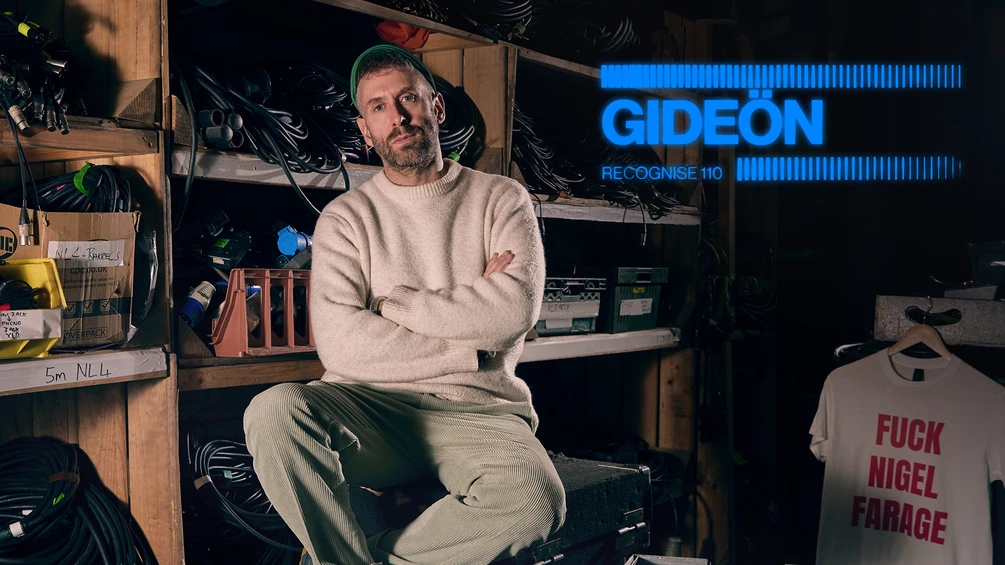
On July 8, 2026, DJ Mag’s Ria Hylton sat down with Gideon Berger, known professionally as GIDEÖN, a figure whose life has been consistently dedicated to intertwining house music with social and political activism. From his pivotal role in the 1994 Anti-Criminal Justice Bill protests to co-founding Glastonbury’s renowned NYC Downlow and Block9, and more recently, championing queer house traditions through his label HOMO-CENTRIC, Berger embodies a unique blend of DJ, producer, activist, creative director, and event organiser. His journey reflects a steadfast belief in dance music not merely as a form of escape, but as a potent vehicle for societal transformation.
The interview began in early June at Berger’s South London home, an environment reflecting his multifaceted interests. Records and books lined walls, hinting at a life steeped in cultural history, while custom green Technics turntables stood ready in a corner. The initial interaction, where Berger mistook the reporter for a political canvasser, immediately underscored his constant engagement with current affairs, a theme that permeated the conversation. He quickly pivoted from discussing local election results in his borough to outlining details for the Harry Styles Meltdown Festival, a project he was curating, and other Southbank Centre initiatives like the London Queer Sound System Day for Chaka Khan. This seamless transition between political analysis, cultural curation, and logistical planning showcased the breadth of his commitments.
The Genesis of a Movement: The Criminal Justice Act and Free Parties
Berger’s activism is deeply rooted in the UK’s counter-culture movements of the 1990s. At just 17, in 1994, he made his indelible mark by playing the very first track, The Fog’s ‘Been A Long Time (Gio’s Doped Mix)’, at the seminal Anti-Criminal Justice Bill protest in Trafalgar Square. This event was a direct response to the UK government’s Criminal Justice and Public Order Act 1994, a controversial piece of legislation that significantly curtailed civil liberties, particularly targeting rave culture and New Age Travellers. The Act granted police sweeping powers to break up outdoor gatherings of 10 or more people where music “wholly or predominantly characterised by the emission of a succession of repetitive beats” was played. This effectively criminalised free parties, sound systems, and the nomadic lifestyle of many communities, sparking widespread public outcry and large-scale demonstrations across the UK.
Berger vividly recalled the terror of that moment: "I was terrified. I remember putting the needle on the record, but my hands were shaking so much – they weren’t Technics, they were Citronics." This act of defiance, amplified by rudimentary equipment, set the tone for his future. The following year, while attending university in Brighton, he famously used his student grant not for rent, but to acquire a sound system, choosing to live in a coach for the next two decades, immersing himself in the New Age Traveller lifestyle. This period forged his conviction that music, particularly house, was an inherent part of any social or political struggle. He observed, "Every movement, in my mind, has got a sound. There’s always been music involved – whether it’s the South Africa, Free Mandela, the climate movement, or the early ‘90s Criminal Justice Bill, New Age Traveller, free party chaos." This direct experience cemented his belief in the transformative power of collective sound, recognising its capacity to unify, energise, and articulate dissent.
R3 Soundsystem: Amplifying Voices in Modern Protests
In recent memory, Berger has continued to channel this potent energy through the R3 Soundsystem, leading some of London’s most significant street demonstrations. His efforts include prominent roles in Stop Brexit marches, where sound systems provided a unifying rhythm for diverse voices, and more recently, the impactful House Against Hate protest. Held in March as part of the Together Alliance demo in London’s Trafalgar Square, this demonstration saw 50,000 people march against the far-right, united by the pulsating beats of house music. The event, which drew widespread media attention, underscored the continued relevance of music-led protests in contemporary British political discourse. Berger reflected on the enduring effectiveness of this approach: "House Against Hate was very much me leaning into the muscle memory that this country has [of music and resistance]. [If] you have an anti-establishment struggle, [or] a protest – stick a sound system in the middle of it and then you’re cooking." The sustained attendance and visibility of these events underscore the unique role of music in galvanising public opinion and fostering solidarity, a legacy directly traceable to the free party movement he helped pioneer, demonstrating its evolution from anti-establishment defiance to broader social justice advocacy.
Curating Cultural Spaces: From Glastonbury to Global Stages
Beyond direct activism, GIDEÖN has profoundly shaped cultural landscapes. In 2007, alongside his long-term collaborator Stephen Gallagher, he co-founded NYC Downlow at Glastonbury Festival. This immersive, queer-themed disco and performance venue quickly became an iconic fixture, celebrated for its authentic atmosphere, inclusive ethos, and commitment to showcasing underground talent. Housed within a giant, industrial-style warehouse facade, it recreated the raw energy of New York’s legendary queer club scene, becoming a sanctuary of self-expression. The immense success and critical acclaim of NYC Downlow led to the establishment of Block9, a larger late-night area at Glastonbury, renowned for its ambitious installations, cutting-edge sound, and dedication to showcasing diverse electronic music. These projects are not merely entertainment venues; they are carefully constructed alternative realities that embody the utopian ideals of dance music culture, providing vital platforms for LGBTQ+ artists and audiences.
Berger’s creative vision extends far beyond the festival circuit. He serves as an occasional co-booker for London’s beloved queer party ADONIS and heads music programming at Kensington’s The Roof Gardens. His expertise as a creative director is highly sought after, leading to collaborations with an eclectic range of artists including pop superstar Dua Lipa, electronic pioneer Skrillex, house legend Honey Dijon, and even the enigmatic street artist Banksy. These diverse projects demonstrate his ability to translate underground sensibilities into mainstream contexts without compromising artistic integrity, often injecting a subversive or socially conscious element into commercial endeavors.
One of his most significant recent undertakings was the creative direction for the Together For Palestine benefit concert at London’s OVO Arena Wembley. Held last September, the event drew an audience of 12,500 people and featured performances by notable artists such as Palestinian DJ Sama’ Abdulhadi, ambient music icon Brian Eno, and Damon Albarn of Gorillaz. Crucially, the concert raised over £2 million for Palestinian-led humanitarian organisations, including Taawon (a non-profit development organisation), the Palestine Children’s Relief Fund (providing medical care), and the Palestine Medical Relief Society (offering health services). This monumental effort showcased Berger’s capacity to mobilise artistic communities for urgent global causes, demonstrating the tangible impact of cultural solidarity and effective fundraising through entertainment.
Despite this extensive list of accomplishments, Berger maintains a grounded perspective. When asked about potential failures, he candidly revealed a "monster project" currently underway: a new opera in partnership with the English National Opera and ANOHNI, exploring themes of technology, climate change, and artificial intelligence. "It’s vast and the most complex thing I’ve ever done and I’m halfway through trying to give birth to that," he confessed, highlighting the continuous ambition and challenge that defines his career. This project underscores his commitment to pushing artistic boundaries and engaging with pressing contemporary issues through innovative forms, even those far removed from the traditional dancefloor.
HOMO-CENTRIC: Reclaiming the Queer Roots of House Music
In 2022, GIDEÖN launched HOMO-CENTRIC, his independent record label, as a vehicle for his own releases, free from creative and political compromises. The label’s manifesto, accompanying every vinyl release, unequivocally states its mission: "Re-establish the lines of queer musical tradition at the heart of House Music, lost to AIDS and the recent capitalist desecration of dance music." This declaration positions HOMO-CENTRIC as a critical intervention in the contemporary electronic music landscape, seeking to honour and revitalise the foundational narratives of house music, which emerged from Black and Latino LGBTQ+ communities in Chicago and New York. The manifesto implicitly critiques the mainstreaming of house, which often strips the genre of its radical origins and political potency.
In under four years, HOMO-CENTRIC has released 17 records, including seven EPs, demonstrating a prolific output and clear artistic direction that has garnered significant underground acclaim. Berger’s sound is distinctive and intentional. He embraced the label of "motherfucking purist" — a compliment he received from Beyoncé’s creative director — and playfully refers to himself as a "house music dinosaur." He elaborated on this philosophy: "The highest accolade, I think, for any producer or any DJ, is when you can close your eyes and listen to a track or a mixtape or a set – or a part of a set – and you immediately know who’s playing." He champions artists who dedicate their lives to a specific "cul de sac" of a genre, citing Jamaican dub icon Jah Shaka as an example of unparalleled depth within a niche. Shaka’s decades-long devotion to "deep, dark, ethereal, beautiful roots and dubs – Jamaica via South London lens" serves as a benchmark for the focused artistic pursuit that GIDEÖN strives for, a deep dive into sonic identity rather than trend-chasing.
GIDEÖN’s chosen "cul de sac," his "North Star," is the golden era of house music and its Black North American progenitors, particularly the dubbed-out deep house and US garage cuts of the early 90s. These "seedy, crunchy, imperfect productions" with "vivid, no-fucks-to-give messaging" form the core of his aesthetic. He poignantly articulated the historical context informing this focus: "My generation is haunted by the ghosts in house music, because AIDS wiped out the good ones, the best ones, the craziest ones, the ones that would have been the most fun on the dancefloor." This catastrophic loss within the queer community, particularly in the 1980s and 90s, decimated a generation of artists, DJs, and dancers who were central to house music’s development. This void underscores the urgency of HOMO-CENTRIC’s mission to preserve and propagate the "inherited spirit" of that era. "The label is essentially a vehicle for meditation on the spiritual, cultural, political and musical meaning of the queer house music tradition," he asserted, positioning his work as a form of active remembrance and cultural continuity.
His releases consistently reflect this ethos. The inaugural HOMO-CENTRIC release, ‘Ritmo’, opens with ‘Aaron Carl Lives On’, a tribute to the late Detroit house legend Aaron-Carl, featuring a deep, spacious stomper with a fat bassline and hazy, Casio-style chords. Other tracks on the record include playful acid jams and bare-bones house cuts. Across his catalogue, GIDEÖN’s productions are characterised by full-swing drums, deep and burly basslines, gospel elements, and punchy vocals, with lower frequencies doing much of the heavy lifting while other elements subtly weave in and out. The sound is rich and textured but never overly cluttered, maintaining a raw, authentic feel reminiscent of early analog productions.
Beyond the sonic, explicit political statements are woven into his discography. Track titles such as ‘Study War No More’ and ‘The West Bank’ convey clear stances on global conflict and geopolitical issues. Another track is named after Jamaican political activist Marcus Garvey, whom Berger admires for his pan-Africanist movement: "What that guy achieved at that time is bonkers. We need more Marcus Garveys." ‘Angela’s Dream’ features clips from a 1972 interview with Marxist feminist icon Angela Davis, further cementing the label’s commitment to historical and contemporary political discourse. These titles and samples are not mere adornments; they are integral to the narrative and purpose of each release, transforming dance tracks into educational and inspirational tools, reminding listeners of the revolutionary potential embedded within house music.
Battling Commercialisation: The Purity of the Dancefloor
The commercialisation of house music is a recurring concern for Berger, particularly concerning the use of vocals and the shift in venue aesthetics. He laments, "Capitalism’s extraction of – or exploitation of – dance music is part of the reason why so much dance music doesn’t have new vocals." This suggests that the financial constraints and creative compromises imposed by the commercial industry often stifle the development of new vocal talent and original lyrical content, leading to a proliferation of instrumental tracks or reliance on samples. He critiques the "business techno bro’s, or the big room house bros that are playing in the big rooms – that techy-sounding, high fidelity, glossy stuff for big rooms – you’ve got to be daring to drop vocals in a room like that." This observation highlights a perceived disconnect between the intimate, vocal-driven origins of house and the expansive, often instrumental, soundscapes preferred in larger commercial venues.
His ideal environment for house music is a stark contrast: a 300-capacity room