Muhammad Ibadurrohman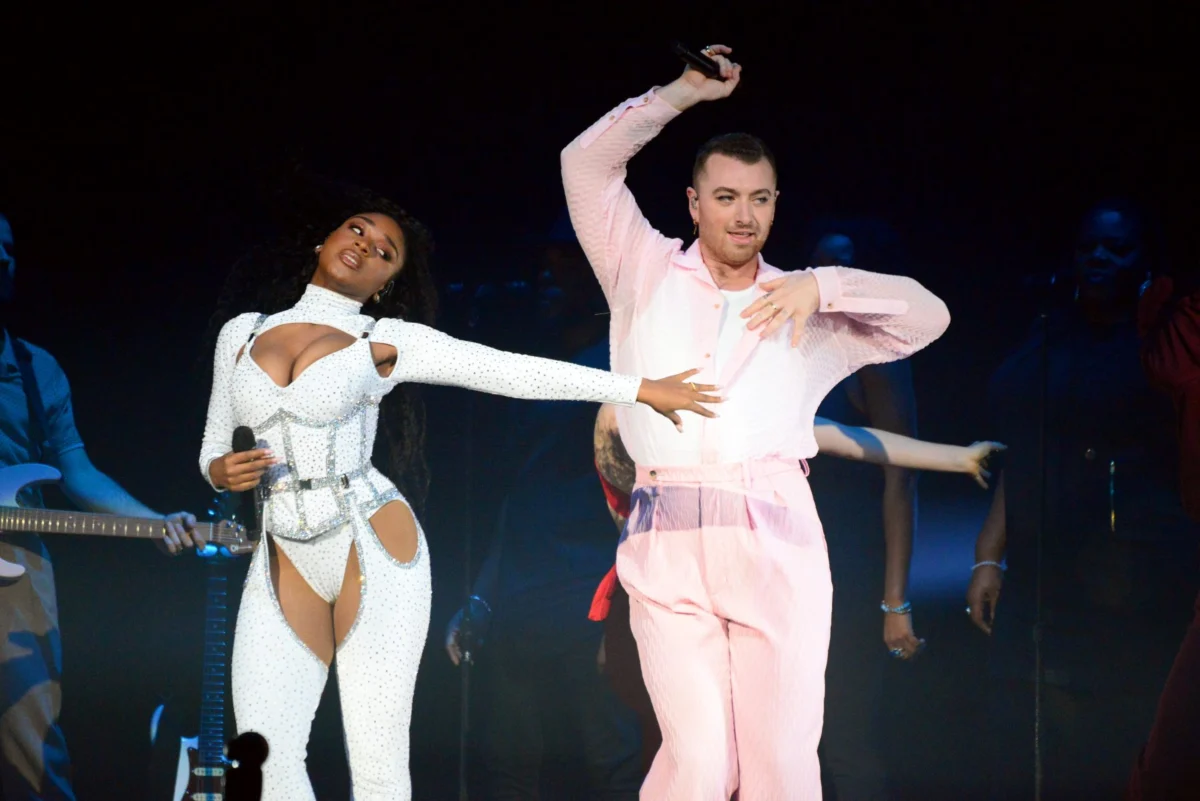
Sam Smith and Normani, alongside their team of co-writers and publishers, are once again moving to dismantle a persistent copyright infringement lawsuit alleging that their 2019 global hit, “Dancing With a Stranger,” unlawfully copied elements from an earlier, lesser-known song. This latest legal maneuver, a motion for summary judgment filed on Tuesday, July 7, implores a federal judge to terminate the proceedings before a full trial, marking a critical juncture in a case that has seen a prior dismissal and subsequent revival by an appeals court. The legal battle underscores the complex and often contentious landscape of music copyright in the modern era, where the lines between inspiration, coincidence, and infringement are constantly debated in courtrooms.
The Genesis of the Dispute
The legal saga began in March 2022 when songwriter Jordan Vincent, along with co-plaintiffs Christopher Miranda and Roscoe Farmer, filed a lawsuit in federal court. They claimed that "Dancing With a Stranger," the chart-topping collaboration between Smith and Normani, which soared to No. 7 on the Billboard Hot 100 and charted for an impressive 45 weeks, infringed upon their 2015 song, "Dancing With Strangers." The core of their complaint centered on the alleged similarities in the "hook" of both tracks, particularly the lyrical phrase "dancing with a stranger" and its accompanying melodic structure.
Initially, a federal judge sided with Smith and Normani, dismissing the case in 2023. This early victory was a temporary reprieve, as copyright cases, especially those hinging on subjective musical similarities, frequently navigate a protracted appeals process. Indeed, the plaintiffs successfully appealed this decision. Last year, a higher court reversed the dismissal, ruling that there was a "legitimate dispute" regarding whether the two songs shared "substantially similar" hooks. This decision invigorated the plaintiffs’ case, setting the stage for the current phase of litigation focused on the crucial question of whether Smith and Normani, or their co-writers, had access to Vincent’s song and subsequently copied it.
Under U.S. copyright law, to prove infringement, a plaintiff must typically demonstrate two elements: ownership of a valid copyright and copying of protected elements of the work. Copying can be proven either through direct evidence of access and substantial similarity, or, in the absence of direct access, by showing "striking similarity" – a degree of similarity so profound that copying is the only plausible explanation, ruling out independent creation or mere coincidence.
The Latest Legal Maneuver: Summary Judgment
The motion for summary judgment, a powerful legal tool, seeks to resolve a case without the need for a jury trial by arguing that there are no genuine disputes of material fact, and therefore, the moving party is entitled to judgment as a matter of law. In this instance, the defense, represented by the powerhouse media litigation firm Davis Wright Tremaine, leverages a significant concession made by Vincent during the discovery process: he has admitted that there is no direct evidence to prove that the "Dancing With a Stranger" songwriting team ever heard his 2015 track, "Dancing With Strangers."
This concession is pivotal. Without proof of access, Vincent’s legal team must now meet the much higher legal bar of demonstrating "striking similarity." This standard requires the similarities between the two works to be so pronounced and unique that independent creation becomes virtually impossible, and copying is the only logical conclusion.
Smith and Normani’s lawyers contend in their motion that Vincent "does not come close to meeting that demanding standard." They argue that any shared elements between the two songs are "meager" and derived from musical motifs "freely floating in popular music" long before Vincent’s 2015 composition. To support this claim, the defense cites several earlier works featuring the same or similar lyrical phrases and melodic ideas. For instance, they point to Cyndi Lauper’s 1989 song also titled “Dancing With a Stranger,” and Regina’s 1997 track “Dancing With an Angel.” These examples serve to illustrate that the phrase "dancing with a stranger" is not novel or unique to Vincent’s work, having appeared in "more than fifteen songs" prior to his.

The legal team asserts, "The similarities amount to a four-word phrase, ‘dancing with a stranger’ — which has appeared in more than fifteen songs before plaintiff’s song — and some unprotected pitches and rhythms in each song’s otherwise different melodies to which that phrase is sung. These similarities are not unique or so complex as to render coincidence virtually impossible." This argument aims to dismantle the "striking similarity" claim by demonstrating that the alleged shared elements are generic and commonplace within the musical lexicon, rather than original expressions deserving of copyright protection.
Unlicensed Samples: A New Front
Adding another layer of complexity to the defense’s strategy, Smith and Normani’s attorneys revealed a recently discovered "independent, fatal defect" in Vincent’s lawsuit. They allege that Vincent’s "Dancing With Strangers" itself incorporated unlicensed samples from two earlier tracks: "The Ha Dance" by Masters at Work and "Think (About It)" by Lyn Collins. If these allegations are proven true, it could render Vincent’s copyright on "Dancing With Strangers" invalid, thereby undermining the very foundation of his infringement claim against Smith and Normani.
This development introduces a significant hurdle for the plaintiff. Copyright law dictates that a work that is largely derived from unoriginal, un-licensed material cannot be validly copyrighted in its entirety, or at least its original elements would be difficult to discern from the infringing ones. This type of legal challenge often emerges in copyright disputes as defendants seek to poke holes in the plaintiff’s ownership claims. The defense is essentially arguing that if Vincent’s song is itself an infringing work, he cannot claim infringement against another party for allegedly copying it.
Plaintiff’s Stance: Striking Similarity and Prior Precedent
In response to the summary judgment motion, AJ Fluehr of Francis Alexander LLC, Vincent’s lawyer, has filed an opposition brief, vehemently arguing that there is ample evidence of "striking similarity" to warrant a jury trial. Fluehr contends that the two songs’ hooks share "virtually identical" pitch sequences and "nearly identical" melodic contours, in addition to the same lyrical phrasing.
Fluehr emphasizes the unique combination of these elements, stating, "There are no works… in [the] history of the world which have anything close to the selection and arrangement shared by both [songs]." He posits that such a rare convergence of expression appearing in both songs, created only a few months apart, cannot be accidental. Instead, he describes it as "a fingerprint linking them," suggesting a clear pattern of copying rather than mere coincidence or use of common musical tropes.
Regarding the defense’s claims of unlicensed sampling in "Dancing With Strangers," Fluehr dismisses the issue as "frivolous" and irrelevant to the current case. He likely intends to argue that even if samples were used, they do not negate the originality of the specific hook elements that are the subject of the current dispute.
Fluehr also points to a past incident involving Sam Smith as a potential indicator of a pattern. He references Smith’s 2015 decision to grant post-release writing credit to Tom Petty and Jeff Lynne for Smith’s hit "Stay With Me," due to perceived similarities with Petty’s 1989 song "I Won’t Back Down." Fluehr argues that this past instance serves as "a further indication that defendants’ songwriting process is not independent, and does at times use other works." Smith’s attorneys, however, have labeled this suggestion as "outlandish," implying that a past resolution to avoid litigation does not constitute an admission of a general pattern of non-independent songwriting.
In a statement to Billboard on Wednesday, July 8, Fluehr reiterated his client’s position: "My client’s hook is unique in the history of music and, as our experts explain, it is not a coincidence that defendants’ song with essentially the same hook was created shortly later. We look forward to arguing our case before the court." This statement underscores the plaintiff’s confidence in the distinctiveness of their musical expression and their determination to proceed to trial.

Navigating Music Copyright in the Digital Age
The "Dancing With a Stranger" lawsuit is but one example of a growing trend in the music industry: an explosion of copyright infringement cases. In an era of pervasive digital access to music and an increasingly saturated market, artists and their legal teams are more vigilant than ever in protecting intellectual property. However, this vigilance often collides with the reality of musical commonalities and the subjective nature of artistic creation.
The legal standard of "striking similarity" is notoriously difficult to meet. It demands a level of originality and complexity in the allegedly copied elements that goes beyond mere similar chords, rhythms, or lyrical phrases that are considered part of the public domain or common musical language. Courts often rely on expert testimony from musicologists to dissect compositions, identify unique melodic or harmonic progressions, and assess the probability of independent creation versus copying.
High-profile cases like the "Blurred Lines" lawsuit against Robin Thicke and Pharrell Williams (where the jury found infringement based on "feel" rather than direct melodic copying, a controversial decision), or Katy Perry’s "Dark Horse" case (initially found infringing but later overturned on appeal), highlight the challenges and inconsistencies in applying copyright law to music. These cases illustrate that proving infringement can be an arduous, costly, and often unpredictable process, regardless of the fame of the artists involved.
The "Dancing With a Stranger" case also brings the issue of sampling into sharp focus. The use of samples, a ubiquitous practice in hip-hop, electronic, and pop music, legally requires obtaining licenses from the original copyright holders. Failure to do so can expose the sampler to infringement claims and, as argued by Smith and Normani’s defense, potentially invalidate their own copyright claims on the sampled work. This aspect of the lawsuit could set a precedent regarding the scrutiny applied to a plaintiff’s own work in such cases.
What Lies Ahead: Hearing, Trial, or Settlement?
The immediate next step in this ongoing legal battle is an August hearing in Los Angeles, where a federal judge will consider the summary judgment motion. This hearing will be critical. The judge will weigh the arguments presented by both sides, particularly the strength of the defense’s claim that Vincent cannot meet the "striking similarity" standard and the implications of the alleged unlicensed samples.
There are several potential outcomes:
- Case Dismissal: If the judge agrees with Smith and Normani’s arguments, particularly that there’s no genuine issue of material fact regarding striking similarity or that Vincent’s copyright is invalid due to unlicensed samples, the case could be dismissed. This would be a definitive victory for Smith and Normani, bringing an end to the litigation.
- Case Proceeds to Trial: If the judge finds that there are still genuine disputes of material fact, especially concerning the degree of similarity or the validity of Vincent’s copyright, the motion for summary judgment will be denied, and the case will proceed to a full jury trial. This would involve extensive courtroom proceedings, witness testimonies, and expert musical analyses.
- Settlement: As with many protracted legal disputes, there is always the possibility of a confidential settlement being reached outside of court. Settlements often allow both parties to avoid the uncertainties and high costs associated with a full trial, providing a mutually agreeable resolution.
The financial implications for all parties are substantial. Legal fees for a complex copyright case can run into the millions of dollars. If found liable, Smith and Normani could face significant damages, including a share of past and future royalties from "Dancing With a Stranger." Conversely, if Vincent’s case is dismissed, he would bear his own legal costs. Beyond the financial aspects, there are reputational considerations. Artists involved in copyright disputes often face public scrutiny, regardless of the outcome, which can impact their image and future collaborations.
The outcome of this case will not only affect the careers and financial standing of Sam Smith, Normani, and Jordan Vincent but could also contribute to the evolving jurisprudence of music copyright, particularly concerning the increasingly difficult burden of proving "striking similarity" in an interconnected musical world. As the industry continues to grapple with the digital age’s impact on creation and ownership, each ruling contributes to defining the boundaries of artistic inspiration and legal protection.