Indra Aziz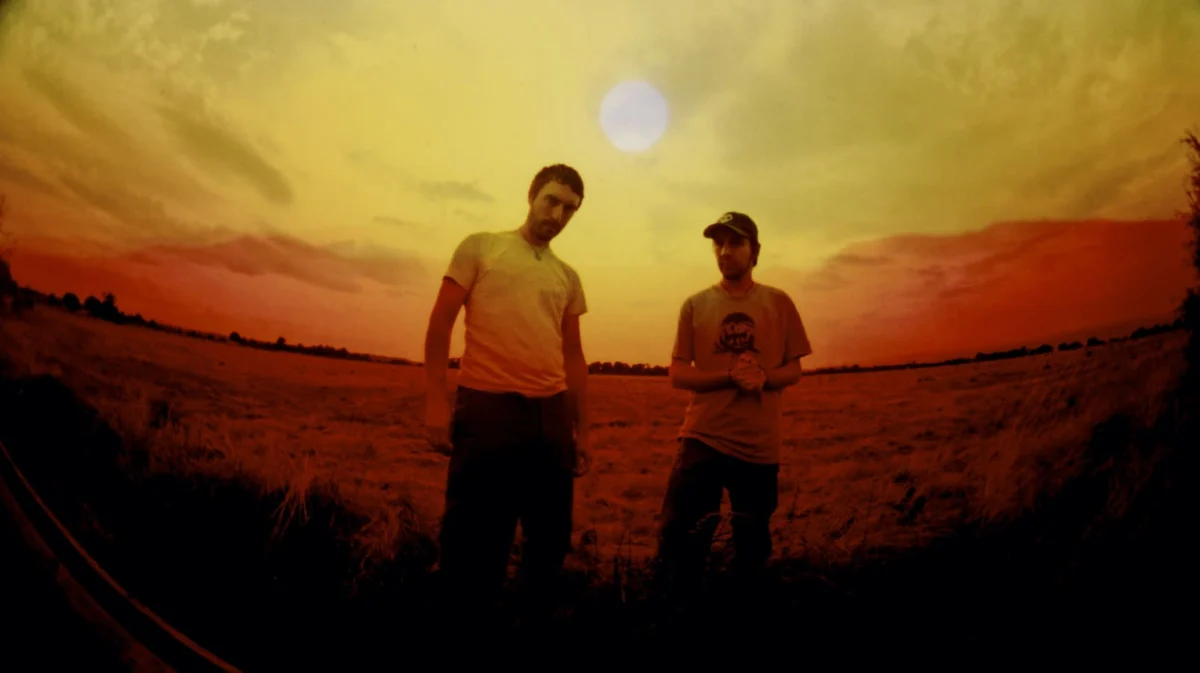
The recent cultural landscape has been profoundly shaped by two seemingly disparate yet thematically resonant phenomena: the release of Boards of Canada’s critically acclaimed album "Inferno" and the unexpected box office triumph of the horror film "The Backrooms." Both have resonated deeply with audiences, capturing a palpable zeitgeist that grapples with themes of nostalgia, liminality, and the unsettling echoes of industrialization and urbanization. This article delves into the shared "hauntological" undercurrents that connect the melancholic electronica of Boards of Canada with the surreal dread of The Backrooms, exploring how both tap into a collective unease about the past and its lingering influence on the present.
The Purgatorial Spaces of Memory and Modernity
The connection between Boards of Canada’s sonic explorations and the lore of The Backrooms was recently highlighted by Kane Parsons, the 20-year-old director behind the viral YouTube series and subsequent film adaptation of The Backrooms. In a BBC interview, Parsons articulated the underlying anxieties driving the Backrooms concept, stating, "It comes from a place of long-standing anxieties that, as a culture and a species, we’re feeling about industrialisation and urbanisation." He described the fictional location as "like the purgatory archetype, in a way. It’s sort of like the past coming back to taunt us." This sentiment is mirrored in the work of Boards of Canada, whose music has long been characterized as "hauntological." Their signature sound, often built on samples from vintage public information films and 1970s television, conjures hazy images of cultural memories, lost futures, and a perceived late modernist era that was seemingly usurped by postmodern neoliberalism.
The Backrooms, as a concept, encapsulates the aesthetic of "liminal space" – transitional, in-between environments that evoke a sense of unease and disorientation. These are often depicted as endless, uncanny repetitions of familiar yet sterile urban landscapes, such as deserted office buildings, empty hotel corridors, and abandoned retail outlets. This resonates with the academic concept of "non-places," as defined by anthropologist Marc Augé, which refers to transient spaces of modern life that lack a distinct identity or history, contributing to a feeling of anonymity and detachment. The film adaptation of The Backrooms masterfully translates this online lore into a cinematic experience, presenting labyrinthine architecture teeming with unseen horrors, all within a warped reflection of these mundane, post-modern environments.
Boards of Canada: Sonic Archaeology of a Lost Future
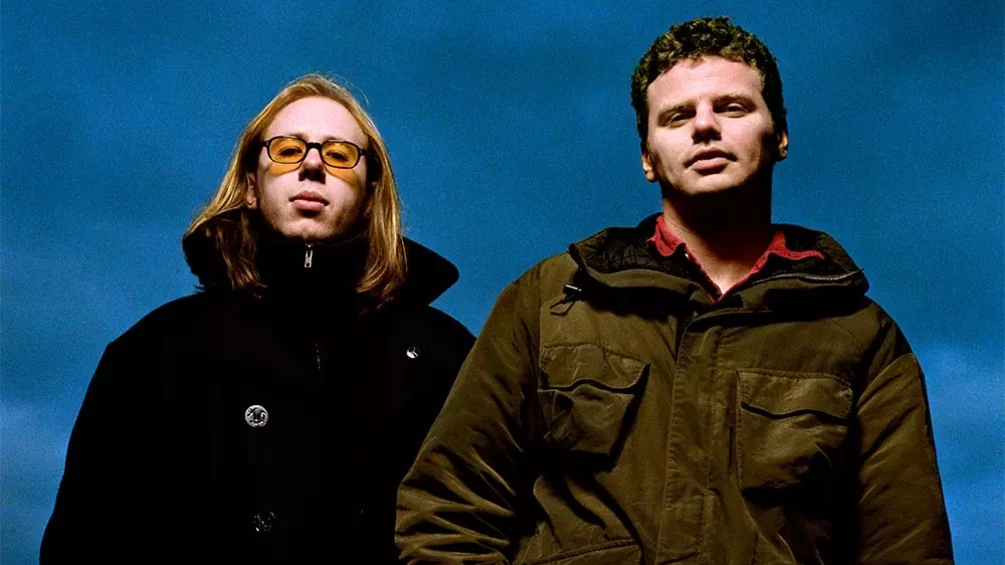
Boards of Canada, comprised of brothers Michael Sandison and Robin Smellie, have cultivated a distinct sonic identity over their career, particularly on seminal albums like "Music Has The Right To Children." Their work is a sonic archaeology, excavating fragments of a bygone era and recontextualizing them to create a deeply personal and often mournful soundscape. In a rare 2000 interview, the duo described their creative process and the philosophical underpinnings of their music, stating, "it’s like we’re inhabiting an alternative, parallel present where maybe someone in the past took a different branch to the way things actually went." This concept of alternate timelines and divergent historical paths is central to their hauntological appeal, suggesting a world that could have been, and the lingering specter of that unfulfilled potential.
The band’s new album, "Inferno," while continuing to draw from their established aesthetic, appears to mark a thematic evolution. While previous works often delved into nostalgia and memory, "Inferno" seems to confront the anxieties of the present moment more directly. The album’s rich and ornate themes, invoking religious imagery, apocalyptic visions, and a sense of theocratic Americana, are woven into a complex mosaic that reflects contemporary fears residing within the collective unconscious. This shift suggests a move from passively observing the past to actively engaging with its implications for the present and future.
A Shared Release Date and Cultural Resonance
The temporal proximity of the release dates for "Inferno" and "The Backrooms" film (both on May 29th) further fuels the perception of a cultural confluence. Both have achieved significant mainstream success, capturing the public imagination and generating widespread discussion. "Inferno" has garnered critical acclaim, with a Metacritic score of 84/100, and has been a contender for the number one spot on the UK album charts. In a peculiar and fitting turn of events, one of its tracks was notably used by the White House to soundtrack a propaganda video, underscoring the album’s engagement with potent socio-political themes.
"The Backrooms" film, meanwhile, has achieved extraordinary commercial success, grossing $118 million worldwide on its opening weekend. This stands as the largest opening for an original horror movie, a testament to the enduring power of its concept and its ability to tap into a widespread cultural fascination with liminal spaces and existential dread. The film has also received near-universal critical acclaim, boasting an 89% rating on Rotten Tomatoes.
Beyond their shared thematic concerns and release dates, there are direct connections between the two properties. A track from "Inferno," titled "The Word Becomes Flesh," is featured during the end credits of "The Backrooms" film, a deliberate inclusion that underscores the artistic synergy. This direct link, combined with their similar aesthetic explorations of liminality, nostalgia, analogue media, and cryptic mysteries, has led many to draw parallels between the two. Online communities, such as a notable post on Reddit, highlighted these connections well in advance of the film’s wider release.
Unpacking the "Weird" and the "Eerie"
To further understand the psychological and cultural underpinnings of both Boards of Canada’s music and The Backrooms phenomenon, the theoretical framework of cultural theorist Mark Fisher proves invaluable. Fisher, in his seminal 2016 text "The Weird And The Eerie," offers incisive definitions that illuminate the unsettling qualities of both artistic endeavors.

Fisher defines "the weird" as "the presence of that which does not belong, a teeming which exceeds our capacity to represent it." Examples he cites include the works of H.P. Lovecraft and David Lynch, artists who delve into the fundamentally alien and unknowable. "The eerie," on the other hand, is defined as "when there is something present where there should be nothing, or there is nothing present where there should be something." This encompasses the uncanny feeling of a familiar space that feels subtly wrong, or a void where presence is expected. Fisher’s examples for the eerie include the ghost stories of M.R. James, the science fiction of Nigel Kneale, and the cinematic works of Andrei Tarkovsky.
Both "Inferno" and "The Backrooms" film not only fit these definitions but also expand and blur their boundaries. Boards of Canada’s musical aesthetic remains "out-of-time," a recurring characteristic of eerie media. Tracks like "Deep Time" and "I Saw Through Plantonia" from "Inferno" are constructed from signature layers of melancholic synthesizers that materialize and contort in ways that feel impossible, akin to spectral apparitions. The track "Father And Son" exemplifies this by sampling a spiritual conversation from a 1971 film, chopping and manipulating the voices to chatter in sync with the music in an unreal, deeply "uncanny" fashion – a term Fisher uses to describe something strange within the familiar. Furthermore, the duo’s incorporation of guitars on "Inferno," particularly on the spacious post-rock track "Into The Magic Land," feels inherently "weird" due to their unexpected and characteristically obfuscated presence within their electronic soundscapes.
The Backrooms film similarly navigates the realms of the weird and the eerie with mesmeric and often terrifying effect. The impossible architecture of the titular location evokes Fisher’s reading of David Lynch’s "Inland Empire," a film characterized by its ontological labyrinthine nature. While the film introduces a plethora of overtly weird horrors, it is the subtle, unsettling details that director Kane Parsons masterfully weaves in that create the most profound sense of unease. These include the unnerving "real world" blue skies that appear painted on, the brief yet disturbing mentions of other Backrooms entrances opening with increasing frequency, and the recurring "hole" symbols that Fisher observes throughout Lynch’s work, hinting at a deeper, more pervasive strangeness.
A Reflection of Contemporary Disquiet
The profound resonance of both "Inferno" and "The Backrooms" film with contemporary audiences can be understood as a direct reflection of the current socio-political and technological climate. The ascent of reality-bending AI, often producing unsettlingly "weird" and "uncanny" outputs, and the perceived collapse of established social institutions – an absence where there was once a presence – contribute to a cultural landscape ripe for media that mirrors these disquieting realities. The rapid-fire, attention-fragmenting nature of life lived on social media further amplifies this phenomenon, creating a fertile ground for narratives that explore disorientation and the uncanny.
There is even a compelling interpretation of "The Backrooms" that views it as a Boards of Canada-esque commentary on nostalgia. In this reading, the endless, half-formed replications within each room serve as metaphors for the constant regurgitation of old ideas and cultural artifacts to which we are subjected. This critique suggests that nostalgia, while comforting, can also trap social, cultural, and political imaginations, leading to a state of stasis.
A Glimmer of Optimism in the Uncanny Halls
Despite the pervasive themes of unease and disquiet, the significant audience engagement with both "Inferno" and "The Backrooms" offers a glimmer of optimism. The widespread acclaim for "Inferno’s" soulful, ultimately humanist vision, coupled with the franchise-disrupting success of "The Backrooms" film – which notably knocked the latest Star Wars installment off the top of the US box office – suggests a potential turning point. This engagement may indicate that the nostalgia and stasis that both artistic works observe and critique are beginning to lose their grip.
As we continue to navigate these uncanny hallways and explore their weird and eerie depths, the dialogue between Boards of Canada’s "Inferno" and the cinematic world of "The Backrooms" serves as a powerful reminder of our shared anxieties and our collective yearning for meaning in an increasingly complex and disorienting world. The enduring power of these artistic expressions lies in their ability to articulate the inarticulable, to give form to the formless dread that underpins our contemporary experience.
Boards of Canada’s new album "Inferno" is out now. "The Backrooms" is currently in cinemas.
Words: Tom Morgan