Johan Budi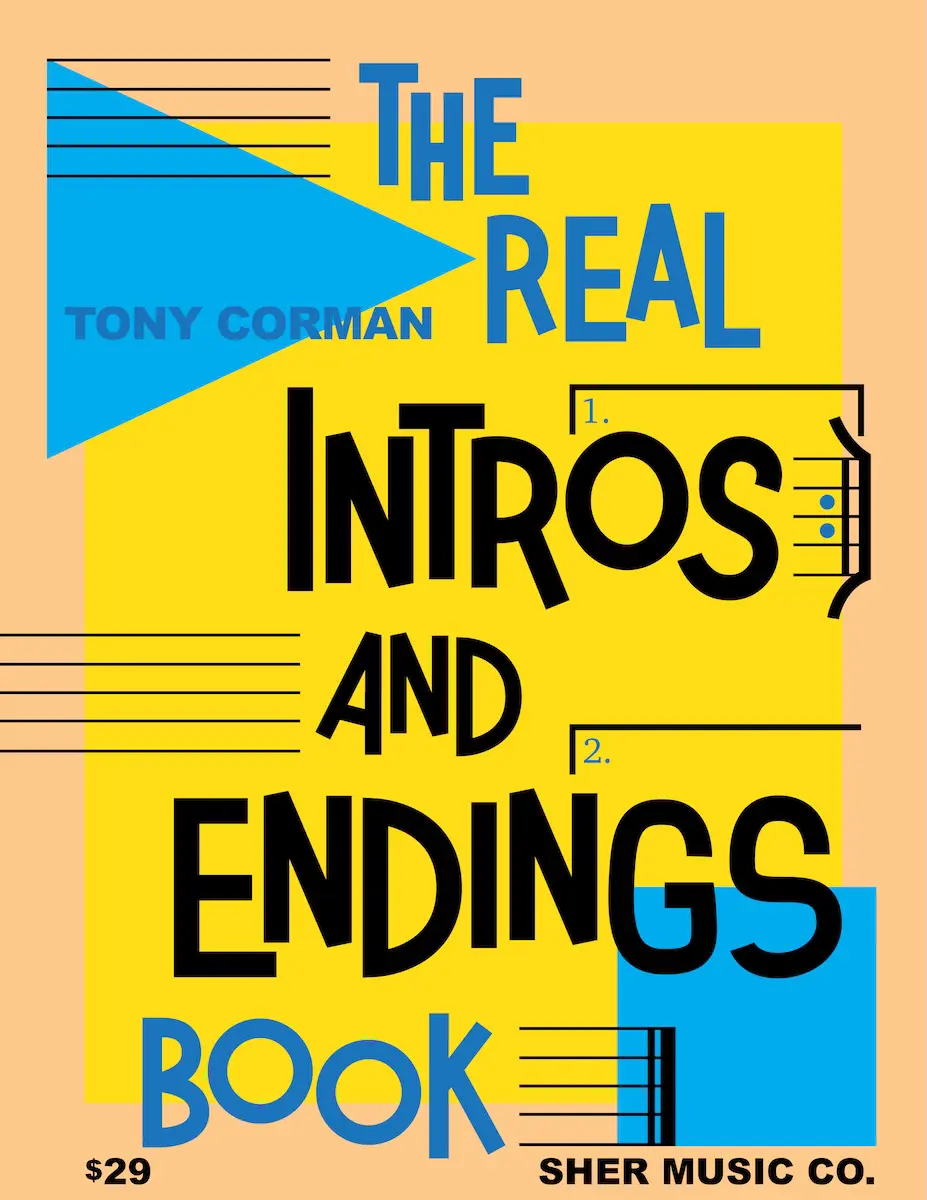
A Targeted Approach to Jazz Pedagogy
In the landscape of jazz literature, the "fake book" has long been the standard tool for performers. These books typically provide the melody (the "head") and the chord changes, leaving the specific arrangement details to the discretion of the performers. However, many of the most iconic versions of jazz standards are defined by their specific introductions and codas—elements that are rarely documented in standard lead sheets.
Corman’s work focuses on the specific gestures that have become inseparable from the tunes themselves. Notable inclusions in the collection include Clifford Brown’s intricate opening to "Joy Spring," the atmospheric beginning of Miles Davis’s "Bye Bye Blackbird," and the sophisticated arrangement of "Autumn Leaves" as performed by Cannonball Adderley. By isolating these moments, Corman provides a practical roadmap for musicians looking to replicate the stylistic authenticity of the hard bop, cool jazz, and fusion eras.
The book covers a broad spectrum of instrumentalists and styles, ensuring its utility across various jazz subgenres. Beyond the mid-century masters, Corman includes transcriptions of modern innovators such as Mike Stern and Allan Holdsworth. The collection is particularly notable for its focus on the rhythm section’s role, though many transcriptions also incorporate horn parts. A dedicated section is also provided for the works of Charlie Parker, acknowledging the foundational role of bebop vocabulary in modern jazz arrangement.
Chronology and Development of Jazz Notation
The release of The Real Intros And Endings Book represents a specific point in the timeline of jazz’s evolution from a performance-based oral tradition to a codified academic discipline. To understand the significance of this publication, one must view it within the context of jazz publishing over the last half-century.
- The Bootleg Era (1970s): The original Real Book emerged from Berklee College of Music as an underground, handwritten collection of lead sheets. While technically a copyright infringement, it became the "gold standard" for jazz education, though it often lacked specific arrangement details.
- The Professionalization Era (1980s): Publishers like Sher Music Co. began producing "The New Real Book" series, which offered legal, accurate, and professionally edited versions of these tunes. This era saw a shift toward greater precision in notation.
- The Analytical Era (2000s–Present): Contemporary publications have moved toward specific analysis and transcription of performances rather than just compositions. Corman’s book fits into this current phase, where the "how" of a performance is considered as vital as the "what."
Corman’s transition from the Boston jazz scene to the West Coast in the mid-1980s coincides with the rise of Berkeley and the San Francisco Bay Area as a secondary hub for jazz education and innovation. His background as a bandleader and arranger informs the selection process, ensuring that the transcriptions are not just academic exercises but are functional for use on the bandstand.
Supporting Data and Technical Specifications
The publication is designed for high-frequency use in both practice rooms and live performance settings. Sher Music Co. has opted for a spring-bound (spiral) format, allowing the 109-page volume to lay flat on music stands—a critical feature for working musicians.
The pricing structure reflects the current market for specialized music education:
- Paperback Edition: $29.00
- E-book Edition: $18.00
- ISBN: 979-8992226324
The breadth of the artists covered provides a statistical cross-section of the jazz canon. While the "Big Three" of the collection—Davis, Coltrane, and Adderley—receive significant attention, the inclusion of pianists like Bud Powell and guitarists like Wes Montgomery and Dexter Gordon ensures that the book serves as a multi-instrumental resource. The transcriptions are largely focused on the rhythm section’s interaction, which is often the most difficult element for students to "ear" from a recording.
Theoretical Analysis: Jazz as "Art Music"
The existence of a book like Corman’s invites a deeper analysis of the status of jazz in the 21st century. By transcribing and codifying specific performances, the work treats jazz as "art music"—a term often used to describe music that is autonomous, serious, and part of a formal tradition.
This classification is supported by several factors outlined in contemporary musicology:
- Autonomy: Jazz has evolved into an art form that exists for its own sake, independent of its historical origins in dance halls or the entertainment industry.
- Common Practice: Like Western Classical music, jazz now has a "common practice" period (roughly 1940–1965) that is taught in universities worldwide. Corman’s book serves as a textbook for this period’s stylistic nuances.
- Internationalism: The language of these intros and endings is universal. A jazz musician in Tokyo or Berlin uses the same "Autumn Leaves" intro as one in New York or Berkeley.
The book aligns with the theories of James Parakilas, who argued in 1984 that classical music functions as a form of popular music, and conversely, that certain popular musics can be elevated to the status of "classical" or "art" music through the process of canonization. By providing a "Standard Version" of an intro, Corman is participating in the canonization of these specific musical moments. This is not a static process; rather, it provides a foundation upon which new improvisations can be built.
Industry Response and Practical Implications
While official reviews from major academic institutions are pending, early reception within the jazz community highlights the book’s utility for gigging professionals. Bandleaders often call for "the Miles intro" or "the Clifford intro" during a performance; having a definitive transcription prevents the confusion that can arise from varying interpretations of the original recordings.
The practical implications for jazz education are significant. In a classroom setting, instructors can use these transcriptions to illustrate concepts of tension and release, pedal points, and rhythmic displacement. For the student, it provides a shortcut to professional-sounding arrangements without the labor-intensive process of transcribing every note from scratch—though educators continue to emphasize that transcription by ear remains a vital skill.
Furthermore, the publication reinforces the reputation of Sher Music Co. as a leader in high-quality jazz literature. By focusing on the "fringes" of a song—the beginning and the end—Corman has identified a niche that other major publishers have overlooked.
Broader Impact on the Jazz Canon
The Real Intros And Endings Book by Tony Corman does more than simply provide sheet music; it preserves the specific performance choices that might otherwise be lost to the passage of time or simplified in generic lead sheets. As jazz continues to move further into the academic sphere, the documentation of these "famous recordings" becomes essential for historical preservation.
Calling a work "classic" or "art" does not imply that it is static or beyond reproach. Instead, as seen in the works of William Shakespeare or the paintings of J.M.W. Turner, labeling something as classic acknowledges its enduring value and its ability to serve as a reference point for future generations. Corman’s book treats the works of Miles Davis and Charlie Parker with the same level of detail and respect that a scholar might accord to a Bach prelude or a Beethoven sonata.
In conclusion, Tony Corman’s latest contribution to the Sher Music catalog is a functional, aesthetically pleasing, and intellectually grounded resource. It serves as a bridge between the spontaneity of the original recording session and the structured environment of modern jazz study. For the working musician, it is a tool for better performances; for the student, it is a window into the minds of the masters; and for the genre, it is a vital step in the ongoing documentation of its rich and complex history.