Johan Budi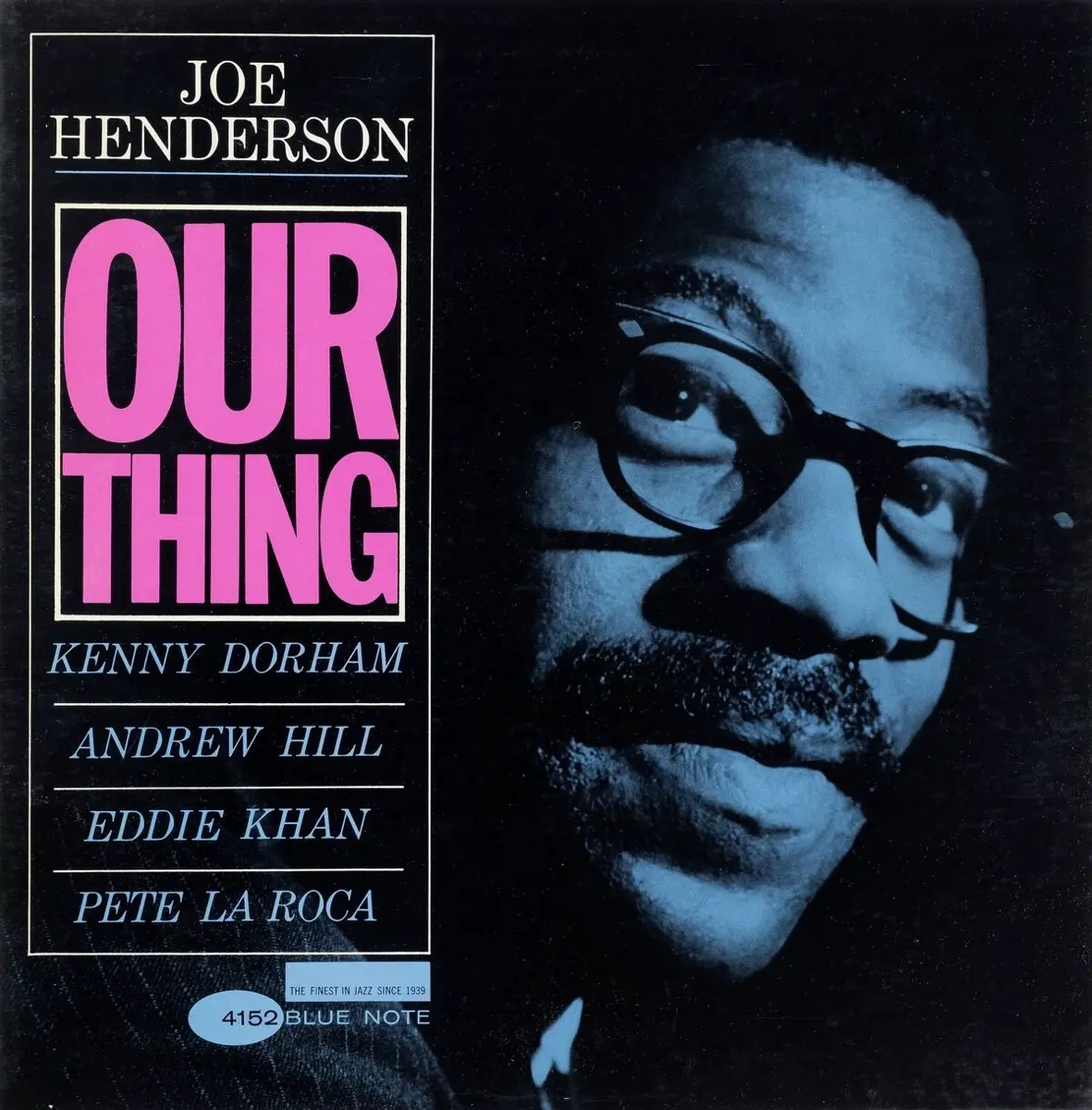
In the autumn of 1963, the jazz landscape was undergoing a seismic shift, transitioning from the structured elegance of hard bop toward the more experimental and harmonically fluid territory of post-bop and the avant-garde. At the center of this evolution stood Joe Henderson, a tenor saxophonist whose debut as a leader had occurred only months prior. On September 9, 1963, Henderson entered the Van Gelder Studio in Englewood Cliffs, New Jersey, to record his second album for Blue Note Records, titled Our Thing. By the time music critic Mark Gilbert revisited the work in a May 1986 retrospective for Jazz Journal, Henderson had transitioned from a promising newcomer to a major and abiding influence on contemporary saxophone, a status he maintains in the 21st-century jazz canon. The 1986 analysis highlighted how the album served as a bridge between the bebop foundations of the 1940s and the radical innovations that would define the late 1960s.
The Historical Context of the 1963 Sessions
To understand the significance of Our Thing, one must examine the state of Blue Note Records during the early 1960s. The label was in a period of high productivity, frequently pairing established veterans with emerging radicals. Joe Henderson had arrived in New York in 1962, quickly gaining a reputation for a sound that was at once grit-inflected and intellectual. His partnership with trumpeter Kenny Dorham was instrumental; Dorham had essentially discovered Henderson and brought him into the fold, co-leading the group that would record Henderson’s debut, Page One.
Our Thing was recorded during a pivotal window. Only months later, the jazz world would be forever changed by the further explorations of John Coltrane and the arrival of the "New Thing." However, Our Thing captured a specific moment of balance. It was an era where "straightahead" jazz was beginning to stretch its boundaries without fully abandoning the swing feel or the 12-bar blues structure. The session personnel—comprising Henderson, Dorham, pianist Andrew Hill, bassist Eddie Khan, and drummer Pete La Roca—represented a cross-section of the era’s most versatile talent.
Personnel and the "Weirdness" of Andrew Hill
One of the most distinctive elements of the Our Thing sessions was the inclusion of pianist Andrew Hill. While Joe Henderson was the leader, Hill’s presence provided a harmonic friction that elevated the record beyond standard bop fare. In his 1986 assessment, Mark Gilbert noted that Hill represented the "extreme of weirdness" on the recording. Hill’s style, characterized by an oblique, angular approach to the keyboard, owed a significant debt to Thelonious Monk. However, Hill pushed Monk’s idiosyncrasies into a more atonal and rhythmically complex space.
Hill’s contributions to Our Thing served as a precursor to his own leadership debut on Blue Note, Black Fire, which would be recorded just weeks later in November 1963. On tracks like "Teeter Totter" and "Pedro’s Time," Hill’s comping and solos often sidestepped the expected resolutions of bebop, creating a sense of tension and intellectual depth. While Kenny Dorham provided a grounding in the classic bop tradition, Hill acted as the progressive catalyst, ensuring the album remained on the cutting edge of the contemporary scene.
Compositional Analysis: Beyond the Blues
The tracklist of Our Thing illustrates the multifaceted nature of Henderson’s musical identity. The album opens with "Teeter Totter" and "Pedro’s Time," both of which utilize the 12-bar blues form but do so with a modern harmonic sensibility. These tracks demonstrate that while Henderson was looking forward, he remained deeply rooted in the blues—a core tenet of the Blue Note identity.
The title track, "Our Thing," introduces more complex structural elements, specifically a 6/8 bridge that disrupts the standard 4/4 swing. This use of shifting meters was becoming more common in the early 60s as composers sought to move away from the predictability of dance-oriented jazz. "Back Road" offers a different flavor, leaning into a "soul-style" theme that reflects the influence of the hard bop movement’s intersection with gospel and R&B. Finally, "Escapade" showcases Henderson’s ability to weave discrete, melodic phrases into a high-energy bop framework.
Technical data from the session indicates that the interplay between Eddie Khan and Pete La Roca was essential for maintaining cohesion amidst these stylistic shifts. Khan, a bassist known for his work with Max Roach and Elvin Jones, provided a sturdy but flexible foundation. Pete La Roca, a drummer of immense versatility, was tasked with navigating Hill’s rhythmic eccentricities while maintaining the "industrious" drive required for Henderson’s powerful tenor lines.
The Role of Kenny Dorham as Mentor and Peer
While Joe Henderson’s name was on the marquee, the presence of Kenny Dorham cannot be understated. By 1963, Dorham was a veteran of the bebop era, having played with Charlie Parker and as a founding member of the Jazz Messengers. In the 1986 retrospective, Gilbert observed that Dorham might have sounded "preset" by the standards of the early sixties, yet he remained an "inspired and consistent bop trumpeter."
Dorham’s role on Our Thing was twofold: he provided a veteran’s stability to the front line and contributed several compositions that challenged the band. His trumpet playing offered a lyrical, slightly melancholic contrast to Henderson’s more aggressive and "growling" tenor style. The chemistry between the two was a hallmark of early 1960s jazz, representing a passing of the torch from the bop pioneers to the post-bop innovators.
Critical Reception and the Leonard Feather Perspective
In the original sleeve notes for the album, the legendary jazz critic Leonard Feather remarked that the spirit of Charlie Parker (Bird) was still very much a part of the 1960s jazz scene. While this was factually accurate—Parker’s influence remained the bedrock of saxophone technique—Mark Gilbert’s 1986 analysis suggested that this was "not the whole truth."
Gilbert argued that Our Thing was much more than a tribute to the past. He pointed to the "non-bop chord movements," the varying song lengths, and the "cool, Milesian elements" as evidence that Henderson was forging a new path. Henderson’s sound was often compared to John Coltrane’s, particularly in his use of "sheets of sound" and harmonic exploration. However, Henderson’s preference for more discrete, melodic phrasing gave him a unique voice that was less about spiritual searching and more about architectural precision.
Chronology of Influence: 1963 to 1986 and Beyond
The timeline of Joe Henderson’s career post-Our Thing confirms the album’s role as a launchpad.
- 1963: Recording of Our Thing establishes Henderson as a top-tier Blue Note artist.
- 1964-1966: Henderson records a string of masterpieces, including In ‘n Out and Inner Urge, further refining the post-bop sound.
- 1967-1970s: Henderson joins the Horace Silver Quintet and later moves into jazz-fusion and big band arrangements.
- 1985: The "State of the Tenor" live recordings at the Village Vanguard signal a major career resurgence.
- 1986: Mark Gilbert’s review in Jazz Journal acknowledges Henderson as a "major and abiding influence," noting that his "determinedly individualistic and expressive voice" was already fully formed in 1963.
By the time of the 1986 review, Henderson’s influence was visible in a new generation of players, such as Branford Marsalis and Joe Lovano, who looked to Henderson’s 1960s work for a model of how to be technically proficient without losing emotional expressiveness.
Broader Impact and Implications for the Post-Bop Genre
Our Thing stands as a "magnificent post-bop edifice," a term used by Gilbert to describe the album’s structural integrity. Its broader impact lies in its refusal to be categorized as strictly one thing or another. It is not a pure avant-garde record, nor is it a simple hard bop session. Instead, it reflects a period of jazz history where multiple attitudes and influences coexisted.
The album’s longevity is a testament to the "viable currency" of Henderson’s sound. In the modern era, jazz educators and performers continue to study the transcriptions of Henderson’s solos on "Teeter Totter" and "Our Thing" to understand his unique approach to phrasing and intervalic leaps. The record serves as a masterclass in ensemble interaction, showing how a group of musicians with disparate styles—from the traditionalism of Dorham to the modernism of Hill—can create a unified and forward-thinking work of art.
As a historical document, Our Thing captures the essence of 1963: a year of transition, tension, and immense creativity. It remains a cornerstone of the Blue Note catalog, representing the moment when Joe Henderson stepped out from the shadow of his mentors to define his own "thing" in the world of jazz.
Technical Discography and Recording Details
Album Our Thing
Label: Blue Note (BST 84152)
Recording Date: September 9, 1963
Location: Van Gelder Studio, Englewood Cliffs, NJ
Track List and Timings:
- Teeter Totter (Joe Henderson) – 8:31
- Pedro’s Time (Kenny Dorham) – 10:01
- Our Thing (Joe Henderson) – 6:21
- Back Road (Kenny Dorham) – 6:19
- Escapade (Joe Henderson) – 7:16
Personnel:
- Joe Henderson: Tenor Saxophone
- Kenny Dorham: Trumpet
- Andrew Hill: Piano
- Eddie Khan: Bass
- Pete La Roca: Drums
The enduring legacy of Our Thing is found in its balance of discipline and freedom. It remains a vital chapter in the story of Joe Henderson, an artist who spent his career proving that the most individualistic voices are often the ones that respect the foundation while relentlessly building toward the future.