 Aveline Kirana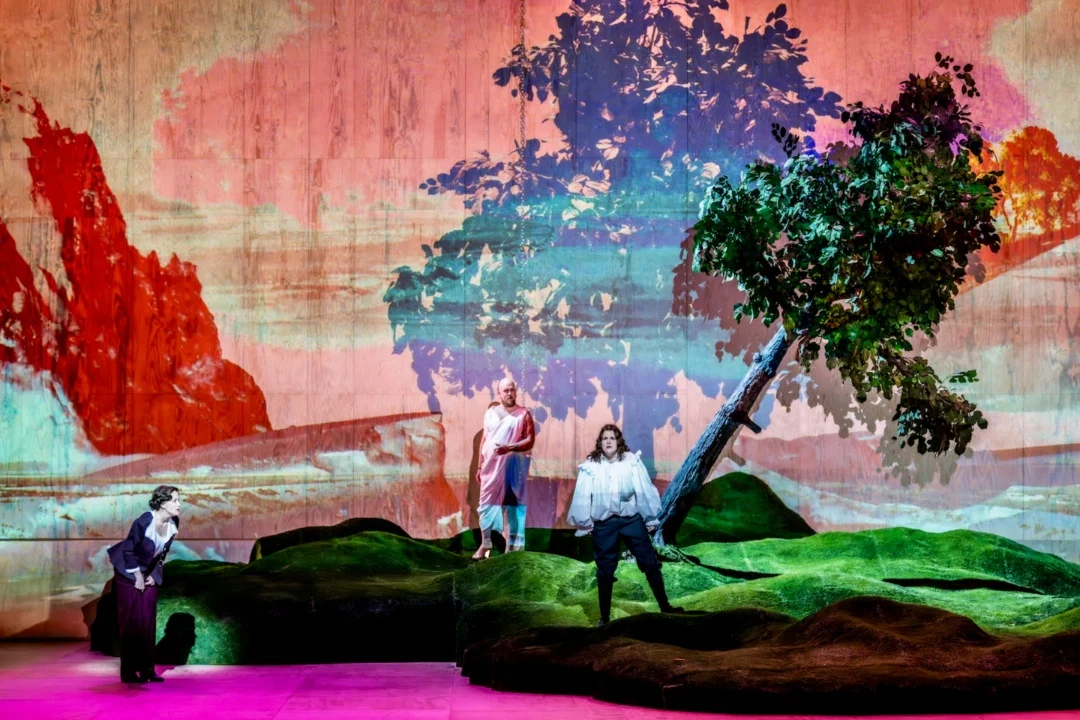
Komische Oper Berlin Stages Ambitious German Premiere of Olga Neuwirth’s "Orlando," a Sprawling Operatic Epic of Modernity
Berlin, Germany – The Komische Oper Berlin has premiered Olga Neuwirth’s highly anticipated opera "Orlando," a monumental work adapted from Virginia Woolf’s seminal 1928 novel. Directed by Ewelina Marciniak and conducted by Johannes Kalitzke, the German premiere attempts to translate Woolf’s intricate exploration of gender, identity, and time into a vast operatic canvas. The production, a collaboration between Neuwirth and American playwright Catherine Filloux, expands significantly on the original novel’s scope, weaving in a comprehensive chronicle of the 20th and 21st centuries.
The opera plunges audiences into an ambitious, multi-layered narrative that seeks to encompass a wide array of themes: a profound meditation on gender fluidity and societal constructs, a sweeping cultural-historical panorama, a stark political warning, a vibrant queer manifesto, a pointed critique of media saturation, and a comprehensive musical depiction of Western modernity. From its outset, the sheer magnitude of Neuwirth’s undertaking is palpable, presenting a challenge to both the creative team and the audience to navigate its immense thematic density.
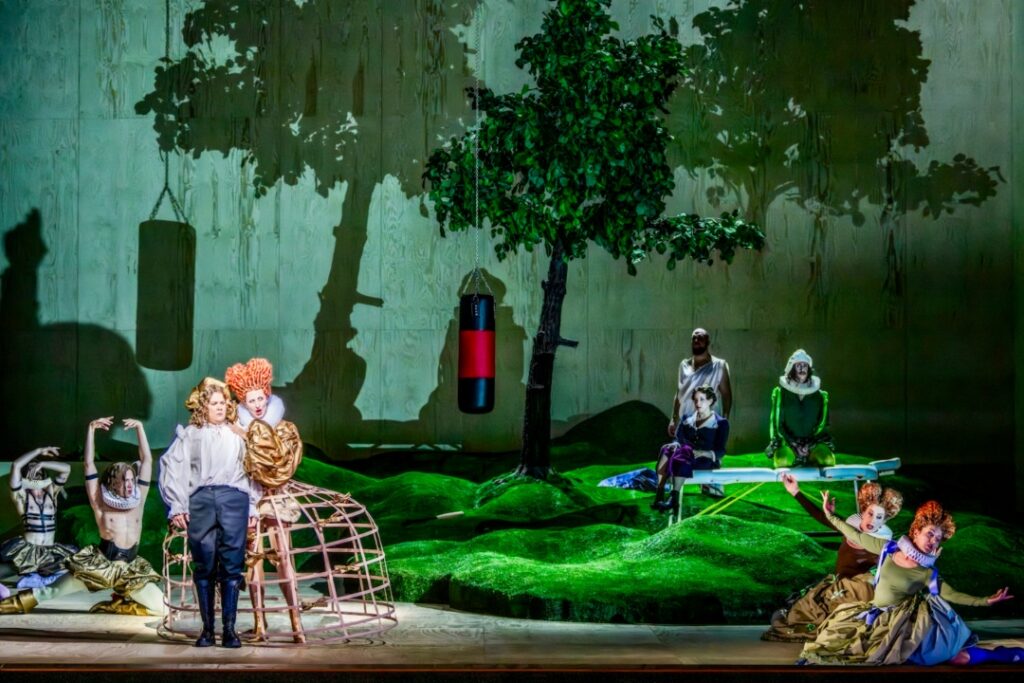
"Orlando" traces the journey of its titular character, initially an English aristocrat in the court of Queen Elizabeth I, across centuries. Orlando experiences love, profound disappointment, and literary solitude, undergoing a fundamental transformation from male to female. This core element of Woolf’s work—the fluid exploration of gender, identity, and shifting social roles—remains the heart of Neuwirth’s operatic adaptation. A narrator, notably costumed to evoke the spirit of Virginia Woolf herself, guides the audience through this temporal and personal evolution. However, where Woolf’s prose is characterized by lightness, irony, and melancholic elegance, Neuwirth’s operatic interpretation often leans towards a more overt, sometimes heavy-handed, clarity in its messaging.
An Expansive Chronological and Thematic Journey
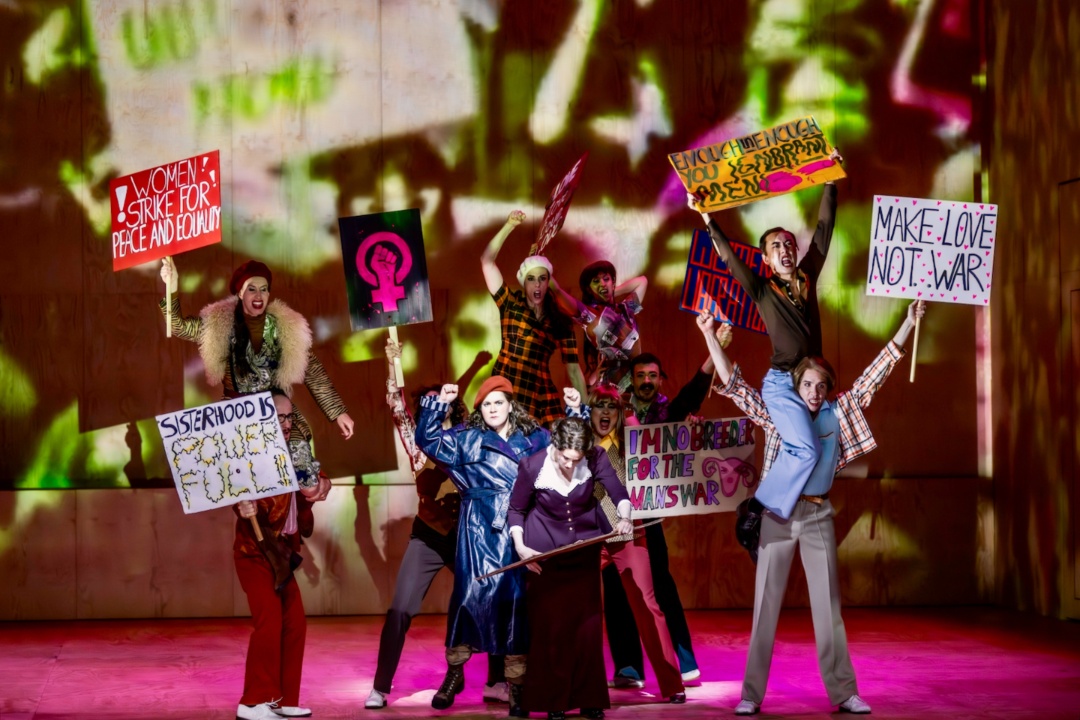
Neuwirth and Filloux’s libretto extends "Orlando’s" narrative far beyond the novel’s 1928 conclusion. The opera propels Orlando through the tumultuous 20th and 21st centuries, encountering pivotal historical moments and societal shifts. This includes the cataclysms of world wars, the horrors of the Holocaust, the devastating aftermath of Hiroshima, the counterculture movements of the mid-20th century, the rise of feminism, the pervasive influence of consumer society, contemporary queer debates, and the looming specter of the climate crisis. The operatic adaptation endeavors to touch upon nearly every significant contemporary issue, resulting in a libretto that often feels more like an exhaustive checklist of historical and social milestones than a narrative driven by dramatic development. This episodic structure, despite the considerable visual and musical energy invested, can lead to a sense of fatigue over the course of the evening.
A Sonic Tapestry of Modernity
Olga Neuwirth’s musical score for "Orlando" is undeniably potent, employing an expansive orchestral and vocal apparatus. The production features a large orchestra, multiple choirs, and a significant number of soloists and instrumentalists, creating a rich and complex sonic environment. Stylistically, the opera embraces a vast spectrum of musical influences, seamlessly interweaving Renaissance madrigals with echoes of Purcell, hymns, jazz, cabaret, punk, rock, and avant-garde electronic soundscapes. The score incorporates jarring elements such as out-of-tune harpsichords and a tempest of percussion effects, symbolically linking musical history with the unfolding temporal narrative.
However, this relentless sonic stimulation, while demonstrating considerable evocative power, can become overwhelming. The music frequently prioritizes escalation, densification, and direct commentary, leaving little room for lyrical respite. Particularly in the first act, a scarcity of pauses hinders the development of musical memory and deeper emotional resonance. While the absence of traditional arias in a conventional operatic sense is not a detractor, the opera arguably lacks moments of genuine musical focus and concentrated impact.
Johannes Kalitzke, the conductor, is credited with admirably holding together this vast and complex musical structure with remarkable clarity. Despite an inclination towards consistently high volume, Kalitzke meticulously guides the immense sonic forces, imposing order where the score might otherwise descend into chaos. The orchestra and chorus of the Komische Oper Berlin delivered an extraordinary performance, demonstrating exceptional technical prowess and commitment to Neuwirth’s demanding score.
Staging: A Visual Symphony of Superimposition
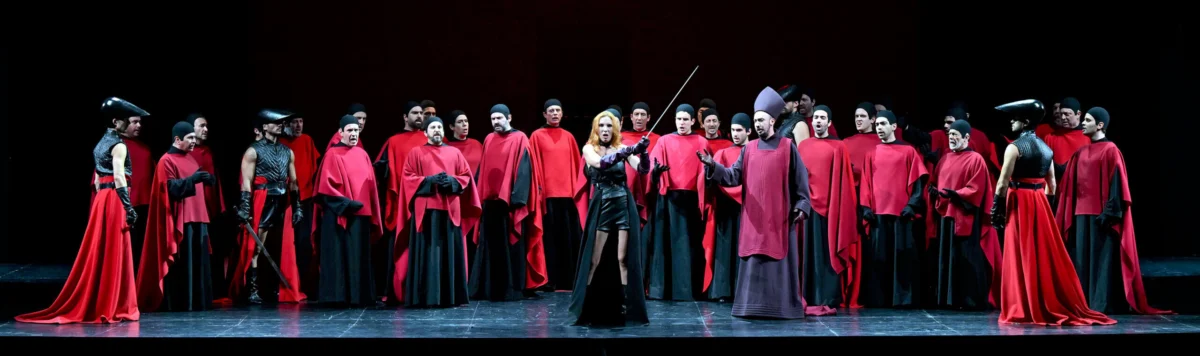
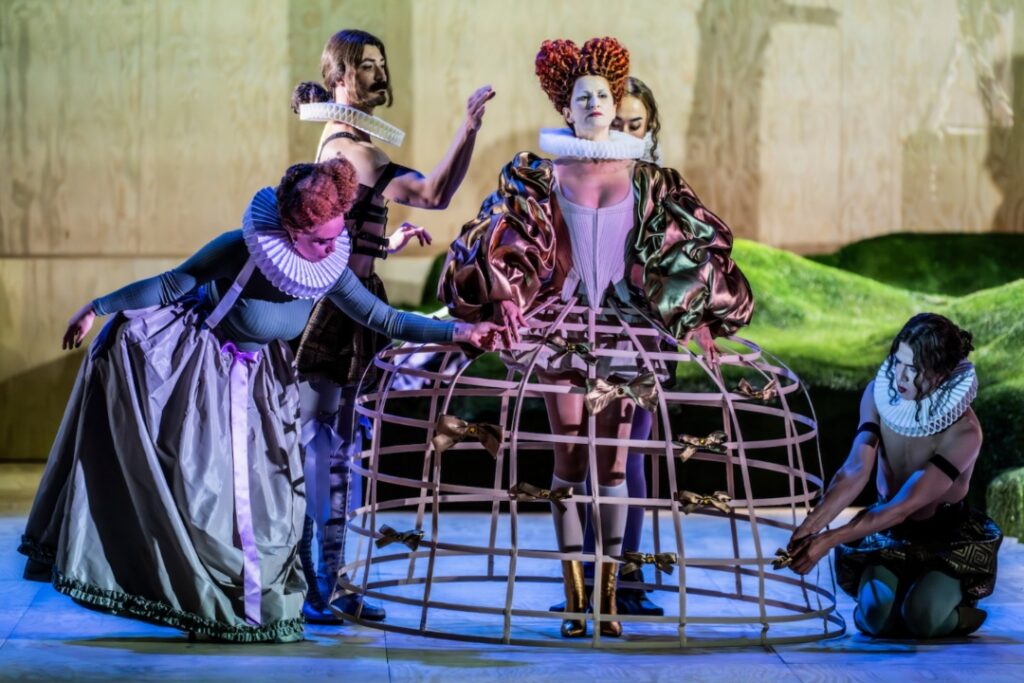
Director Ewelina Marciniak’s staging responds to the opera’s rich and multifaceted material with an aesthetic of visual superimposition. The stage design by Mirek Kaczmarek, featuring large projection screens, is almost perpetually animated by Natan Berkowicz’s dynamic video art. Images, historical documents, and surreal tableaux flow and intermingle, creating a dense visual tapestry. Julia Kornacka’s costumes further enhance this layered approach, blending historical allusions with a distinctly postmodern stylistic sensibility. The production consistently generates powerful, and at times unsettling, imagery. Examples include the grotesque exaggeration of gender identities and the mirroring of war-torn landscapes with scenes of contemporary consumerism.
Yet, even the direction occasionally falls prey to the overtness inherent in the libretto. Much of the narrative is explicitly illustrated, with elements being displayed rather than subtly suggested, leaving limited space for audience interpretation. This constant symbolic overloading, while initially striking, can ultimately prove exhausting. The production raises questions about the portrayal of LGBTQ+ identities, at times appearing to rely on flamboyant costumes and exaggerated performances without fully exploring the inner conviction or nuanced emotional depth of these characters.
A Work of Greatness in its Excess?
Despite its perceived shortcomings, it would be inaccurate to dismiss Olga Neuwirth’s "Orlando" as a failure. The work possesses a certain greatness, perhaps stemming precisely from its deliberate excess. Neuwirth has not crafted a conventionally pleasing piece of musical theater; rather, she has created an exuberant panorama of contemporary life, striving with every fiber for relevance. The resultant overwhelm, repetition, and fatigue are arguably an inevitable consequence of such a monumental and ambitious undertaking.
The Vocal Prowess of Ema Nikolovska
The demanding title role of Orlando proved to be a significant challenge, one that mezzo-soprano Ema Nikolovska embraced with admirable intensity and vocal virtuosity. Neuwirth conceived the role as a vocal metamorphosis. The male Orlando initially resides in darker vocal registers, but as the gender transformation occurs, the role opens up to agile coloratura passages and bright high notes. Later sections incorporate spoken-song, amplified passages, and aggressive rock-inspired vocalizations. Nikolovska navigated these diverse demands with exceptional technical mastery and a remarkable stage presence, embodying the character’s complex journey.
A Stellar Supporting Cast
The supporting cast delivered equally superb performances, rounding out the operatic ensemble. Baritone Günter Papendell offered a dual portrayal, imbuing Shelmerdine with lyrical warmth and melancholic distance, while simultaneously delineating the cynical critic Greene with sharp precision. Soprano Anna Nekhames lent Sasha a sensuous elegance, and mezzo-soprano Karolina Gumos portrayed Elizabeth I with impressive dignity. Alma Sadé served as the narrator and Virginia Woolf’s alter ego, bringing a quiet concentration to the role. Kevin(a) Taylor made a striking impression as a trans non-binary child in the second act, adding important contemporary representation.
Conclusion: Admiration Without Profound Impact
Ultimately, the experience of "Orlando" at the Komische Oper Berlin inspires admiration, but it does not necessarily leave a profound, lasting shock. Audiences may depart feeling more relieved that this voluminous opus has concluded than deeply moved. This distinction perhaps encapsulates the fundamental difference between Virginia Woolf’s literary approach and Olga Neuwirth’s operatic vision. Woolf masterfully explored the subtle shifts in perception and inner life, while Neuwirth appears driven to ensure that every message, every theme, is delivered at maximum sonic and visual volume. The opera stands as a testament to artistic ambition and a bold attempt to capture the zeitgeist, even if its sheer density risks overwhelming its intended impact. The production’s success lies in its daring scope and the exceptional talent that brought it to life, even as it prompts reflection on the balance between comprehensive thematic exploration and sustained artistic engagement.