
 Jia Lissa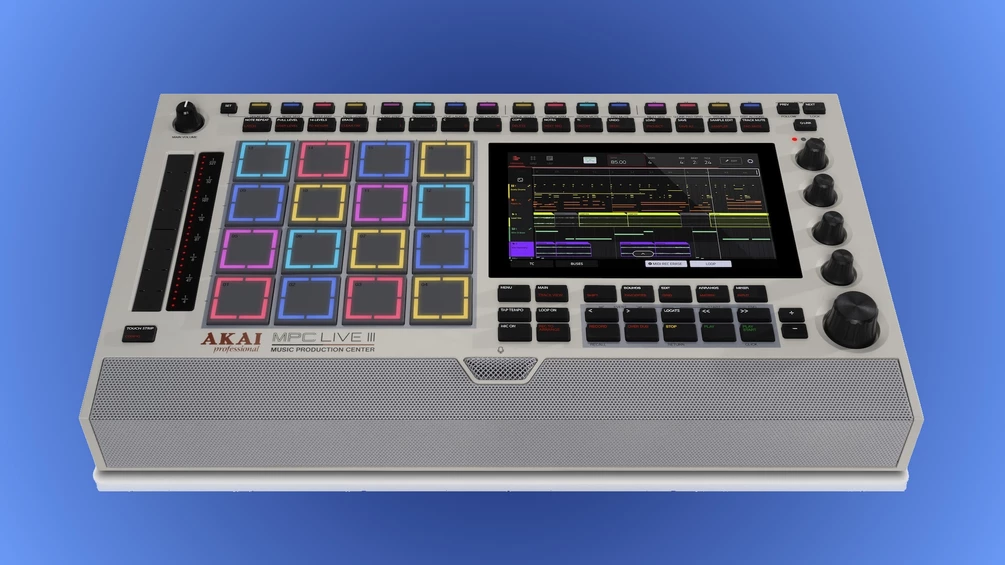
Akai Professional, a global leader in music production technology, has officially unveiled its latest innovation, the MPC Live III Retro, a standalone music production center that seamlessly blends the iconic aesthetics of its late 1980s predecessors with a suite of cutting-edge modern features. This highly anticipated release represents a strategic move by Akai to cater to both seasoned producers nostalgic for the golden era of hardware sampling and a new generation of creators seeking powerful, portable, and intuitive production tools. The announcement has generated significant buzz within the music technology community, underscoring Akai’s enduring influence on beat-making and electronic music production.
At the heart of the MPC Live III Retro lies a powerful next-generation Gen 2 eight-core processor, designed to deliver unparalleled performance, rapid loading times, and the capability to handle complex projects with ease. This robust processing power is complemented by a 16-step sequencer, a foundational element of the MPC workflow that has defined countless tracks across genres. Visually, the unit is a direct homage to Akai’s classic machines, featuring a meticulously recreated retro colorway that evokes a sense of timeless design. The user interface is anchored by a vibrant seven-inch multi-touch color display, offering intuitive navigation and control, alongside four tactile touch-capacitive knobs for hands-on parameter manipulation. Further enhancing its versatility, the MPC Live III Retro comes equipped with a built-in battery, integrated speakers, and an internal microphone, making it a truly self-contained and highly portable production studio.
A Deep Dive into Advanced Features: MPCe™ Pads and Processing Power
One of the most significant advancements introduced with the MPC Live III Retro is the integration of the new MPCe™ pads, which incorporate revolutionary 3D-sensing technology. Unlike traditional velocity-sensitive pads, these innovative pads are engineered to detect not only the force of impact but also subtle three-dimensional movements and gestures. This includes pressure, tilt, and even nuanced finger movements across the pad surface, opening up an entirely new dimension of expressive control. Producers can now modulate parameters such as filter cutoff, resonance, effects send, or even pitch in real-time simply by varying their finger pressure or subtly sliding their finger across the pad. This level of granular control allows for more organic, dynamic, and nuanced performances, bridging the gap between digital precision and the expressive fluidity of acoustic instruments. For beat makers, this translates into more intricate drum patterns, expressive sample manipulation, and dynamic synth performances, pushing the boundaries of what is possible with a pad-based interface.
The upgrade to a Gen 2 eight-core processor is not merely an incremental improvement; it represents a substantial leap in computational capability. This advanced processor empowers the MPC Live III Retro to handle larger projects with more tracks, sophisticated effects chains, and vast sample libraries without encountering latency or performance bottlenecks. It facilitates faster loading of projects and samples, seamless switching between different modes, and the ability to run multiple plugins and instruments concurrently. This level of processing power is crucial for a standalone unit, allowing it to function as a fully fledged production workstation capable of tackling complex arrangements and intricate sound design tasks, minimizing the need to rely on external computers during the creative process. The enhanced processing also lays the groundwork for future firmware updates, potentially enabling even more advanced features and deeper integration with evolving music production ecosystems.
The Enduring Legacy of the MPC: Shaping Musical Culture
The significance of Akai Professional’s MPC line extends far beyond mere technological innovation; it is deeply interwoven with the fabric of modern music history, particularly within hip-hop, R&B, and electronic music. The original MPC, or MIDI Production Center, was conceived in the late 1980s by legendary engineer Roger Linn, in collaboration with Akai. The first model, the MPC60, released in 1988, revolutionized music production by offering a standalone, integrated unit for sampling, sequencing, and MIDI control. Before the MPC, these functions often required separate, expensive pieces of equipment, making professional-grade production inaccessible to many. The MPC’s intuitive pad interface, coupled with its powerful sequencing capabilities, democratized beat-making, transforming it from a niche engineering skill into an accessible art form.
Producers like DJ Premier, J Dilla, Pete Rock, and countless others adopted the MPC, leveraging its unique workflow to craft iconic beats that defined entire genres. Its gritty 12-bit sampling, swing quantization, and tactile pads became synonymous with a particular sound and feel that resonated globally. The MPC3000, released in 1994, refined this formula, becoming another industry standard, followed by the MPC2000 and MPC2000XL in the late 1990s and early 2000s, which further solidified the MPC’s dominance in studios worldwide. These machines were not just tools; they were instruments of cultural change, enabling artists to create entirely new sonic landscapes and pushing the boundaries of musical expression.
Akai Professional’s Creative Global Marketing and Artist Relations Manager, Andy Mac, eloquently encapsulated this sentiment in his statement regarding the new release: “The original MPCs didn’t just make music – they shaped culture. MPC Live III Retro is for the producers who grew up on those machines and the new generation discovering them now. Every detail of the retro colourway is intentional. This is vintage attitude with everything the modern MPC has to offer.” Mac’s words underscore the delicate balance Akai aims to strike with the Live III Retro: honoring a profound legacy while simultaneously embracing the demands of contemporary production.
Chronology of Innovation: Akai’s MPC Evolution
The journey of the MPC has been one of continuous evolution, adapting to technological shifts and the changing needs of musicians.
- 1988: MPC60: The seminal release, designed by Roger Linn, laid the groundwork for modern beat production.
- 1994: MPC3000: An enhanced version that became a staple in professional studios, known for its pristine sound and robust build.
- 1997: MPC2000: Introduced a more accessible price point and expanded features, becoming highly popular among a new wave of producers.
- 1999: MPC2000XL: An updated and refined version of the MPC2000, offering improved workflow and features.
- Early 2000s: Models like the MPC1000 and MPC2500 continued to evolve the standalone concept, offering portability and enhanced connectivity.
- 2010s: The Hybrid Era: As computer-based production gained prominence, Akai introduced units like the MPC Renaissance and MPC Studio, which functioned primarily as controllers for desktop software, integrating the MPC workflow with the power of DAWs.
- 2017: Return to Standalone: Akai responded to strong user demand for standalone capability by launching the MPC Live and MPC X. These units blended the traditional MPC hardware experience with modern computing power, allowing producers to create without a computer.
- Recent Developments:
- Earlier this year: Akai Professional released the MPC XL, hailed as its "most powerful MPC ever," pushing the boundaries of standalone processing and feature sets.
- This month: Akai also announced a free firmware update (MPC 3.8) designed to enhance integration between MPC Sample and other MPC hardware, demonstrating ongoing commitment to its existing user base and ecosystem.
- Present Day: The MPC Live III Retro continues this trajectory, offering a potent blend of heritage and cutting-edge technology, packaged in a beloved aesthetic.
Market Positioning and Competitive Landscape
Priced at $1,699 USD (€1,649.99, £1,399.99), the MPC Live III Retro positions itself firmly in the premium segment of the standalone music production market. This price point reflects the advanced hardware, proprietary technology, and the significant brand legacy it carries. Akai’s strategy with the MPC Live III Retro appears to be a dual approach: appealing to the established demographic of producers who grew up with classic MPCs and are drawn to its vintage aesthetic, while simultaneously attracting a new generation with its modern features, portability, and powerful processing.
In the contemporary music technology landscape, the MPC Live III Retro competes with a range of innovative standalone production units. Competitors include Native Instruments’ Maschine+, which offers deep integration with Native Instruments’ extensive software ecosystem, Roland’s MV-1 Verselab, focusing on vocal and song production, and various offerings from Elektron and Korg, known for their unique sequencing and synthesis capabilities. What differentiates the MPC Live III Retro is its unparalleled heritage, the specific workflow perfected over decades, and now, the unique expressiveness offered by the MPCe™ pads. Its integrated battery, speakers, and microphone also give it a distinct advantage in the increasingly important mobile production segment, allowing creators to capture ideas and produce full tracks virtually anywhere.
Industry analysts suggest that Akai’s consistent innovation within the MPC line, coupled with strategic retro releases, effectively diversifies its product portfolio and reinforces its market leadership. "The blend of classic aesthetics with modern functionality is a smart play," notes Sarah Jenkins, a senior analyst at TechSound Research. "It leverages powerful nostalgia while delivering genuine technological advancements, appealing to a broad spectrum of users from purists to mobile creators. This unit is poised to be a significant contender in the evolving standalone production market."
Broader Impact and Future Implications
The release of the MPC Live III Retro carries significant implications for the broader music production landscape. Firstly, it reaffirms the enduring appeal and viability of standalone hardware in an era dominated by digital audio workstations (DAWs) and software plugins. While software offers immense flexibility, many producers still crave the tactile, focused experience that dedicated hardware provides, free from the distractions of a computer. The MPC Live III Retro directly addresses this demand by offering a comprehensive, self-contained creative environment.
Secondly, the introduction of 3D-sensing pads heralds a potential shift in how producers interact with their instruments. This technology could inspire other manufacturers to explore more expressive input methods, moving beyond traditional velocity and aftertouch to embrace multi-dimensional control. This could lead to a new wave of instruments that offer unprecedented levels of nuance and performative depth, blurring the lines between electronic and acoustic musical expression.
Thirdly, the emphasis on portability and integrated features (battery, speakers, mic) underscores the growing trend towards mobile music creation. As artists increasingly work on the go, devices that facilitate immediate capture and development of ideas anywhere become invaluable. The MPC Live III Retro is perfectly positioned to cater to this mobile workflow, enabling producers to move seamlessly from initial spark to polished track without being tethered to a studio setup.
Akai Professional’s continued commitment to evolving the MPC platform, as evidenced by recent firmware updates and powerful new releases like the MPC XL and now the MPC Live III Retro, indicates a robust long-term vision. This strategy ensures that the MPC ecosystem remains relevant, competitive, and at the forefront of music technology, continuing its legacy of shaping culture through sound. The MPC Live III Retro is not just a new product; it is a statement of intent, bridging the past and future of music production with a powerful, inspiring, and culturally resonant instrument.