 Jia Lissa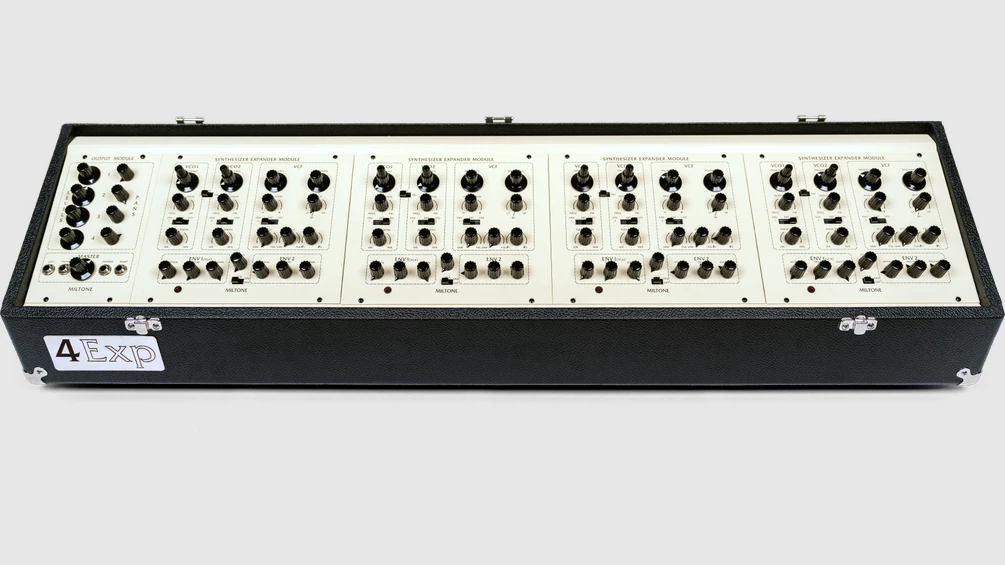
Paris-based vintage synthesizer repair specialists and renowned Oberheim experts, Miltone, have officially unveiled their ambitious recreation of the iconic 1975 Oberheim Four Voice System, christened the 4Exp. This new instrument is presented as a meticulously faithful, part-for-part reproduction of the original, hand-built to exacting standards, and integrates four individual Synthesizer Expander Modules (SEMs) into a cohesive, singular instrument, mirroring the architecture of its legendary predecessor. The announcement marks a significant development in the world of vintage electronic music instrument preservation and high-end artisanal manufacturing, promising to make one of history’s most coveted synthesizers accessible to a new generation of musicians and collectors, albeit within the realm of luxury bespoke items.
Historical Context: The Genesis of the Four Voice
To fully appreciate the significance of Miltone’s 4Exp, one must delve into the origins and impact of the original Oberheim Four Voice System. Oberheim Electronics, founded by Tom Oberheim in 1969, rapidly ascended to prominence in the nascent synthesizer market. Initially, Oberheim focused on effects units and sequencers, but a pivotal moment arrived with the introduction of the Synthesizer Expander Module (SEM) in 1974. The SEM was a self-contained monophonic synthesizer voice module featuring two voltage-controlled oscillators (VCOs), a voltage-controlled filter (VCF) with a unique 12dB/octave multi-mode design (low-pass, high-pass, band-pass, and band-reject), two envelope generators, and a voltage-controlled amplifier (VCA). Its distinctive sound, characterized by rich, creamy filters and powerful oscillators, quickly garnered acclaim.
The true innovation, however, came in 1975 with the Oberheim Four Voice. Prior to this, polyphony in synthesizers was largely achieved through paraphonic designs, where multiple voices shared a single filter and VCA, or was limited to complex, often unreliable patchable systems. The Four Voice shattered these limitations by integrating four independent SEM modules into a single chassis, each with its own full set of controls, creating a genuinely polyphonic instrument where each note could have a unique sonic character. This architecture, revolutionary for its time, allowed for incredibly rich and complex textures, from lush pads to soaring leads and powerful basses, all with the distinct Oberheim warmth. The Four Voice was a technical marvel and a sonic powerhouse, quickly becoming a staple in the studios of pioneering electronic musicians and rock bands, leaving an indelible mark on genres from progressive rock to new wave and film scores. Its influence extended to artists like Pink Floyd, Rush, Supertramp, and Devo, who utilized its distinctive sound to craft iconic tracks.
Miltone’s Meticulous Recreation: The 4Exp
Miltone, recognized for their deep expertise in vintage synthesizer repair, particularly Oberheim instruments, has undertaken the ambitious project of recreating the Four Voice System with an almost obsessive dedication to authenticity. The 4Exp is not merely inspired by the original; it aims to be a precise, part-for-part replica. This commitment to fidelity extends beyond cosmetic details to the internal circuitry, component selection, and construction methodologies that defined the original units.
Manfred Veber, the creator behind Miltone’s 4Exp, articulated the philosophy driving this endeavor in an interview with Resident Advisor: "We already had in mind the idea that we could remake the whole SEM exactly like it was with those new parts, as everything else is still quite easy to source. Then the idea of proposing a complete replica (not just an approximate clone) made much more sense and things came to life." This statement underscores Miltone’s intention to leverage their understanding of the original schematics and component characteristics to achieve a sonic and functional identicality. The challenges in such a project are immense, involving sourcing period-appropriate components or meticulously recreating unavailable ones, adhering to original manufacturing tolerances, and assembling each unit by hand with the precision of a master craftsman. The result is an instrument that promises not just the sound but also the operational feel and character of a 1975 Four Voice.
The 4Exp is offered as a made-to-order instrument, emphasizing its bespoke nature and the artisanal effort involved in each unit. Customers have options for customization, with modules available in the classic beige or a sleek black finish, and the chassis offered in either robust aluminum or a vintage-inspired tolex. Each 4Exp will be individually numbered, further highlighting its status as a collectible, high-end instrument. This approach caters to a niche market of discerning musicians, producers, and collectors who prioritize authenticity and craftsmanship.
The Technical Heart: Understanding the SEMs
Central to the 4Exp’s authentic recreation is the meticulous reproduction of the Synthesizer Expander Modules (SEMs). The original SEM, a compact and powerful monophonic synth voice, was revolutionary. Each SEM in the Four Voice system provided:
- Two Voltage-Controlled Oscillators (VCOs): Offering sawtooth and pulse waveforms, with pulse width modulation (PWM) capabilities, allowing for rich timbral variations. The stability and character of these VCOs were crucial to the Oberheim sound.
- A Unique 12dB/octave Multi-Mode Voltage-Controlled Filter (VCF): This filter was a cornerstone of the SEM’s sonic identity. Unlike the more common 24dB/octave Moog-style ladder filters, the SEM filter offered a gentler 12dB/octave slope and, critically, multiple modes: low-pass, high-pass, band-pass, and band-reject. This versatility allowed for a wide array of tonal shaping possibilities, from warm, sweeping pads to sharp, resonant leads and distinctive formant-like sounds.
- Two Envelope Generators (ADSR): One dedicated to the filter and one to the VCA, providing dynamic control over the sound’s amplitude and timbre evolution.
- A Voltage-Controlled Amplifier (VCA): To control the overall volume of the voice.
- Low-Frequency Oscillator (LFO): For modulation of parameters like pitch or filter cutoff, adding movement and expressiveness.
By faithfully replicating four of these SEMs and integrating them into a single, playable instrument, Miltone aims to deliver the full polyphonic experience of the original Four Voice. The challenge lies in ensuring not just individual module accuracy but also the harmonious interaction between them, including any subtle characteristics or "sweet spots" that emerged from the original design. This involves careful calibration and component matching, tasks that demand an intimate understanding of analog circuitry and vintage synthesizer behavior.
Pricing, Availability, and the Artisanal Economy
The Miltone 4Exp is positioned at the premium end of the synthesizer market, reflecting the extensive research, development, artisanal craftsmanship, and high-quality components involved in its creation. The 4Exp Aluminum model is priced at €9,990 (ex VAT) plus shipping, while the Tolex Edition, offering a different aesthetic, is priced at €11,990 (ex VAT) plus shipping. These figures place the 4Exp squarely in the realm of high-end, bespoke musical instruments, appealing to professional studios, serious collectors, and musicians seeking the unparalleled authenticity of a classic sound.
The pricing strategy is indicative of the "artisanal economy" prevalent in specialized fields such as vintage synth recreation. Unlike mass-produced instruments, these units are hand-built, often by a small team, with an emphasis on quality over quantity. The lead time for delivery further underscores this, with the synth expected to ship in late 2026. This extended timeline is common for complex, made-to-order instruments, allowing for meticulous construction, testing, and quality control. Pre-orders are currently being accepted through Miltone’s official website, providing an opportunity for enthusiasts to secure one of these limited-production units. The significant investment required highlights the value placed on historical accuracy, sonic fidelity, and the enduring legacy of the Oberheim Four Voice.
Oberheim’s Resurgence: A Parallel Narrative
Miltone’s announcement of the 4Exp arrives amidst a fascinating parallel narrative: the resurgence of Oberheim itself. Originally established in 1969, Oberheim faced bankruptcy in 1985, a fate shared by many pioneering synth manufacturers during a period of rapid technological shifts and market consolidation. The brand’s intellectual property was acquired by a group of lawyers, leading to decades of dormancy for the original company. However, 2022 marked a triumphant comeback for Oberheim, spearheaded by its founder, Tom Oberheim, and supported by Sequential (now part of Focusrite’s Novation). This revival saw the release of new instruments that sought to capture the essence of the classic Oberheim sound while incorporating modern manufacturing and reliability.
Since its re-establishment, Oberheim has introduced several new models, demonstrating a commitment to innovation while honoring its heritage. A notable recent example is the TEO-5, a 5-voice polyphonic analog synthesizer released in 2024. Named after Tom Oberheim himself, the TEO-5 embodies the classic Oberheim sound in a contemporary format, featuring new interpretations of the multi-mode filter and powerful VCOs. This official resurgence of Oberheim provides a broader context for Miltone’s 4Exp. While Oberheim itself is focused on evolving its legacy with new designs, Miltone is preserving a specific, iconic moment in that history through meticulous recreation. This co-existence highlights the diverse approaches to celebrating and continuing the legacy of groundbreaking musical instruments.
Implications for the Synthesizer Market and Legacy
The introduction of the Miltone 4Exp carries several significant implications for the broader synthesizer market and the preservation of musical heritage.
Firstly, it addresses a critical demand for authentic vintage sounds. Original Oberheim Four Voice systems are exceedingly rare, prohibitively expensive, and often require extensive maintenance due to their age. A faithfully recreated version offers a viable alternative for those seeking the exact sonic character without the inherent risks and costs associated with acquiring and maintaining a nearly 50-year-old instrument. This makes the sound of the Four Voice accessible to a new generation of musicians who might not have had the opportunity to experience it otherwise.
Secondly, the 4Exp contributes to the growing trend of high-fidelity vintage synth recreations. Companies like Behringer have offered affordable clones, while others like Black Corporation have created instruments "inspired by" classics. Miltone’s approach, however, falls into a distinct category of artisanal, part-for-part recreation, often targeting a higher-end market similar to offerings from companies like Analogue Solutions or even other boutique builders focused on specific vintage circuits. This segment emphasizes absolute sonic and functional accuracy over cost-effectiveness or modern features, serving a niche but passionate community.
Thirdly, it underscores the enduring value of analog synthesis and the specific design philosophies of pioneers like Tom Oberheim. In an era dominated by digital emulations and software synthesizers, the continued demand for physical, hand-built analog instruments speaks to the unique tactile experience, sonic depth, and perceived "mojo" that only hardware can provide. The Four Voice, with its per-voice control, offers a level of expressive manipulation that is often challenging to replicate in software or even other hardware designs.
Finally, the 4Exp project serves as a testament to the dedication of independent artisans in preserving electronic music history. Miltone’s deep repair knowledge and understanding of original circuits are invaluable assets in such endeavors. Their work ensures that the legacy of instruments that shaped modern music can continue to be experienced and utilized, not just as museum pieces, but as living, breathing tools for musical creation. This contributes to a vibrant ecosystem where original manufacturers, large-scale clone makers, and boutique artisans all play a role in catering to diverse segments of the synthesizer community, from those seeking affordability to those prioritizing uncompromising authenticity.
Challenges and the Future
While promising, the journey for the Miltone 4Exp will not be without challenges. The long lead time to 2026 suggests the complexities of sourcing components, the meticulous hand-assembly required, and the rigorous testing needed to ensure each unit meets Miltone’s high standards of authenticity and reliability. Market reception, while likely enthusiastic from core enthusiasts, will also be closely watched, particularly given the premium pricing and the presence of Oberheim’s own new offerings.
Ultimately, Miltone’s 4Exp represents more than just a new synthesizer; it is a labor of love, a historical homage, and a significant contribution to the ongoing narrative of electronic music instrument design. By meticulously resurrecting a foundational instrument, Miltone ensures that the unique voice of the Oberheim Four Voice System will resonate for years to come, connecting past innovations with future musical explorations.