Nayara Elvina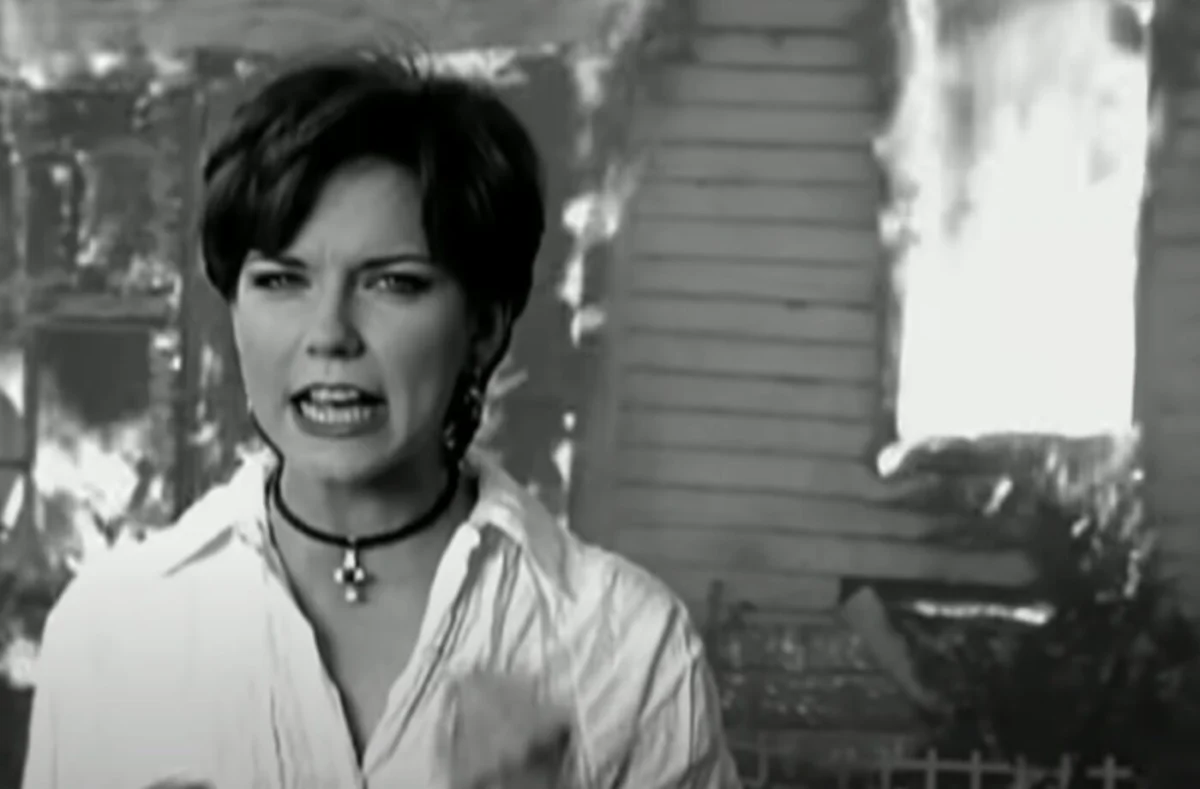
The landscape of America’s upcoming 250th anniversary celebrations has been marked by a significant cultural and political rift following the abrupt withdrawal of country music icon Martina McBride from the Great American State Fair. Initially announced as a marquee headliner for the event, which is scheduled to take place on the National Mall in Washington, D.C., McBride’s departure has catalyzed a broader discussion regarding the politicization of national holidays and the interpretation of patriotic art. The incident, occurring in late May 2026, highlights the complexities facing organizers as they attempt to navigate a deeply polarized public sphere ahead of the nation’s Semiquincentennial.
McBride’s decision to step down from the roster came less than twenty-four hours after her participation was made public. The withdrawal was not an isolated event; reports indicate that at least five of the nine artists originally slated to perform have also rescinded their agreements. This mass exodus of talent has cast a shadow over the "Freedom 250" organization, the entity responsible for the Great American State Fair, and has raised questions about the internal communication between event organizers and the talent they represent.
The Dual Commissions: A Foundation of Conflict
To understand the controversy surrounding McBride’s withdrawal, it is necessary to examine the administrative structure governing the 250th-anniversary festivities. The official effort to commemorate the signing of the Declaration of Independence began in 2016 with the passage of the United States Semiquincentennial Commission Act. This led to the formation of "America 250," a non-partisan, congressionally appointed body tasked with planning nationwide events.
However, a parallel initiative known as "Freedom 250" emerged more recently. This group was appointed by former President Donald Trump to execute a specific vision for the festivities, which includes the Great American State Fair. Critics of Freedom 250 argue that the group’s existence represents an attempt to bypass the established non-partisan commission in favor of a more politically aligned celebration. This administrative duality has created a fractured environment where artists and vendors must choose between competing organizations, each claiming to represent the definitive spirit of the American anniversary.
The confusion resulting from these two entities appears to be the primary driver behind McBride’s exit. In her official statement, the singer emphasized that her initial agreement to perform was predicated on the understanding that the event would be a neutral, inclusive celebration of all fifty states.
Martina McBride’s Official Statement and Rationale
In a detailed explanation released via her representatives, McBride claimed that the nature of the event was misrepresented during the booking process. She stated that her team had conducted due diligence, asking specific questions regarding the partisan nature of the fair, and was repeatedly assured that the gathering was intended to be a unifying, non-political community event.
"I was presented with an opportunity to perform at a nonpartisan event, but that turned out to be misleading," McBride’s statement read. "I asked lots of questions and was assured this was a nonpartisan event that was meant to celebrate ALL 50 states and also bring people together in a way that only music can. I saw it as just a bigger version of so many state fairs I have performed at over the years, celebrating community and what makes each state special."
The singer further explained that as the event’s ties to specific political figures and ideologies became clearer in the hours following the announcement, she felt compelled to distance herself to maintain her career-long commitment to neutrality. "Yesterday, things started changing and what we were told is, in fact, not what is happening," she added, concluding that her career has always been focused on "real people with real issues" rather than political posturing.
The Public Backlash and the Irony of Independence Day
The reaction to McBride’s withdrawal was swift and divided along ideological lines. On social media and various news outlets, conservative commentators criticized the singer for what they perceived as "caving" to online pressure. Critics argued that celebrating the birth of the United States should be inherently non-partisan and that refusing to perform at an event on the National Mall because of its association with a specific political figure was, in itself, a political act.
Prominent voices, including journalist Katie Pavlich, pointed to the perceived irony of McBride’s decision. Pavlich noted that McBride’s career was significantly bolstered by her 1993 hit "Independence Day," a song that has become a staple of American patriotic celebrations. "The woman who got rich and famous off of the song Independence Day won’t show up for the 250th anniversary of America on the National Mall?" Pavlich questioned, labeling the withdrawal "pathetic."
Other critics echoed this sentiment, suggesting that the song’s title and its frequent use in Fourth of July playlists made McBride’s refusal to participate in the Semiquincentennial particularly jarring. However, this line of criticism has reignited a long-standing debate about the actual meaning of the song and how it has been misinterpreted by the public for decades.
A Technical Analysis: The Meaning vs. The Perception of "Independence Day"
While "Independence Day" is often treated as a jingoistic anthem, a lyrical analysis reveals a much darker narrative. Written by Gretchen Peters and released as the third single from McBride’s album The Way That I Am, the song is not a celebration of national sovereignty but a harrowing tale of domestic violence and its tragic consequences.
The verses describe a young girl witnessing her mother’s suffering at the hands of an abusive, alcoholic father. The "independence" referred to in the title is the mother’s desperate act of arson—burning down the family home with her husband inside—as a final escape from her circumstances. The song ends with the daughter being sent to a county home, having lost both parents.
“She tried to pretend he wasn’t drinkin’ again / But daddy left the proof on her cheek,” the lyrics state, establishing the domestic setting. The chorus, which is the segment most frequently played at rallies and fireworks displays, uses metaphorical language that can easily be mistaken for nationalistic fervor: “Let freedom ring, let the white dove sing / Let the whole world know that today is a day of reckoning.”
Despite its dark subject matter, the song reached Number 12 on the Billboard Hot Country Songs chart and won the Country Music Association (CMA) Award for Song of the Year in 1995. Over time, the soaring melody and the repetition of the word "independence" led to its adoption by various political figures and media personalities. Political commentator Sean Hannity notably used the track as the theme for his radio program, a move that songwriter Gretchen Peters publicly opposed, stating that the song was never intended to be a political tool.
Historical Precedent and the Role of Artists in National Events
The McBride controversy is part of a larger historical trend where artists find their work recontextualized for political purposes. A frequently cited parallel is Bruce Springsteen’s "Born in the U.S.A.," which was famously used by Ronald Reagan’s 1984 reelection campaign. Like "Independence Day," Springsteen’s track was a critique—specifically regarding the treatment of Vietnam War veterans—but was embraced as a patriotic anthem due to its driving beat and anthemic chorus.
McBride herself has historically navigated the line between the song’s literal meaning and its patriotic reception. In the immediate aftermath of the September 11 attacks in 2001, she performed "Independence Day" at the Farm Aid concert in front of massive American flag backdrops. This performance is often cited by her critics as evidence that she has, at times, encouraged the song’s use as a nationalistic symbol.
The current withdrawal from the Great American State Fair suggests a shift in strategy for McBride and perhaps for the country music industry at large. In an era of heightened corporate and personal branding, the risk of "brand contamination" through association with controversial political movements has become a primary concern for talent agencies and management firms.
Broader Implications for the 2026 Semiquincentennial
The exodus of artists from the Freedom 250 event poses significant logistical challenges for the organizers of the Great American State Fair. With the 250th anniversary of the United States approaching, the inability to secure and retain top-tier talent for a celebration on the National Mall reflects a broader struggle to find common ground in national commemorations.
The situation also highlights a growing divide within the country music community. While the genre has traditionally been associated with conservative-leaning audiences, many of its biggest stars, including McBride, Taylor Swift, and Maren Morris, have increasingly asserted their independence from specific political platforms. This shift has occasionally alienated segments of their traditional fan base while garnering support from others.
As of late May 2026, the organizers of the Great American State Fair have not announced replacement acts for the five departed artists. The "America 250" commission, meanwhile, continues its separate planning for sanctioned events, though it remains to be seen if the confusion between the two groups will affect participation in those festivities as well.
Conclusion: The Challenge of National Unity Through Art
The controversy surrounding Martina McBride and the Great American State Fair serves as a case study in the challenges of modern event planning and the power of artistic interpretation. As the United States moves toward its 250th year, the difficulty of staging a "non-partisan" event in a landscape where even the choice of an organizing body is viewed through a political lens becomes increasingly apparent.
For McBride, the decision to withdraw appears to be an attempt to reclaim the narrative of her career and her most famous song. For the public, the incident remains a reminder that the songs and symbols used to define "independence" are often more complex and contested than they appear on the surface. Whether the Semiquincentennial can eventually serve as a moment of genuine national unity, or if it will continue to be defined by such fractures, remains an open question as the summer of 2026 approaches.