Johan Budi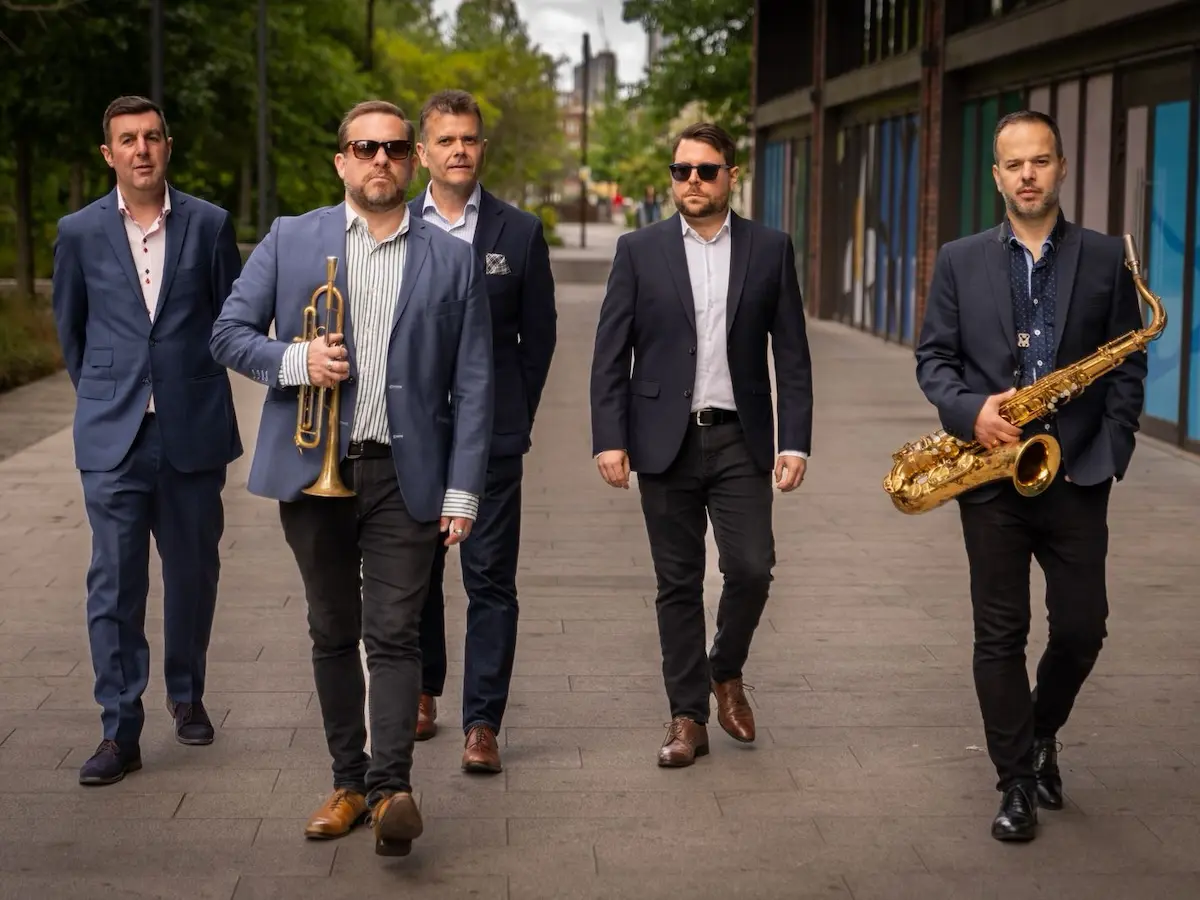
The international jazz scene continues to demonstrate its resilience and creative evolution through the simultaneous emergence of two significant recordings that highlight the diverse trajectories of the genre: the high-octane hard bop of Five-Way Split and the atmospheric, cross-cultural fusion of the Danish quartet Grammofon. These releases, "Modus Operandi" and "Fabelagtige Forviklinger" respectively, represent more than just new additions to the jazz discography; they serve as case studies in how contemporary musicians balance historical reverence with modern innovation. While Five-Way Split draws from the structured, energetic traditions of the 1950s and 1960s London and New York scenes, Grammofon explores a more ruminative, Nordic-Latin synthesis, further complicated by the recent loss of a key founding member. Together, these works provide a comprehensive look at the state of European jazz in the mid-2020s.
The Democratic Impulse of Five-Way Split
In an industry often dominated by charismatic frontmen and singular bandleaders, Five-Way Split operates under a strictly egalitarian philosophy. Led by trumpeter and flugelhornist Quentin Collins, the ensemble’s name itself is an architectural blueprint for its operations. According to Collins, the group functions without a designated leader, ensuring that the responsibility for composition, arrangement, and artistic direction is shared equally among its five members. This democratic approach is a deliberate nod to the collective spirit of the classic hard bop era, specifically the seminal groups of Horace Silver and Art Blakey’s Jazz Messengers, where the ensemble’s identity was often greater than the sum of its parts.
The quintet is composed of a diverse array of international talent, each bringing a high-tier pedigree to the recording studio. Hungarian bassist Mátyás Hofecker, a staple of the European circuit, brings the weight of his experience performing with legends such as Harold Mabern and Sheila Jordan. Drummer Matt Home provides the rhythmic foundation, having honed his craft alongside Barry Harris and Herb Geller. The harmonic core is managed by pianist Rob Barron, whose portfolio includes collaborations with Phil Woods and Al Jarreau. Rounding out the front line alongside Collins is Greek saxophonist Vasilis Xenopoulos, a prolific figure who maintains an active presence across the British, Greek, and Cypriot jazz landscapes.
Evolution from Debut to Modus Operandi
The release of "Modus Operandi" in February 2025 marks the second major milestone for Five-Way Split, following their critically acclaimed 2023 debut, "All The Way." The band has maintained a consistent structural formula for their recordings: a heavy emphasis on original compositions supplemented by carefully selected standards. The new album features seven original pieces penned by the band members and two covers: Henry Mancini’s "Dreamsville" and Peter Nero’s "Sunday In New York."
A defining characteristic of this ensemble is the collective involvement in the arranging process. Unlike many contemporary sessions where a single arranger dictates the "voice" of the album, every member of Five-Way Split contributed to the final arrangements of "Modus Operandi." This collaborative effort was refined through a rigorous period of live performance. Throughout 2024, the band utilized high-profile appearances, such as the Scarborough Jazz Festival, to "road-test" new material before a live audience. This process allowed the compositions to breathe and evolve, ensuring that the studio versions captured the "masterly performance" and creative energy that originally wowed festival-goers.
Narrative and Nomenclature in Hard Bop
The tracks on "Modus Operandi" are often imbued with personal narratives and local references, grounding the abstract nature of jazz in concrete experiences. For instance, the track "Dr Stohl," composed by Rob Barron, serves as a clever linguistic tribute to London’s jazz history. The title is "Lots Rd" spelled backward, referencing Lots Road, the location of the iconic 606 Club, a venue that has served as a sanctuary for British jazz musicians for decades.
Similarly, the track "Two Little Alphas," set to a Latin rhythm by Matt Home, is a personal dedication to the two young sons of saxophonist Vasilis Xenopoulos. The closing track, "XO Buzz," refers to Collins’ preference for high-quality brandy, adding a touch of late-night sophistication to the album’s conclusion. While the album is characterized by "hard-driving" energy typical of the hard bop genre, critics have noted passages of "unexpected delicacy," suggesting a nuanced maturity in the band’s collective voice.
Grammofon and the Nordic-Latin Synthesis
While Five-Way Split looks toward the urban energy of the hard bop tradition, the Danish quartet Grammofon occupies a different sonic space, one defined by the intersection of Nordic minimalism and Latin American passion. Led by saxophonist Niels Oldin and guitarist Jakob Frandsen, Grammofon is the culmination of a 25-year musical partnership that began in the jazz clubs of Copenhagen. What started as a duo eventually expanded into a trio, and finally, in 2023, reached its full realization as a quartet with the addition of Torben Westergaard on electric bass and Victor Dybbroe on percussion.
Their latest album, "Fabelagtige Forviklinger" (translated as "Fabulous Entanglements"), is a testament to this long-standing collaboration. Recorded in a studio on the Danish island of Møn, the album prioritizes a "live" feel. All four musicians performed simultaneously in the same room, utilizing minimal takes to preserve the spontaneous interaction that defines the quartet’s chemistry. The repertoire is split between five compositions by Oldin and three by Frandsen, creating a balanced dialogue between the two founders.
The Legacy of Torben Westergaard
The release of "Fabelagtige Forviklinger" is tempered by the recent passing of the group’s bassist, Torben Westergaard, who died at the age of 65 following a short illness. Westergaard was a pivotal figure in the Danish jazz scene, known for his unique ability to meld the cool, spacious aesthetics of Nordic jazz with the rhythmic intensity of Argentinian tango.
Westergaard’s technical proficiency was rooted in his education at the New School in New York City, where he studied alongside jazz luminaries such as Chris Potter, Bill Stewart, and Brad Mehldau. Over a career spanning several decades, he released 20 albums of his own compositions, leaving behind a significant body of work that influenced a generation of European musicians. His contribution to "Fabelagtige Forviklinger" is seen as a final masterclass in his signature style, providing a rhythmic and melodic anchor to the quartet’s explorations.
Technical Artistry and Atmospheric Textures
"Fabelagtige Forviklinger" is primarily an acoustic endeavor, with the notable exception of Westergaard’s electric bass. The album’s atmospheric depth is achieved through the meticulous selection of instruments. Jakob Frandsen utilizes three distinct guitars to achieve specific tonal colors: a nylon-string guitar for Latin-influenced tracks, a steel-string guitar for compositions requiring longer sustain, and an "ageing, rusty guitar" with old strings used specifically on the track "Backwards" to create a raw, historical sound.
Niels Oldin similarly varies his woodwind palette, alternating between tenor saxophone, clarinet, and bass clarinet. The use of the bass clarinet, in particular, adds a "darker, more ruminative cast" to the sound, which complements the "wistful and atmospheric" nature of the compositions. At just under 30 minutes, the album is a concise exploration of mood and texture, emphasizing the "thoughtful collaboration" of the ensemble over technical bravado.
Broader Implications for the European Jazz Market
The simultaneous release of these two albums highlights several trends within the modern jazz industry. First, the success of Five-Way Split’s "Modus Operandi" suggests a continuing appetite for high-quality, tradition-grounded jazz that prioritizes ensemble tightness and virtuosic soloing. The group’s ability to sell out festival dates and successfully transition that energy into a studio environment speaks to the viability of the "hard bop" brand in the 21st century.
Second, the work of Grammofon underscores the importance of regional identity in jazz. By blending Nordic sensibilities with Latin rhythms, the quartet creates a sound that is distinctly European yet globally accessible. The tragic loss of Torben Westergaard also highlights the precarious nature of small-ensemble jazz, where the individual voice of a single musician is often irreplaceable.
Furthermore, both releases demonstrate the importance of independent labels—such as 5WS Records and Zack’s Music—in providing a platform for specialized jazz projects. In an era where streaming algorithms often favor generic "mood" music, these labels remain dedicated to the "album" format as a cohesive artistic statement. Whether it is the five-way democratic split of a London-based quintet or the fabulous entanglements of a Danish quartet, these recordings affirm that jazz remains a vital, evolving medium for personal and collective expression.
Discography and Recording Data
Five-Way Split: Modus Operandi
- Tracks: Dr. Stol; Modus Operandi; Soho Soirée; Two Little Alphas; Dreamsville; Pandora’s Box; Viennese Whirlwind; Sunday In New York; X.O. Buzz.
- Personnel: Quentin Collins (trumpet, flugelhorn); Vasilis Xenopoulos (tenor sax, soprano sax); Rob Barron (piano, electric piano); Matyas Hofecker (bass); Matt Home (drums).
- Recording Locale: London, February 2025.
- Label: 5WS Records CD0001.
Grammofon: Fabelagtige Forviklinger
- Tracks: Backwards; Absinth; Ferdinand; De Muzen; Louie; Ella; Contempo; Moonflow.
- Personnel: Niels Oldin (tenor sax, clarinet, bass clarinet); Jakob Frandsen (guitar); Torben Westergaard (electric bass); Victor Dybbroe (percussion).
- Recording Locale: Møn, Denmark, June 12-13, 2024.
- Label: Zack’s Music GR2601CD.