Johan Budi
The landscape of contemporary jazz is currently undergoing a period of profound reflection and expansion, characterized by the simultaneous release of long-lost archival recordings and cutting-edge explorations of instrumental limits. Three recent releases—Louis Stewart’s Joyce Notes, Jon Irabagon’s Saturday’s Child, and Olivier Le Goas’s The Chaining Loops—represent the diverse currents currently shaping the genre. From the literary intersections of 1980s Dublin to the avant-garde bass saxophone duos of modern-day Chicago and the intricate polyrhythmic ensembles of Paris, these works provide a comprehensive look at the intellectual and technical rigor defining the global jazz community.
The Archival Resurrection of Louis Stewart’s Joyce Notes
In 1982, the literary and musical worlds converged in Ireland to celebrate the centenary of James Joyce’s birth. Among the most ambitious tributes was a suite composed by the nation’s preeminent jazz guitarist, Louis Stewart. Titled Joyce Notes, the work was a multi-movement exploration of Joyce’s modernist masterpiece, Ulysses. Despite its successful premiere at the Cork Jazz Festival in October 1982, the recording of this performance remained unreleased for over four decades. The recent acquisition and restoration of these tapes by Livia Records marks a significant milestone in the preservation of Irish cultural history.
Louis Stewart, widely regarded as one of the finest guitarists in the history of the genre, was not primarily known as a composer of large-scale suites. However, Joyce Notes demonstrates a sophisticated command of thematic development and arrangement. The suite is often compared to Stan Tracey’s 1965 masterpiece Under Milk Wood, which similarly translated Dylan Thomas’s literature into a jazz vernacular. Stewart’s work utilizes an Irish-American octet and features the dramatic readings of Eamon Morrissey, a Dublin-born actor renowned for his interpretations of Joycean text.
Compositional Structure and Literary Intertextuality
The suite is structured to mirror the episodic nature of Ulysses. The track "Night Town" serves as a blues-inflected descent into Dublin’s historical red-light district. Musically, it opens with Jim Doherty employing a stride piano technique, a stylistic choice that anchors the piece in the early 20th-century era of the novel, supported by the rhythmic precision of drummer Bobby Rosengarden.
One of the most technically intriguing pieces is "Stephen," a contrafact of John Coltrane’s "Giant Steps." This harmonic framework serves as a backdrop for a monologue by the protagonist Stephen Dedalus. In a moment of avant-garde synchronization, Doherty’s piano accompaniment becomes intentionally incoherent to mirror Dedalus’s drunken state, showcasing Stewart’s ability to use jazz improvisation as a narrative tool. The suite culminates in "Molly," which features the famous interior monologue of Molly Bloom, providing a lyrical and emotional resolution to the complex instrumental textures.
A Legacy of International Collaboration
The 1982 performance was notable for its cross-continental lineup. The American rhythm section featured bassist Steve LaSpina and drummer Bobby Rosengarden. Rosengarden’s presence lent the project immense historical weight; his resume included work with Duke Ellington, the Miles Davis/Gil Evans Orchestra, and Benny Goodman. LaSpina, known for his associations with Jim Hall and Benny Carter, provided the harmonic stability necessary for Stewart’s intricate lines.
The Irish contingent was equally formidable. Flautist Brian Dunning, who later gained international fame with the Celtic-fusion group Nightnoise, and tenor saxophonist Richie Buckley, a long-time collaborator of Van Morrison, contributed to a sound that was uniquely Irish yet firmly rooted in the hard-bop tradition. The release of Joyce Notes finally corrects a historical oversight, placing Stewart’s compositional ambition on par with his legendary instrumental prowess.
Jon Irabagon and the Resonance of the Bass Saxophone
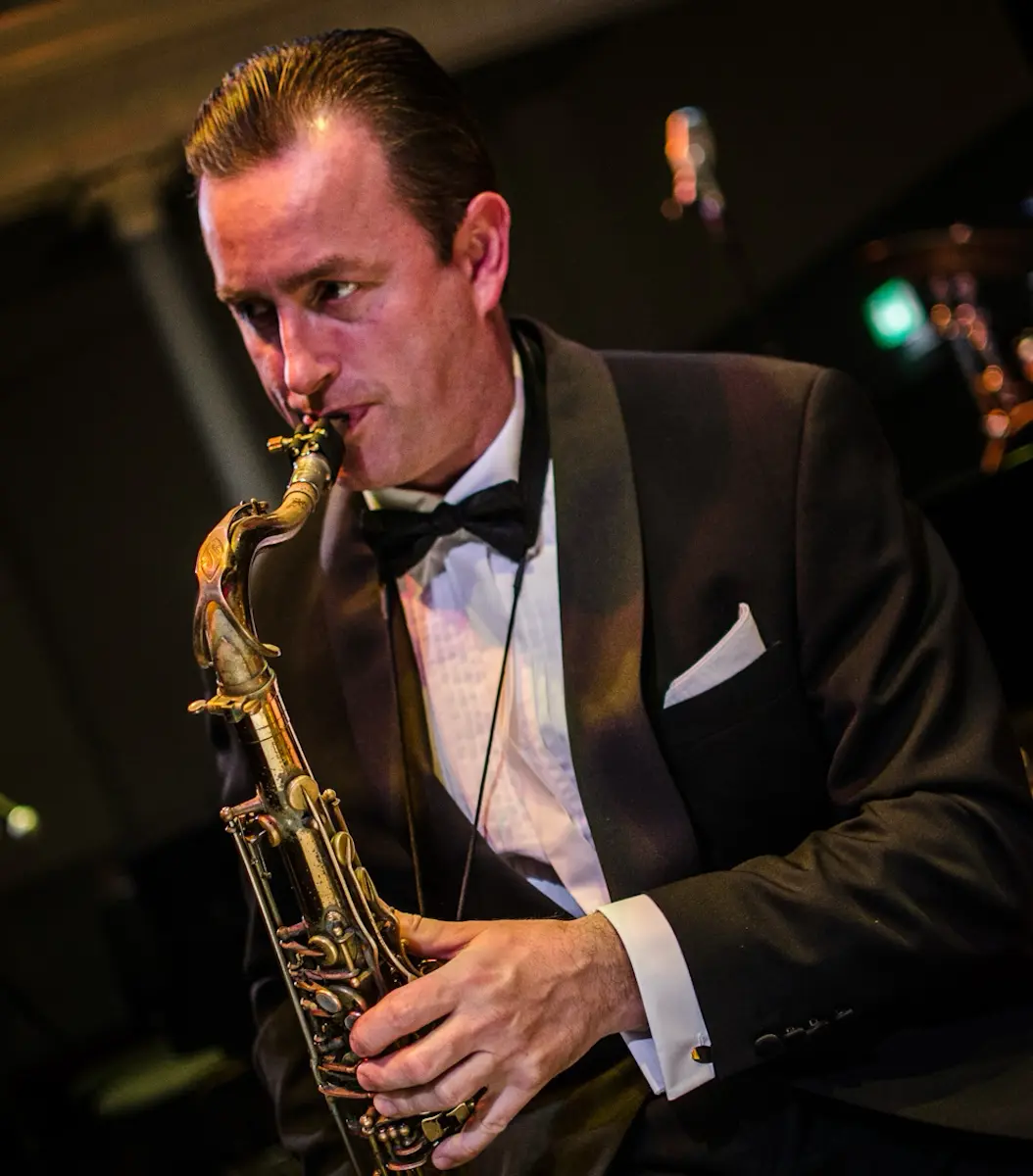
While Stewart’s work looks back at literary history, Jon Irabagon’s Saturday’s Child looks toward the physical and sonic boundaries of the saxophone. Recorded in September 2023 at the Hungry Brain in Chicago as part of the Instigation Festival, the album is a rare duo recording featuring two bass saxophones. Irabagon, a Filipino-American saxophonist and winner of the 2008 Thelonious Monk International Jazz Saxophone Competition, joins forces with Dan Oestreicher to explore an instrument often relegated to the fringes of the jazz ensemble.
Historical Context of the Bass Saxophone
The bass saxophone has a checkered history in jazz, often viewed as a novelty due to its immense size and the physical demands required to play it. Its lineage can be traced back to the 1920s with Adrian Rollini, who utilized "slap-tonguing" to emulate the percussive nature of a brass bass. In the modern era, the instrument was revitalized by avant-garde icons like Anthony Braxton and Roscoe Mitchell.
Irabagon and Oestreicher’s collaboration, however, eschews the purely academic or "dry" approach to free improvisation. Saturday’s Child is characterized by a sense of playfulness, suggested by track titles such as "Daycare Infantry" and "Sugar Rush." The album balances the instrument’s naturally guttural, percussive qualities with surprisingly agile melodicism. By soloing largely in the baritone register, the duo maintains a level of clarity that prevents the low-frequency soundscapes from becoming muddy or indistinct.
The Instigation Festival and Collaborative Improvisation
The Instigation Festival, where this recording originated, is a vital platform for fostering connections between the New York and Chicago improvised music scenes. The recording captures the raw energy of live performance, emphasizing the "musical dialogue" between the two players. Analysts suggest that Saturday’s Child serves as a testament to the versatility of the bass saxophone, proving that even the "lowest of the low" can sustain a compelling, full-length duo narrative without the need for traditional rhythm section support.
Olivier Le Goas and the Precision of Pulse
The third pillar of this contemporary jazz survey is Olivier Le Goas & Ensemble Pulse’s The Chaining Loops. Released on Challenge Records, this album represents the sophisticated "European" school of jazz, which often blends American rhythmic sensibilities with a distinct sense of structural architecture. Le Goas, a drummer and composer born in the historic French city of Senlis, has spent decades refining his "Pulse" ensemble, a name derived from the astronomical "pulsar"—a rapidly rotating neutron star.
Technical Sophistication and Ensemble Dynamics
The Chaining Loops is defined by metrical complexity and interlocking polyrhythms. The title track is a large-scale composition that utilizes repetitive, overlapping patterns to create a sense of momentum. Unlike much of the French jazz of the late 20th century, which tended toward either delicate impressionism or aggressive "muscular" reactions, Le Goas’s music occupies a middle ground of high-definition clarity and emotional engagement.
The ensemble includes several prominent figures in the European scene. Vibraphonist David Patrois and cornetist Médéric Collignon have worked with Le Goas for over thirty years, a longevity that is evident in the group’s seamless transitions and unified sound. A standout element of the album is the guitar work of Michael Felberbaum. Critics have noted his tone’s similarity to John McLaughlin’s early 1970s work—thick, warm, and utilizing strictly controlled feedback. This is particularly evident on "Direction," a piece that builds in density and complexity, requiring a delicate balance between individual virtuosity and collective cohesion.
Cross-Cultural Influences and Implications
Le Goas’s work has been compared to Neil Ardley’s Kaleidoscope of Rainbows due to its colorful orchestration and rhythmic shifts. However, the inclusion of Médéric Collignon’s scatting and vocalese on tracks like "Fifteen Miles" adds a layer of experimentalism that is distinctly contemporary. While some purists may find the wilder vocal elements polarizing, they represent the "human" element within the otherwise clockwork precision of Le Goas’s arrangements.
The album also highlights the ongoing challenges facing European jazz musicians in a post-Brexit landscape. With touring between the UK and the EU becoming increasingly difficult, recordings like The Chaining Loops serve as essential bridges, ensuring that the innovative developments in the French scene reach a global audience.
Broader Impact and Conclusion
The release of these three albums underscores several key trends in the jazz world. First, there is a growing movement toward the "archaeology" of jazz, where labels like Livia Records are reclaiming lost masterpieces like Stewart’s Joyce Notes to provide a more complete picture of regional jazz histories. Second, there is a continued interest in instrumental extremes, as seen in Irabagon’s bass saxophone explorations, which challenge listeners to reconsider the sonic possibilities of overlooked instruments. Finally, the work of Olivier Le Goas demonstrates that the future of the genre lies in the synthesis of complex mathematics and melodic accessibility.
Collectively, these works suggest that jazz remains a vital medium for both historical preservation and forward-looking experimentation. Whether through the lens of 20th-century literature, the physical limits of brass and wood, or the astronomical precision of rhythm, these musicians continue to expand the boundaries of what is possible within the tradition of improvised music. As these recordings circulate, they provide a necessary reminder of the intellectual depth and technical mastery that define the modern jazz landscape.