Kholidah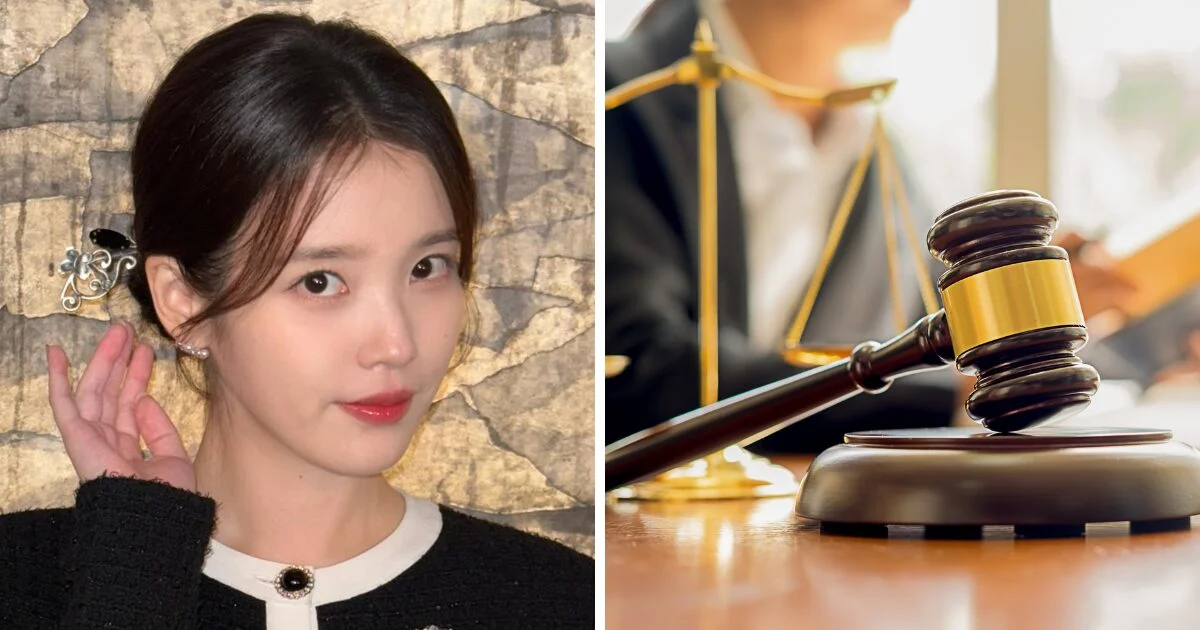
According to the final court documents released on May 31, 2026, the defendant was sentenced to four months in prison, suspended for a period of one year. In addition to the suspended jail time, the court mandated 80 hours of community service and a period of probation. This verdict follows an appeal process that significantly heightened the severity of the initial ruling. In the first trial, the defendant had been ordered to pay a fine of ₩3.00 million KRW (approximately $1,990 USD). However, the appellate court chose to merge the initial charges with another similar case involving the same individual, leading to the more stringent criminal sentence.
Detailed Breakdown of the Judicial Ruling
The prosecution presented evidence that the defendant had repeatedly posted vitriolic content across various online communities, using derogatory language and making unsubstantiated claims. Specifically, the court noted that the individual had referred to IU as a "fraudster" and "mentally ill." These terms were deemed by the presiding judge to be clear violations of the Act on Promotion of Information and Communications Network Utilization and Information Protection, which governs cyber-defamation and insults in South Korea.
In the sentencing remarks, the Seoul Central District Court emphasized that the comments were not merely expressions of opinion but were intended to degrade the victim’s character. The court also highlighted the defendant’s conduct throughout the legal proceedings, noting a distinct lack of remorse. Despite the accumulation of evidence, the defendant reportedly continued to deny the charges and offered no apology to the artist, which influenced the court’s decision to pursue a custodial sentence rather than a simple fine.
The Evolution of IU’s Legal Protection Strategy
This case is the latest development in a long-standing "zero-tolerance" policy maintained by IU’s management agency, EDAM Entertainment. For several years, the agency has been proactive in monitoring online forums, social media platforms, and portal sites for malicious rumors, sexual harassment, and character assassination.

The chronology of IU’s legal battles reflects an increasing trend in the K-pop industry where agencies take aggressive stances against "anti-fans."
- 2019–2021: EDAM Entertainment began releasing regular updates on legal proceedings, revealing that dozens of individuals had been fined or sentenced to probation for online harassment.
- 2023: A significant spike in legal activity occurred after IU was targeted by a series of plagiarism accusations regarding several of her hit songs. Although the Seoul Metropolitan Police Agency eventually declined to pursue the charges, citing a lack of evidence, the incident triggered a wave of online vitriol.
- 2024–2025: The agency intensified its efforts, utilizing third-party legal firms to track international IP addresses and persistent offenders.
- May 2026: The current sentencing of a woman in her 30s marks one of the few instances where an insult-based case resulted in a suspended prison sentence rather than a purely financial penalty.
Public Outcry and the "Class System" Debate
While many fans of the artist have lauded the verdict as a necessary step in curbing cyberbullying, a significant portion of the general public has expressed alarm. The controversy gained momentum on X (formerly Twitter) and other platforms, where netizens questioned the equity of the South Korean justice system.
Critics point to the perceived disparity between the treatment of online insults and more violent physical crimes. One widely shared post argued that the sentencing of a woman reportedly suffering from health issues—specifically mentioned by netizens as epilepsy—to a criminal record over four comments is an overreach of judicial power. This sentiment was echoed by others who claimed that the legal system favors wealthy celebrities, referring to IU as "Your Highness" or a "modern-day aristocrat."
The debate has centered on a comparison of recent high-profile cases. Netizens noted instances where individuals involved in the exploitation of women in adult broadcasts or cases of physical assault received what were perceived as lenient sentences—often cited as "young men with bright futures" receiving suspended sentences. In contrast, the criminalization of online speech against a billionaire celebrity is being framed by some as a tool to silence public discourse.
Context of South Korea’s Cyber-Defamation Laws
To understand the weight of this controversy, one must look at the unique legal landscape in South Korea. Unlike many Western jurisdictions where defamation is primarily a civil matter, South Korea maintains strict criminal laws regarding online speech.

- Criminal Insult (Article 311 of the Penal Code): This law penalizes the public use of insulting language that can lower a person’s social standing. It does not require the statement to be a factual claim.
- Cyber Defamation (Information and Communications Network Act): This carries heavier penalties than standard defamation. Notably, in South Korea, a person can be prosecuted for defamation even if the statement they made is true, provided the intent was to damage someone’s reputation (True-Fact Defamation).
Legal experts suggest that the court’s decision to issue a suspended prison sentence in this case likely stems from the "habitual" nature of the defendant’s actions. Under Korean law, recidivism or the repeated nature of an offense is a primary factor in escalating a punishment from a fine to imprisonment.
Statements and Reactions from Involved Parties
EDAM Entertainment has not issued a specific statement regarding this individual verdict but has previously maintained that they will continue to pursue "all possible legal measures without leniency or settlement." The agency’s stance is built on the premise that the mental health of their artists is a priority, especially following the tragic losses the K-pop industry has suffered due to cyberbullying in the past decade.
On the other side of the discourse, human rights advocates have occasionally raised concerns about the "chilling effect" such rulings might have on free speech. While the comments made by the defendant (calling someone a "fraudster") are derogatory, the transition into criminal imprisonment—even if suspended—is seen by some as a precedent that could be used by those in power to suppress criticism.
Broader Implications for the Entertainment Industry
The IU controversy serves as a landmark case for several reasons. First, it demonstrates the effectiveness of dedicated legal teams in securing criminal convictions for online behavior. This is likely to encourage other entertainment labels, such as HYBE, SM, and JYP, to pursue similar paths for their artists who face persistent harassment.
Secondly, the backlash highlights a growing social rift. There is a palpable tension between the desire to protect individuals from the devastating effects of "keyboard warriors" and a public frustration with a legal system that many feel is inconsistent. The "50 billion won celebrity" versus the "average citizen" narrative suggests that future cases may be met with even greater scrutiny regarding the socio-economic status of the parties involved.

Analysis of Judicial Trends
As digital communication continues to evolve, South Korean courts appear to be moving toward harsher deterrents. Historically, the "slap on the wrist" fines of ₩1 million to ₩3 million KRW were seen as a mere cost of doing business for malicious commenters. By moving toward probation and suspended prison sentences, the judiciary is sending a message that online harassment carries lifelong consequences, including a permanent criminal record that can affect employment and travel.
However, the "merging" of cases, as seen in this instance, is a critical legal mechanism. By combining multiple instances of insults into a single prosecution, the state can argue for a pattern of behavior that justifies a custodial sentence. This strategy is becoming the standard operating procedure for legal firms representing K-pop idols.
In conclusion, while the sentencing of the netizen in the IU case is a legal victory for the artist and her agency in their fight against cyberbullying, it has simultaneously opened a Pandora’s box of social commentary. The case stands at the intersection of mental health protection, the right to free speech, and the ongoing struggle for perceived judicial fairness in a society increasingly sensitive to class distinctions. As the one-year suspension period begins, the industry will be watching closely to see if this ruling acts as a deterrent or if it further fuels the fire of public resentment toward celebrity legal actions.