Nayara Elvina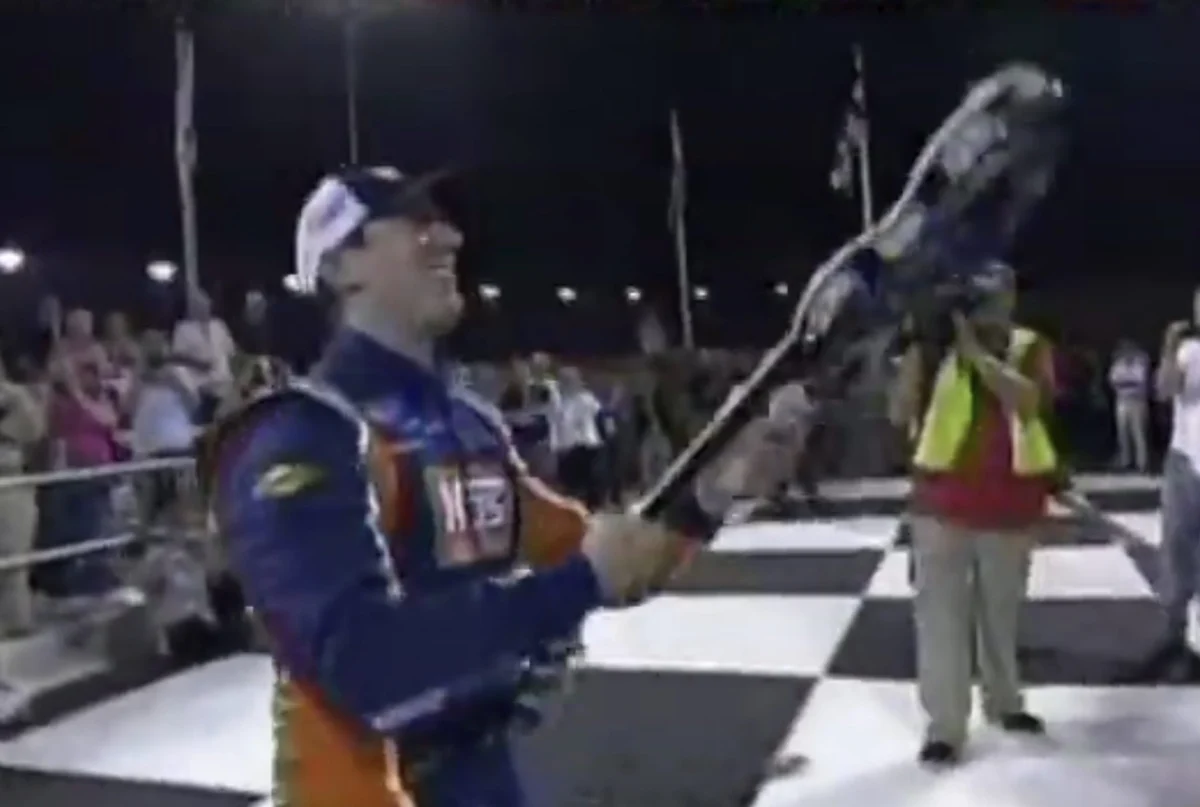
As NASCAR returns to the neon-lit atmosphere of Nashville for the Cracker Barrel 400, the absence of Kyle Busch from the competitive field continues to serve as a significant talking point among fans, analysts, and fellow competitors alike. Nashville Superspeedway has historically served as a proving ground for the sport’s most polarizing and talented figures, but few have left a mark as indelible—or as literal—as Busch. Throughout his decorated career, Busch demonstrated a unique mastery of the 1.33-mile concrete oval, securing victories that solidified his status as one of the most successful drivers in the modern era. However, his legacy in Music City is perhaps most defined by a single, explosive moment in 2009 that transcended the sport and sparked a nationwide debate regarding sportsmanship, artistic respect, and the boundaries of victory celebrations.
The Anatomy of the 2009 Smash: A Moment of Infamy
The date was June 6, 2009. Kyle Busch had just secured a dominant victory in what was then the NASCAR Nationwide Series (now the Xfinity Series) O’Reilly 300. It was his first win at the Nashville Superspeedway, a venue known for its unique winner’s trophy: a custom-designed, hand-painted Gibson Les Paul guitar. These instruments were not mere off-the-shelf products; they were bespoke works of art commissioned specifically for the track’s champions.
Upon arriving in Victory Lane, Busch, known by his moniker "Rowdy," took the guitar from the presentation stage. In a move that mirrored the high-energy antics of rock stars like Pete Townshend or Jimi Hendrix, Busch hoisted the instrument and proceeded to smash it against the concrete surface of the winner’s circle. The guitar, valued at thousands of dollars and requiring dozens of hours of meticulous hand-painting, shattered into splinters.
The immediate reaction was a mixture of stunned silence and vocal disapproval from the crowd. While Busch’s intention, as he later stated, was to provide every member of his Joe Gibbs Racing crew with a physical piece of the victory, the optics of the act were interpreted by many as a slight against the cultural heritage of Nashville and the artist who created the trophy.
The Artist and the Instrument: The Significance of Sam Bass
To understand the weight of the controversy, one must consider the pedigree of the trophy itself. The guitar was the work of Sam Bass, a man widely recognized as NASCAR’s first officially licensed artist. Bass’s influence on the aesthetic of the sport was unparalleled; he was the creative mind behind some of the most iconic paint schemes in history, including Jeff Gordon’s "Rainbow Warrior" Chevrolet. He also produced countless race program covers and fine art paintings that captured the speed and intensity of the sport.
The Nashville trophy guitars were a signature project for Bass. Each one was a playable Gibson Les Paul, adorned with intricate, hand-painted details celebrating the race and the track. When Busch destroyed the 2009 trophy, Bass was among the first to express a sense of personal loss. In the aftermath of the event, Bass noted that while he understood the "rock and roll" spirit Busch was trying to channel, the destruction of a unique, handcrafted item was disheartening. The incident highlighted a cultural clash between the "new NASCAR," characterized by aggressive branding and persona-driven antics, and the traditional values of craftsmanship and respect for the sport’s symbols.
Public Backlash and the Villain Persona
The fallout from the "Nashville Smash" was swift and severe. Joe Williams, the veteran track announcer at the time, was so incensed by the display that he famously refused to conduct the standard post-race interview with Busch in Victory Lane. The refusal of a track official to engage with a winner was an unprecedented breach of protocol, signaling the depth of the offense taken by the local community.
The following week, the media scrutiny intensified. When questioned about the incident, Busch remained defiant, leaning into the "villain" persona that had become a hallmark of his career. He suggested that the fans who were upset were likely supporters of rival drivers, specifically referencing those with "88" (Dale Earnhardt Jr.) or "8" (the number Earnhardt Jr. formerly drove) tattoos. This rhetoric further polarized the fan base, cementing Busch’s reputation as a disruptor who prioritized his team and his brand over traditional sensibilities.
Statistically, the incident occurred during a period of peak dominance for Busch. In 2009 alone, he participated in 86 races across NASCAR’s three national series, winning 21 of them. This high-frequency winning may have contributed to a sense of "winner’s fatigue" among fans, making the destruction of the trophy feel even more egregious to those who felt he took success for granted.
A Path to Redemption: Philanthropy and Amends
Despite his initial defiance, Busch eventually took steps to mitigate the damage caused by the celebration. While a formal public apology was never issued in the traditional sense, his actions in the months following the race spoke to a desire to make amends with the Nashville community.
Busch personally reached out to Sam Bass to commission and pay for two replica guitars—one for his own collection and one for his crew chief at the time, Dave Rogers. This gesture provided Bass with additional work and acknowledged the value of the original art. More significantly, Busch engaged in a substantial philanthropic effort directed at the city’s youth. He donated 162 guitars to Metro Nashville Public Schools, ensuring that the "spirit of rock and roll" he cited in his defense would actually benefit the next generation of musicians in Music City. This donation, valued in the tens of thousands of dollars, remains one of the more substantial charitable acts linked to a single NASCAR controversy.
The 2021 Fake-Out: Closing the Circle in Music City
The narrative of the Nashville guitar came full circle in 2021 when NASCAR returned to the Superspeedway after a decade-long hiatus. Busch, now a veteran and a two-time Cup Series champion, found himself back in Victory Lane after winning his 100th career race in the Xfinity Series.
As he was presented with the Gibson Les Paul trophy, the atmosphere was thick with anticipation. The crowd, the media, and even the track officials waited to see if history would repeat itself. Busch took the guitar, lifted it high above his head in a familiar stance, and leaned forward as if to strike the ground. However, he stopped mid-swing, shook his head with a grin, and pulled the instrument back to his chest, cradling it safely.
This "fake-out" was hailed by many as a sign of maturity and a masterful piece of showmanship. It acknowledged his past while demonstrating a newfound respect for the traditions of the track. It was a rare moment of levity that allowed the sport to move past the 2009 incident while still celebrating the "Rowdy" energy that Busch brought to the garage.
The Lasting Impact on NASCAR Traditions
The legacy of the Kyle Busch guitar smash extends beyond a single driver’s career. It forced NASCAR and its partner tracks to reconsider the role of trophies and celebrations in the modern era. Today, trophies like the Nashville guitar, the Martinsville grandfather clock, and the New Hampshire lobster are treated with a level of reverence that was perhaps less emphasized prior to 2009.
Furthermore, the incident served as a case study in sports marketing. Busch’s ability to generate headlines—even negative ones—kept NASCAR in the mainstream conversation during a period of economic transition for the sport. It also highlighted the importance of local culture; Nashville’s identity is inextricably linked to its music, and the trophy guitar serves as a bridge between two of the city’s largest industries.
As the engines roar tonight for the Cracker Barrel 400, the specter of the 2009 smash remains. Some fans on social media have even called for a "tribute smash" from tonight’s winner, though most analysts believe the current generation of drivers is unlikely to risk the backlash. The Gibson Les Paul trophy remains one of the most coveted prizes in racing, a testament to the enduring work of the late Sam Bass and the high-stakes drama that only Nashville can provide. Whether the winner chooses to hoist the guitar in triumph or simply pose for a photograph, the memory of Kyle Busch’s shattered instrument will forever be a part of the Nashville Superspeedway’s concrete foundation.