Mia Khoirunisa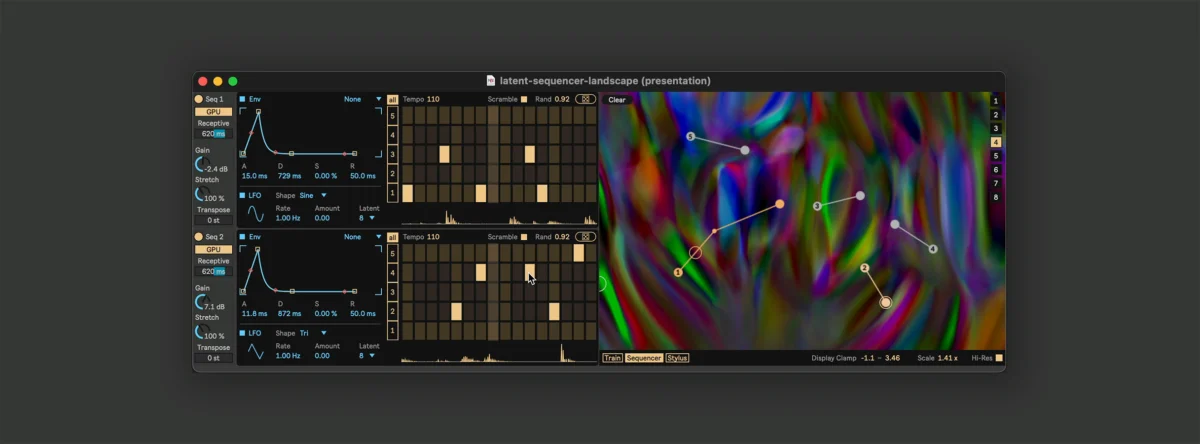
Jasper Shuoyang Zheng’s groundbreaking work, Latent Terrain, is redefining the landscape of AI in music production by shifting the focus from generative synthesis to an in-depth exploration and manipulation of neural audio codecs. Unlike the prevalent, often hyped, AI music technologies that generate content based on textual prompts, Latent Terrain empowers users to actively engage with, dissect, and creatively repurpose the underlying structures of sound. This innovative open-source Max external and user interface provides musicians and sonic experimenters with an intuitive and elegantly designed tool to treat the complex world of neural audio codecs as a playable instrument, transforming their own audio inputs into novel and unexpected textures.
The fundamental appeal of Latent Terrain lies in its departure from the common narrative surrounding AI in creative fields. Instead of relying on vast, often opaque, cloud-based data centers that consume significant energy, Latent Terrain operates locally, processing user-provided sounds. This approach not only democratizes access to advanced audio manipulation techniques but also aligns with growing concerns about the environmental impact of digital technologies. The project’s ethos, as articulated by Zheng, is not about generating predictable outputs but about uncovering the "beautiful and weird" possibilities inherent in the latent spaces of neural networks, allowing for expressive instrumental techniques.
This emphasis on discovery and nuanced sonic transformation is precisely what is attracting a growing community of musicians and audio researchers. Latent Terrain facilitates a return to the core principles of sound exploration, where the AI acts as a tool for revealing new timbral palettes rather than homogenizing sonic output. The project’s accessibility through the Max programming environment, particularly for users already familiar with frameworks like FluCoMa ( a powerful set of tools for the analysis, manipulation and synthesis of sound) and Data Knot, further lowers the barrier to entry for sophisticated audio experimentation.
Navigating the Latent Space: A Visual and Sonic Journey
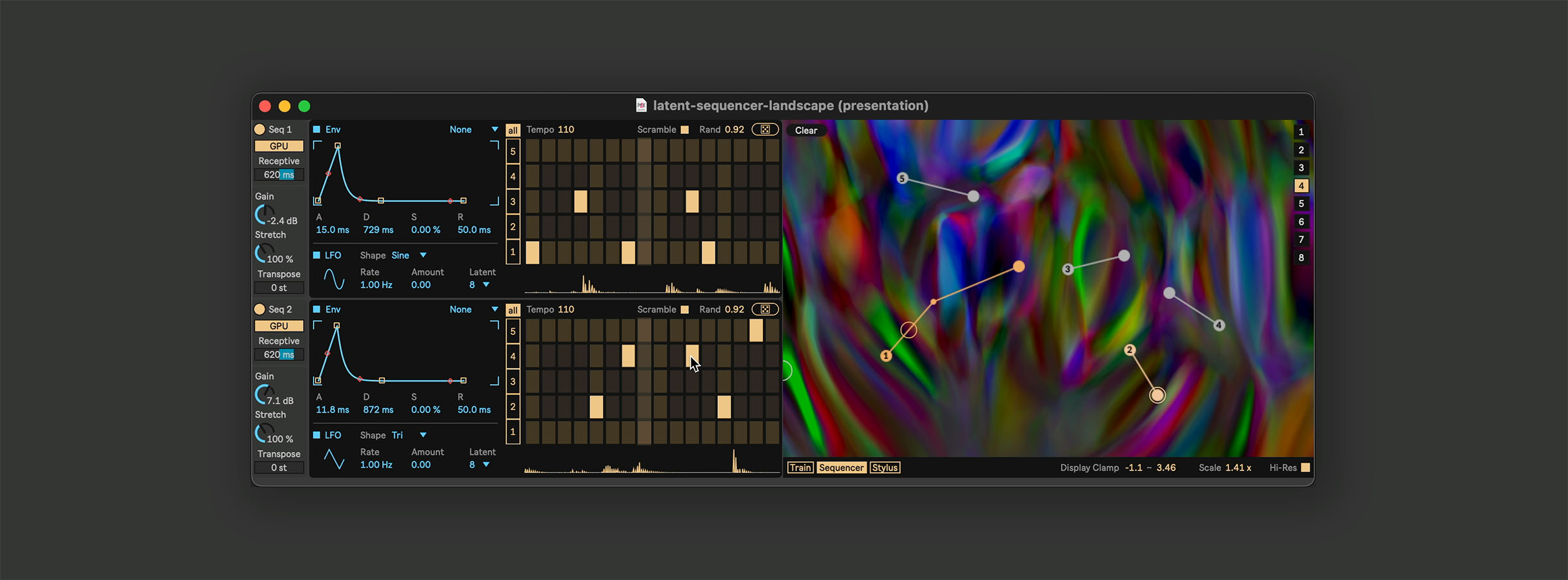
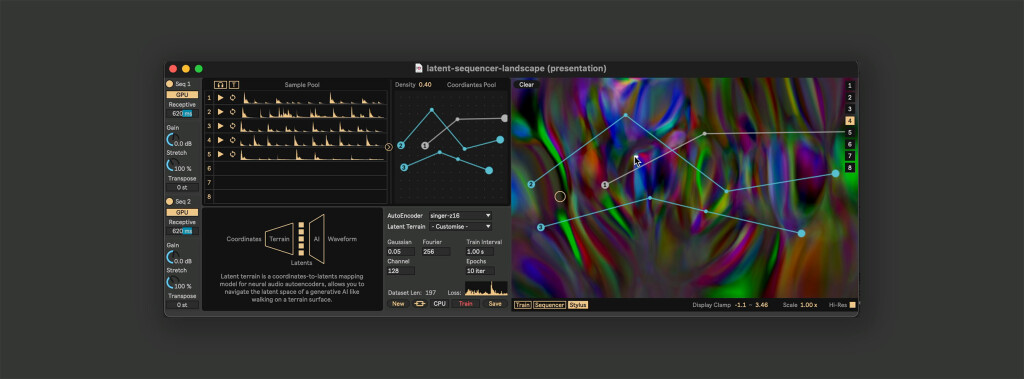
Latent Terrain offers a compelling visual interface that represents the complex relationships within neural audio codecs as an interactive map. This "warped texture," as described by Zheng, can be navigated using a variety of input devices, from a standard mouse to more gestural controllers, allowing for a deeply personal and performative interaction. A key feature of the platform is its ability to train small neural networks directly within the Max environment. This hands-on approach enables users to witness and influence how their chosen timbres "shatter, fracture, and meld into new materials," offering an unprecedented level of control and understanding over the sonic transformation process.
The power of Latent Terrain lies in its ability to facilitate the meticulous construction of sound libraries and the charting of personalized pathways through these sonic landscapes. This process is inherently subjective and deeply personal, allowing artists to curate unique sonic identities and develop novel compositional approaches.
Artistic Explorations and Sonic Storytelling
The potential of Latent Terrain is vividly illustrated by the work of artists who are pushing its boundaries. Keigo Yoshida’s project, which utilizes the technology to sonify EEG readings, offers a compelling glimpse into the unique sonic possibilities unlocked by the tool. This demonstration highlights how Latent Terrain can translate abstract data into tangible sonic experiences, opening avenues for bio-feedback installations and novel forms of data sonification.
Beyond purely technical demonstrations, Latent Terrain is fostering artistic projects that delve into deeper sonic meanings and narratives. Jiatong Liu’s "nn/mémoire" is a poignant example of this artistic application. This virtual gallery soundscape is constructed from archival recordings of Beijing’s Hutong neighborhoods, capturing a rapidly disappearing urban soundscape. Liu’s approach frames the "terrain" as an ambient archive, inviting users to navigate through spatialized sound. Critically, Liu identifies "learning to deal with unpredictability" not as a bug to be fixed, but as a central design question, embracing the emergent qualities of the neural network as integral to the artistic outcome. This perspective aligns with Zheng’s core philosophy of dissecting and understanding, rather than merely generating.
The project’s commitment to fostering a community of practice is evident in its comprehensive documentation and upcoming public presentations. Latent Terrain is scheduled to be showcased at NIME (The International Conference on New Interfaces for Musical Expression) in London later this month, providing a platform for artists and researchers to engage with the technology and share their work.
Technical Foundations and Accessibility
Latent Terrain is built upon the foundation of advanced neural audio codecs, a field that has seen significant recent progress. These codecs, often based on autoencoder architectures, learn to compress and reconstruct audio signals, capturing the essential characteristics of sound in a lower-dimensional "latent space." Latent Terrain leverages these compressed representations, allowing users to explore and manipulate this latent space directly. The project supports various audio autoencoders, with several popular options already integrated, ensuring flexibility and a diverse range of sonic outcomes.
The development team has prioritized accessibility, releasing Latent Terrain as open-source software for both macOS and Windows platforms. The inclusion of Max for Live devices is planned, further integrating the tool into established Ableton Live workflows. The project’s robust documentation, including an article by Jasper Zheng titled "Latent Terrain: Dissecting Neural Audio Codecs" and a dedicated project page with research details, provides a clear roadmap for installation and exploration. The installation guide is readily available at https://jasper-zheng.github.io/nn_terrain/installation.
Broader Implications for Sound Design and Musical Practice
The implications of Latent Terrain extend beyond its immediate application in sound design and music composition. By providing a transparent and dissectible interface to neural audio processes, the project contributes to a more critical understanding of AI in creative contexts. It challenges the notion of AI as an inscrutable black box, instead positioning it as a complex system that can be understood, manipulated, and ultimately, played.
The emphasis on local processing and open-source development also has significant implications for the democratization of advanced audio technologies. This approach ensures that powerful AI tools are not solely in the hands of large corporations or institutions but are accessible to individual artists, researchers, and hobbyists. This fosters a more diverse and innovative ecosystem for sonic exploration.
Furthermore, the project’s success and the growing interest it garners signal a potential shift in how AI is integrated into creative workflows. The focus is moving from purely generative capabilities to tools that enhance human creativity through deeper understanding and interaction. This collaborative approach, where AI serves as a partner in discovery rather than a replacement for human ingenuity, is likely to define the future of AI in the arts.
The development also taps into a broader trend of increased activity in generative audio models, exemplified by advancements in areas like Stable Audio. Latent Terrain’s approach, however, offers a complementary and often more profound method of engagement by focusing on the internal workings of these models.
While the current focus is on Max and Max for Live, there is anticipation within the community regarding potential ports to other environments like Pure Data, which would further expand its reach and accessibility. The project’s robust engineering and clear vision suggest that future developments and expansions are highly probable.
The availability of Latent Terrain represents a significant step forward in the exploration of neural audio technologies. By prioritizing dissection, manipulation, and artistic expression over automated generation, Jasper Shuoyang Zheng and the project’s contributors are paving the way for a more nuanced, personal, and creatively fulfilling integration of artificial intelligence into the world of sound. The project is a testament to the power of open-source collaboration and the potential for AI to unlock new frontiers in artistic discovery.